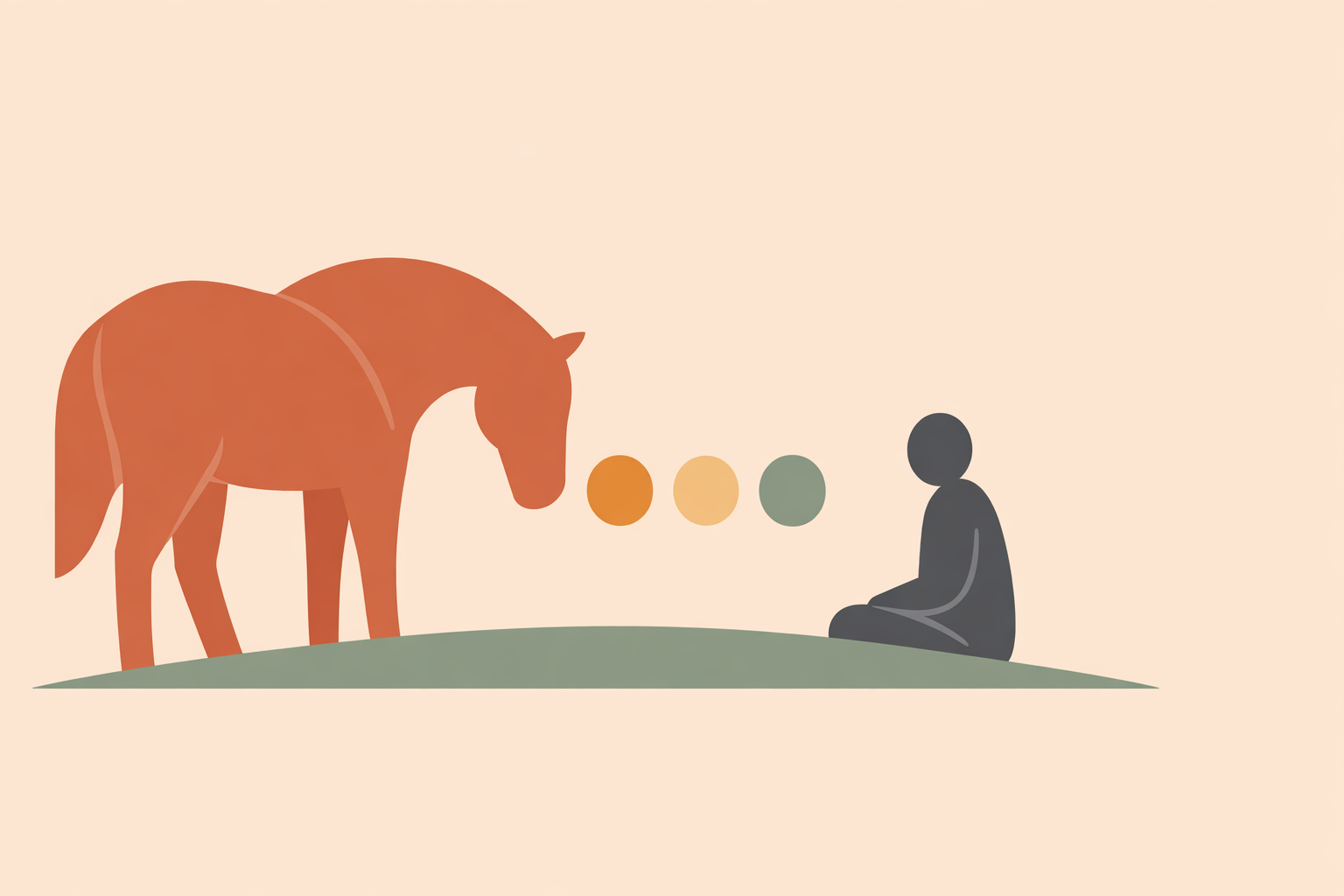
Equine-assisted practitioners rarely lose a session because a technique was imperfect. More often, they lose it because a horse was already saying—clearly—“not today.” One week the herd is settled and the work flows; the next, scanning, tension, or avoidance disrupts the plan. Staff feel the shift, clients feel it too, and outcomes become inconsistent.
The most dependable answer is operational: make equine welfare the system that runs every session. When welfare is built into the daily rhythm, horse behavior becomes easier to read, boundaries get clearer, and the work becomes steadier. A recent review highlights how handling practices can affect equine stress and the quality of equine-assisted services.
Key Takeaway: Treat equine welfare as the operating system of every session: read the horse early, shape calmer environments, and build real choice and comfort into the work. When handling, workload, and standards are consistent and welfare-led, horses communicate more clearly and client outcomes become steadier over time.
Habit 1: Read the Horse First
Reliable sessions begin before any exercise starts. A horse who is overloaded, uncomfortable, or withdrawn is already offering guidance—and the practitioner’s job is to hear it early and respond well.
Move from a quick glance to a repeatable check-in: eyes, ears, jaw, nostrils, tail, back, gait, and social orientation. Repetitive behaviors like weaving or cribbing can be discomfort flags or stress signals, so they belong on your everyday radar. In real sessions, these small tells often matter more than the plan you arrived with.
Look for patterns, not single moments. Ethogram research describes relaxed posture and voluntary approach as signs linked with calmer, affiliative states, and it also identifies backward ears and avoidance as markers of negative affect or defensive motivation. Think of it like reading the weather: one gust doesn’t decide the day, but the whole sky tells you what’s coming.
A structured pre-, mid-, and post-session read is also simply good horsemanship. It keeps the session honest: if the horse changes, the session changes. If the horse needs a pause, the pause is part of the work.
Many horses do settle into well-paced roles over time. One equine-assisted study noted adaptation over time, with horses re-balancing well after sessions rather than showing an escalating pattern of strain.
“Horses provide immediate, honest feedback—if a client’s emotions escalate, the horse’s body language shifts at once,” share practitioner‑educators.
That immediacy is a gift. When practitioners respond to body-language shifts instead of pushing through them, they protect the horse and often deepen the client’s learning at the same time. Participants in one program also described enhanced engagement in daily life through the confidence and trust built in the horse-human relationship.
Habit 2: Shape a Calm, Horse-Friendly Environment
Horses settle more easily when the environment makes sense to them. The space can either support regulation—or keep a horse braced, vigilant, and unavailable.
Start with variety and low-stakes interest. Research on equine enrichment suggests exploratory behavior increases in more varied, sensorially rich settings. In day-to-day practice, that can look like thoughtful footing changes, access to shelter, quiet transitions, and spaces that invite curiosity rather than monotony.
Choice in the environment matters, too. Practical welfare guidance notes that pasture, shelter, footing support species-typical behavior and give horses more chances to exercise agency.
Familiarity is part of calm. A hazard-checked, well-maintained space reduces unnecessary scanning and leaves more capacity for connection and learning. Many teams notice the difference immediately when the setting becomes predictable: the horse stops “reading the perimeter” and starts reading the moment.
Social life belongs in the environment, not on a wish list. Research on separation notes separation distress when horses are apart from preferred partners or herd mates.
And what happens after the session counts just as much as what happens during it. Reviews on equine stress highlight how transport and frequent work can add cumulative load—one reason decompression time, turnout, and quiet routines are so protective.
Horses “thrive on routine,” as one experienced professional puts it—and predictability is a gift for clients, too.
Even light enrichment can support this kind of environment. A novel object, a small layout change, or a gentle “investigation corner” can spark curiosity and help clients practice observation without forcing contact.
Habit 3: Build Choice and Consent into Every Session
When horses have meaningful choice, the whole session becomes clearer. Choice reduces pressure, protects welfare, and gives clients a lived experience of boundaries and respect.
Agency is not a luxury in equine-assisted work. Animal welfare frameworks emphasize that environmental control is central to good welfare, and that lack of control can contribute to passivity and learned helplessness. Put simply: a horse who can say “yes,” “no,” or “not yet” is usually safer and more honest than a horse who has learned that refusal changes nothing.
Meaningful choice can stay practical: allow distance, create rest zones, keep exit paths clear, pause before pressure builds, and treat opt-in as part of the design. Space matters socially, too—equine behavior research describes how space to avoid conflict helps reduce tension and stress.
Respecting a horse’s pause signal often steadies the work over time. And when a refusal stands, clients often learn something rare and valuable: the difference between invitation and force, and how to adjust without blame.
As Linda Kohanov says, horses respond to our “unconscious signals,” not to our verbal stories.
- Simple consent supports: a threshold line the horse can remain behind, a visible rest area, tasks with opt-in starts, and a clear “pause and reassess” protocol the first time the horse declines.
Habit 4: Protect Comfort Every Day
Comfort is foundational. Horses who are physically at ease tend to be more available for subtle, relational work. Horses who are uncomfortable often communicate it through behavior long before anyone names the cause.
Many apparent behavior problems are really comfort problems. Reviews show that pain affects behavior, including resistance, aggression, or repetitive behaviors. The same literature links poor gear fit and musculoskeletal strain with ear pinning, tail swishing, reluctance, and stereotypic behavior.
That’s why daily comfort checks matter: feet, back, skin, body condition, feed routine, gear fit, and whether yesterday’s workload is still showing in the body today. Essentially, comfort is the quiet baseline that allows everything else—attention, curiosity, relationship—to show up.
Workload matters as much as fit and feeding. Well-dosed participation can support adaptation, and welfare reviews emphasize the value of turnout and rest for horses involved in services. Many equine therapy for mental health practice communities naturally cap how much any one horse does in a day for this exact reason: depleted horses don’t offer their best selves.
When horses feel comfortable, clients often feel that steadiness, too. The interaction becomes less guarded and easier to trust.
- Daily comfort loop: body scan, gear check, feed and hydration review, session cap by individual horse, turnout or recovery time, then brief notes for whoever works with that horse next.
Habit 5: Handle Through Relationship, Not Pressure
Your presence shapes the session. Horses respond strongly to consistency, timing, and the emotional tone of the person handling them.
Research suggests horses can sense human emotion and respond to body language and facial expression. Seasoned practitioners recognize this instantly: posture, breath, pace, tension, and intention all land. When the human becomes more grounded and consistent, the horse often becomes easier to read.
Low-pressure handling supports that clarity. Experimental work has shown positive reinforcement tends to produce less stress and more willing responses than more aversive approaches. In everyday terms: reward the try, use pauses well, keep cues timely, and minimize unnecessary force.
“Horses can help us to develop a sense of trust, empathy, and compassion,” notes Temple Grandin.
Pat Parelli observes that unclear intent or over‑control quickly loses a horse’s cooperation—an embodied lesson in leadership and communication.
Session rituals often do more than we expect. Quiet leading, attentive grooming, thoughtful transitions, and calm returns to turnout or stable help clients learn pacing, respect, and repair. These simple “bookends” can become relational templates clients carry into everyday life.
Habit 6: Keep Learning and Audit Your Standards
Welfare-first practice isn’t a static checklist. It’s a discipline of observation, reflection, and adjustment—refined by what the horses show you week after week.
Field-wide, welfare literacy still varies, and equine-assisted practice is under-researched in several operational areas. One review concludes that more education among practitioners would improve equine welfare in services.
Clear standards make good instincts repeatable. Peer review, team reflection, incident debriefs, and straightforward documentation help keep a program aligned. A broader welfare review also concludes that welfare monitoring is needed to protect horses and support ethical, high-quality services.
Workload review belongs here as well. Diversified roles, true rest, and ongoing monitoring can reduce cumulative wear. A literature review highlights the importance of workload management for horses in these programs.
Ethical humility ties it all together. If a team keeps seeing tension, shutdown, refusal, or inconsistency, that’s not a problem to conceal—it’s information to learn from.
- Useful self-audit rhythm: weekly team review, monthly workload review per horse, quarterly policy review, and immediate debriefs after any incident or concerning change in behavior.
Habit 7: Let Traditional Horsemanship and Research Inform Each Other
The strongest equine-assisted programs don’t choose between old wisdom and newer research. They let each sharpen the other, with the horse as the final reference point.
Much of what experienced horsepeople have long practiced is now being described in welfare language: subtle observation, respect for herd dynamics, attention to environment, thoughtful pacing, and the understanding that each horse is an individual rather than a role. Traditional knowledge has always valued timing, feel, and relationship.
Current welfare frameworks reinforce many of those instincts, pointing toward agency, social connection, environmental suitability, and careful handling as core conditions for good equine participation.
This also calls for cultural respect. Draw from horsemanship traditions with care, context, and integrity. Learn from mentors, lineage-holders, and skilled practitioners without flattening distinct traditions into vague inspiration. Then verify what you’re learning against what the horses in front of you consistently show.
Practically, this means keeping field notes, tracking patterns, discussing them as a team, and adjusting early—before a horse has to “shout” to be heard.
Conclusion: Welfare-First Habits Create Steadier Equine-Assisted Practice
When you read the horse first, shape calmer spaces, honor choice, protect comfort, handle with clarity, keep refining your standards, and stay rooted in thoughtful horsemanship, you create the conditions for steadier and more ethical work.
Equine-assisted programs are also associated with well-being improvements across a range of studies, and one eight-week program reported reduced depressive symptoms alongside greater peace, grounding, and trust. Those outcomes make equine welfare even more central, not less—because if the horse isn’t supported, the work loses its integrity.
Keep it practical: tighten your checks, tune the environment, and give horses a real veto. Build schedules around comfort, social life, and genuine recovery. Let handling stay slow, clear, and kind. Then keep learning—especially from patterns you’d rather ignore.
As with any approach involving animals and people, standards should be matched to each horse, each team, and each setting. When something feels “off,” slow down, document what you see, and adjust the workload and environment first.
That is how good intentions become consistent outcomes: one welfare-first habit at a time.
Train Welfare-First Skills
Go deeper on these session habits with the Equine Therapy Practitioner course.
Explore Equine Therapy Practitioner →