Many Reiki Masters reach the same turning point: your calendar gets full, income fluctuates with cancellations, and you find yourself repeating the same explanations session after session. Raising prices or packing in more appointments can quickly trade presence for pressure. What most practitioners want instead is scale that protects attunement, consent, and lineage—supported by structures you can run consistently, so growth reduces decision fatigue rather than multiplying logistics.
A steadier path is to build a portfolio of repeatable, ethics-led containers that move you beyond single sessions while keeping the work rooted. The models below—foundational teaching, long-form Master pathways, group circles, memberships, digital libraries, practitioner mentoring, and collaborations—are designed to expand reach without compromising culture or standards. The thread that ties them together is simple: clear promises, informed consent, and a consistent teaching flow.
Key Takeaway: Scale a Reiki Master practice by building repeatable containers—teaching, cohorts, circles, memberships, digital resources, mentoring, and partnerships—so growth relies on clear scope, informed consent, and consistent transmission rather than more one-to-one sessions. Diversifying income protects your energy, preserves lineage, and reduces logistical strain.
Income Model 1: Teach Reiki Levels I & II as Your Scalable Foundation
The most grounded way to scale as a Reiki Master is to start with Level I and II teaching. It shifts you from trading hours for income to guiding small groups—while staying close to practice, lineage, and clear expectations. Even though there’s no formal research specifically on Reiki business models, the wider field tends to emphasize how Reiki is offered and taught in real-world settings, reflecting an interest in sustainable structures over volume-based work (Reiki literature).
This foundation matters because one-to-one sessions, however meaningful, have a natural ceiling. Most writing and research attention has focused on Reiki as a biofield practice, not on long-term practice design—so Masters have largely refined scalable models through lineage, community, and experience.
Teaching changes the rhythm: instead of repeating the same core principles privately, you hold a shared learning space where students receive the basics together and then integrate them in daily life. Done well, it’s not “more output”—it’s better transmission.
That’s also why maturity matters. Naturalistico’s guidance on the Reiki Master path emphasizes years of study, hands-on practice, and self-integration—not a rushed identity jump. Put simply: teaching becomes scalable because it’s seasoned.
From there, your curriculum can mirror the natural arc of Reiki learning. As Emma Loewe describes, Level I focuses on opening channels through hands-on practice and self-Reiki—ideal for beginners who need structure and repetition. Level II then supports students to practice on others with more confidence and skill. That progression creates a clean, ethical ladder: self-connection first, supported application next.
To keep this model sustainable, make your delivery repeatable. Naturalistico outlines a 5-step process for attunement and teaching that helps you guide multiple students without losing depth. Think of it like a well-built ritual: consistent enough to rely on, spacious enough to stay alive.
And build ethics into the foundation, not as an afterthought. Clear scope, informed consent, and honest communication build trust. So does naming Reiki’s Japanese roots and crediting your teachers and lineage.
Level I and II teaching isn’t “entry-level” in its impact—it’s the base layer of a scalable practice: roomy enough to reach more people, strong enough to hold your standards as you grow.
Income Model 2: Long-Form Reiki Master & Teacher Pathways
If Level I and II are your foundation, long-form Master and Teacher pathways are your depth model. They create higher-value, more spacious containers for serious students—and they protect Reiki from being flattened into a quick certificate. In academic and practitioner conversations, Reiki is often situated within wider spiritual and contemplative traditions that naturally unfold over time, not in compressed formats (traditions).
This is where many Masters either strengthen their work or dilute it. A rushed weekend can be easy to sell, but traditional arts are absorbed through cycles of practice and reflection. Naturalistico points to months to years of development, with meaningful space between trainings so students can integrate.
That pacing isn’t a gimmick—it’s how inner change catches up with outer responsibility. As Frans Stiene puts it, one of the central shifts at Master level is ethical maturity. Essentially, students begin to relate to Reiki as stewardship of community and practice, not just technique.
A strong Master pathway can feel like apprenticeship: ethics and lineage, teaching skills, attunement preparation, reflective journaling, peer practice, and supervised teaching reps. The point is not to add complexity—it’s to build capacity and discernment.
Cohorts also make the model easier to hold. A multi-month group gives you predictable rhythms and mirrors how traditional learning often happens: instruction, application, reflection, and return. Practitioner-oriented collections tend to highlight structured series and educational formats rather than isolated encounters (structured series).
Between sessions, students practice, record insights, and come back with sharper questions. Naturalistico recommends tracking practice hours and feedback so completion reflects embodied work, not just attendance. Here’s why that matters: it makes your certification a marker of integrity, aligning with broader commentary on responsibility and depth in Reiki training (responsibility).
As cohorts grow, codifying your attunement flow keeps standards steady across groups and makes your teaching calmer.
This model scales because it’s spacious. The longer journey doesn’t slow growth—it keeps growth worthy of the lineage it comes from.
Income Model 3: Group Reiki Circles, Classes & Retreat Segments
Reiki circles and group classes let you support many people at once, and they offer something one-to-one work can’t always create: shared ritual, community resonance, and belonging. While Reiki research has focused more on individual sessions than group formats, group-based contemplative and energy practices have been associated with reduced stress and improved mood—and in practice, community settings often deepen connection quickly.
Once you begin teaching, circles are a natural next step. Not everyone wants a full training, and not everyone needs a private container. A circle, themed class, or retreat segment offers a gentle, consistent way to engage, often aimed at relaxation and steadiness rather than intense “breakthroughs.”
People also come back for how the space feels. Many Reiki recipients report deep relaxation and greater ease, and in adjacent energy-work contexts, some describe becoming more aware of their body—an everyday kind of embodiment that often grows through repetition.
To keep group work repeatable and respectful, use a simple structure: open with intention and consent, guide practice, allow stillness, then close with grounding and integration. When the “container” is consistent, you can be more present inside it.
- Opening agreements and consent
- Short teaching or theme for the session
- Guided Reiki practice or shared circle format
- Quiet integration time
- Grounding and simple reflection
This model travels well, too. Retreat leaders and workshop hosts often look for culturally respectful facilitators who can offer Reiki within a broader well-being program. In high-stress environments, recipients frequently mention relaxation and a sense of shared humanity when the space is held consistently.
Circles aren’t smaller versions of private sessions—they’re their own ecosystem, where community stewardship is part of the offer.
Income Model 4: Reiki Memberships & Ongoing Communities
When people start returning to your circles, a membership model becomes a natural next step. It turns occasional attendance into a steady rhythm—supporting recurring income for you and ongoing practice for members. Practitioner-focused resources often emphasize the value of sustainable structures that don’t rely entirely on one-off events (sustainable structures).
The real value of membership isn’t endless content—it’s predictability. When people know they have a weekly or monthly place to land, Reiki becomes part of how they support balance over time, not something they reach for only in crisis.
That rhythm matches how many Reiki programs and protocols are designed: as a series rather than a single encounter. In wider summaries of Reiki research, repeated engagement has been associated with lower stress and steadier shifts in mood and sleep for some people. A clinician writing in a well-being context also notes the value of regular practice for ongoing benefits.
Long-term members often describe these groups as a home base: a ritual that helps them feel less scattered. Research reviews also suggest Reiki can be linked with improved mood, which maps neatly onto the lived experience many communities describe—steadying, not sensational.
As Chyna Honey says, Reiki supports deep relaxation. Here’s why that matters: deep relaxation is closely tied to the parasympathetic nervous system, the part associated with “rest and digest.” In hospital-based settings, Reiki documentation has noted markers associated with physiological regulation. Many seasoned practitioners recognize the same pattern in everyday terms: calmer nervous systems create more room for clarity and choice.
A simple membership can include:
- One live Reiki circle each week or month
- A monthly theme or practice focus
- Audio-guided self-Reiki or grounding sessions
- A reflection prompt or journal practice
- Light community check-in space
The strongest memberships blend real-time connection with simple resources people can use between meetings.
On the back end, keep systems clean. Naturalistico recommends practical supports like booking tools, feedback forms, and practice logs so you can refine as you go. Done well, membership creates steadier income without the emotional load of constantly “refilling the room.”
Income Model 5: Online Courses & Digital Libraries That Work While You Rest
Digital courses and resource libraries let part of your wisdom live beyond your live schedule. They don’t replace attunement, mentoring, or community, but they can carry the repeatable parts of teaching so your calendar isn’t the only container for income. Reiki hubs and collections tend to focus on application and education rather than prescribing one delivery format, leaving room for thoughtful online structures (education formats).
This works best when you’re clear about what belongs online and what should remain live. In many Usui lineages, theory, history, ethics, and integration practices translate well into self-paced learning, while attunements are typically held with direct guidance out of respect for tradition. Contemporary discussions on Reiki often highlight this careful balance between adaptation and direct transmission (direct transmission).
Naturalistico makes a similar distinction: digital modules can hold repeatable teaching, while live time is reserved for questions, attunements, and nuanced mentoring.
Your library might include lessons on lineage, hand positions, ethics, journaling prompts, self-Reiki guidance, and integration practices. Once recorded well, these resources support students across time zones and reduce how often you need to re-teach the same essentials.
Accessibility is part of ethics here. Many educators now treat captions and transcripts as a baseline standard, helping ancestral practices remain genuinely available to different learning needs.
Penelope Quest captures the spirit behind that openness when she says Reiki is open to people from all walks of life. A good digital library extends that principle with care.
This model also supports repetition. Audio-guided self-practice tends to deepen with consistency, and when people stop, perceived benefits can fade. A clinician notes that regular practice supports ongoing benefits—exactly the logic of an evergreen library people can return to as life changes.
If you offer certificates for online completion, keep language precise. Naturalistico emphasizes clear scope so learners understand what the training reflects—and what it does not. That clarity is what keeps digital scaling trustworthy.
Income Model 6: Mentoring & Practice-Building Support for Reiki Practitioners
As students mature, many need more than another class—they need mentoring. This can become a strong income stream for experienced Masters because it draws on lived wisdom, not just teaching content. Reiki collections focus mostly on recipients and settings, which highlights how much practitioner-development knowledge is still carried through lineages and communities (Reiki collections).
Eventually the questions shift from “How do I do Reiki?” to: How do I hold boundaries? Price fairly? Describe Reiki without exaggeration? Build something that still feels like mine? Those are mentoring questions, and they’re a natural part of stepping into leadership.
Naturalistico points directly to this need, including support around boundaries and pricing, ethics, and blending Reiki with coaching or other approaches in grounded ways.
There’s also support for this kind of guidance from adjacent fields. Coaching-style support has been linked with reduced burnout and improved role satisfaction in high-pressure environments. Different context, same human truth: good mentoring reduces isolation and helps people make steadier choices.
Keep the framing clean. Mentoring should be positioned as reflective support and practice development—not something outside your scope.
And this is where Frans Stiene’s phrase ethical maturity belongs at the center. At higher levels, many practitioners don’t need more information—they need better discernment. Mentoring helps cultivate that.
You can offer mentoring in several formats:
- One-to-one monthly mentoring
- Small group mentoring circles
- Practice review sessions for graduates
- Ethics and boundaries labs
- Business-building intensives rooted in integrity
Group mentoring works best with explicit agreements like confidentiality, no unsolicited advice, and respect for cultural roots. Add simple tracking—patterns in bookings, feedback themes, hours of practice—and your mentees evolve from real experience rather than copying generic formulas.
The deeper value is stewardship: you’re helping practitioners become steady carriers of the work.
Income Model 7: Collaborations, Corporate Programs & Integrated Offers
Collaborations and organizational programs can expand your reach beyond your current audience. When done well, they diversify income, introduce Reiki to new communities, and keep the work grounded through clear scope and respectful partnerships. Some organizations already include Reiki in broader well-being programs, showing how partnership models can extend reach beyond private work (organizational use).
At this stage, you’re weaving Reiki into wider ecosystems: retreats, coaching spaces, meditation events, workplace well-being initiatives, and collaborative communities. It’s a sustainable way to grow because you aren’t generating every room from scratch, and practitioner discussions increasingly point toward diversification even if it hasn’t been formally quantified (diversification).
Many partners respond well to offerings framed around resilience and stress support, especially when they’re presented as part of a broader well-being approach. Reiki is increasingly integrated into clinics and centers as complementary support, often with exactly this kind of language.
Communication matters here. Clear scope and calm promises build trust. Commentary on contemplative work in institutional settings suggests partners respond best to transparency and the absence of fear-based claims (realistic promises).
The same goes for retreat partnerships. A yoga teacher or event host may love your work, but collaboration lasts when agreements are explicit: scope, timing, revenue share, and how Reiki will be described. Strong boundaries make creativity easier.
Participant feedback also helps you understand what these partnerships offer. One client described feeling more calm and more present after a session, and in group settings people often report feeling less alone—especially meaningful in high-pressure workplaces.
Over time, the most stable integrated offers are layered rather than one-off. A workplace package might include a circle, a short educational session, and follow-up digital practices. A retreat collaboration might include an opening ritual, a small-group experience, and post-retreat integration resources.
That layered design is what makes collaboration scalable: you bring a coherent Reiki ecosystem into new settings while staying rooted in lineage, humility, and honest communication.
Conclusion: Design Your Own Mix of Reiki Master Income Streams
The strongest Reiki practices are rarely built on one income stream alone. They grow through a thoughtful blend: foundational teaching as the base, circles as community, memberships for continuity, digital resources for reach, mentoring for depth, and collaborations for expansion.
This isn’t just about income—it’s about sustainability. Naturalistico frames growth as support for rest and sustainability, so your practice can evolve without draining your presence. When everything depends on one-to-one work, both income and energy become fragile; diversified structures create breathing room (breathing room).
Wherever you start, keep ethics non-negotiable. Strong professional guidance across fields emphasizes honest scope, respect for autonomy, inclusivity, and freedom from coercive or exaggerated claims—standards that translate beautifully into Reiki teaching and practice-building.
They also protect the lineage. Clear language that Reiki supports relaxation, balance, and well-being as a complementary practice keeps the work understandable. And it helps to be explicit that training or certification reflects education in the modality, not professional licensure of another kind.
As your work expands, keep integration simple and steady: rest, hydration, journaling, quiet reflection, and knowing when to seek other support. Aftercare guidance commonly recommends drinking water and resting after sessions—gentle practices that reflect long-standing community consensus.
Choose one model first, not all seven. Build it well, make it repeatable, and let it reflect your lineage, your temperament, and the community you genuinely want to hold. Then add the next layer when the first feels steady. That’s how a Reiki Master practice grows—without losing its roots.
Explore Reiki Master Certification
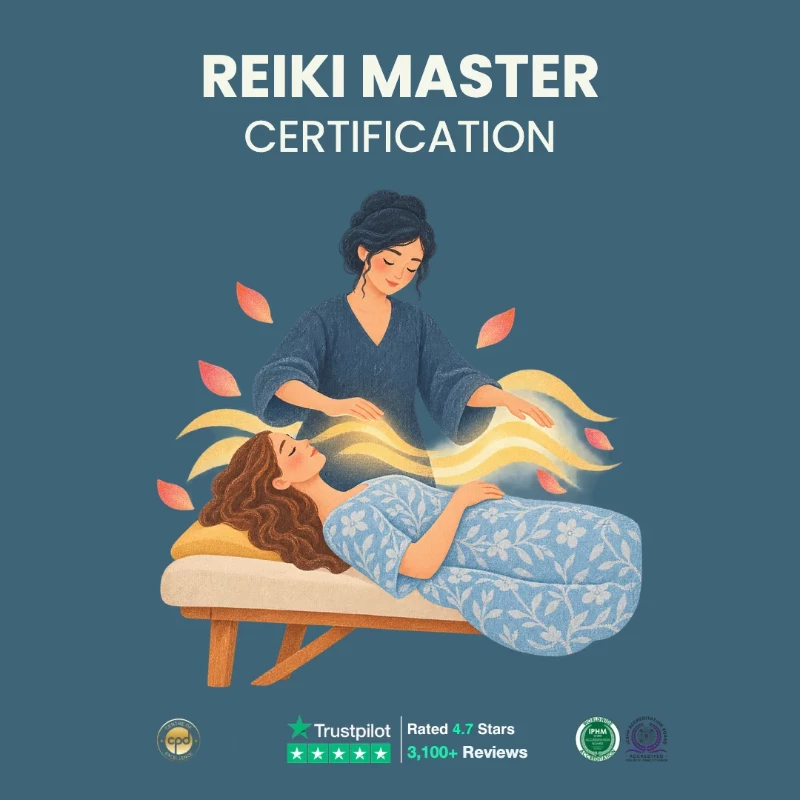
Reiki Master Certification supports ethical, repeatable teaching containers that help you scale without losing lineage or consent.
Explore Reiki Master Certification →