The default move in “accessible gardening” is often to ask whether someone can garden, then add a few specialist tools and a standard raised bed. In practice, that can underdeliver. Awkward reaches remain, fatigue rises mid-session, and people end up asking what they are allowed to do rather than choosing how they want to participate.
Adaptive gardening works differently. It starts with a better question: how would you like to garden? From there, the space, task sequence, pacing, and supports are shaped around real participation. The point is to make gardening safer, more comfortable, and more self-directed.
Key Takeaway: Adaptive gardening treats ability as a design variable and centers participant choice. In practice, that means using universal design so people have multiple ordinary ways to reach, see, touch, rest, and contribute; adapting tasks before rushing to equipment; offering meaningful roles and flexible pacing; and building in sensible guardrails without taking ownership away.
Universal Design in the Garden
Universal design is what makes adaptive gardening feel natural. Instead of building one “special” route or one “special” bed, you build several usable options into the space from the start.
Universal design can make garden participation safer, more comfortable, and easier to navigate by reducing barriers and including features such as seating, raised beds, and integrated watering. It also protects dignity: people can choose how they join in without having to negotiate access every time.
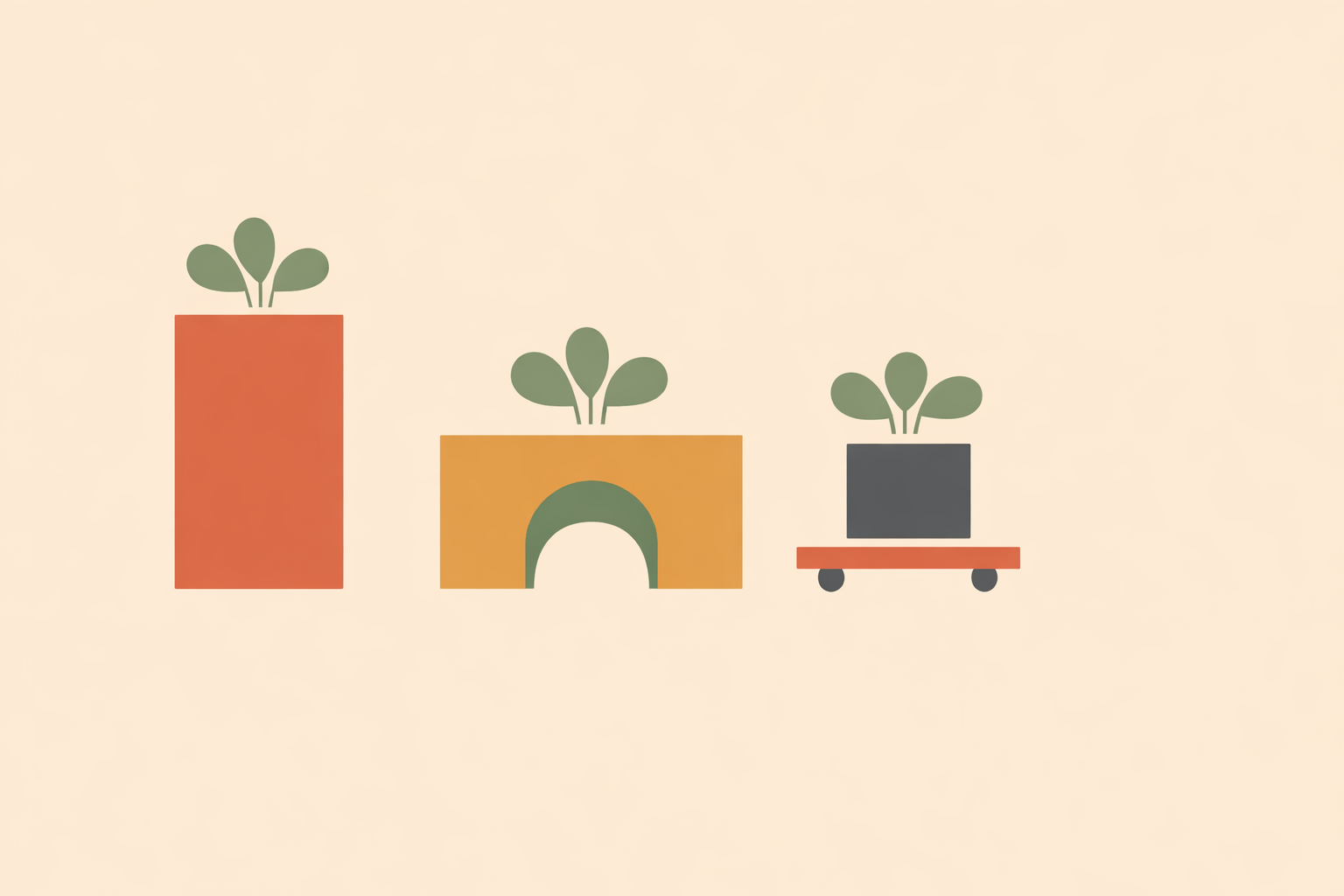
A simple example is three basil stations side by side:
- a standing-height bed
- a seated-height bed with knee space underneath
- a container on a stable cart
The goal stays shared: harvest basil for a dish or drying rack. What changes is the path into the task.
Paths, Beds, and Seating That Invite Participation
If the layout works, people arrive thinking about the tomatoes or the herbs, not whether they can make it down the path. That’s the standard to aim for.
Paths and circulation
Routes should feel clear, steady, and easy to read. Firm surfaces, good drainage, and enough space to pause or pass remove friction before any activity begins. Visual contrast at edges and simple wayfinding cues can make movement more intuitive.
On main routes, benches with backs and armrests every 10–12 meters create reliable opportunities to rest, reorient, or stay involved without stepping away. Short distances between stations, visible resting spots, and easy transitions between sun and shade keep the whole session more sustainable.
Inclusive layout guidance also highlights supports such as shade-producing structures, seating, and straightforward circulation that reduces unnecessary hazards.
Beds and work surfaces
Raised beds work best when they vary. Mixed heights let people choose what fits their body and energy on that day, and seated beds with knee space make close work more accessible for many gardeners.
Raised beds can reduce bending and kneeling, and roll-under designs support seated gardening. They also make fine-motor tasks steadier because the work surface is closer and easier to see.
A few reliable rules help in most gardens:
- Use mixed bed heights rather than one standard height.
- Keep one-sided beds shallower than beds with access from both sides.
- Add a lip or edge where trays and tools need to stay put.
- Place seating within the work area, not only at the perimeter.
The guiding principle stays consistent: the garden should fit changing bodies and changing days.
Adapt the Task Before You Add the Tool
One of the most reliable shifts in adaptive gardening is to adjust the task before buying equipment. Very often, the barrier is reach, pacing, too many steps at once, or an unclear role.
This is where activity analysis shines. Break the job down, reorder it, simplify it, and define what “done” looks like for that person in that session. When the steps make sense, participation becomes much easier to support.
For example, potting seedlings can become a series of small, visible steps:
- steady the tray on a non-slip mat
- fill a few cells rather than the whole tray
- make holes with a dibber or finger tool
- transfer seedlings with a spoon
- top up soil
- water lightly
Once the task is clear, tools can be matched to real needs. Long-handled tools, lightweight watering cans, long-neck wands, drip systems, and sit-on carts can reduce strain while keeping ownership with the gardener.
A useful test is this: if the tool disappeared tomorrow, would the person still have a clear, valued role? If not, refine the task and role first, then add equipment only where it truly helps.
Meaningful Roles and Real Contribution
Adults need adult roles. Adaptive gardening works best when contribution is genuine and connected to a shared outcome.
Partial participation means joining the group through the part that is realistic and meaningful for that person. In a tomato session, one person might choose varieties, another prepares labels, another sows, and another checks moisture later. Everyone should be able to point to something in the finished bed and say, “That was my part.”
Ownership grows through real responsibility. Some people prefer directing over digging, so they can plan the herb layout. Someone with fluctuating energy can take on harvesting, seed sorting, or record-keeping. Someone avoiding soil contact that day can lead plant selection, arrangement, or scent-based choices.
Language can quietly reinforce autonomy. Instead of “Do you want help with that?” try:
- “Which part would you like to take on?”
- “Would you rather sow, label, or organise the trays?”
- “Do you want the seated station, the standing station, or the shaded table?”
Choice turns support into collaboration.
Sensory Choice, Story, and Emotional Safety
A garden can be grounding, and it can also be intense. Smell, texture, heat, noise, insects, and social pressure all shape how the space lands for someone, so sensory experiences work best as invitations rather than expectations.
Some people love rubbing mint, brushing lamb’s ear, or listening to grasses in the wind. Others prefer visual contact only, or a quieter corner with less stimulation. Options without pressure widen participation and reduce overwhelm.
A simple sensory set-up might include:
- a “smell if you wish” herb station
- a quiet seating area nearby
- plants with contrasting texture and colour
- the option to watch rather than handle
Trauma-aware facilitation follows the same logic: predictability, transparency, and choice. A session opening such as “Today includes soil, water, and time in the sunnier bed; you can swap to the shaded table or skip any part without explaining” lowers pressure and makes participation feel safer.
Cultural meaning belongs here as well. Plants carry foodways, seasonal practices, family stories, and community identity. Asking what crops, scents, or traditions feel familiar can make the garden more welcoming, as long as those roots are honoured with respect, proper credit, and no borrowing of sacred or culturally specific practices for general use.
Pacing for Fatigue and Fluctuating Mobility
Energy changes from person to person and from day to day. Good adaptive gardening makes room for that reality and keeps participation steady.
Flexible pacing often works better than fixed schedules. Short activity blocks, visible rest points, shaded alternatives, and lighter arrival tasks help people stay engaged without tipping into exhaustion, which is also central to session flow in garden-based work.
A practical session rhythm might look like this:
- arrival task in shade
- one short active garden task
- seated pause or watering break
- a second task with easier alternatives
- gentle close with reflection, photos, or harvest check
Frequent resting opportunities support fluctuating energy and mobility far better than a plan that assumes everyone can just push through.
In day-to-day facilitation, watch for cues that it’s time to pause or adapt: slower responses, more effortful movement, overheating, loss of focus, or visible frustration. Switching to a seated station, shortening the task, or offering an observation role can keep someone included without turning the moment into a struggle.
Tools, Watering, and Other Supports That Reduce Strain
Once space and task flow are working well, tools can make participation smoother. The best supports reduce effort while keeping the work meaningful.
Useful supports often include:
- drip irrigation for routine watering
- lightweight watering cans
- long-neck watering wands
- long-handled tools that reduce bending
- sit-on carts or mobile stools for transport and rest
Accessible-garden guidance recommends drip systems and lighter watering equipment to reduce carrying, reaching, and repetitive strain.
Even here, restraint helps. Remove avoidable strain, then leave room for the satisfaction of doing something real.
Risk-Aware Practice Without Overprotecting People
Gardening should stay alive and ordinary. Good practice removes unnecessary hazards while keeping dignity and autonomy intact.
A sensible review usually covers:
- paths and surfaces
- weather, heat, and shade
- water access
- tool weight and storage
- plant selection
- manual handling
- allergens and scent intensity
- hygiene around soil and compost
- privacy, communication, and emotional comfort
Soil and compost bring microbial exposure, so ordinary hygiene matters: cover cuts, wash hands, avoid hand-to-mouth transfer, and handle compost responsibly. A calm routine and clear prompts are usually enough.
Plant choice deserves equal care. In high-contact areas, many practitioners favour plants that are easy to approach and unlikely to scratch or irritate. Strong fragrance, heavy pollen, or thorny growth can be wonderful elsewhere, but less helpful near seating and narrow paths.
The balance is straightforward: remove what’s avoidably risky, signpost what remains, and keep the person’s ability to choose at the centre.
Review, Learn, and Keep Adapting
Adaptive gardening is not a fixed template. Gardens change, seasons change, and people change too, so strong programmes keep noticing what works and adjusting in small, practical ways.
Evaluation can stay light. Reflection notes, attendance patterns, photos, participant comments, and brief check-ins can tell you a lot: Which station drew engagement? Where did fatigue show up? What got avoided, and why?
Plan–Do–Study–Act cycles fit this work well: try one adaptation, observe what changes, then refine. Gardening already teaches this rhythm through constant tending and adjustment.
It also helps to review the site with fresh eyes now and then, especially in horticultural therapy settings:
- Can people arrive and orient themselves easily?
- Are signs readable?
- Can work surfaces be reached in different ways?
- Are rest and shade built into the flow of the session?
- Is there a quieter option when sensory load is high?
- Are tools, water, and handwashing easy to access?
When adaptive gardening is done well, it feels like good gardening practice: thoughtful, responsive, and generous enough to welcome different ways of taking part. The question remains simple and powerful: how would you like to garden?
For practitioners building broader skills in nature and outdoor therapy, this same mindset carries across settings, tasks, and levels of support.
Train in Horticultural Therapy
Build adaptive, choice-centered sessions with deeper practice in the Horticultural Therapy Certification.
Explore Horticultural Therapy →