Most animal-naturopathy practitioners meet the same real-world pressure points. A guardian asks for a herb for a named condition. A clinic is understandably cautious about non-veterinary guidance. Someone has already started using essential oils or supplements without a clear plan. In those moments, good practice comes from knowing when to slow down, what to record, and how to coordinate respectfully without stepping outside your role.
Key Takeaway: Animal naturopathy works best as an educational, well-being support alongside veterinary oversight. In practice, that means focusing on observation, species-appropriate routines, environmental support, clear records, and respectful collaboration. The safest practitioners know where the boundary sits, communicate with humility, and use cautious stop rules around higher-risk areas such as herbs, supplements, and essential oils.
Animal naturopathy and veterinary collaboration in 2026
Animal naturopathy is increasingly finding its place in collaborative care. Formal literature points to growing acceptance of integrative veterinary medicine, and many guardians now value practical support around food, rhythm, environment, rest, and enrichment.
This is where a naturopathy practitioner contributes most, especially within broader animal wellness support. The role is not to name conditions or lead assessment, but to help guardians notice patterns, make manageable changes, and support steadier day-to-day well-being between appointments.
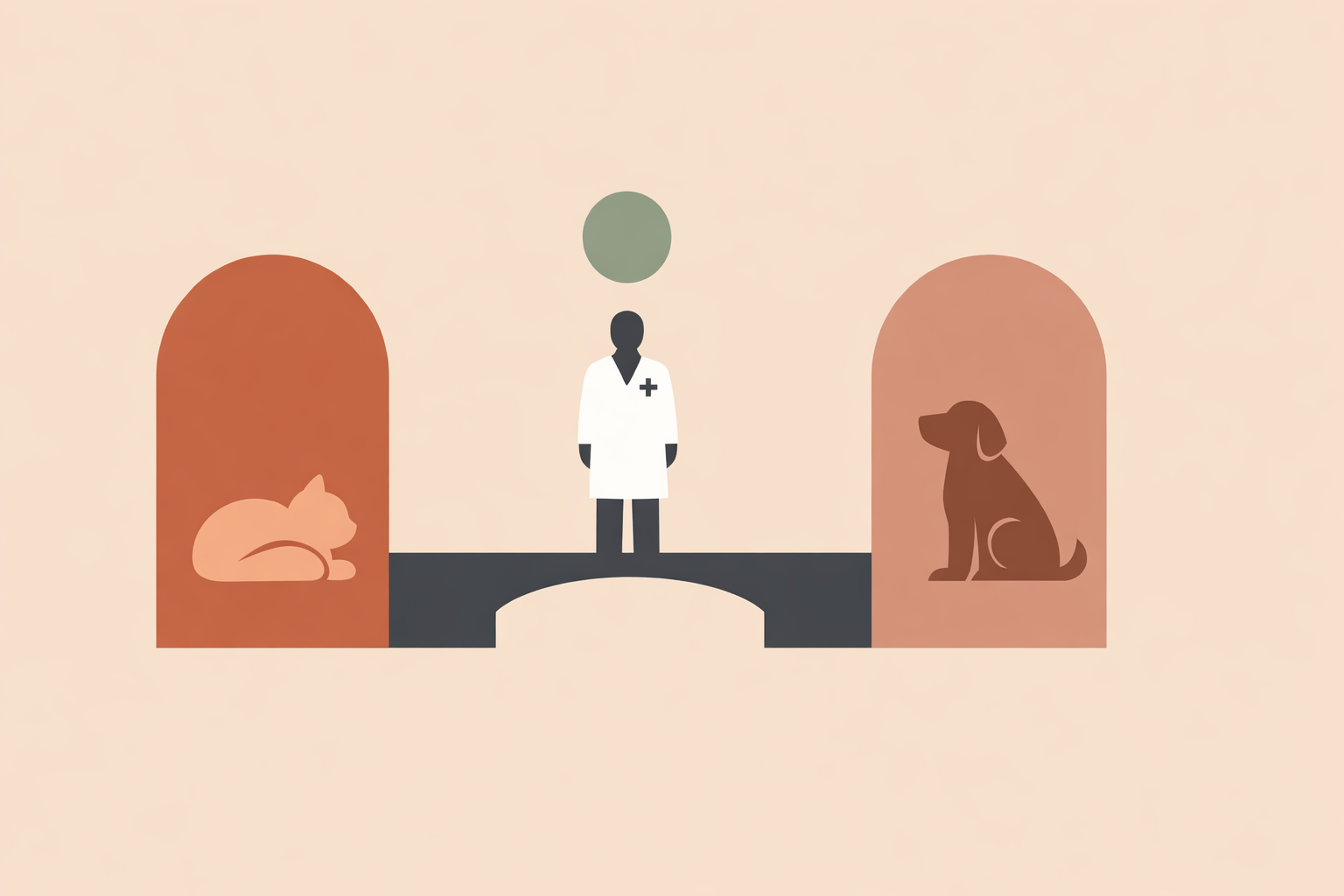
A healthy partnership stays simple. The veterinary team leads assessment and decisions. You support tracking, home routines, and low-risk environmental adjustments, introduced one at a time so results are easier to understand. Clear division protects the animal, respects everyone’s responsibilities, and usually improves follow-through at home.
The collaboration boundary: who does what
A reliable boundary test is this: if your suggestion requires naming a condition, interpreting tests, or responding to pain, injury, or a rapidly worsening sign, it sits outside a naturopathy support role.
Within scope, you can observe, educate, document, and support routine change. Outside scope includes labeling a disorder, giving condition-specific dosing advice, or encouraging delays when timely veterinary input is needed.
Before offering any suggestion, it helps to check:
- What am I observing, without labels?
- Could this signal need prompt veterinary attention?
- Has the animal already been assessed for this change?
- Could my suggestion conflict with current products or care?
- Have I explained uncertainty in plain language?
- What is the stop rule, and when do I refer back?
This mindset keeps your work grounded and makes your notes genuinely useful to clinics.
For example, if a guardian asks, “What herb helps my cat’s cystitis?” a safer reply is: “I can’t advise on named conditions. Let’s record what you’re seeing and help you prepare clear notes for assessment. After that, I can support routine and environmental comfort,” including the kind of day-to-day home support discussed in integrative feline support.
Within scope: observation, environment, and species-appropriate routines
Most meaningful change happens in ordinary life. Small, species-appropriate adjustments often build into noticeable improvements in comfort, regulation, and daily ease.
Observation comes first. Describe what is happening without jumping to labels: pacing after dinner, vocalizing at night, hiding after visitors arrive, resisting handling, waking early, skipping breakfast, or over-grooming in the afternoon. Clear observations give you a solid starting point.
Tracking patterns for 7 to 10 days also helps before changing too many variables. Logging sleep, appetite, elimination, play, rest, and social behavior makes it easier to see what shifts when you adjust one thing at a time.
Then build around the animal’s nature. A terrier may do better with scent work before being left alone. A rabbit often settles with safe chew options and covered retreat spaces. A parrot can thrive with predictable light cues and foraging opportunities. A senior indoor cat may benefit from evening play, warmer sleeping spots, and a quieter wind-down period.
Keep records simple and consistent:
- Species, age, and breed or type
- Body weight where relevant
- Current food and quantities
- Products already in use
- Known sensitivities
- Observed changes and dates
- Guardian goals
- Follow-up plan
These basics make coordination smoother and help you spot patterns you might otherwise miss.
Herbs, supplements, and essential oils: where caution matters most
Plants are powerful, and traditional herbal knowledge deserves respect for that very reason. In animal practice, guidance varies across species, so practitioners often work with a mix of long-standing tradition, emerging evidence, and real species-specific uncertainty.
That is why quality, sourcing, and context matter so much, and why human protocols should never be copied across casually.
Essential oils call for particular care. Veterinary toxicology guidance notes they can be rapidly absorbed through the gut, skin, lungs, and mucous membranes. The same source reports severe poisoning has occurred with some oils, including tea tree and pennyroyal.
Cats and birds can be particularly sensitive to airborne substances, so diffuser use around them deserves serious thought rather than a casual “it’s natural, so it’s fine” assumption.
Two practical rules help:
- Avoid diffusing oils in enclosed spaces with cats or birds present.
- Avoid giving condition-specific dosing advice for herbs or supplements without veterinary oversight.
If a guardian is already using a product, your role is to document it clearly, ask neutral questions, and encourage coordination so everyone can watch for changes or possible interactions.
For an older dog who seems stiff getting up, that can mean noting timing, flooring, activity patterns, body condition, and current products, then supporting low-risk comfort steps such as traction, routine warm-ups, and environmental ease while the veterinary team guides any product decisions.
Touch, presence, and gentle supportive modalities
Hands-on work can be deeply meaningful when it is slow, consent-led, and clear about its purpose. The aim is to support rest, ease, and connection where the animal welcomes it.
Let body language lead. If the animal approaches, softens, leans in, or stays settled, you can continue gently. If you see freezing, withdrawal, turning away, agitation, vocalizing, or defensive posture, pause or stop.
This matters with touch-based work, energy practices, and owner-led calming routines. The animal’s response should always set the boundary.
There is emerging literature suggesting manual approaches may support comfort and daily function in certain dogs when used appropriately. Reviews also note limited evidence for many complementary animal-care modalities, which is a good reason to keep language realistic and outcomes grounded.
Traditional hands-on practices still hold value, especially when they are offered with skilled observation, respect for consent, and a steady focus on comfort.
How to build trust with veterinary teams
Trust grows through clear records, concise summaries, and straightforward referral language. Clinics are far more likely to welcome your input when you share information they can use quickly.
Keep summaries neutral and practical: timelines, observations, products already in use, environmental changes, appetite, activity, elimination, and behavior. Skip dramatic interpretations and loaded language.
A helpful summary often includes:
- What changed
- When it changed
- What the guardian has already introduced or removed
- What you observed directly
- What you have paused pending guidance
Simple referral phrasing helps: “Please contact your veterinary professional so this change can be assessed.” It keeps everyone aligned and reduces the chance that a story about stress, detox, energy imbalance, or sensitivities distracts from timely assessment.
Red-flag stop rules also belong in your client materials. Difficulty breathing, collapse, seizures, suspected poisoning, severe bleeding, repeated vomiting, inability to urinate, suspected fracture, sudden paralysis, heat distress, or fast-worsening signs call for immediate veterinary contact.
Ethics, consent, and cultural respect
Strong practice is built on more than scope. It also depends on honesty, consent, and integrity in how you frame your support.
Guardians should clearly understand what you are offering, what you are not offering, where uncertainty exists, and when veterinary input remains essential. Consent works best when it is plain, practical, and free of inflated promises.
A solid working ethic for animal naturopathy includes:
- Put animal well-being first
- Stay within competence
- Be honest about uncertainty
- Respect animal consent and body language
- Keep accurate records
- Avoid guarantees and exaggerated claims
- Disclose financial interests
- Refer promptly when needed
Cultural respect matters too. If your work draws from Indigenous, Asian, African, European, or other ancestral traditions, name those roots carefully and avoid flattening them into a generic wellness story. Traditional knowledge deserves context, lineage, and care.
Conclusion: the strongest role is a supportive one
The future of animal naturopathy is built on calm collaboration, careful boundaries, and deep respect for the animal in front of you.
Your strongest tools are often the least dramatic: clear observation, species-aware routine design, modest environmental change, thoughtful records, and timely referral. These habits make your support safer, more useful, and easier for veterinary teams to trust.
Before offering any suggestion, check that it is species-appropriate, low risk, within your competence, honest about uncertainty, and unlikely to delay assessment. If it does not meet that standard, pause and coordinate.
Over time, that steady approach supports guardians, helps animals live more comfortably, and helps this field mature with integrity through grounded animal naturopathy practice.
Explore Animal Naturopathy Certification
Build practical, ethical collaboration skills in the Animal Naturopathy Certification to support animals safely alongside veterinary care.
Explore Animal Naturopathy →