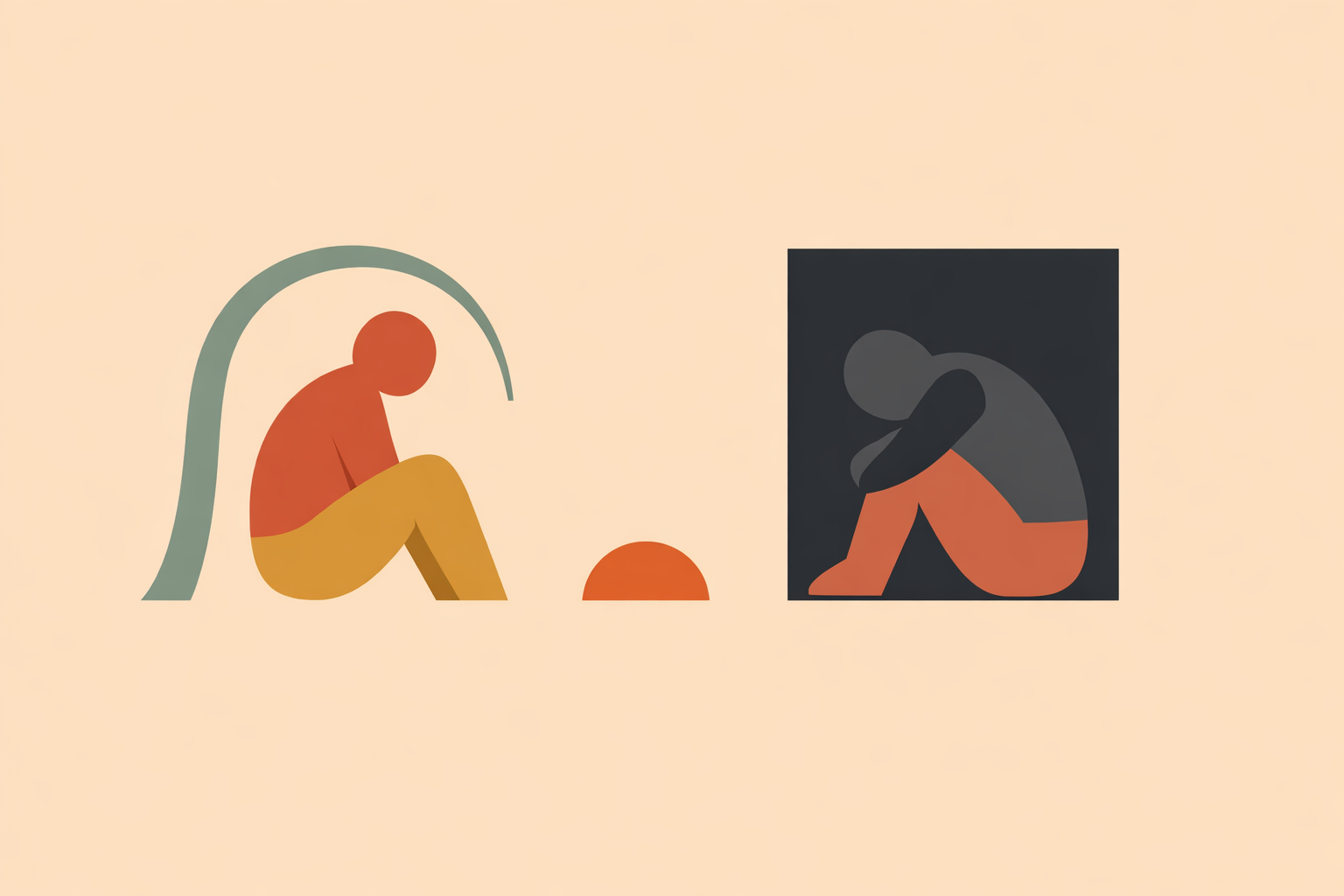
The default response when an autistic client stalls is often to add structure, raise accountability, or label the dip as a motivation issue. That can backfire. If the client is in autistic burnout, more structure may add pressure to a system that is already overloaded. If the client is experiencing depression, waiting too long to bring in additional support can allow functioning to decline further.
Key Takeaway: Distinguishing autistic burnout from depression helps coaches choose safer next steps, stay within scope, and support clients more effectively. In practice, burnout tends to look like reduced capacity and rising sensory overwhelm that ease when demands come down. Depression is more likely when low mood and loss of interest stay flat across contexts, even with rest and adjustments. The clearest path is to watch patterns over time, use low-risk supports that reduce overload, and refer promptly when mood remains low, functioning declines, or risk rises.
Autistic burnout in practice: reduced capacity and sensory overload
Most clients don’t arrive saying, “I’m in autistic burnout.” They say, “I can’t do this anymore,” or “Everything feels too much.” The pattern is usually reduced capacity: communication narrows, executive function drops, and ordinary environments start to feel unworkable.
From a practitioner lens, burnout often looks like a sudden loss of usable bandwidth. The client still wants their goals. Their system just can’t reliably supply the energy, regulation, or sequencing needed to carry them out.
This matches descriptions of autistic burnout as long-term exhaustion shaped by chronic overload and unmet support needs. It also explains why piling on more expectations tends to worsen the situation.
What can look like “isolation” is often self-protection. During burnout, an increased need for solitude can be the body’s way of lowering incoming demand enough to stabilize.
Traditional frameworks have long respected cycles of effort and retreat. Many lineages view quiet, reduced output, and protected recovery time as a normal response to strain, not a character flaw. That perspective helps coaches support pacing with dignity, rather than trying to push someone back to performance too quickly.
Recovery typically unfolds in steps. Research also points to gradual return as demands decrease and the person gets enough rest, sensory relief, and practical support.
In-session example: Suggest a short capacity reset: fewer meetings, lower sensory load, clearer transitions, and more protected quiet time. Then track what comes back. If speech becomes easier, basic tasks feel more doable, or tolerance improves, burnout dynamics are likely central.
Depression in autistic clients: low mood and interest that do not lift
Depression tends to have a different signature. Even when life gets quieter and demands drop, mood stays low and interest doesn’t reliably return.
Persistence is a key clue. With depression, diminished interest can continue across settings, including “easier” days. A client may get more rest and still report that everything feels flat, pointless, or far away.
Body rhythms often change, too. Sleep changes, appetite shifts, and altered daily timing are common. In autistic people, these signals can be missed if the person already has an unconventional routine.
Another common layer is emotional self-report. Difficulty identifying feelings can make depression harder to name directly. Clients may describe fog, numbness, pressure, or shutdown rather than sadness. A coach can work with that by listening for patterns across days and contexts, not relying on a single label.
Quick litmus test: After a week of lower demands and thoughtful sensory adjustments, ask: “Did anything feel even slightly more interesting or easier to care about?” If the answer is consistently no, depression deserves closer attention.
Working with uncertainty: capacity problem, mood problem, or both?
In real coaching, it’s often both. Burnout can cut capacity so deeply that hopelessness grows around the experience. If overload continues and support needs stay unmet, depressive features can also develop.
Pattern-tracking usually serves clients better than rushing to a single label. One question guides the process: what changes when demands go down?
If functioning rises with rest, sensory relief, and fewer expectations, burnout is likely doing a lot of the driving. If mood and interest stay flat through those same adjustments, depression becomes more likely. Sometimes the pattern is mixed: capacity returns in pieces, while the emotional heaviness stays put.
This overlap makes sense given that autistic burnout is associated with higher depression scores, even though the experiences aren’t identical.
Four pattern questions to ask:
- Capacity: What becomes possible after 24 to 72 hours of lower demand?
- Mood: Does interest or hope rise at all when life gets gentler?
- Context: Are changes strongest in high-demand environments, or everywhere?
- Time: Has this been a brief collapse, a long slide, or a repeating cycle?
Worked example: After a three-day sensory retreat, Sam can cook and reply to one message again, but still says everything feels gray and meaningless. That suggests a mixed picture: keep the capacity supports, and begin a warm referral conversation.
Safe first steps in coaching: low-risk adjustments that also clarify the picture
When you’re not sure what’s driving the change, start with supports that are gentle and practical. They reduce harm during burnout and also reveal whether mood begins to move.
Begin by lowering unnecessary demand: simplify schedules, reduce transitions, trim social load, and make sensory conditions more workable. In neurodiversity coaching, these supports are foundational because they help the client access abilities that are currently blocked by overload.
Keep goals smaller than you think you need. Micro-steps match action to current bandwidth. Instead of “clear your inbox,” try “open email, sort by sender, answer one easy message, stop.”
Widen communication options to preserve connection when speech or social energy is thin. Written reflection, shorter check-ins, longer processing time, or lower-pressure session formats can make consistency possible again, especially when communication strategies are made more explicit.
- Mini sensory audit:
- Light: reduce glare, soften brightness, change screens or lamps where possible.
- Sound: identify harsh background noise, commuting strain, or open-office fatigue.
- Predictability: use a visible plan for the day and allow buffer space for surprises.
- Texture and comfort: notice clothing, seating, temperature, and touch irritants.
- Micro-step mapping:
- Big task: reply to 12 emails.
- Micro-steps: open inbox, sort, star 3 easy replies, draft one short response, stop.
- 7-day capacity log: each evening, rate energy, sensory load, social load, and interest from 0 to 5. Note one thing that became possible.
What you are watching: If function starts returning as load decreases, burnout is likely central. If function improves somewhat but mood stays low and interest doesn’t return, build referral planning into the next steps.
Referral thresholds: when coaching is not enough
Referral is part of excellent coaching. Clear thresholds include functioning, duration, and risk.
If a client’s day-to-day life is sliding for an extended period, that deserves attention. In depression, functional impairment is associated with concerns that shouldn’t be held by coaching alone.
Duration matters. If lowered demands, sensory supports, and pacing don’t meaningfully shift mood over time, it’s time to widen the support team. The same applies if the person is increasingly unable to eat regularly, rest, manage money, communicate clearly, or carry out basic daily tasks.
Risk comes first, every time. Any sign of self-harm, suicidal thinking, extreme despair, or rapid deterioration sits outside coaching scope and calls for immediate connection to appropriate support.
- Simple decision map:
- If function rises and mood rises: continue coaching and rebuild slowly.
- If function rises but mood stays flat: continue practical supports and refer for mood support.
- If both function and mood stay low or worsen: refer urgently and narrow coaching to immediate stabilization only, if appropriate.
Referral script: “We’ve made thoughtful adjustments, and some things are clearer now. I’m noticing that mood is not lifting the way I would expect from burnout support alone. I’d like us to bring in an additional layer of support, and I can help make that next step feel more manageable.”
Making referrals autism-affirming
A good handover protects dignity and momentum. The aim is to reduce friction and overwhelm while helping the client access the next layer of support.
Whenever possible, summarize what already works: preferred communication style, sensory stressors, processing pace, current routines, strengths, and what changes have or haven’t helped. That gives the next practitioner a clearer starting point and reduces the burden on the client to retell everything from scratch.
Keep language practical and respectful by describing patterns rather than judging the person. Examples include: “Speech reduces under overload,” “written processing works better than live verbal problem-solving,” or “interest has remained flat despite lowered demands for ten days.”
- Useful handover points:
- language and identity preferences
- communication style and processing needs
- sensory triggers and calming conditions
- current strengths, interests, and stabilizing routines
- what supports have already been tried
- what changes have and have not improved capacity or mood
Stay in your lane without becoming distant. Coaching remains a strong container for pacing, practical scaffolding, strengths, and environment fit. Persistent low mood, severe decline, and safety concerns call for other forms of support. Clients do best when those roles collaborate clearly.
Conclusion
When an autistic client seems exhausted, flat, or suddenly unable to do what was once manageable, the wisest first move is to reduce pressure and observe carefully. Track what changes when demands soften, whether capacity returns, and whether the person feels more like themselves in quieter conditions.
Autistic burnout commonly responds to reduced overload, sensory relief, and time. Depression is more likely when low mood and loss of interest hold steady despite those changes. Sometimes both are present, and that’s exactly when flexible support and timely referral protect progress.
A final note of caution: because burnout and depression can look similar on the surface, it’s worth building in simple tracking and clear referral thresholds early, before risk rises. Support capacity where you can, refer when the pattern calls for more, and keep the work grounded in respect for the client’s rhythm of recovery, whether you work broadly in learning differences or through the autism coach certification.
Explore Autism Coach Certification
Apply these burnout-versus-depression coaching decisions with autism-affirming tools in the Autism Coach Certification.
Explore Autism Coach →