Coaching often comes with “professional” defaults that look smooth on the surface: camera on, steady eye contact, quick answers, tidy emotion labels, and a polished social style. With many autistic clients, those norms can quietly increase pressure. The session can look successful while the client pays for it afterward with exhaustion, shutdown, or a long recovery.
A steadier approach treats masking as an adaptive response to environments that reward sameness, not as a flaw to eliminate on command. In practice, that means lowering the masking load, widening the ways a client can participate, and making any continued masking a conscious, consent-based choice. When the coaching container changes, more energy becomes available for regulation, agency, and sustainable growth.
Key Takeaway: Neurodiversity-affirming coaching treats masking as an adaptive response to context and aims to lower its load while making unmasking safe and consent-based. Practitioners can support this by noticing how conventional “professional” norms increase pressure, understanding the real costs of self-surveillance, distinguishing strategic masking from chronic compulsory masking, and designing sessions that are more flexible, predictable, sensory-considerate, and autonomy-supportive.
Why Masking Shows Up in Coaching Spaces
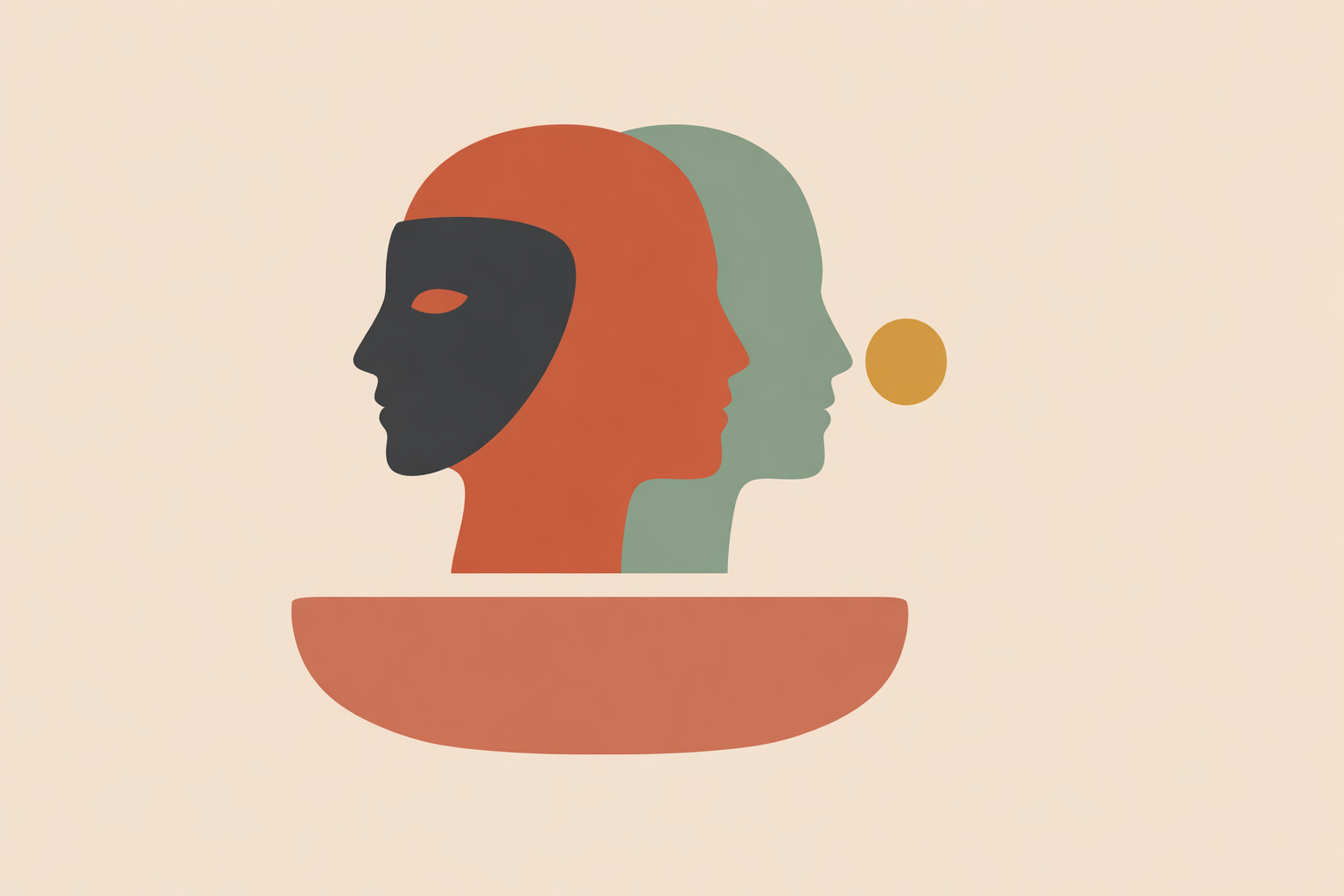
Masking often develops in environments that don’t make enough room for cognitive diversity. In autism research, masking is discussed as appearing “typical” or avoiding exclusion by hiding traits and leaning into socially expected behavior.
It doesn’t arise in a vacuum. Many autistic adults connect masking with fear of stigma, unspoken social rules, and pressure to fit ableist norms. Coaching spaces can unintentionally recreate those same pressures through expectations around eye contact, stillness, rapid processing, or “polished” communication.
That’s why a client may arrive highly skilled at presenting as fine. They can look articulate and engaged while privately managing sensory strain, delayed processing, or a rising need to self-regulate. If a practitioner reads only the polished surface, masking can be mistaken for ease.
Seen clearly, masking is often a form of self-protection. It can help someone secure safety, income, belonging, or access in rigid settings. The cost tends to rise when it becomes the price of entry everywhere, including in spaces meant to offer support.
What Masking Involves and Why It Is So Tiring
Masking isn’t one behavior. It’s a whole layer of self-monitoring that can include suppressing stimming, forcing eye contact, mimicking social cues, rehearsing dialogue, adjusting tone, or hiding sensory overwhelm and shutdown signals. Common examples include forcing eye contact, scripting conversation, and stifling natural repetitive movement.
Underneath is constant self-surveillance: tracking face, voice, posture, timing, word choice, and other people’s reactions all at once. Autistic adults describe masking as effortful and exhausting because this level of monitoring consumes a great deal of energy.
Over time, heavy masking is associated with reduced self-acceptance, isolation, and self-alienation. Someone can become exceptionally skilled at fitting in while feeling less and less like themselves.
Many practitioners also notice an executive function tax. When energy goes into “performing acceptably,” there’s less available for planning, working memory, flexible thinking, and regulation. Some standard coaching tools then feel strangely ineffective unless they’re adapted. For clients with alexithymia, being asked to name emotions on demand can add pressure, making socially acceptable answers feel safer than honest ones.
A practical check-in is: “If your mask level today was on a scale from 0 to 10, where was it for most of this session?” It often turns an invisible workload into something you can work with together.
How Masking Can Look Fine in Session but Cost a Lot Afterward
Masking can create a misleading picture in real time. A client may appear smooth and capable during the session, then feel the impact later. Autistic adults describe camouflaging as chronic depletion that can involve reduced coping capacity, heightened sensitivity, and a heavy recovery cost.
The aftermath often worsens when natural regulation is inhibited for long stretches. Extended masking has been linked with poor physical health and burnout. In coaching terms, a productive-looking hour can be surprisingly expensive.
So the metric of success needs to change. Don’t only ask whether the client looked engaged. Ask what it cost: did they leave clearer and steadier, or depleted from holding themselves together?
When Masking Helps and When It Starts to Harm
Masking isn’t always harmful. Sometimes it’s strategic and values-aligned, used to navigate a job interview, a family event, or another setting where safety and access matter.
The cost rises when masking becomes chronic and compulsory. Research suggests camouflaging across settings is common across contexts, and higher camouflaging is linked with worse mental health outcomes.
Practitioners often see the same pattern in autistic burnout. Prolonged masking is increasingly understood as linked to autistic burnout, especially when someone has little autonomy and no real chance to recover. Burnout here is a broader erosion of capacity, not ordinary tiredness.
Context still shapes outcomes: support, choice, stigma, and psychological safety matter. A useful coaching question becomes, “Where is masking protecting you, and where is it eroding you?”
That distinction helps clients move from unconscious overperformance toward deliberate decision-making. Masking may still happen, but with clearer boundaries and planned recovery.
How Coaching Can Accidentally Reinforce Masking
Many coaching habits are well-intended yet still raise masking pressure, especially when performance gets rewarded more than regulation.
Common examples include:
- equating eye contact, stillness, and quick verbal processing with engagement
- using rigid social scripts without checking whether the client actually wants them
- assuming a polished session means the client needs less support
- pushing emotional labeling before the client has enough time or language to locate their internal state
Autistic adults report that extensive camouflaging can create unreal expectations from others, which can obscure how much support is still needed. When the client looks “fine,” their effort can disappear from view.
High camouflaging also correlates with burnout-exhaustion and depressive symptoms. So if a client consistently crashes afterward, the issue may not be resistance or poor follow-through. The session itself may be demanding too much performance.
For clients who struggle to identify feelings in words, intensive introspection on demand can also increase pressure to invent an acceptable answer. It often works better to widen the channel: visual scales, body-based check-ins, sensory language, pauses, typed responses, shared notes, and “I don’t know yet” as a valid response.
Designing Lower-Mask Coaching Sessions
The most effective shift is often environmental. Change the container before trying to change the person.
Lower-mask coaching spaces tend to include predictable structure, sensory consideration, flexible communication, and explicit permission for clients to regulate in their own way. Small design choices can dramatically reduce how much energy a client spends on self-monitoring.
Useful design choices include:
- camera optional rather than assumed
- no expectation of eye contact
- permission to stim, stretch, stand, pace, or rock
- short agendas shared in advance
- slower pacing and more processing time
- multiple response channels such as voice, chat, silence, visuals, or shared notes
Multimodal support can be especially helpful in neurodiversity coaching. Some clients think more clearly with a visual map, a brief written summary, or a color-coded sequence than through spoken reflection alone. Others stay present through movement, rhythmic input, or sensory grounding.
Bottom-up regulation can fit naturally into coaching when it’s invitational rather than prescriptive. A practitioner might offer a short movement break, a gentle extended exhale, or a grounding prompt focused on neutral sensation. Traditional practices such as rhythm, breath, swaying, chanting, prayer beads, or quiet ritual can also be supportive when used with cultural respect and without appropriation.
The tone matters as much as the tool. “Here are three options; what feels kindest to your system right now?” usually supports more autonomy than “Try this now.” Over time, choice-based coaching helps clients shift from performing for the session toward participating in it.
Mapping Masking, Energy, and Needs
Once a session feels safer, the next step is making the hidden workload visible. Mapping helps clients notice where masking rises, what it protects, and what it costs.
A simple weekly review can include:
- where masking spikes
- which environments feel easiest or hardest
- what the masking seems to secure, such as income, belonging, or conflict-avoidance
- what recovery is needed afterward
It also helps to map core needs across several domains:
- sensory: light, sound, temperature, movement, texture
- cognitive: pace, chunking, visuals, clear sequencing
- relational: consent, directness, predictability, room to opt out
- emotional: gentleness, validation, solitude, reassurance, time
From there, activity–energy mapping makes pacing realistic. A person can identify tasks that are high-mask and draining, then pair them with restorative practices or lower-demand time. This kind of energy accounting respects the reality that masking uses capacity even when others can’t see it.
Visual planning tools can reduce mental juggling when executive resources are already under pressure. A simple board with “Today,” “In Progress,” and “Parked” can help. A brief tracker for mask level, energy, and sensory load can also reveal patterns that would otherwise stay vague.
Supporting Unmasking Carefully and Within Scope
Unmasking is usually gradual and selective, shaped by context. People often begin by dropping specific strategies in safer environments: more authentic communication, more visible regulation, or clearer boundaries around sensory and social needs.
For many autistic adults, this process can feel relieving and vulnerable at the same time. It can bring self-compassion and authenticity, while also increasing exposure to misunderstanding in environments that remain unsupportive. Paced, risk-aware experimentation tends to serve clients better than all-or-nothing advice.
In coaching, that can look like small, reversible experiments:
- keeping the camera off for part of a meeting
- allowing visible stimming in one trusted setting
- asking for an agenda in advance
- switching one conversation from video to audio or walking format
- using more direct language instead of rehearsed social cushioning
Sorting environments into green, yellow, and red zones can keep the work grounded. Green spaces are broadly safe for more visible authenticity. Yellow spaces are mixed and need preparation. Red spaces carry enough risk that masking may still be a protective choice.
Scope matters here. Coaching can support awareness, self-advocacy, energy budgeting, pacing, and environmental redesign. If unmasking brings up overwhelming trauma material or persistent distress, that signals a need for support outside coaching scope. Naming that boundary clearly helps keep the work ethical and non-coercive.
Conclusion: A More Respectful Coaching Stance
The central shift is straightforward: treat masking as protection before treating it as a problem. When practitioners honor the intelligence behind it, lower the load inside sessions, and support real choice about when and how it happens, coaching becomes more humane and more useful.
That means believing clients when they describe the cost of appearing fine. It means designing sessions that are flexible, sensory-considerate, and multimodal. It also means helping clients map where masking supports safety, where it drains identity and capacity, and what recovery or boundary changes are needed.
Evidence can guide this work without overshadowing lived experience. Higher stigma is associated with poorer wellbeing, and camouflaging is linked to depression and burnout. Traditional knowledge adds an additional layer of confidence here: across many cultures, wellbeing improves when people are given steady rhythm, permission to regulate, clear roles, and respectful community support.
For many coaches, this is an evolution away from polishing behavior and toward creating conditions where people can participate with less strain. The main caution is practical: unmasking works best when it’s paced, consent-led, and matched to real-world safety, with clear boundaries about what coaching can and can’t hold, including in neurodiversity coach training.
Train as a Neurodiversity Coach
Build safer, lower-mask sessions with the Neurodiversity Coach Certification.
Explore Neurodiversity Coach Certification →