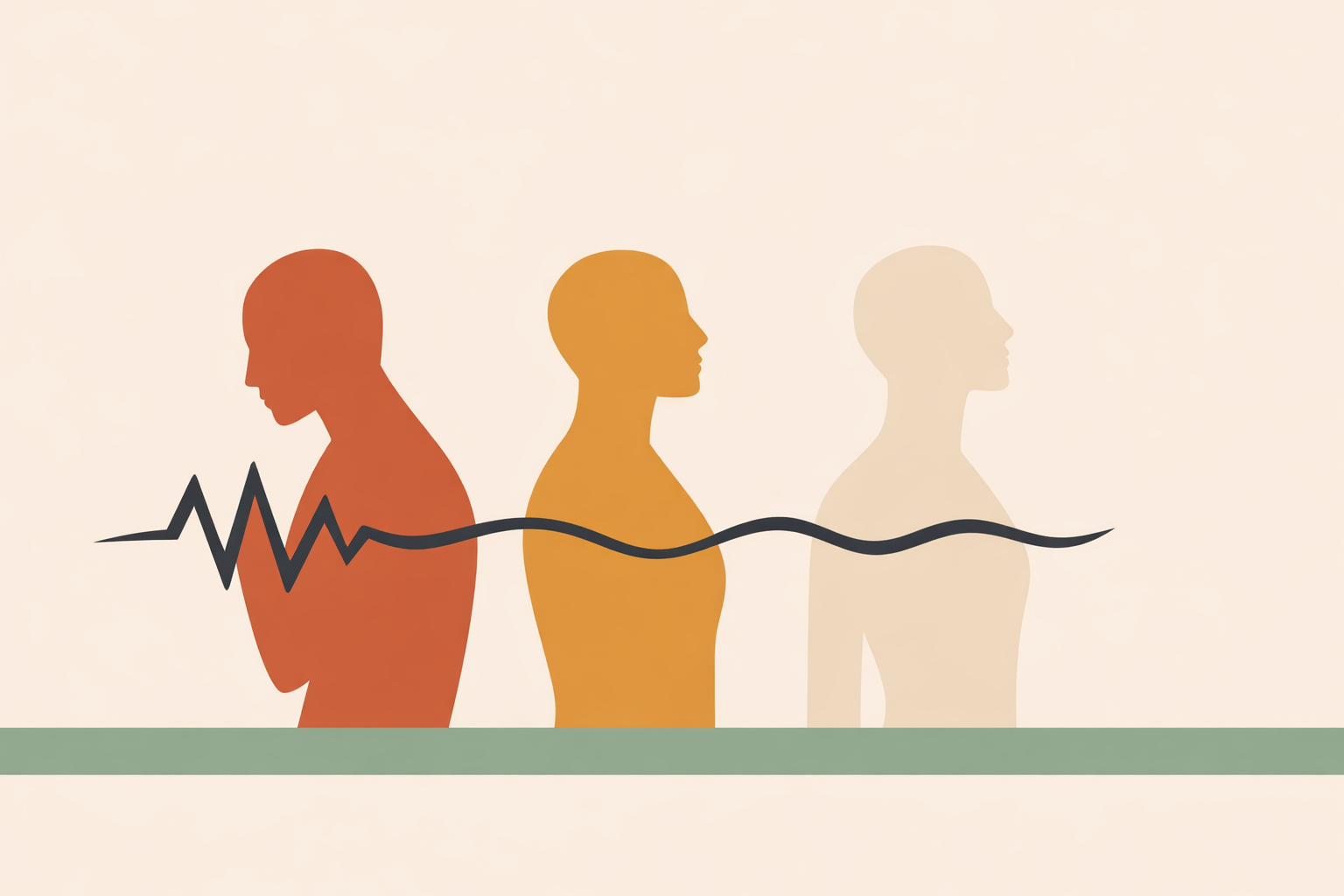
Sessions can stall when a person’s autonomic state isn’t ready for reflection, connection, or change. When someone is highly mobilized, clear thinking often narrows. When they’re shut down, curiosity and choice can feel out of reach.
Online, these shifts are easier to spot: breath gets shallow, posture collapses, and even good questions can land flat. In those moments, more talking rarely helps.
What tends to help is simpler—small, coachable regulation tools that work in the moment, match the person’s capacity, and fit real life. The aim isn’t permanent calm; it’s flexibility, steadiness, and more options.
In practice, these tools usually fall into three families: breath and voice, body and sensory input, and the relational container that helps every technique land. Used together, they support state shifts with more skill and less force.
Key Takeaway: The most effective autonomic regulation is built from small, repeatable practices matched to someone’s current state, not forced calm. When breath, movement, voice, and sensory tools are offered with consent inside a steady relational container, people gain more flexibility and choice in real time and over time.
Breath and voice practices for autonomic regulation
Breath and voice are often the quickest access points for shifting state. They’re portable, simple to guide, and easy to revisit between sessions.
Breathing patterns can reflect broader nervous system shifts. Fast, shallow breathing often travels with mobilization, while slower, fuller breathing supports parasympathetic settling. The goal isn’t to force slow breathing—it’s to use breath as a gentle doorway when the body is ready.
Paced breathing, 4–7–8, and the physiological sigh
Start with what’s easy enough to succeed. Many practitioners use a steady rhythm of about 5–7 breaths per minute to build a calm-but-alert baseline over time—supportive, not effortful.
For transitions, 4–7–8 breathing can work like a soft reset: inhale for 4, pause for 7, exhale for 8, then return to natural breathing. It can be especially useful before a difficult conversation, between appointments, or after a stressful exchange. What matters most is repeatability, not perfection.
When the system spikes sharply, the physiological sigh is often easier than a longer practice. Invite one full inhale, a second small sip of air, then a long unforced exhale—once or twice. Many people feel bracing soften quickly with this pattern.
90-second breath sequence
- Notice the current breath without changing it.
- Take one physiological sigh.
- Rest for one natural breath.
- Try two gentle 4–7–8 cycles, or skip the hold if that feels better.
- Finish with three easy rounds of inhale 4, exhale 6.
If dizziness, tingling, urgency, or agitation shows up, it’s likely too much for that moment. Shorten the practice, remove the hold, or shift attention back to the room. Breathwork should increase choice, not override the body’s signals.
As I often tell clients, “Your body is doing something intelligent.” That simple frame keeps the work respectful and collaborative instead of corrective.
Humming and vocal toning as steadying rituals
Across many traditions, song, mantra, and sounding have been used to steady attention, support connection, and soften inner pressure. Shared music and vocal rhythm are also linked with social closeness, which helps explain why small vocal rituals can feel so regulating.
Humming is one of the easiest starting points. A low, comfortable hum on the exhale gives vibration, rhythm, and sound all at once—often more accessible than breath alone.
In the words of Brianna Paruolo, “The vagus nerve… is constantly signaling which state you’re in—whether you can connect, whether you need to mobilize, or whether you shut down. What makes this important is that it explains why your body reacts before your thoughts do.” This is exactly why bottom-up tools can shift state before insight catches up.
Simple vocal rituals
- Morning hum for 2–3 minutes while tea or coffee is brewing.
- Three long “mmm” or “vvv” sounds between tasks.
- A soft repeated word or tone in the evening for five minutes.
Keep it gentle. If the throat tightens, emotion rises strongly, or someone feels exposed, pause and orient to the room. Vocal practices work best when they feel invitational, not performative.
Body-based tools when breath is not the best first step
When the system is highly charged or heavily collapsed, body-first tools are often the most accessible starting point. Short rhythmic movement and simple sensory input can restore presence by giving the person something concrete to do.
Practitioners learn to watch for patterns: tight jaw, lifted shoulders, restless hands, and quick movements often track sympathetic charge. Slumped posture, slowed movement, and a heavy gaze can suggest shutdown. These aren’t labels—they’re practical cues for what might help next.
Gentle discharge for tension and hyper-alertness
When someone feels wired, tiny repeatable discharges often work better than long reflective exercises. Progressive muscle relaxation is one option: gently tense an area for a few seconds, then release for longer. Think of it like teaching the body the contrast between “on” and “less on.”
Bilateral tapping can also help. Cross the arms and alternate light taps on the upper arms, or tap left and right thighs or feet. The rhythm often organizes scattered energy and gives attention a simple anchor.
Movement snacks work in the same spirit—brief bursts that can be integrated into daily routine without turning regulation into a new project. A brisk walk to the kitchen, a short stair climb, or one song of movement can reset attention and circulation.
Two-minute discharge circuit
- Shoulder rolls for 10–15 seconds.
- 20 alternating taps on the upper arms or thighs.
- 30 seconds of marching in place with soft knees.
- One physiological sigh.
- One long humming exhale.
When heaviness and numbness are more prominent than tension, the body often needs a gentle upshift. Wall push-ups, standing and looking out a window, a supported chest opening, or a short walk across the room can bring back tone and curiosity without overwhelm.
Rhythm, nature, and sensory support
Rhythm is one of our oldest regulators. Rocking, drumming, walking, chanting, and repeated movement patterns can organize experience when words aren’t enough. Rhythm also helps synchronize movement, which is one reason it can feel so steadying.
Nature contact belongs here too. Time outdoors is consistently associated with lower perceived stress and greater vitality. It can be as simple as stepping outside between sessions, feeling air on the skin, noticing tree movement, or orienting to sounds beyond the room.
Movement and rhythm together are also linked with resilience and coordination. Put simply, a short walk, gentle rocking, or a steady drum track can sometimes shift more than another round of discussion.
Cold input can help some people regulate, but it should be approached gently and never as a test of will. Cool water on the hands or face, or a brief cool finish in the shower, is often enough. People with cardiovascular concerns or strong sensitivity to bodily intensity need extra care here.
“There is no one way to heal. Find what speaks to you and works for you.”
That reminder from Deb Dana fits perfectly. Regulation isn’t about forcing everyone into the same method—it’s about finding tools that are usable, respectful, and repeatable.
Nature-and-rhythm micro-practices
- Three minutes outside noticing five shapes, three sounds, and one scent.
- Gentle rocking with a long humming exhale.
- Hands in cool water for 20–30 seconds, then pause and notice sensation.
- A 60–80 bpm rhythm track while walking or swaying.
The relational container: presence, pacing, and predictability
Tools land best inside steady relationships and clear environments. Presence, pacing, and predictability act as cues that help the body settle enough to engage.
A supportive relational context encourages social engagement. In real terms, tone of voice, eye contact, pacing, and simple structure matter as much as any technique.
It also helps to frame ventral, sympathetic, and dorsal patterns as adaptive—not moral. When people stop treating activation or shutdown as personal failure, shame tends to soften, and curiosity returns. Here’s why that matters: curiosity creates options.
Co-regulation and state mapping
“We don’t solve problems when we’re frightened. We solve problems when we’re safe with others.”
Stephen Porges’ words capture what experienced practitioners see every day: steady human presence can do a great deal of the regulation work before any formal exercise begins.
Your tone, eye contact, and pacing act as signals of safety—slow enough to be digestible, warm enough to feel human, and clear enough to reduce uncertainty.
One of the most useful long-term practices is state mapping. At the start of a session, invite a person to name their current state, rate intensity from 0–10, and note context plus body signals. Over time, patterns become obvious: what pulls them out of steadiness, what brings them back, and what early signs they can catch sooner next time.
In groups and online spaces, predictable structure matters even more. Clear agreements, warm facilitation, and unhurried transitions support stability—especially on video, where people benefit from knowing what’s coming next and from avoiding common polyvagal pitfalls.
Relational checklist
- Begin with orienting to the room.
- Invite a simple state check-in.
- Ask consent before suggesting breath, movement, or sounding.
- Name transitions clearly.
- End by reflecting what helped and what did not.
Orienting, micro check-ins, and light tracking
Orienting can shift a session quickly. Let the eyes move around the room—find the far wall, something stable, something pleasant, and something in the edges of vision. Essentially, it widens attention and interrupts the narrowing that often comes with dysregulation.
Micro check-ins reinforce the same skill. Ask: What state are you in now? What’s one body cue you notice? What would feel most supportive next—breath, movement, voice, or stillness? Over time, small questions build real state literacy.
For people who enjoy data, wearables and breathing apps can offer helpful trends. The key is to hold them lightly: look for patterns, not scores, and never use numbers to override lived experience.
Above all, this work needs consent, cultural respect, and clean scope. Song, rhythm, breath, and nature carry deep roots across many traditions; use them with care, acknowledgment, and humility.
Three micro check-ins
- “What state word fits right now?”
- “What is one body signal you notice?”
- “What would support you most next: breath, movement, voice, or pause?”
Bringing it together in everyday practice
A simple sequence often works well: orient for safety, add a little movement if the system feels stuck or collapsed, then use breath or voice to consolidate the shift. This progression respects the body’s timing and avoids asking for too much too soon.
From there, daily practice stays small: two minutes of humming in the morning, a short walk between calls, one orienting pause before a difficult conversation. Regulation grows through repetition, and regular practice can build resilience over time.
Some days call for an upshift: more tone, more light, more movement. Other days call for settling: longer exhales, less pressure, softer pacing. The goal isn’t to be calm all the time—it’s to have options.
Traditional wisdom has long valued song, rhythm, breath, nature, and steady companionship. Modern language around autonomic state simply gives another way to describe what many practitioners have observed for generations: people do better when regulation is relational, embodied, and practiced in small repeated ways, including simple vagus nerve regulation techniques.
Go gently. Let the body set the pace. Celebrate small wins. With time, these ordinary practices become real capacity.
Train in Polyvagal Therapy
Deepen these regulation strategies with practical, ethical tools in the Polyvagal Therapy Certification.
Explore Polyvagal Therapy →