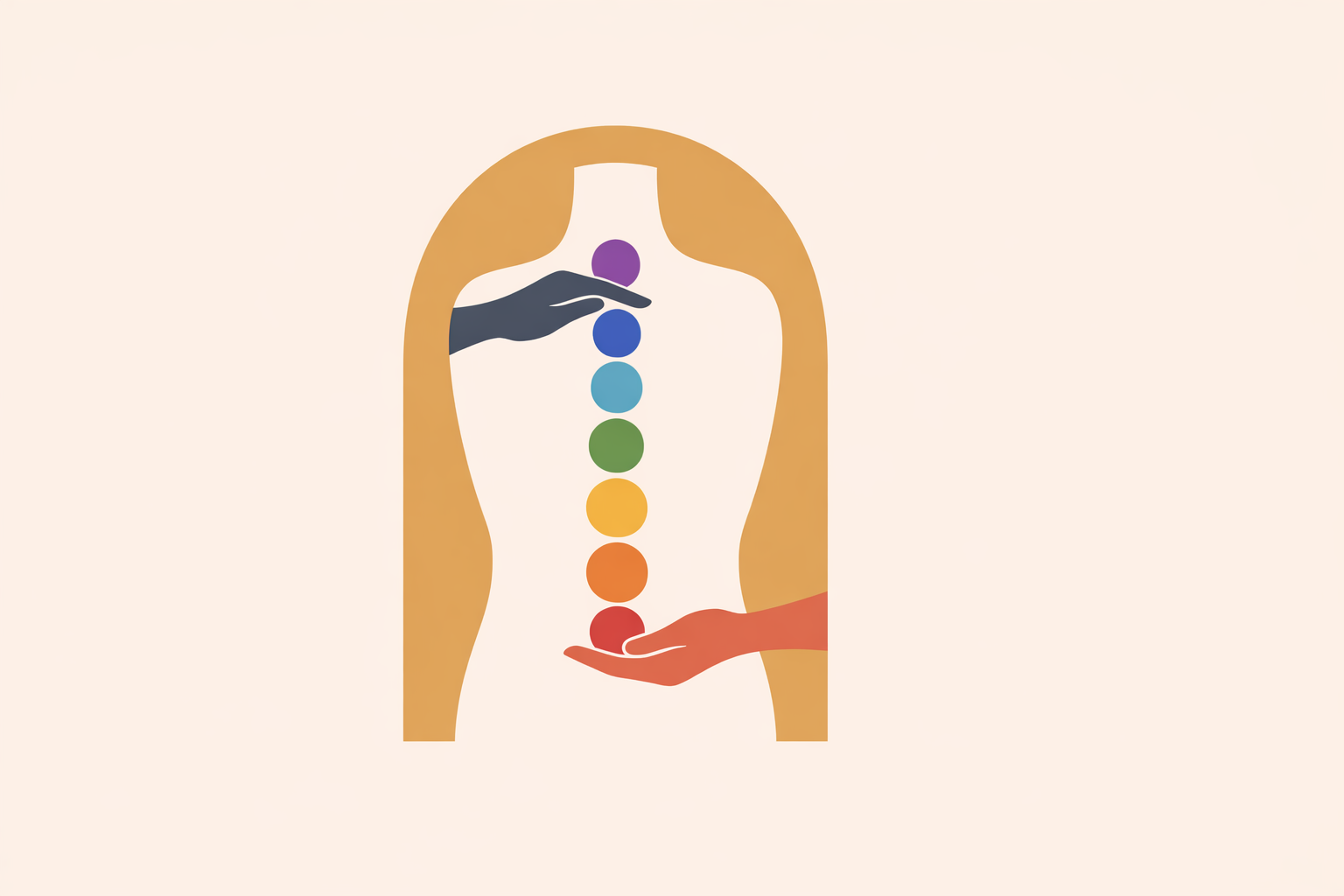
In yoga, coaching, and somatic spaces, practitioners hear the phrase “My heart chakra is blocked” all the time. The least helpful response is usually either correction or certainty. Correction can dismiss lived experience, while rigid interpretation can turn something personal into a cliché. Translation helps more: taking symbolic language and bringing it back to sensations, emotions, context, and small choices someone can work with.
Chakra language is most useful when held lightly. It offers a shared map for reflection without needing to become literal anatomy or absolute truth. Used well, it supports self-inquiry, grounded action, and respect for both the tradition’s roots and the client’s own meaning-making.
Key Takeaway: “Blocked chakra” language works best as metaphor translated into lived experience. A respectful, practical approach starts by understanding the diverse roots of chakra teachings, then turns “blocked” into concrete sensations, emotions, patterns, and needs. From there, you can work with common themes across the seven centers, stay alert to moments when spiritual framing is not appropriate, and keep the process ethical, consent-led, and grounded in everyday life.
Why people talk about blocked chakras
People reach for chakra language because it gives shape to something that’s hard to name. “My throat is blocked” or “my root feels off” can be shorthand for fear, disconnection, overstimulation, grief, uncertainty, or a loss of direction. The phrase is rarely the final insight; it’s often the doorway into one.
That doorway deserves cultural respect. Chakra teachings emerged in South Asian contexts, and they have never been a single, uniform doctrine. Even the familiar seven-chakra system is better understood as a synthesis across lineages than one fixed canon.
In modern practice, “blocked chakra” is often shorthand for something like excess, depletion, or loss of rhythm. Framing it that way invites curiosity and care rather than pronouncements.
Chakras as symbolic maps, not fixed anatomy
A grounded approach treats chakras as symbolic centers of awareness. This keeps the work practical without asking anyone to force belief, and it keeps the scope clear while still honoring tradition.
In sessions, stay close to lived experience. If someone says, “My sacral chakra is blocked,” ask, “How do you notice that in daily life?” That one question moves the conversation from labels to felt reality.
Often what comes next is immediately workable: numbness, avoidance, shame, conflict, exhaustion, or a sense that something meaningful has gone flat. Now the map has traction.
How to translate “blocked” into something workable
Many chakra-centered sessions hinge on the same skill: translating metaphor into experience. “Blocked” usually points to a blend of sensations, emotions, habits, pressures, and unmet needs.
Someone might say, “My heart is blocked,” and with gentle unpacking it becomes: tightness in the chest at night, grief after a breakup, scrolling when lonely, and a longing for gentler connection. At that point, the work has shape and direction.
This is also why chakra language remains common in coaching conversations: it gives people a way to begin before they have more precise words.
Questions that make chakra language practical
Short, grounded questions bring the metaphor back into the body and ordinary life:
- What does “blocked” feel like for you right now?
- Where do you notice it most clearly?
- What emotions seem to travel with it?
- When does it intensify?
- What softens it, even slightly?
- If this felt a little more open this week, what would be different in real life?
These questions honor the person’s chosen language without letting the session drift into vague spiritual storytelling. The aim is not to decode someone from the outside; it’s to help them hear themselves more clearly.
A simple mini-process can be enough. Invite them to pause, breathe naturally, and name three things: one sensation, one emotion, and one need. “Root: jittery legs, anxious, need routine” already points toward a useful next step.
Common blocked chakra signs and what they often point to
Certain patterns do recur. Treat them as themes many practitioners recognize, not fixed rules. They work best as starting points for exploration.
Root, sacral, and solar plexus themes
- Root: concerns often show up as insecurity, financial stress, frequent moves, disrupted routines, or a persistent sense of not being settled. The practical need is usually steadiness: sleep rhythm, nourishment, structure, budgeting, or a more reliable daily pace.
- Sacral: this may come through as low creativity, shame around pleasure, emotional flatness, or difficulty enjoying anything without guilt. Support is often sensory and kind: music, rest, beauty, movement, nourishment, play, permission.
- Solar plexus: common signs include indecision, fear of judgment, people-pleasing, and the sense of giving away one’s voice or agency. Helpful experiments often center on choice-making, boundaries, follow-through, and tolerating the discomfort of being seen.
These themes usually land in everyday life. A person with “root issues” may need a more dependable routine. A person naming a “solar plexus block” may need to practice one small decision without outsourcing it.
Heart, throat, third eye, and crown themes
- Heart: guardedness, grief, resentment, loneliness, or difficulty receiving care can all be voiced through heart-chakra language. The work is often about tenderness, discernment, and relational honesty rather than forced openness.
- Throat: this commonly appears as difficulty speaking up, fear of conflict, over-explaining, swallowing feelings, or editing oneself to stay acceptable. The next step is often concrete: naming a preference, practicing a boundary, or saying less but more truthfully.
- Third eye: overthinking, confusion, mental fog, and cycling through too many interpretations are frequent themes. Support often means reducing noise, slowing input, and returning to one clear next step.
- Crown: people may describe feeling spiritually adrift, cut off from meaning, or disconnected from belonging. In practice, this often asks for rhythm, reflection, humility, and simple ritual rather than grand explanation.
Across all centers, movement, breath, journaling, reflection, and sensory grounding can support integration. The key is choosing one small practice the person can sustain, not matching a center with something dramatic.
Helpful practices for chakra-based coaching
The most effective practices are usually modest. They connect symbol to behavior without turning the symbol into a verdict.
- For root themes: morning stretches, a simple meal plan, tidying one corner of a room, or a weekly money check-in.
- For sacral themes: free movement to two songs, sketching, cooking something pleasurable, or time with no productive goal.
- For solar plexus themes: one deliberate choice each day, a short boundary script, or finishing one postponed task.
- For heart themes: writing an appreciation message, sitting with grief without rushing it, or noticing where support is already present.
- For throat themes: practicing two clear sentences aloud, asking directly for what is needed, or reducing apologetic language.
- For third-eye themes: single-focus walks, reduced screen input, or journaling one question instead of ten.
- For crown themes: quiet reflection, lighting a candle before journaling, contemplation in nature, or reconnecting with a values-based ritual.
Fit matters most. Choose something clear, proportionate, and doable. If it sounds impressive but won’t happen in real life, it’s not the right practice.
When not to spiritualise blocked chakra signs
Not every difficult experience should be framed through chakras. Sometimes the most ethical move is to pause the symbolic lens and encourage broader support.
If someone describes sudden or intense physical changes, severe exhaustion, fainting, major sleep disruption, difficult breathing, or dramatic shifts in functioning, avoid assigning spiritual meaning. Stay grounded, name your scope clearly, and encourage them to seek appropriate support alongside your work together.
The same principle applies when someone is highly overwhelmed, disoriented, or unable to stay present in the conversation. In those moments, grounding comes before interpretation.
Chakra meditation safety and intensity
Intensity is not proof of depth. In vulnerable people, unguided or forceful meditation practices have been linked to dissociation and, in some reports, psychotic experiences. This does not mean contemplative practice is inherently harmful. It means pacing, context, and discernment matter.
If a practice pushes someone beyond capacity, stop and simplify. Return attention to ordinary anchors: the room, the feet, natural breathing, a glass of water, or the sound of your voice. The aim is steadiness and choice.
A useful rule: if a practice increases confusion, fear, disconnection, or compulsion, it’s not supportive in that moment. Gentler pacing is often the skilled move.
Ethical red flags in chakra coaching
The biggest risks in this space usually come less from the symbols themselves and more from power dynamics. Problems begin when the practitioner becomes the authority over someone else’s inner truth.
Be cautious of any approach that says, in effect:
- Only I can clear this for you.
- Your discomfort proves you need more sessions.
- You must follow my interpretation of your energy.
- You should keep this process secret from other sources of support.
- You need expensive add-ons to move forward.
These patterns create dependency, not empowerment. Ethical work stays transparent and easy to pause, and it respects a person’s pace, their no, and their right to make meaning for themselves.
Consent, touch, and boundaries
Consent should be explicit, ongoing, and easy to withdraw. Chakra work uses body-based symbolism, and that can make assumptions feel deceptively natural unless boundaries are clear.
Offer real options: hands-off, near-body, or no energetic practice at all. Ask before every shift. Keep language plain. Avoid sexualised framing, especially around sacral-center themes, and never imply that intimacy or touch is necessary for release, healing, or progress.
Boundaries are not a barrier to depth. They make depth safe enough to explore.
Designing calmer, consent-led chakra sessions
A steady session structure keeps chakra work respectful and useful:
- Start with the person’s aim: What would feel supportive by the end of the session?
- Clarify the frame: chakra language is a reflective map, not a fixed verdict.
- Translate the metaphor: explore sensations, emotions, patterns, needs, and context.
- Choose one small practice: keep it proportionate and grounded in ordinary life.
- Close with integration: ask what they noticed, what felt supportive, and what they want to carry into the week.
This structure keeps the map in service of the person. The symbol can open the conversation, while lived experience stays central.
Listening beneath the metaphor
At its best, chakra work is about listening closely enough that a symbolic phrase becomes a doorway to self-awareness, dignity, and change.
“Blocked” is often a first draft, not a conclusion. Beneath it may be a need for steadiness, voice, grief, rest, courage, pleasure, meaning, or choice. Meet that with cultural respect, clear boundaries, and practical support, and the work stays grounded and humane.
That’s what makes chakra language valuable in real practice: it helps people notice what’s asking for attention and respond with small, doable steps.
Explore Chakra Energy Healing
Deepen your practical approach with the Chakra Energy Healing Certification and learn ethical, grounded chakra session skills.
Explore Chakra Certification →