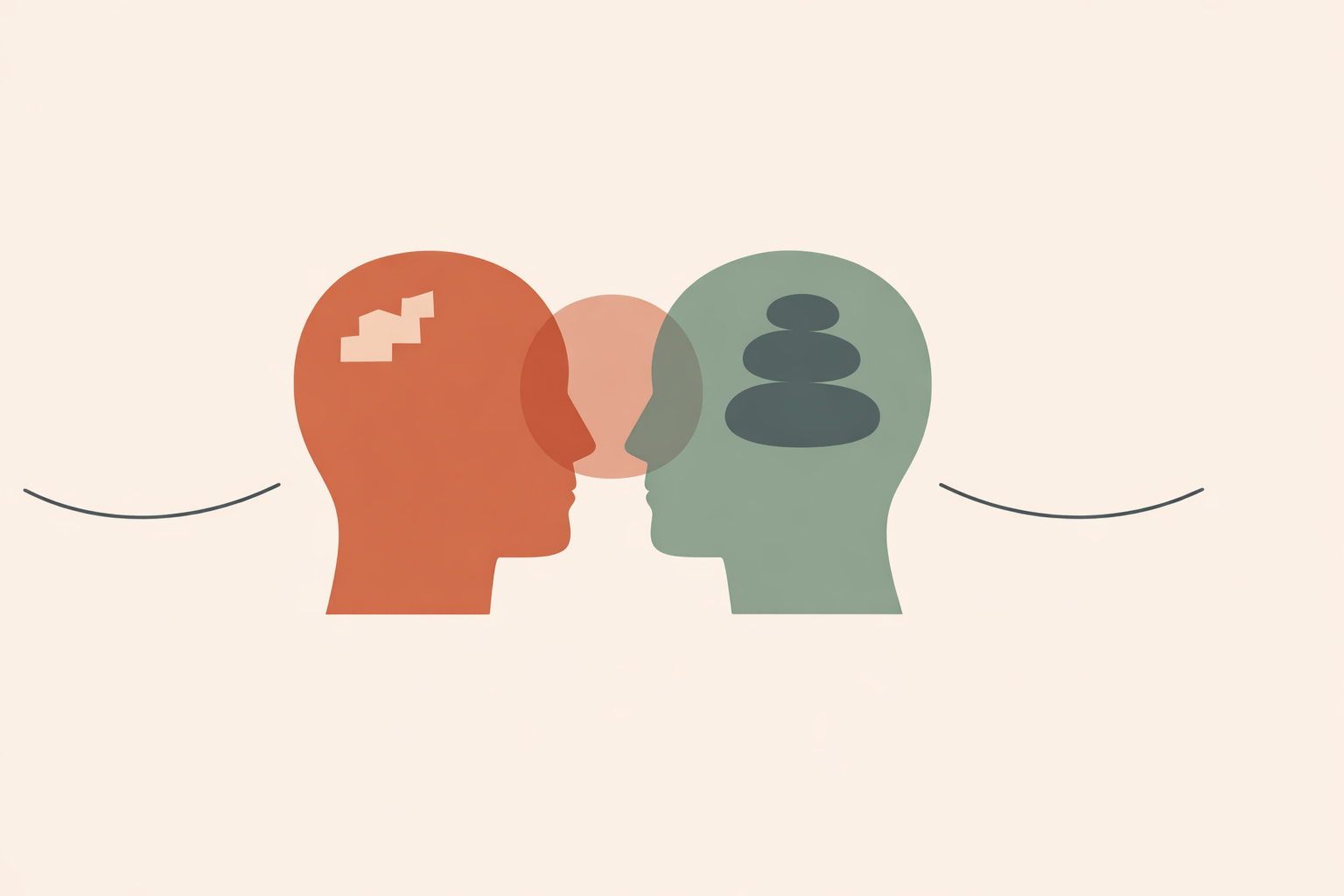
Coaches who support people with auditory processing differences often see the same pattern: a client does well in a quiet one-to-one, then loses names and next steps in a fast, noisy meeting, and leaves drained or self-critical. The usual response is to push harder on attention or “listening harder,” yet that misses the real question: why do some settings feel workable while others feel punishing?
A better lens is load and capacity. Listening changes depending on the person, the soundscape, the pace of communication, and the recovery time available. From there, support becomes practical: spot overload early, adjust the environment before demanding more effort, use body-based supports to regain steadiness, and build daily rhythms that respect fatigue instead of fighting it.
Key Takeaway: Calmer listening comes from reducing listening load and building capacity across the ear–brain–environment, not from forcing attention. The article first reframes misses as load, not lack, to change how support is chosen; it then redefines calm as enough capacity to participate and offers polyvagal-informed language for state awareness. You’ll learn to spot early overload cues and pair them with tiered actions; lighten environments with signal-to-noise and universal design; add optional somatic and culturally rooted supports; shape daily rhythms of effort, breaks, and recovery; and convert insight into advocacy, scripts, and shared agreements. It closes with a practical prepare–reduce–recover sequence and scope-safe referral guidance you can use immediately.
Redefine Calm as Capacity to Participate
Calm is often misunderstood as silence, stillness, or compliance. With auditory processing challenges, calm is better understood as enough steadiness to participate.
A child who looks still during a noisy group activity may be zoning out because the listening demand has already exceeded what they can manage. Adults can do the same in meetings: they go quiet, nod along, and pay for it later with exhaustion.
This is where polyvagal-informed language can be useful in coaching. Terms like safety and connection, mobilization, and shutdown can help clients notice state shifts and choose supports that bring them back toward steadiness. Used well, the language stays descriptive. It gives people a map, not a label.
In real life, “calm enough to participate” might look like:
- edge seating rather than sitting in the middle of a noisy group
- captions on during meetings
- slower pacing and clearer turn-taking
- contributing by chat or shared document instead of rapid speech
- taking a short pause before trying to continue
One question keeps this grounded and workable: What would “enough to participate” look like in this setting?
Notice Overload Cues Early
The earlier someone notices overload, the easier it is to respond before frustration, conflict, or shutdown take over.
Early cues often include jaw tension, shallow breathing, irritability, mental fog, racing thoughts, and an urge to escape. On the outside, you might see delayed responses, repeated “What?” questions, looking away, fidgeting, missed details, or abrupt withdrawal.
These aren’t personal failings. They’re signs the listening demand is climbing. Research linking challenging speech conditions with listening fatigue helps explain why someone can look present while their capacity is dropping.
A simple cue map makes this easier to use day to day:
- Early: jaw tight, breath held, missing occasional words
- Mid: asking for repeats often, tension rising, focus slipping
- Late: cannot follow multi-step speech, shutting down, snapping, or leaving
Pair each stage with one response:
- Early: move closer to the speaker
- Mid: ask for slower pacing or rephrasing
- Late: pause and switch to written follow-up
This planning turns self-awareness into protection. It also helps clients act while they still have choices.
Lighten the Environment Before Asking for More Effort
When listening is hard, start with the environment. Improving signal-to-noise is one of the most practical ways to reduce strain.
Small adjustments can change everything:
- sitting closer to the main speaker
- avoiding fans, corridors, doors, kitchens, and machinery
- choosing smaller rooms or spaces with softer surfaces
- using captions, agendas, and written summaries
- asking speakers to face the listener and secure attention first
- slowing the pace and breaking information into shorter chunks
- reinforcing key points with visuals
Universal design matters here too. Norms like one speaker at a time, predictable agendas, and multiple ways to contribute reduce the burden on one person to keep explaining their needs. The room becomes easier for everyone to use.
In schools, this may look like thoughtful seating, reduced background noise, printed supports, and a simple hand signal for “slower,” all common in APD support in class. In work settings, it may mean captions on by default, fewer side conversations, and post-meeting notes shared in writing.
Helping the space do more of the work is often far kinder than asking a person to push past strain again and again.
Layer Somatic and Traditional Sensory Supports
Once the environment is more supportive, body-based tools can help restore steadiness during listening demands. These are optional supports that many people find genuinely useful, especially when they’re easy to repeat in everyday settings.
A coaching menu might include:
- feeling both feet on the floor
- softening the jaw and lowering the shoulders
- orienting by slowly looking around the room
- taking a longer exhale
- humming softly
- changing posture or standing briefly
- using a warm drink or a cool cloth as a sensory cue
- choosing a position at the edge of the group if that feels steadier
Across many traditions, rhythm, song or chant, time in nature, tea rituals, and supportive touch have helped people settle and reconnect over generations. When a regulating practice comes from the client’s own lineage, bringing it into a support plan can feel grounding, familiar, and deeply respectful.
This is also where care matters. Traditional practices should never be borrowed casually or stripped from their cultural roots. The aim is to help the client reconnect with what is already supportive and ethical for them.
Often the most effective supports are simple: unclenching the jaw, taking one slower breath, stepping into the hallway for 30 seconds, then returning with a written way to track what matters.
Shape Daily Rhythms of Effort and Recovery
Listening capacity isn’t constant. It rises and falls across the day, which is why planning for effort and recovery changes outcomes.
Many people do best when demanding listening is spread out rather than stacked. Short pauses after noisy or complex listening help capacity stay steadier instead of collapsing later.
Encourage clients to map their energy windows. Patterns often appear quickly: focused listening is easiest in the morning, afternoons suit written tasks, evenings call for lower-demand conversation. Once the pattern is visible, the schedule can reflect it.
A simple rhythm might look like this:
- Morning: important calls, one-to-one conversations, complex listening
- Midday: movement, visual tasks, a quieter meal
- Afternoon: admin, writing, solo work, shorter interactions
- Evening: low-demand conversation, captions on, time to decompress
With children, rhythm can be built into the day through predictable quiet moments after noisy activities, short reset tasks, or transitions that allow the system to settle before the next demand.
Many ancestral rhythms reflect this same ebb and flow: communal meals, pauses in the middle of the day, time outdoors, cycles of work and rest, and recurring moments of reflection or prayer. Clients may find it meaningful to draw on those familiar patterns when building steadier support.
Turn Insight Into Advocacy and Shared Support
Self-awareness helps, but shared agreements make support sustainable. Auditory processing challenges become far more manageable when the people around the client understand how to help.
That can include:
- facing the person before speaking
- keeping to one speaker at a time
- slowing down when the pace becomes too fast
- switching key details into writing
- moving to a quieter space when needed
Short advocacy scripts can make these moments easier:
- “When the room gets loud, I miss names and next steps.”
- “Could we slow down a little?”
- “Can you put that in the chat?”
- “I’m catching part of this. Can we move somewhere quieter?”
For some people, a visual or nonverbal cue works better than speaking up in the moment. A colored card, a hand signal, or a pre-written message on the phone can lower the effort of asking.
When family members, teachers, or managers are involved, clarity around consent matters. Coaching here should stay grounded in the client’s preferences, privacy, and real-life goals. The focus stays on participation and access, not on making someone appear easier to manage.
A Practical Coaching Sequence for Calmer Listening
A clear rhythm often works best: prepare, reduce, recover.
- Prepare: preview vocabulary or agendas, choose supportive seating, decide how to ask for help if needed.
- Reduce: use captions, chunked speech, slower pacing, fewer competing sounds, and clear turn-taking during the activity.
- Recover: follow with a quiet pause, a written recap, and a quick review of what helped.
It also helps to frame support as an experiment. Choose one challenge, make one change, look for one observable outcome, then review. Over time, this leads to fewer missed details, faster recovery, smoother repair moves, and more confidence in asking for what works.
For many clients, steady access to supportive strategies becomes a bridge from overwhelm to participation. That bridge is built through thoughtful environments, respectful pacing, body awareness, and rhythms that honor human limits.
As a final note, good coaching in this area stays collaborative and culturally respectful, and it remains clear about scope. When a client needs specialist assessment or additional support, a well-timed referral is part of ethical practice.
Advance APD Coaching Skills
Apply these load-reduction strategies with confidence in the Auditory Processing Disorder Coach Certification.
Explore the Certification →