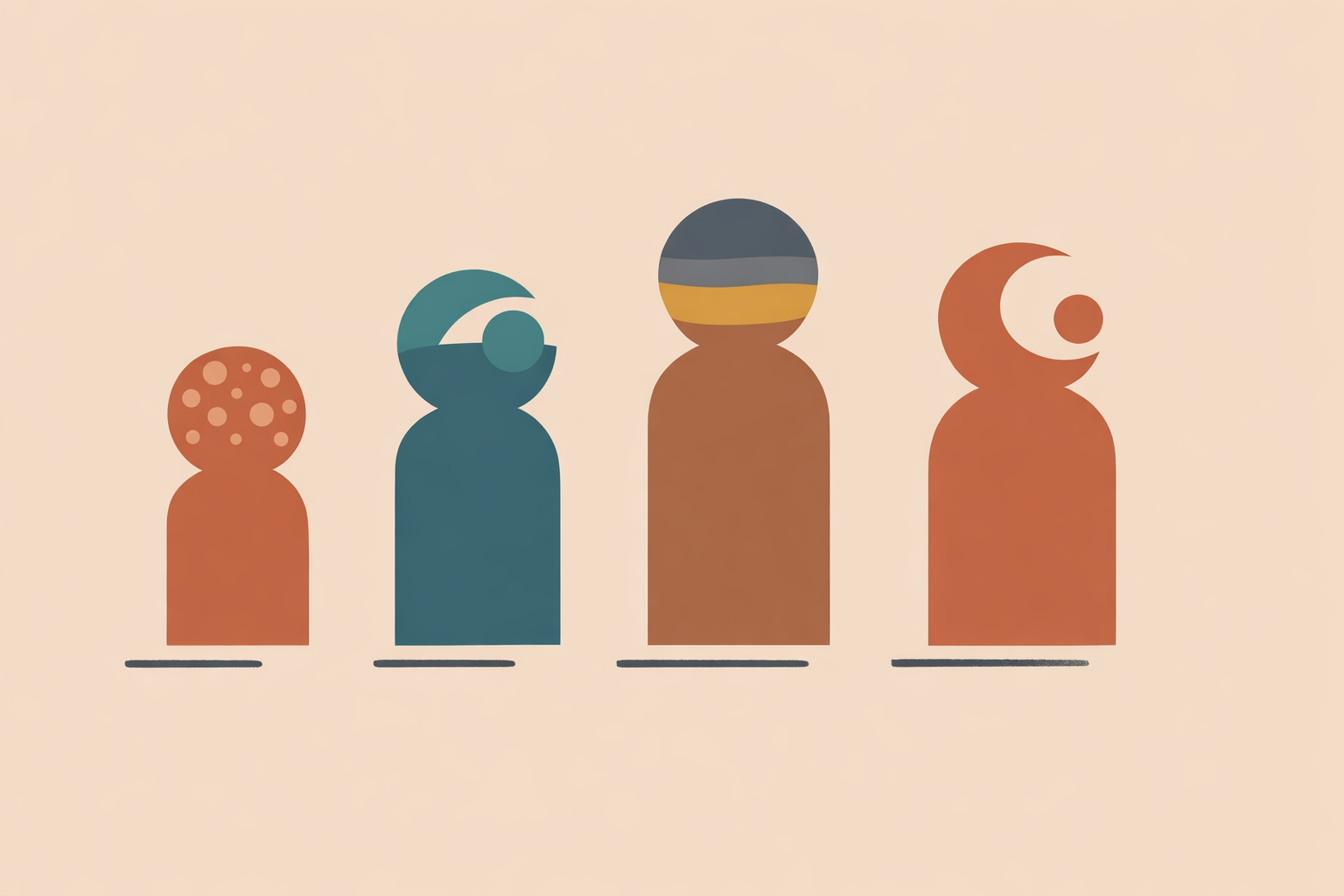
The default promise in our field is tidy and wrong: apply the same “brain hack” to everyone and expect fast, durable change. In practice, the 8-year-old who needs playful structure, the 15-year-old whose attention turns quickly toward peers and rewards, the 34-year-old drowning in notifications, and the 72-year-old who benefits from slower pacing and more movement cannot be supported with a single template. Plans stall not because clients lack willpower, but because pacing, load, and context ignore how the brain changes across a lifetime.
When plans are designed for real plasticity—shaped by age, sleep, stress, meaning, and opportunity—progress becomes steadier. Coaching gets kinder and more realistic.
Key Takeaway: Effective coaching plans assume an adaptive brain that changes across the lifespan and works through networks, not isolated centers. A practical approach is to plan around four lenses—control, salience/emotion, memory/habit, and sensory/action—then adapt rhythm, challenge, and environment for the person’s stage of life. In early years, short playful repetition works best; in adolescence, autonomy and reward matter; in adulthood, load management becomes central; and in later life, pacing, movement, and meaning-rich practice remain powerful supports.
From Brain Regions to Networks: A Practical Map for Coaches
For coaching, it helps to think in networks rather than isolated regions. The brain works through coordinated systems, and distributed systems offer a more useful map than region-by-region oversimplification.
A four-lens model is usually enough:
- Control and planning: goal-setting, inhibition, shifting attention, sequencing.
- Emotion and salience: noticing what feels urgent, meaningful, threatening, or rewarding.
- Memory and habit: encoding, retrieval, repetition, automation.
- Sensory and action: posture, movement, tone, light, sound, and internal bodily cues.
These lenses include familiar structures often linked with specific functions: hippocampus with memory, basal ganglia with habit, amygdala with salience, and thalamus with relay and coordination. In real life, they operate as a team.
People meet the world through ongoing predictions shaped by past experience and present goals. Change the inputs, and the brain often updates what it expects. A calmer setting, a clearer sequence, or a more familiar cue can make effort feel safer and more available.
That is why environment matters. Light, noise, posture, timing, and internal state all influence how guidance lands. When someone is already tense and overloaded, even supportive coaching can register as pressure.
Consider a client who struggles to start a difficult task. Through the salience lens, you notice the task name itself triggers tension. So you shrink the start to two minutes, invite a standing start or small movement, soften the tone, and offer a simple checklist. Pairing the task with a calmer body state and an easier entry point often makes initiation easier over time.
Good coaching shapes conditions so effort becomes more available.
Early Years: Building Focus Through Play, Rhythm, and Safety
In early years, short, rhythmic, play-forward structures usually work best. Children are still building capacities adults rely on, so long explanations and abstract expectations rarely help.
Predictable sequence, movement, repetition, and emotionally safe engagement do more. Traditional child-rearing practices reflect this beautifully: call-and-response stories, hand games, songs, and communal rituals build memory through repetition, language richness, and embodied participation.
In practical terms:
- Keep instructions short and concrete.
- Use pictures, gestures, and visible routines.
- Break tasks into one step at a time.
- Alternate focus with movement.
- Use familiar songs or story patterns when possible.
A simple 30-minute session for a 6-year-old might look like this:
- 2 minutes: greeting ritual with a song or clap pattern.
- 5 minutes: picture card showing today’s mini-goal.
- 10 minutes: play-based practice with one-step cues.
- 5 minutes: retrieval game—repeat the steps from memory.
- 3 minutes: feeling check using faces, colors, or simple words.
- 5 minutes: close with a story or visible progress marker.
Language carries weight. “Big feelings visit everyone” supports dignity and regulation far better than “calm down.”
Keep the rhythm predictable. When a session feels safe enough to play and structured enough to remember, learning speeds up.
Adolescence: Working With Reward, Belonging, and Growing Autonomy
Adolescence is a period of rapid capacity-building—socially, emotionally, and cognitively. Coaching works well here when it fits the stage instead of fighting it.
Teens are often especially responsive to peer influence and reward. In emotionally charged situations, that can tilt decisions toward riskier choices or inconsistent follow-through. Context is doing a lot of the work.
Digital life can raise the stakes further. Research suggests digital-media use can affect sleep, focus, and social functioning, with effects that vary by intensity, timing, and what the screen time actually involves.
Strong adolescent coaching respects autonomy while offering steady structure. “You’re the driver; I’m helping you build a system that works for you” tends to land better than commands.
Useful approaches include:
- turning vague goals into short experiments,
- pairing effort with immediate reward,
- building in novelty or challenge,
- using peer accountability thoughtfully,
- protecting sleep as a foundation.
For a 15-year-old who scrolls late into the night, a realistic experiment might be a 10 p.m. phone dock outside the bedroom on school nights, followed by a brief breath practice, prayer, journaling prompt, or quiet music. Track two lived outcomes: how long it takes to fall asleep and how alert they feel in first period. Start small, review honestly, and adjust.
The aim is building self-observation and structure that holds up in real settings.
Young Adulthood to Midlife: Performance, Stress, and Sustainable Rhythms
In early adulthood and midlife, capacity can look strong from the outside while feeling fragile on the inside. Stress, overload, poor sleep, and constant interruption erode consistency fast.
So coaching at this stage often becomes less about motivation and more about load management. The key question shifts toward: what keeps getting in the way of follow-through?
Traditional effort-and-rest cycles understood what modern life forgets: sustained output depends on recovery. Seasonal work, midday pauses, contemplative retreats, and communal rhythms protect attention by building return into the week.
For a busy adult, practical supports may include:
- Focus blocks: protected single-task periods with clear start and stop.
- Notification boundaries: fewer interruptions, checked at set times.
- Values filtering: deciding what truly deserves energy.
- Transition rituals: a walk, breath, stretch, or pause between roles.
- Evening downshifts: reducing stimulation before sleep.
A 34-year-old product manager, for example, may benefit from three single-task work blocks a day, grayscale on the phone, message checks twice daily, and a short walk before re-entering home life. The language can stay simple: build a rhythm the brain can trust, drawing on focus and memory supports that reduce switching and friction.
Track only a few outcomes that matter, such as focused work time, perceived energy, and one weekly output. If the plan strains the person, reduce the dose before adding complexity.
Later Adulthood: Pacing, Meaning, and Ongoing Adaptation
Later adulthood often brings a different tempo, not an absence of growth. Some processing can slow, while judgment, pattern recognition, patience, and depth of understanding often remain strong.
That shift invites practical adaptation. More response time, better lighting, quieter rooms, written follow-ups, and clearer visuals can make participation easier, without infantilizing the person.
Movement is a strong anchor at this stage. Walking, strength work, balance practice, dance, crafts, singing, and socially meaningful roles keep mind and daily functioning engaged. Many elder traditions have always blended these through story circles, song, craftsmanship, mentoring, and ceremonial responsibility.
A practical week for a 72-year-old community organizer might include:
- three brisk walks with a friend,
- one group singing or community gathering,
- one learning practice such as a new pattern, sequence, or skill,
- one chance to teach or pass something on,
- a brief daily reflection on what felt easier or more alive.
Progress is often best judged in lived terms: smoother transitions, steadier participation, better recall in meaningful settings, more ease with daily tasks, and a sustained sense of contribution.
Slow the tempo when needed, and keep purpose in view. Growth and dignity belong together.
A Simple Framework for Lifespan-Savvy Coaching Plans
Across ages, one flexible planning frame works well:
- Goal: one behavior to support in plain language.
- Capacities: which lenses matter most—control, salience/emotion, memory/habit, sensory/action.
- Environment: what helps or hinders in the setting.
- Meaning: what hopes, fears, values, or pressures are attached to the goal.
- Experiment: one small repeated practice.
- Measure: one visible sign of progress that matters to the client.
- Review: what worked, what strained, what to adjust.
This frame keeps neuroscience practical and prevents overcomplication. Plans usually improve when they become specific and easy to repeat.
Here are three brief examples:
- Child, age 8: Goal—get dressed for school. Use a picture checklist, clothes prepared the night before, and a simple “dress then breakfast” routine.
- Teen, age 16: Goal—start homework before 7 p.m. Use a phone dock, music as a controlled reward, and three short work sprints with movement breaks.
- Older adult, age 70: Goal—remember names at a community circle. Use bold name tags, verbal repetition, a visual cue, and a short note after the event.
Keep claims grounded. Structured practice supports learning. Better environments reduce load. Retrieval, repetition, and feedback strengthen follow-through. Traditional practices—breathwork, contemplative prayer, chanting, drumming, movement rituals, storytelling—can be valuable supports when they are client-chosen and named with respect for their cultural roots.
It also helps to stay humble about plasticity. We do not say, “your brain made you this way,” and we do not say, “you can become anything if you rewire hard enough.” Change is real, and it is shaped by development, opportunity, history, culture, and time.
Conclusion: Coaching the Whole Person Across the Lifespan
Across childhood, adolescence, adulthood, and later life, people keep learning through practice, context, relationship, and meaning. The form changes with age, but the principle stays familiar: repeated experience, held in the right conditions, reshapes what becomes possible.
Ages are not destinies. Two people of the same age may differ widely in history, culture, motivation, confidence, and support. Lifespan-sensitive planning avoids stereotypes and keeps coaching responsive to the person in front of you.
In day-to-day work, keep plasticity practical: choose one behavior, make the practice small, measure a real outcome, and review without drama. If you notice warning signs such as rapid decline in everyday functioning, dramatic personality change, suicidal thinking, or an inability to manage basic daily activities, coaching alone is not enough and additional professional support is needed.
At its best, this work bridges careful observation with lived wisdom. Neuroscience and brain health can sharpen how plans are built; traditional knowledge reminds us that change is rhythmic, relational, and rooted in culture. Held together with respect, coaching becomes more effective and more humane.
Explore Cognitive Neuroscience Certification
Connect lifespan-aware coaching strategies to brain networks with the Cognitive Neuroscience Certification.
Explore Cognitive Neuroscience →