Many coaching programs talk about “the brain” as if it works the same way at every age. In real life, that falls apart fast. A seven-year-old can’t self-organize like an adult, a 19-year-old’s drive is shaped by peers and novelty, a 48-year-old may have strong judgment but less patience for constant switching, and an 81-year-old may hold stories more easily than lists. When coaching assumes development just rises and then falls, it misses the levers that make change workable.
Key Takeaway: Effective lifespan coaching works best when you think in terms of changing brain networks rather than a single fixed capacity. Across life, growth remains possible, but it depends on attention, emotion, repetition, and relationships. A practical five-age map helps you set age-wise goals: shape the environment in early childhood, balance reward sensitivity with mentoring in adolescence and early adulthood, protect bandwidth and lean on strategy in mid-life, and support meaning, routine, and contribution in later years.
Use the five ages of the brain as a practical coaching map
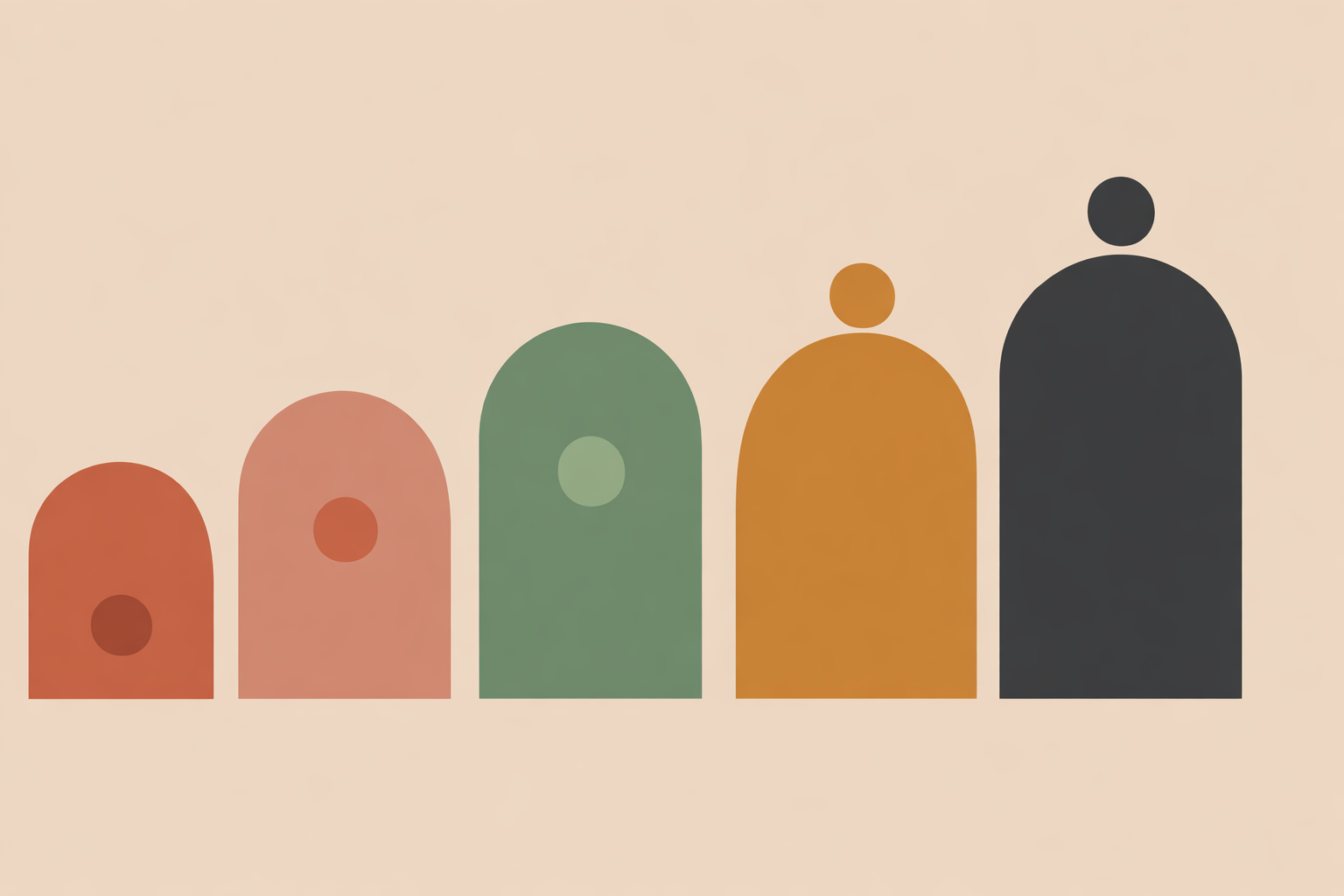
A five-age map gives you a storyline you can actually coach with. It helps you stop asking every person to change in the same way, and start choosing the right entry point.
- Early childhood (0–9): Rapid shaping through routine, relationship, play, rhythm, and environment.
- Adolescence and early adulthood (9–32): High flexibility, strong reward sensitivity, identity formation, and major differences between individuals.
- Mid-life (32–66): Relative stability, deeper knowledge, stronger strategy, and increasing need to protect bandwidth.
- Early older adulthood (66–83): More visible variation, with life experience and long-practiced habits showing up more clearly.
- Late older adulthood (83+): Further softening in some abilities, often alongside enduring social meaning, perspective, and emotional wisdom.
Research describing five broad lifespan epochs highlights relative stability in mid-life, with more noticeable shifts again in later years. In early older adulthood, the same work points to an early ageing phase where network patterns change more visibly.
Different systems also mature on different timelines. In everyday coaching terms, sensory and movement functions often settle earlier, while higher-order association networks take longer to develop. That’s one reason a child can look coordinated and capable, yet still struggle to plan, pause, or reflect consistently.
Used well, this map doesn’t reduce anyone to an age bracket. It helps you decide whether the next step needs more scaffolding, more challenge, more structure, more meaning, or more external support.
Early childhood (0–9): coach the environment first
In early childhood, coaching is mostly environmental. Children learn through rhythm, repetition, imitation, play, and relationship long before abstract explanations reliably help.
Daily rhythms and steady relationships shape early sensory, language, movement, and emotional circuits through pruning and experience-dependent change. Reporting on current lifespan research describes early childhood as a phase of rapid consolidation and restructuring.
This is why expecting a five-year-old to “self-regulate on command” often misses the real task. At this stage, regulation is shared, with adults providing pacing, naming, and containment until those skills gradually become internal.
Three supports tend to make the biggest difference:
- Rhythmic routines: predictable transitions after waking, after meals, and before sleep.
- Feelings in words: brief, concrete naming of body states and emotions.
- Playful attention practice: short games using color, sound, movement, counting, and story.
For example, a parent might use a two-minute morning rhythm game, a wall-push when frustration rises, and a brief evening story retell. It may look small, but it builds attention, language, and steadiness in ways a child can actually use.
Traditional family and community practices have long understood this. Song, repetition, simple household roles, call-and-response, and shared meal rhythms aren’t “extras”; they’re foundational developmental supports.
Adolescence and early adulthood (9–32): combine challenge with guidance
This stage holds enormous possibility, and it often comes with intensity. Learning is strong, identity is still taking shape, and social influence carries unusual weight.
During adolescence and early adulthood, reward systems develop on a different timetable from control systems, increasing reward sensitivity and peer influence. That helps explain why a young person can be brilliant, sincere, impulsive, visionary, and inconsistent in the same week.
This is also a long window. Executive capacities generally keep strengthening into emerging adulthood before leveling off, and habits built here can echo for decades. Coaching works best when it channels energy into something real, with steady guidance alongside autonomy.
Supportive coaching at this age often includes:
- Clear challenge: something concrete to attempt, not vague encouragement.
- Relational oversight: mentoring, accountability, and trusted feedback.
- Purposeful reward: linking effort to contribution, belonging, or mastery.
- Identity-safe experimentation: enough stretch to grow without overwhelm.
A useful pattern is the mentored quest: a visible project, a time frame, a supportive witness, and a debrief. For a 22-year-old, that could mean co-leading a community event, publishing a short creative series, or facilitating a small group with supervision.
Many traditional rites of passage used similar principles: responsibility, challenge, elders, symbols, and belonging. Modern coaching can learn from that structure while avoiding imitation of cultural forms that aren’t ours to borrow.
Mid-life (32–66): lean on strategy and protect bandwidth
Mid-life coaching is often about integration. Roles get denser, responsibility expands, and knowledge deepens. At the same time, constant multitasking starts to cost more.
Across the longest adult epoch, brain architecture is described as relatively stable. Practically, that stability often shows up as stronger strategy and accumulated knowledge, even if processing speed softens a little.
Many people still make major shifts here, especially when they change their structure rather than forcing more effort. Vocabulary, social understanding, and emotional knowledge often stay strong, while working memory and flexibility feel more taxed under overload.
Coaching moves that tend to help most:
- Protect deep work: reduce unnecessary switching and fragmented attention.
- Externalize mental load: dashboards, checklists, recurring templates, and simpler decision systems.
- Lead with meaning: tie effort to role, values, and contribution.
- Build recovery into the day: brief pauses, movement, and visual resets.
A mid-life client often doesn’t need more motivation. They need fewer open loops and clearer boundaries around high-value work, a pattern that also shows up in focus and memory coaching.
This is where lived wisdom deserves real respect. Many traditional ways of organizing life already support this stage well: repeated daily rhythms, seasonal pacing, communal responsibility, and honoring mature judgment.
Later adulthood (66+): support meaning, steadiness, and contribution
Later adulthood is not one uniform experience. Some people stay sharp and socially engaged well into advanced age, while others notice more fluctuation earlier. Coaching works best when it takes variability seriously and builds supportive structure around it.
In the 66–83 range, lifespan research points to a clearer early ageing phase, with more noticeable changes in network patterns. In day-to-day life, that often looks like bigger differences between individuals and stronger effects of long-practiced habits, environment, and relationship quality.
In very late older adulthood, memory for lists, rapid recall, and mental speed can become less reliable. Many people still hold strong emotional perspective and a deep wish to contribute, especially through roles that feel meaningful.
Useful coaching supports include:
- Values-first framing: begin with what matters, not with deficit.
- Simple external supports: visible cues, object routines, written prompts, and consistent locations.
- Ritualized repetition: brief repeated practices rather than long demanding sessions.
- Teaching and mentoring roles: chances to pass on stories, skills, songs, or practical wisdom.
Teaching is especially powerful here. Inviting an older adult to share what they know can strengthen identity, belonging, and attention while keeping learning socially alive.
Traditional communities have long recognized elders as carriers of memory, continuity, and interpretation. Coaching later adulthood works better when it honors that role rather than focusing only on what has changed.
Universal levers: attention, emotion, repetition, and relationships
Across all ages, the same levers keep showing up: focused attention, emotional relevance, repetition over time, and relational safety. The delivery changes by life stage, but the principles stay steady.
One clear example is spaced practice. Distributed repetition tends to support learning and memory more effectively than a single long burst.
For coaching design, that usually means a short practice repeated across the week outperforms one intense session followed by nothing, much like the patterns emphasized in memory storage and brain health work.
A simple session arc helps keep this practical:
- Arrival: a brief ritual to gather attention.
- Meaning cue: why this matters now.
- Edge practice: one focused stretch.
- Consolidation: the client says back what they noticed or learned.
- Tiny repetition plan: a small action tied to an existing routine.
Social synchrony also deserves respect. Song, shared rhythm, synchronized breathing, and coordinated movement can unite attention, emotion, and repetition in a natural way. In many lineages, these are central learning technologies, not decorative additions.
Novelty also works best in digestible doses. Learning tends to stick when something is fresh enough to wake up attention, yet familiar enough to stay steady. In practice, that can be switching roles in a dialogue, retelling a known story from a new angle, or adding one fresh detail to an established routine.
Stage-specific coaching examples for one shared goal
The same goal can be coached very differently depending on age. Take remembering names:
- Child: say the name, clap its rhythm, and draw a quick image.
- Young adult: after a gathering, record three names and one vivid detail about each.
- Mid-life adult: add one meaningful association to calendar notes and review it twice that week.
- Older adult: carry a simple name card, focus on the top three people, and repeat them through story.
The mechanism stays consistent: attention, association, repetition, and relevance. The method changes to fit the person’s stage and context.
Bring lifespan brain development into your coaching practice
Coaching with a lifespan lens makes the work more humane and more precise. It stops the common mismatch of promising the wrong kind of change at the wrong time, and it supports the next workable step for the person in front of you.
That means shaping the environment in early childhood, channeling intensity with guidance in adolescence and early adulthood, protecting bandwidth in mid-life, and strengthening meaning and contribution in later years. It also means respecting what traditional knowledge has emphasized for centuries: rhythm, story, belonging, repetition, and shared roles shape how people learn and grow.
Use brain science as a framing tool, not a label. Let it refine timing and expectations while keeping the focus on real life, real roles, and repeatable practices, whether you are building a broader foundation in neuroscience and brain health or pursuing cognitive neuroscience certification.
In the end, a few cautions keep the work clean: age ranges are broad, personal history matters, and support should always be adapted to the individual’s context and capacity. When that’s honored, lifespan coaching becomes both practical and deeply respectful of human development.
Explore Cognitive Neuroscience Certification
Apply lifespan-friendly coaching levers with the Cognitive Neuroscience Certification and build evidence-based practice habits.
Explore Cognitive Neuroscience →