Group breathwork for low mood can be deeply supportive when it stays grounded, choice-based, and well within scope. People often arrive hoping for relief, connection, and a way to feel more present in themselves. That makes the work meaningful, and it also raises the bar for how carefully the group is held.
The safest approach is usually the simplest: slower breathing, flexible pacing, clear consent, and no pressure to push through strong sensations. In depression-focused groups, the aim is steadiness and agency, so participants can meet the practice at their own pace.
Key Takeaway: Group breathwork for depression is best led with a conservative, people-first approach. Slow, adjustable breathing tends to be the safest default; expectations and scope need to be clear before the session starts; and facilitators should be ready to respond calmly if someone becomes overwhelmed, disconnected, or physically uncomfortable. Traditional breath practices offer valuable roots, while modern evidence suggests modest and variable outcomes rather than one universal method.
Why group breathwork can feel so powerful
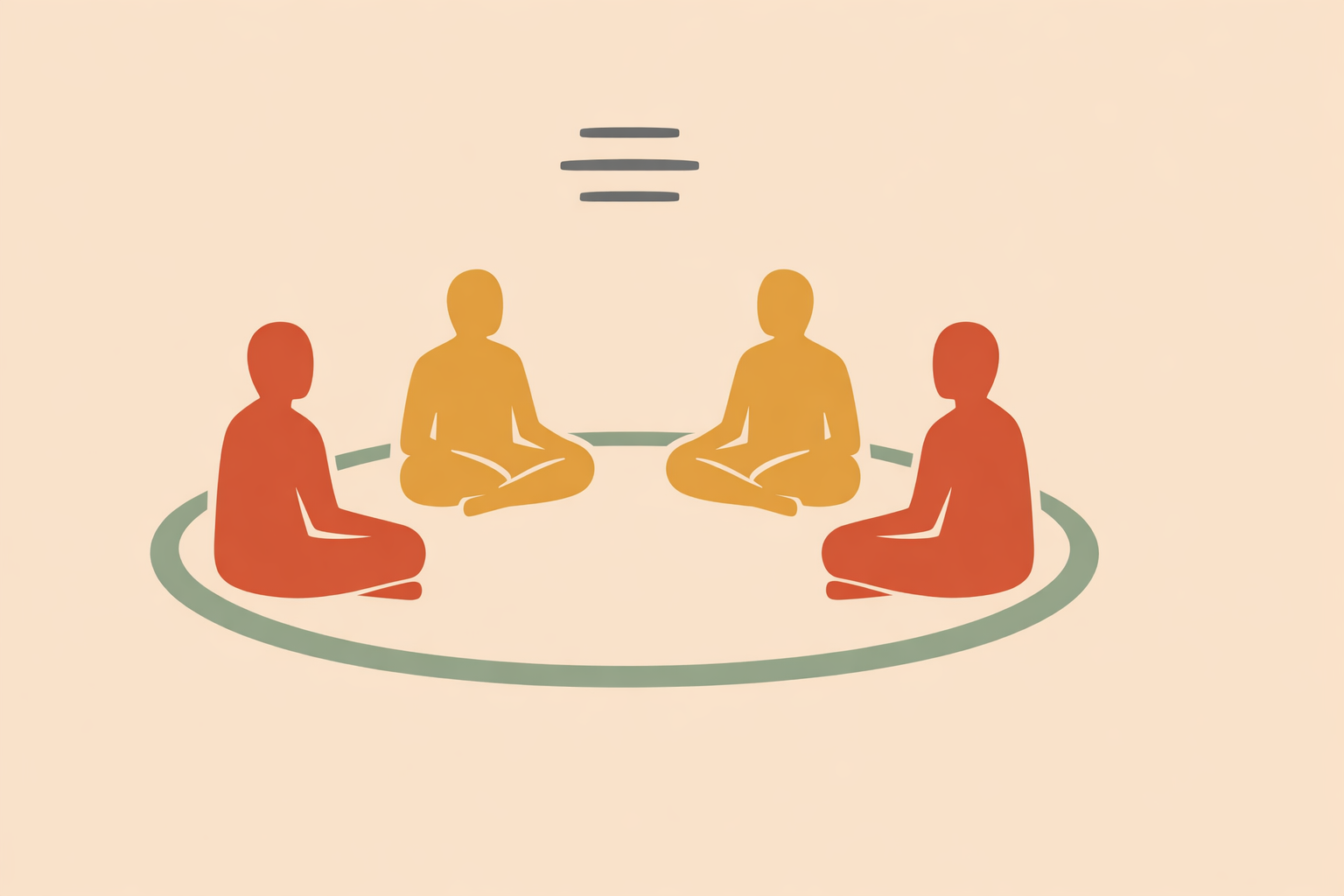
When people breathe together, something often softens. A shared rhythm can ease the isolation that commonly comes with low mood, and many traditional circles have long used breath, chant, and rhythm to steady the mind and strengthen belonging.
That group energy is part of the value. It is also why boundaries matter. In a room full of people longing to feel better, it can become tempting to over-promise, blur roles, or assume that stronger techniques create better outcomes. In practice, calmer pacing often supports deeper trust.
Breathwork can support presence, self-awareness, and regulation. It should not be framed as a complete answer to depression. Research points to modest benefits overall, with results that vary across methods and populations. That variability is a good reason to be precise about what the group offers.
A simple opening statement can do a lot of ethical work: “This session offers supportive breath practices for steadiness and presence. You can pause, modify, or stop at any time.”
Breathwork traditions and modern evidence
Across India and East Asia and in Indigenous circles, breath practices have been used for clarity, steadiness, and spiritual growth. Those roots matter. They remind facilitators that breathwork did not begin as a trend, and that many methods come from long cultural lineages that deserve respect.
Modern research, meanwhile, has limits and mixed results. A recent review of prāṇāyāma found no significant effect for depression outcomes in the studies reviewed, while also noting limited reporting on adverse events. Traditional practice can still be genuinely supportive; the research picture is simply incomplete and should be read with care.
Grounded language follows naturally from that balance. Breathwork can help some people feel calmer, more oriented, or more emotionally flexible. Results differ, and not every style suits every participant or group setting.
- Use tradition respectfully rather than as decoration.
- Describe likely outcomes in practical terms.
- Avoid promising breakthrough experiences.
- Keep the focus on support, not certainty.
Screening, scope, and expectations before the session
Safety begins before anyone takes a guided breath. A good intake is less about labels and more about fit: whether this format, today, supports the person in front of you.
Ask for essentials in clear, adult language: current well-being, recent crises, seizure history, pregnancy, recent surgery or injury, significant physical concerns, previous difficult experiences in intense group practices, and anything else that could affect participation. Written consent and proportionate screening are core parts of responsible group facilitation, especially when breath can shift someone’s state quickly.
Set expectations for normal, manageable sensations. Even slow-paced work can bring emotion, tingling, light-headedness, restlessness, or a wish to stop. Naming this ahead of time reduces surprise and strengthens choice in the moment.
Be equally clear about who is not suited to intense formats. People who are acutely distressed, recently in crisis, highly agitated, confused, unable to follow instructions, or unable to give meaningful consent are not appropriate for intense group breathwork. In those moments, more immediate support pathways are the right next step.
For current suicidal intent or recent inpatient crisis care, prioritize urgent assessment and safety planning rather than a standard group session.
Why slow, choice-based breathing is the safest default
For depression-focused groups, slower and simpler methods tend to serve best. Slow breathing around 5 to 6 breaths per minute is a common starting point for group breathwork, provided it is offered gently and without forcing depth.
Choice is the foundation. Participants should be able to breathe more naturally, shorten the count, open their eyes, sit up, or opt out completely without having to explain themselves. If someone becomes dizzy or feels air hunger, the breathing is too intense, and easing back is the skill.
Research on broader breathwork approaches suggests modest benefits, but not one superior formula. One study also reported no benefit of coherent breathing over a well-designed comparison condition. That aligns with what experienced facilitators see every day: pacing, consent, and adaptation shape outcomes.
A simple sequence is often enough:
- 2 minutes of orienting to the room and body
- 5 minutes of gentle diaphragmatic breathing
- 3 minutes of slightly longer exhalations
- 5 minutes of natural breathing and quiet rest
A useful cue is: “Let the breath feel easy enough that you could continue comfortably. If not, soften the effort or return to your natural breath.”
When to be cautious with more intense methods
High-ventilation or altered-state breathwork methods carry higher risk and require more caution in depression-focused groups. Fast or forceful breathing can shift carbon dioxide levels and bring tingling, dizziness, cramping, or feelings of unreality.
In a mixed group, those sensations should be read conservatively. Strong symptoms do not automatically signal progress. Often they show that the breathing is too forceful, too fast, or poorly matched to the participant.
A recent study of brief high-ventilation breathing reported light-headedness and no improvements on depression, anxiety, or sleep measures in that context. That does not mean such methods have no place anywhere, but it does mean they deserve far more care than many group settings currently give them.
For most depression-focused circles, gentle and adjustable remains the wiser default.
Designing a trauma-aware and inclusive group container
A trauma-aware approach is about structure, not disclosure. The container works when choice is visible, pacing is predictable, and participants do not need to override themselves to belong.
That starts with clear agreements:
- You choose your own pace.
- You can pause or stop at any time.
- No one has to share.
- No unsolicited advice or fixing.
- Attendance does not equal consent to touch, closeness, or being singled out.
Inclusive design matters just as much. Offer seated and standing options. Allow eyes open or closed. Use language that does not assume everyone is comfortable breathing deeply, lying down, or engaging emotionally in front of others. Small adjustments can make the group more accessible for people with sensory sensitivity, chronic pain, neurodivergence, or religious and cultural needs.
Cultural respect belongs here too. If you are drawing from prāṇāyāma or another lineage-based practice, acknowledge its roots and be transparent about any adaptations. Respect strengthens trust.
How to respond when someone becomes overwhelmed
Real-time facilitation is where safety becomes visible. In a live group, watch for emotional activation and also signs that someone is pushing beyond what their system can comfortably manage.
Early signs of over-effort may include jaw tension, fidgeting, shallow rapid breathing, tingling, hand cramping, or a glazed look. Intervene early and plainly: invite the person to return to a natural breath, open their eyes, feel the floor, and orient to something stable in the room.
Also watch for dissociation or collapse. Signs can include staring through, delayed responses, inability to follow instructions, or “I’m not here” sensations. If that appears, stop the active practice for that person and guide gentle orientation with name, place, date, touch-free grounding cues, and small physical movements like pressing feet into the floor or rubbing palms together.
Paper-bag breathing is not recommended for managing hyperventilation symptoms. A steadier response is to reduce effort, slow down, and support orientation.
If someone reports chest pain, faints, has severe breathing difficulty, or shows seizure activity, stop the session and seek emergency assistance. Those are red-flag moments, not situations to manage through group coaching alone.
Closing the session well
The end of the session is part of the session. Closing too abruptly can leave people feeling raw, overstimulated, or disconnected.
Give the group time to come back gradually: natural breathing, gentle movement, water, quiet sitting, journaling, or a short check-in. Keep sharing optional. Questions like “What do you notice now?” or “What would support you this evening?” often serve the group better than asking for a big emotional summary.
Emotional resilience grows when people can notice sensations, tolerate them, and respond with flexibility rather than needing to reach a perfectly calm state every time. That is a realistic marker of progress.
Some participants will leave simply appreciating a practical coping tool they can return to in everyday life. That is enough.
When referral or additional support is the better next step
Breathwork groups are not the right setting for every moment of life. Skilled facilitation includes knowing when not to proceed and when to direct someone toward more immediate support.
If a participant is recently in crisis, highly disoriented, unable to track the session, or unable to participate with meaningful consent, pause the idea of group work and move toward safer next steps, including trauma and emotional healing support when appropriate. If someone is at risk of harming themselves or cannot maintain their own safety, urgent support pathways matter more than attendance.
Prepare those pathways in advance: local crisis lines, emergency contacts, safeguarding processes, and trusted community support options. That way, if a difficult moment arises, you are ready to respond calmly.
Conclusion
Group breathwork for depression can be offered safely, but safety comes from restraint, clarity, and respect.
Lead slowly. Keep choice visible. Stay honest about scope. Draw from tradition with care, and use research as a guide without pretending it settles everything. When the group serves the person rather than the method, breathwork becomes what it is often best at being: a steady, human practice that helps people reconnect with themselves one breath at a time.
Train as a Breathwork Practitioner
Build safer, consent-led group sessions with the Breathwork Practitioner certification.
Explore Breathwork Practitioner →