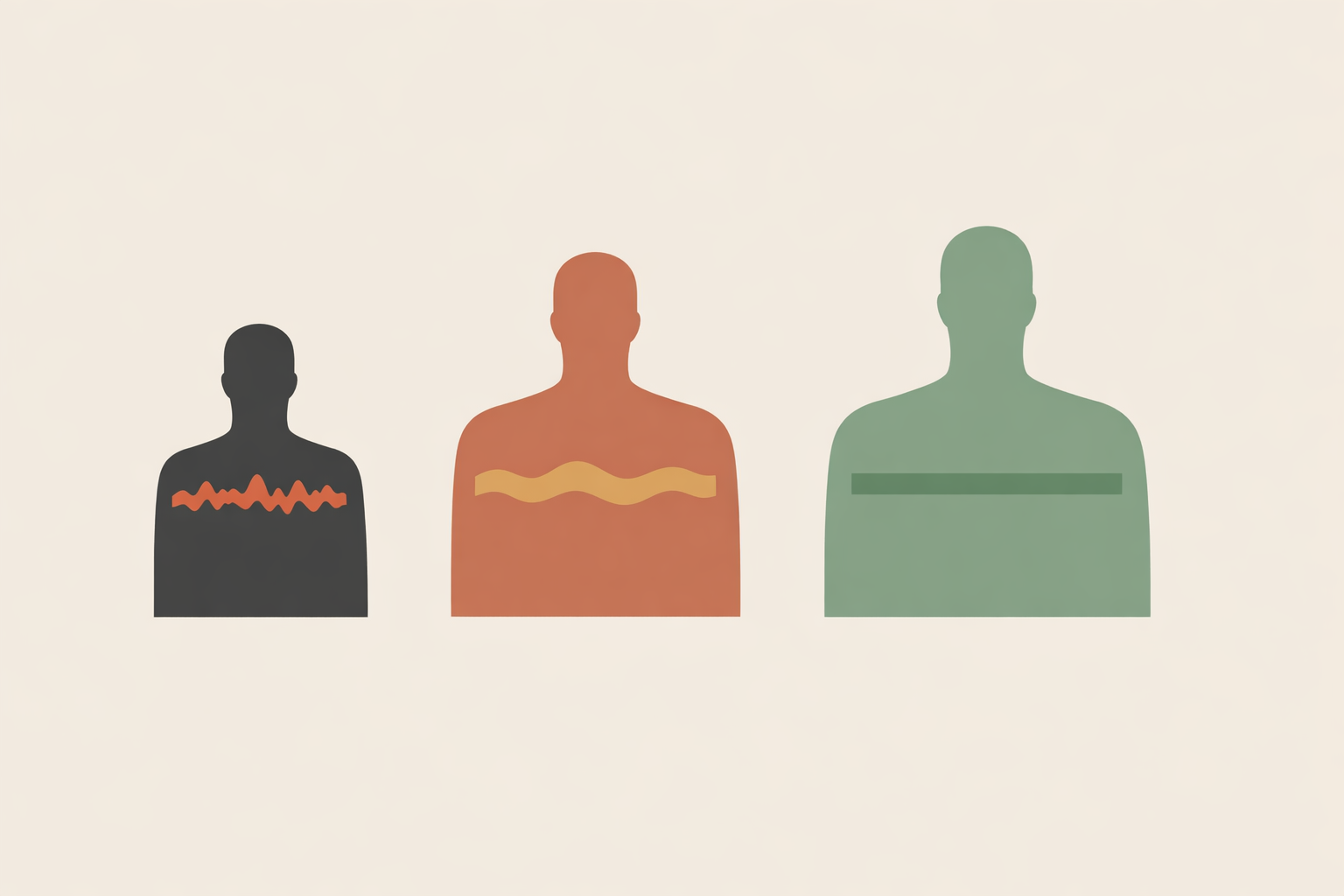
Many practitioners judge a breathwork protocol by the glow right after a session: shoulders drop, the mind quiets, maybe an HRV bump shows up on the app. Then the workday starts, sleep was only average, and that steadiness feels harder to find. Clients decide the technique “didn’t stick,” and coaches reach for more intensity or novelty.
The trouble is the default metric: immediate calm rewards peak experiences while missing what matters most—whether the system holds steady under ordinary load. Daily HRV also has plenty of noise. Travel, late meals, hard workouts, and tense conversations can all blur the picture. Without a better view, planning starts to feel like guesswork.
Key Takeaway: Breathwork is best judged by what carries over between sessions, not by the post-session high. The most useful markers are simple: sleep HRV, resting heart rate, resting respiratory rate, and brief notes on stress, mood, and body sense. Over time, these trends show whether a practice is building steadiness in real life.
Why between-session tracking matters
The real prize isn’t a pleasant ten minutes on the mat. It’s steadiness the next morning, during a difficult conversation, in the late-afternoon slump, or at bedtime when the day has been full.
Traditional lineages have always aimed for that kind of continuity. Pranayama, daoyin, and other ancestral breath teachings were built to cultivate everyday balance, not just a temporary drop in activation. Historical accounts of daoyin describe breath and attention as ways to maintain fitness over time rather than chase a single peak experience.
Modern tracking can serve the same goal when it stays grounded. Slow nasal breathing around five to six breaths per minute can enhance vagal activity. In daily life, many people experience this as calmer breathing, a gentler resting pulse, and a smoother ability to shift out of stress. Reviews of slow breathing protocols also report reduced cortisol, which supports what practitioners have observed for generations.
Between-session tracking helps you see whether a method is changing the terrain, not just the moment.
A simple example: a client I’ll call Maya practiced 10 minutes of resonance breathing after lunch for a few weeks. The first win was fewer afternoon crashes. The more meaningful pattern was a steady lift in her weekly sleep HRV trend alongside a small drop in resting heart rate. She didn’t just feel better after the exercise; she felt steadier across the day.
What changes with practice: your baseline
Over days and weeks, breathwork shapes baseline patterns more than isolated highs. That baseline is often described as an autonomic “set point”: how easily your system mobilizes, settles, and returns to center.
HRV helps because it offers a practical window into autonomic balance and is widely understood as a non-invasive biomarker of the interplay between sympathetic and parasympathetic activity.
As parasympathetic tone strengthens, resting HRV often rises and recovery from stress gets smoother. Broadly speaking, higher HRV is linked with greater parasympathetic influence, while lower HRV often reflects a system working under more strain.
One reading never tells the whole story. HRV can swing after travel, alcohol, poor sleep, hard training, late eating, or emotional stress. Research reviews also note HRV is acutely influenced by lifestyle and environmental factors, which is exactly why trend lines matter.
So look in weeks, not hours. A better question than “Did my HRV rise today?” is “Is my rolling average gradually improving while resting heart rate and reactivity are easing?”
Many practitioners also notice that overnight shifts appear before daytime calm feels obvious. It’s a common pattern worth watching.
What to track: the core biometrics
You don’t need a huge dashboard. Most useful breathwork tracking comes down to three markers:
- Sleep HRV
- Resting heart rate
- Resting respiratory rate
Together, they give a compact view of adaptation, especially when you practice consistently and review patterns once a week.
Sleep HRV is often the clearest signal because daytime readings are easily disturbed by movement, caffeine, posture, conversation, and timing. If your wearable gives a nightly HRV view, it’s usually more useful than chasing spot checks.
Resting heart rate complements HRV well. As regulation improves, HRV often trends up while resting heart rate trends down. The relationship isn’t perfectly linear, but the pair is practical.
Resting respiratory rate is easy to overlook, yet often very sensitive. Many people see breathing get quieter and less effortful at rest before HRV makes a dramatic move.
- Example dashboard: “7-day sleep RMSSD 46 ms to 52 ms; resting heart rate 60 to 57 bpm; resting respiratory rate 14 to 12 breaths/min.”
- Useful tag notes: “nasal only,” “late dinner,” “poor sleep,” “hard training,” “travel day.”
Beyond numbers: mood, stress, and body sense
Numbers tell you that something is shifting. Felt experience tells you whether that shift supports daily life.
Breath traditions have always valued inner sensing: the jaw unclenching, the belly softening, and the sense of having more choice before reacting. Without this layer, tracking becomes detached from real well-being.
Structured breathing protocols have been linked with reduced anxiety and more positive mood across multi-week practice periods. You can also gather meaningful information with very short check-ins.
Keep the subjective side simple:
- Daily: stress 0–10
- Daily: mood 0–10
- Daily: one body note such as “jaw tight,” “chest open,” or “belly guarded”
- Weekly: one reflection question, such as “Where did I respond with more choice this week?”
This respects both measurable change and lived experience. Sometimes the numbers improve first; sometimes the body sense leads. Either way, you’re learning.
Matching breath styles to the signals they tend to shift
Different breath styles leave different fingerprints. When you know what a practice tends to influence, you can choose markers that fit and avoid forcing every method to “prove itself” through HRV alone.
Resonance or coherent breathing
At roughly five to six breaths per minute, this style often pairs well with HRV tracking. Watch sleep HRV and resting heart rate most closely.
Extended-exhale patterns
A pattern such as four seconds in and six to eight seconds out often fits evening settling. Here, bedtime heart rate, ease of winding down, and next-morning freshness can be more informative than dramatic HRV movement.
Cyclic sighing
This style often shows up more clearly in respiratory rate and mood. Track whether resting breathing becomes slower and whether mid-day tension drops.
Humming breath
Humming naturally lengthens the exhale and supports nasal breathing. Many practitioners choose it when they want grounding without effort. Subjective calm and next-morning steadiness are good markers.
At a physiological level, you’re often observing how breath and heart rhythm coordinate. Slow, steady breathing can make that coordination easier to see in the data and easier to feel in the body.
- Resonance at lunch: watch 7-day sleep HRV and resting heart rate.
- Extended exhale before bed: watch bedtime ease and morning freshness.
- Cyclic sighing mid-day: watch respiratory rate and mood.
- Humming in the evening: watch calm and next-morning steadiness.
How to run a simple breathwork experiment
The cleanest way to evaluate a practice is to treat it like a small personal experiment: consistent, modest, and long enough to reveal a trend.
Two to six weeks works well with one main technique, one usual time of day, and a short daily log. This reduces noise and makes the signal easier to read.
Start with a clear hypothesis. For example: “If I practice 10 minutes of resonance breathing after lunch for four weeks, my weekly sleep HRV trend will rise and my average stress score will fall.”
Then track only what matters most:
- Breath style used
- Minutes practiced
- Time of day
- Sleep HRV
- Resting heart rate
- Resting respiratory rate
- Stress and mood notes
- Confounders such as travel, alcohol, late meals, or hard training
Interpret results through rolling averages rather than isolated spikes. A low day after poor sleep doesn’t erase a good weekly direction.
Acute spot checks are still useful if you enjoy them. A seated pre- and post-session reading can show that a technique reliably settles you in the moment. Just don’t confuse that immediate shift with a stable baseline change.
- Week 0: gather baseline data for several days.
- Weeks 1–4: keep one technique and one routine anchor.
- End of week 4: compare trends, not best days.
- Then: decide whether to continue, reduce, or refine.
Dose and timing: how much is enough?
More isn’t always better. For many people, five to ten minutes done consistently delivers more than occasional long sessions.
If your aim is general steadiness, start with a dose that feels sustainable:
- 5–10 minutes daily for beginners
- 10–20 minutes daily for those already familiar with breath practice
- A second short evening practice when sleep support is the priority
Slow breathing builds through repetition. Some people respond quickly to brief daily practice, while others do better with slightly longer sessions once the pattern feels easy. The key is regularity and fit.
Timing matters too. Morning practice can set the tone for the day. Mid-day practice can interrupt buildup and restore clarity. Evening practice often suits extended exhale or humming when sleep is the focus.
Adjust according to signals:
- Increase gradually if trends are improving and the practice feels supportive.
- Hold steady if the routine is working and feels sustainable.
- Reduce duration or choose a gentler pattern if you feel agitated, lightheaded, or overstimulated afterward.
A simple progression might look like six minutes of resonance breathing after lunch for two weeks, then twelve minutes if it still feels easy. Add a brief extended-exhale practice at bedtime if evenings remain busy.
How to read progress without overcomplicating it
The most useful question isn’t whether a session felt powerful. It’s whether your days are becoming more workable.
Signs of progress often include:
- a rising weekly HRV trend
- a gently lower resting heart rate
- a quieter resting breath
- more ease falling asleep
- faster recovery after stress
- less reactivity in ordinary situations
Not every marker moves at the same speed. One person notices steadier breathing and better sleep before HRV shifts much. Another sees the wearable change first. Tracking is for pattern recognition, not perfection.
Safety, boundaries, and context
Breathwork works best when approached with respect rather than force. Gentle, down-regulating patterns suit most people, while stronger methods require more care and discernment.
If you’re working with clients, obtain clear consent before collecting any personal data. Keep records private, collect only what you’ll genuinely use, and make it easy to opt out of anything that feels intrusive.
Be conservative with intense patterns such as rapid breathing or long retentions, especially for people with a history of overwhelm, faintness, strong anxiety responses, cardiovascular concerns, epilepsy, pregnancy, or significant respiratory sensitivity. If a practice leads to chest discomfort, severe breathlessness, fainting, or extreme distress, stop and seek appropriate support.
Keep breathwork in context. Sleep, nourishment, movement, light exposure, workload, and relationships shape the same regulatory terrain. Breath is a powerful lever, and it works best alongside the rest of life, including a broader longevity and biohacking approach.
Closing perspective
Breath is a living tradition as much as it is a measurable practice. Good tracking doesn’t replace intuition, lineage, or skilled observation; it clarifies whether a method is carrying over into daily life.
For most people, the strongest approach stays modest: one breath style, one consistent time window, three core biometrics, and a few honest notes on stress, mood, and body sense. Over time, that’s enough to reveal whether the practice is building nervous system regulation and steadiness that lasts.
When the numbers and lived experience begin to agree, the conclusion is usually clear. The breath isn’t just calming you during practice; it’s supporting how you meet your life, which is also central to biohacking.
Biohacking Skills, Deeper
Apply this tracking mindset to recovery and performance in the Biohacking Certification Course.
Explore the Biohacking Course →