The quickest way to misjudge readiness for a paid foraging walk is to count species and assume that knowledge alone is enough. Once money changes hands, the role shifts. You are no longer simply sharing enthusiasm; you are holding a learning space with clear boundaries, steady group communication, and a respectful relationship with place.
Key Takeaway: Beginner foraging skills can support paid walks when they are kept narrow, taught conservatively, and supported by strong preparation. What matters most is not how many plants you can name, but whether you can guide people through a calm, observation-led experience built on clear identification standards, lawful access, thoughtful tasting policies, and respect for land, culture, and participant choice.
From beginner forager to paid guide
A paid walk asks for a different mindset from a personal hobby. The heart of the work is stewardship: of people, of place, and of the tradition you are passing on. Success looks less like full baskets and more like participants leaving settled, informed, and clear about boundaries.
One of the best ways to develop that steadiness is to learn alongside local experts and elders where possible. Walking familiar ground with someone experienced trains the eye in a way books can’t: seasonal timing, habitat cues, and the small details that separate “similar” from “the same.”
That grounded approach also makes your first paid session stronger. Keep the scope modest: one slow mile, around ninety minutes, and two or three well-known plants you can stand behind. When people feel unhurried, they observe more and reach for less.
A short opening script sets the tone and keeps everyone aligned:
- Today we are here to learn to look closely.
- We will not eat anything unless our identification standard is met and everyone clearly opts in.
- We harvest only where it is abundant, appropriate, and permitted.
- Photos and notes are always enough.
This kind of clarity builds trust early. It also teaches something traditional foragers have long known: restraint is part of the skill, not a failure to “find enough.”
What beginner foraging skills really include
Beginner-level skill is more valuable than many people assume, as long as it’s used honestly. You don’t need dozens of species to offer a worthwhile introduction. You do need a calm structure around a small set of reliable, distinctive plants.
In practice, beginner competence usually includes:
- Explaining basic plant morphology such as leaf, stem, flower, and fruit
- Using a regional field guide with care
- Reading habitat and seasonal change
- Taking notes and comparing visible features
- Planning a simple route and managing group pace
- Modelling ethical harvesting and a willingness to leave uncertain finds alone
Just as important is knowing what stays outside your scope for now. For beginner paid walks, it’s wise to postpone anything that demands deeper training or higher risk, including dangerous look-alikes, fungi identification, seaweed collection, food handling, work with children, incident response, and more nuanced local access questions.
A steady path is to revisit the same few species across the year. Spring might focus on nettle or cleavers, summer on ribwort plantain or yarrow, and autumn on blackberry leaves or rosehips. The route can stay simple while your teaching deepens through repeated contact, much like a seasonal plan.
Why “no certainty, no consumption” should guide the walk
If you lead others, your identification standard needs to be conservative. Government guidance notes that some wild plants are poisonous or deadly, so the rule is straightforward: if you cannot clearly explain what something is, and what it is not, it doesn’t get eaten.
Say it in everyday language during the walk: when in doubt, leave it out.
A reliable identification sequence might look like this:
- Observe the whole plant or organism, not just one part
- Notice the habitat, light, soil, and nearby species
- Compare several visible features rather than relying on one
- Check your reference materials
- Name possible confusion species
- If any key feature is missing, leave it
This doesn’t just protect people. It shows participants what mature practice looks like. Many relax when they see a leader choose caution without fuss, and that steadiness tends to strengthen trust in everything else you teach.
Plant families known for tricky look-alikes are especially useful for modelling good judgment. If uncertainty remains after checking key features like stem details, scent, leaf divisions, or growth habit, the decision is already made: no certainty, no consumption.
The hidden foundations behind a professional foraging walk
The visible part of the work happens on paths and in hedgerows. The less visible part happens before anyone arrives: planning the route, setting boundaries, confirming permissions, preparing for different needs, and deciding exactly what is included.
Start with the route. A strong beginner walk is usually short, easy to navigate, and built around species you know well in that exact place. If weather, ground conditions, or group pace changes, you should be able to adjust smoothly.
Next, be realistic about what still needs study before it belongs in a paid offer. New guides often underestimate how much judgment sits behind tasting, group management, and local access rules. Even seaweed collection can involve local restrictions or permits.
Land access deserves particular care. In the UK, some forms of collecting are illegal without permission, and some plants are protected. Even where gathering is allowed, many excellent walks stay centred on observation and respectful learning rather than picking.
Simple working documents help you lead with calm authority:
- A one-page route plan with timings and rest points
- A list of likely hazards and how you will manage them
- A clear participant email explaining the format
- A tasting policy that makes consent and choice explicit
- A note of land permissions where relevant
This preparation doesn’t make the experience rigid. It makes it steady.
Designing a beginner-safe paid foraging walk
Your first paid walk is usually strongest when it’s modest in scope. Keep it seasonal, choose distinctive species, and build the session around careful looking rather than collecting.
A simple field plan might include:
- Welcome and group briefing
- One species studied in depth
- A second species used to compare features and habitat
- A short conversation about harvesting ethics and local permission
- An optional prepared tasting at the end, if that sits comfortably within your scope
The tasting policy deserves special care. Beginners are usually better supported when they’re not encouraged to eat while moving. A calm close to the session gives you time for consent, hygiene, and clear communication, which is central to guided foraging.
When someone tastes a wild food for the first time, start with a small amount. Keep basics strong too: washing foraged food and avoiding contaminated sites near roads, industrial land, pesticides, or animal waste.
In your event listing, clear wording helps everyone arrive with the right expectations:
- Observation-led and beginner-friendly
- Two or three common species only
- Optional prepared tasting at the end
- No trail eating
- Short route with clear access information
One of the most meaningful moments in a walk can be choosing not to pick. Standing with a healthy patch, noticing it fully, and leaving it untouched teaches respect and discernment in a way instructions alone rarely do.
Growing from cautious beginner to trusted leader
Trust grows through repetition, honesty, and reflection. Revisit the same landscapes and teach the same few species until your knowledge feels settled and your delivery stays calm under real-world conditions.
A simple competence log helps. Note what was in season, what confused people, which comparisons landed well, and where your own explanation felt thin. Patterns show up quickly when you write them down.
After each walk, review questions like these:
- Where did the group feel most engaged?
- What caused hesitation or confusion?
- Did the route suit the pace and mobility of the group?
- Did your boundaries around tasting, harvesting, and uncertainty stay clear?
Participant feedback is also valuable, especially around clarity, pacing, inclusivity, and confidence. A strong outcome is that someone leaves more willing to slow down, verify what they’re seeing, and stay within their own limits.
Community support matters too. Assisting more experienced leaders, learning from local elders, and exchanging notes with peers keeps your practice both sharp and humble. Foraging traditions are relational, and good guidance grows inside relationship.
A realistic growth path might look like this:
- Begin with short observation-only sessions for small groups
- Repeat the same route across several seasons
- Add tasting only when your process feels calm and consistent
- Expand your themes gradually, perhaps into hedgerow history, coastal plants, or pollinator-friendly walking routes
The aim is not quick authority. It is dependable guidance.
Can beginner foraging skills support paid walks?
Yes, as long as they’re used with restraint and integrity. A narrow species range, conservative identification, thoughtful walk design, and solid preparation can support a genuinely valuable paid experience.
Match your offer to your real scope. Promise a grounded introduction, not mastery. Teach people how to observe, compare, question, and leave things alone when certainty is missing. That approach fits the spirit of traditional land-based learning, where skill is built slowly and respectfully over time, and it sits naturally within herbalism and plant medicine.
As confidence grows, well-supported foragers often become more respectful foragers too. They gather less impulsively, pay closer attention to habitat, and understand that relationship with place matters more than quantity taken home.
To close with a few practical cautions: keep identification standards strict, stay within permissions and local rules, avoid higher-risk topics until you’ve trained further, and use a clear tasting policy with explicit consent. If you build from respect, reciprocity, and steady learning, beginner knowledge can be a strong starting point for work that feels careful, trustworthy, and supportive.
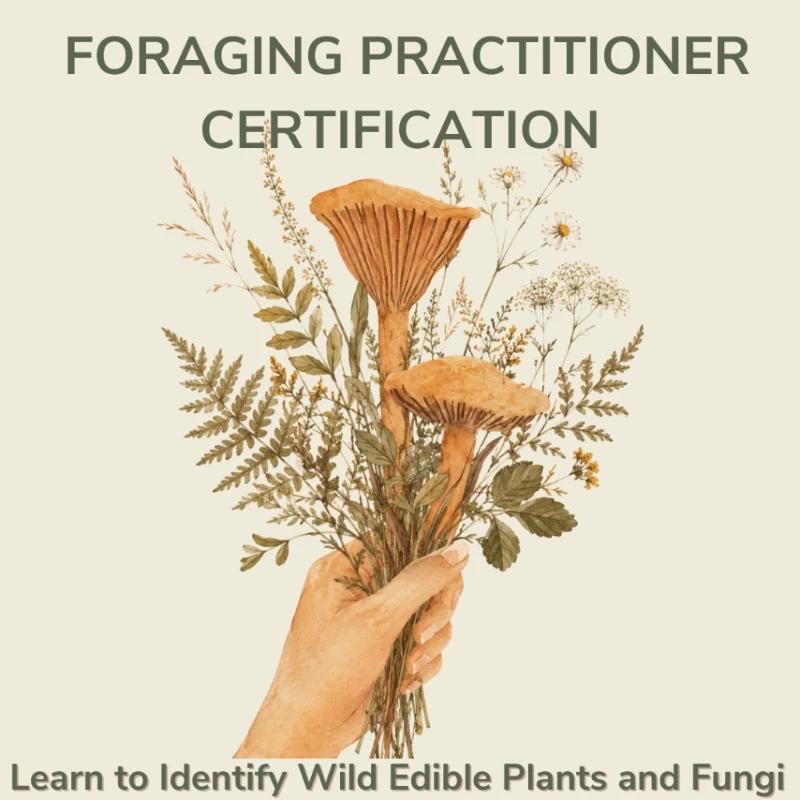
Explore Foraging Foundations
Build safer identification standards and walk structure with the Foundations of Foraging Certification.
Explore Foundations of Foraging →