When anxiety shows up in coaching, insight rarely carries the whole load. A client can understand their pattern clearly and still get pulled into it the moment a familiar trigger hits. What helps most is practice right where the pattern begins: a steadier breath before the inbox opens, a grounded phrase before the meeting starts, a small pause before the spiral gathers speed.
Neuroplasticity offers a useful lens here. Anxiety can be approached as a learned response that strengthens through repetition and softens through repetition, especially when practice is emotionally meaningful. In coaching, that shifts the focus from chasing big breakthroughs to building small responses clients can actually use in daily life.
Key Takeaway: Neuroplasticity invites a practical view of anxiety in coaching: repeated, emotionally meaningful practice can help shift reactive patterns toward more regulated choice. Coaching supports that shift by turning insight into small, repeatable actions linked to real-life cues. Across the article, the focus is on what changes when clients practice consistently, how conversations become embodied learning, which simple practices are most usable, and where ethical limits matter.
How Neuroplasticity Supports Anxiety Shifts in Coaching
Anxiety often arrives like a reflex: tight breathing, racing thoughts, scanning for what could go wrong. Reflexes don’t shift because someone explains them well. They shift because a different response gets rehearsed.
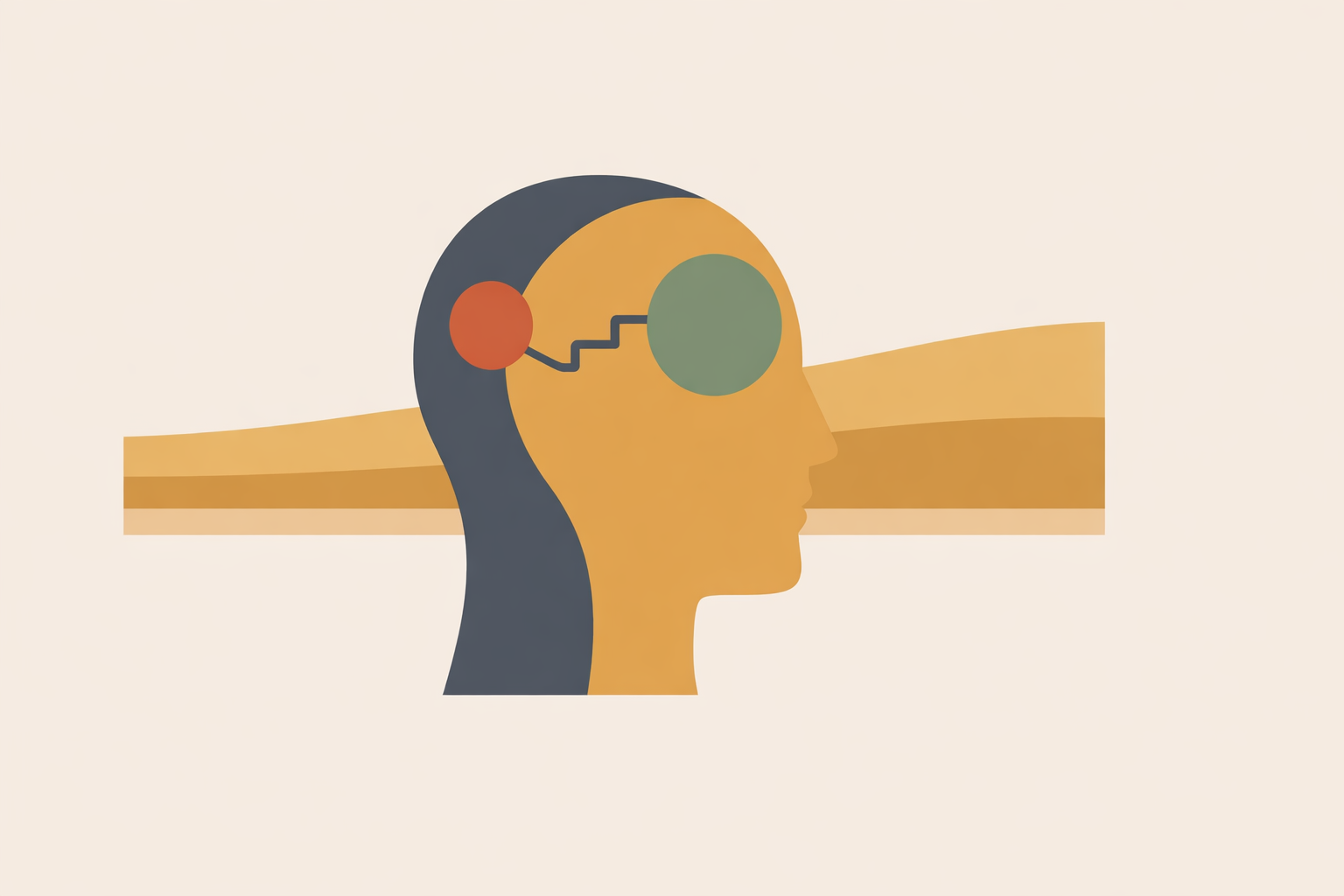
Neuroplasticity is the brain’s capacity to adapt through experience. The patterns a client practices most often become easier to access. If the familiar sequence is alarm, avoidance, and overthinking, it can start running on autopilot. When the client repeatedly practices pause, orient, and choose, that sequence becomes more available over time.
This lens also reduces self-blame. Anxiety reflects real brain-based patterning, and practice becomes more compelling when clients understand that fear regulation draws on prefrontal involvement, not willpower alone.
With consistent repetition, balanced responses can gradually influence amygdala responses, which is why coaching tends to land best when insight is paired with between-session practice.
Coaching naturally supports this kind of learning. Values clarification, strengths-led action, and future-focused inquiry repeatedly invite clients to pause and choose. When those conversations are anchored to real cues, they become rehearsals for daily life.
For example, a client who dreads Sunday evenings practices one minute of slow exhale before opening their planner, then answers: “What would make Monday 10% easier?” Repeated for a few weeks, that pairing can loosen the old link between planning and spiraling. Consistency does the heavy lifting.
What Changes When Anxiety Begins to Ease
When anxious patterns become chronic, the alarm system tends to fire quickly while reflection arrives later. Chronic anxiety is broadly associated with heightened amygdala activation alongside less effective top-down regulation.
As steadiness grows, the pattern often looks different. Calmer responding aligns with stronger prefrontal influence over threat processing; in fear extinction research, mPFC activity helps inhibit amygdala output.
That’s why the real target is regulation, not a constant state of calm. In coaching terms, it shows up when a client can say, “I felt the rush, and I didn’t follow it into the old story.”
Brief mindfulness-style practice can support this, without needing to be framed as formal or spiritual unless that fits the client. Many practitioners see that short, repeated attention training creates more space between sensation and reaction. Slow breathing, gentle movement, and structured reflection often do the same.
Movement also plays an important role. Physical activity has been shown to increase BDNF, a protein associated with the brain’s adaptive capacity. In everyday coaching, this is one reason regular walking, dancing, mobility work, or other sustainable movement can support broader shifts in well-being.
How Coaching Conversations Become New Patterning
Insight matters, but it’s rarely the part that changes behavior under pressure. A strong session can open a door; repetition is what helps clients walk through it on a normal Tuesday.
Coaching does this by linking awareness to action. When a client names what matters, chooses a preferred response, and rehearses it in a specific context, learning becomes embodied instead of purely conceptual. That fits with what we know about prefrontal regulation and its role in cognitive control and emotional downshifting.
This is why co-created plans often outperform one-off epiphanies. Most clients don’t need a dramatic breakthrough each week. They need one or two meaningful shifts translated into tiny actions they’re willing to repeat.
A practical in-session question is: “When this pattern starts, what is the first doable move?” The answer might be:
- one long exhale before speaking,
- a hand on the desk to orient to the present moment,
- a phrase such as “slow is steady,”
- or a quick check of the next concrete step.
Once it’s chosen, the move can be practiced in session, linked to a clear cue, and reviewed the following week. Clients often feel change most when they can do something different at the moment it counts.
Over time, generating balanced alternatives also strengthens new pathways. Repeated reappraisal can support more enduring shifts in response patterns. The brain gets more familiar with a steadier route.
Core Practices: Breath, Mindfulness, and Reframing
The most useful neuroplastic practices for anxiety are often the simplest: breathing that slows the pace, attention training that interrupts automaticity, and reframing that offers a more workable interpretation.
Start with breath. Slow, regular exhalation often gives the quickest felt sense of steadiness. Two minutes before a known trigger can be enough to create a different beginning. The best practice is the one the client will remember and repeat.
- “Before you open your inbox, breathe in gently and breathe out a little longer for two minutes.”
- “Before the school run, take five slow breaths with both feet on the floor.”
- “Before your weekly check-in, let the exhale lengthen and drop your shoulders.”
Mindfulness works well when it stays practical. Brief daily practice can build the capacity to regulate emotion with more awareness. In coaching, that might mean noticing three sounds, feeling the feet, or labeling “thinking” when the mind starts racing.
Reframing is the cognitive companion to these body-based practices. The goal is a fairer thought the client can genuinely stand behind.
- Notice: “I’m going to mess this up.”
- Name: “That’s the old catastrophic pattern.”
- Reframe: “I may feel pressure, and I can still do the next clear step.”
With repetition, this alternative becomes more available under stress. Many practitioners also help clients relabel the experience early, separating sensation from the story that usually rushes in afterward.
Honouring Traditional Practices Without Flattening Them
Long before neuroscience offered terms like regulation or neuroplasticity, communities were already shaping attention, rhythm, and resilience through tradition. Prayer, song, breath-led movement, walking rituals, handcraft, martial forms, and shared time outdoors have carried this kind of “practice-based learning” for generations.
These practices deserve respect, not reduction into trend-friendly techniques. For many clients, what settles them most is culturally familiar: tea prepared a certain way, a phrase remembered from an elder, a form learned in community, a song at the end of the day.
From a coaching perspective, the invitation is to reconnect clients with practices that already hold meaning for them. Breathwork, mindful movement, and time outdoors are accessible for many people. Activities that engage body and mind together, like dance, martial arts, or kneading dough, can also support learning more fully than purely mental drills for some clients.
The key is to avoid borrowing superficially. Honour context, lineage, and permission, and stay open to the fact that traditional knowledge has long recognized useful truths, even when modern research later finds new language for them.
Designing a Neuroplasticity-Informed Coaching Journey
A straightforward sequence works well for many clients: regulate first, reflect second, then rehearse in real life.
Begin with something that settles the system enough for learning to land. When the client is more present, reflection becomes easier and more honest. End by choosing a small, specific experiment linked to a real cue.
A simple structure looks like this:
- Settle: slow breath, orienting, or brief mindful noticing.
- Name: identify the trigger, the old pattern, and the early signs.
- Choose: create one response the client can use under pressure.
- Repeat: anchor it to a daily moment and track what happens.
Micro-practices are especially valuable because they stay close to real life. A one-minute pause before email, a grounding cue before school pickup, or a brief walking reset after lunch might look small on paper, but these repetitions are often where traction builds.
Here is a simple four-week arc:
- Week 1: Identify two common triggers and pair each with a short regulating practice.
- Week 2: Choose one recurring thought pattern and create a believable alternative phrase.
- Week 3: Add a repeatable body-based practice such as walking, qigong, stretching, or dance.
- Week 4: Rehearse an upcoming challenge and script the first few actions the client wants to take.
The more realistic and emotionally relevant the practice, the more likely it is to stick. Coaching supports this by helping clients repeat a few meaningful actions well.
Ethics, Scope, and Good Practice
Neuroplasticity is encouraging, and it needs to be used with integrity. It does not promise instant rewiring, and it should never be framed as proof that every anxious pattern will shift quickly through repetition alone. Progress can be uneven, and clients deserve room for that.
Pacing matters, too. When someone is highly activated, pushing harder rarely produces better learning. Sessions tend to work best when the client is supported enough to stay present, with challenge dialed to a level they can actually use.
Breath-based practices also call for discernment. Some people find them settling right away; others do better starting with movement, orienting to the environment, or practical task focus before returning to breath. The role of the coach is to notice what genuinely supports the individual.
Finally, scope matters. Coaching can offer structure, support, and skill-building, and it is not the place to overreach. If a client is facing severe disruption, intrusive experiences they cannot manage, or any immediate risk concerns, the right move is to pause, be clear about limits, and encourage additional specialist support.
Used well, neuroplasticity language strengthens hope without exaggeration. It reminds clients that patterns can evolve, and it reminds practitioners that change grows through repetition, relationship, and respectful pacing.
Conclusion
Neuroplasticity brings coaching back to a practical truth: what we repeat matters. A steadier breath before a trigger, a fairer interpretation of the moment, a familiar movement practice at the right time of day can gradually change how a client meets pressure.
The work doesn’t need to be flashy to be meaningful. It needs to be repeatable, personally significant, and grounded in real life. When thoughtful coaching is paired with respectful traditional practice and clear scope, anxiety becomes less of a fixed identity and more of a pattern that can make room for greater steadiness, choice, and self-trust.
Explore Neuroplasticity Coaching
Go deeper into practice design with the Neuroplasticity Coaching Certification to support anxiety regulation through repetition.
Explore Neuroplasticity Coaching →