Most skilled practitioners eventually feel the same tug-of-war: clients ask for chakra “alignment” by the numbers, while trends reward neat Hertz charts and quick promises. Real sessions are messier in the best way. People respond differently, instruments behave differently in different rooms, and what settles one person can feel like too much for another.
A steadier frame helps. Chakra-informed sound work tends to land best when it honours chakra traditions as symbolic maps, works with sound as a state-shaping medium, and keeps consent, choice, and observable outcomes at the centre.
Key Takeaway: Effective chakra-informed sound work swaps fixed-frequency claims for tradition-aware, state-based practice with clear consent and client choice. Rather than assigning one proven note to each chakra, it is more grounded to work with traditional qualities, careful listening, and session design that supports steadiness, focus, and connection.
Myth 1: Each chakra has one proven frequency
Chakra charts can be helpful as symbolic or poetic references, but they are not acoustic law.
Chakra teachings formed across multiple lineages over time, not from one universal master chart. Scholarship tracing these traditions notes that tantric traditions shaped the chakra frameworks most people recognize today. Across those streams, you’ll find different numbers of centres, different symbols, and different ways of engaging the system.
This diversity is part of the tradition’s strength. Earlier chakra systems leaned heavily into mantra, visualisation, deity, element, and inner practice. Fixed, laboratory-style pitch assignments are a very modern overlay, so a chart claiming one chakra “is” one exact Hertz value flattens something far richer.
Acoustics adds another layer. Most instruments don’t produce a single pure note; they generate harmonic components around a fundamental. That’s why bowls, forks, gongs, and voice carry texture and complexity, not just pitch.
Even with the same instrument, what you hear changes with the setting and how it’s played. Research on singing bowls and musical acoustics supports that striking implement, placement, listening position, and surrounding materials shape the sound field. The same bowl can feel entirely different in a carpeted room versus a bright, reflective space.
This also explains why a “D fork” or “D bowl” can arrive with different tonal shades. The nominal pitch may be similar, while overtone balance changes the character. For session design, perceived quality matters more than chasing a perfect number.
Cymatics is often offered as proof that specific frequencies map to specific chakras. The patterns are genuine and compelling: vibration can organise matter into visible forms. The leap from those standing-wave patterns to “this exact frequency equals this chakra,” however, remains interpretation rather than settled fact.
A more skillful route is the one many experienced practitioners already use: treat chakra language as a language of qualities. Instead of aiming to “hit” muladhara, svadhisthana, or anahata with a precise frequency, you invite their traditional themes through tone, rhythm, pacing, and feedback.
- Instead of: “The sacral chakra is 417 Hz.”
- Try: “For svadhisthana, I’m using flowing mid-low tones and gentle swells to invite fluidity and ease. Let’s notice whether your system wants more, less, or something different.”
Two practical refinements tend to improve results quickly:
- Play the same bowl in a few slightly different ways and ask which version feels steadier or more supportive.
- Describe instruments in families and qualities (lower, brighter, rounded, spacious, textured) rather than absolutes.
This keeps the work honest while protecting its depth.
Myth 2: Sound automatically balances or clears a chakra
Sound can shift experience powerfully, but outcomes are shaped by pacing, relationship, and context.
What practitioners commonly observe is a change in state: breath slows, attention gathers, shoulders drop, and a person feels more here, more spacious, or more connected. That’s already meaningful, and it’s often exactly what people came for.
Across cultures, drums, chant, humming, bowls, flutes, and voice have supported prayer, grief, celebration, initiation, and inner focus. Contemporary research sometimes echoes this lived knowledge, and traditional understanding stands confidently on its own: sound shapes how a person feels, attends, and settles.
Two pathways show up again and again in practice:
- Rhythmic entrainment: a steady pulse can nudge breathing, movement, and attention toward coherence.
- Settling through tone and voice: humming, toning, and low continuous sound can invite softness, warmth, and a sense of returning to oneself.
It also helps to match the tool to the claim. Binaural beats, for example, require stereo headphones for true binaural processing; through speakers, you mostly get an acoustic interference effect in the room rather than the same internal listening experience.
For session language, clarity builds trust. Rather than promising to clear, open, or rebalance a chakra, name what you’re actually inviting:
- more steadiness
- more breath awareness
- more spacious attention
- a greater sense of connection
- a chance to notice what the body is asking for
A client-led structure can stay simple while still feeling profound:
- Opening choice: “Would your system prefer low spacious tones, a soft midrange swell, humming, or mostly silence today?”
- Rhythmic support: a few minutes of slow, even pulse matched loosely to a comfortable breathing pace.
- Voice support: gentle shared humming or client-led toning if welcome.
- Minimal layering: one bowl or fork at a time rather than a dense wash of sound.
- Check-in: “Is this helping you feel more settled, less settled, or unclear?”
This makes the process collaborative rather than performative. It also makes your notes more useful: “breath became fuller,” “speech slowed,” or “high tones felt too sharp” guides future sessions far better than any preset chart.
Myth 3: Chakra sound work is harmless and works the same for everyone
This is the most important myth to release.
Even gentle sound can feel overwhelming depending on volume, proximity, duration, setting, and personal history. What feels nourishing to one person can feel intrusive to another. That’s normal variation, and it’s valuable information.
Some people settle with inward-focused sound. Others become restless, flooded, tearful, numb, or irritated. Trauma history, grief, neurodivergence, sensory-processing differences, and day-to-day capacity all shape how sound is received. Sometimes silence feels safer than tone; sometimes open eyes feel steadier than closed; sometimes a chair supports regulation better than a mat. The best cue is always the person in front of you.
Groups add extra variables. Social pressure can make it harder to opt out, and crowded rooms reduce mobility. In those spaces, permission and visible alternatives matter even more.
A dignity-centred, trauma-aware structure can be straightforward:
- Consent: explain what sounds you may use, where they may be placed, and that the client can pause or change anything at any time.
- Choice: offer options around eye position, posture, silence, humming, lower versus brighter tones, and on-body versus off-body sound.
- Volume: start lower than you think you need and increase only if welcomed.
- Proximity: avoid hovering bright or strong instruments over sensitive areas unless clearly requested.
- Exit ramps: signal transitions, soften gradually, and allow quiet before asking someone to speak or move.
Useful phrases include:
- “You can stop this at any point.”
- “Would you like more space, less sound, or a different texture?”
- “Open eyes is completely fine.”
- “Silence is also part of the session.”
For groups, set choice up front:
- Invite people to change position whenever needed.
- Keep a clear path for stepping out quietly.
- Offer chairs as well as floor options.
- Name that stillness is not required.
Cultural respect belongs here as well. Chakra language arises from yogic traditions with deep South Asian roots. A respectful practitioner names those roots, avoids flattening distinct lineages into generic spiritual décor, and stays clear about what is historical, what is modern synthesis, and what comes from their own training.
That can be as simple as saying: “I’m working with a modern seven-centre chakra map informed by South Asian traditions and contemporary sound practice.”
Working in a more grounded way
Once these myths fall away, the work often becomes simpler and stronger.
You don’t need one definitive Hertz value for each chakra to create meaningful sound sessions. You need listening, discernment, and the ability to match sound qualities to the person and the moment, whether you’re offering energy healing more broadly or focused sound work in particular.
A grounded chakra-informed approach usually includes:
- using chakra frameworks as symbolic maps rather than rigid formulas
- choosing tone families for qualities, not for claims of exact energetic proof
- watching for observable shifts in breath, attention, posture, and expression
- keeping the client in active dialogue with the process
- adjusting quickly when sound feels too much, too little, or simply not useful
Document what the person actually experiences. Brief pre- and post-session check-ins reveal patterns over time:
- “What feels most present right now?”
- “Which sounds felt supportive?”
- “Was there anything you wanted less of?”
- “Do you feel more settled, less settled, or about the same?”
Those real-world observations become your best guide for what to do next.
Conclusion
Letting go of fixed-frequency certainty doesn’t weaken chakra-informed sound work. It strengthens it by keeping practice aligned with tradition, acoustics, and real human response.
When chakra work is held as a living symbolic tradition rather than reduced to a numbered chart, sound work regains nuance. When sound is understood as shaping state rather than delivering automatic outcomes, practitioners can speak with proportion and design sessions with care. When consent, choice, pacing, and cultural respect lead, people are more likely to feel supported rather than managed.
Sound-based practice can help many people feel calmer, more focused, or more connected through physiological, psychological, and spiritual pathways. Keep claims grounded, keep choices visible, and let the person in front of you set the depth and direction of the work, whether you’re refining your sound therapy practice or situating it within a wider energy healing approach.
Train in Sound Therapy
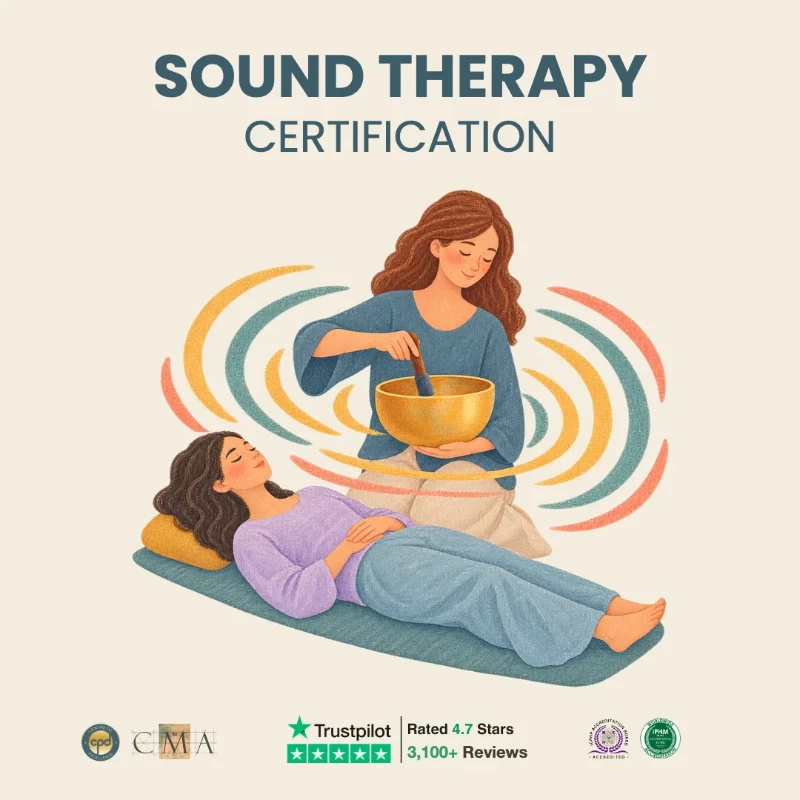
Deepen your grounded approach with the Sound Therapy Certification.
Explore Sound Therapy →