Whether you’re new to animal-focused work or deeply experienced, sensitive animals can bring out the same instinct: add more. More scent, more sound, more focus, more intention, more hands-on time. And the animal responds in a familiar way—lip licking, turning away, hiding, or going very still without truly settling.
With sensitive animals, the better answer is usually quieter. What feels “subtle” to a person can already be a full sensory experience for a dog, cat, rabbit, or bird. Chakra-informed support can be deeply meaningful here when it’s used as a symbolic observation map, not as anatomy to correct. Keep contact light, brief, and optional, and let consent, species norms, and safety shape every choice.
Key Takeaway: Sensitive animals benefit most from low-intensity, consent-led support where chakras act as a gentle observation map rather than a target for strong input. In practice, that means reducing sensory load, grounding yourself before contact, keeping sessions brief, watching species-specific consent signals, and ending while the animal is still comfortable. The aim is not a dramatic shift, but a cooperative close that protects trust and supports well-being.
Using chakras as a symbolic map for animals
Chakra work becomes gentler and clearer when it’s held as symbolism rather than literal structure. In their original South Asian contexts, chakras are cultural and energetic models for noticing vitality, expression, and connection. They are not anatomical parts that can be fixed.
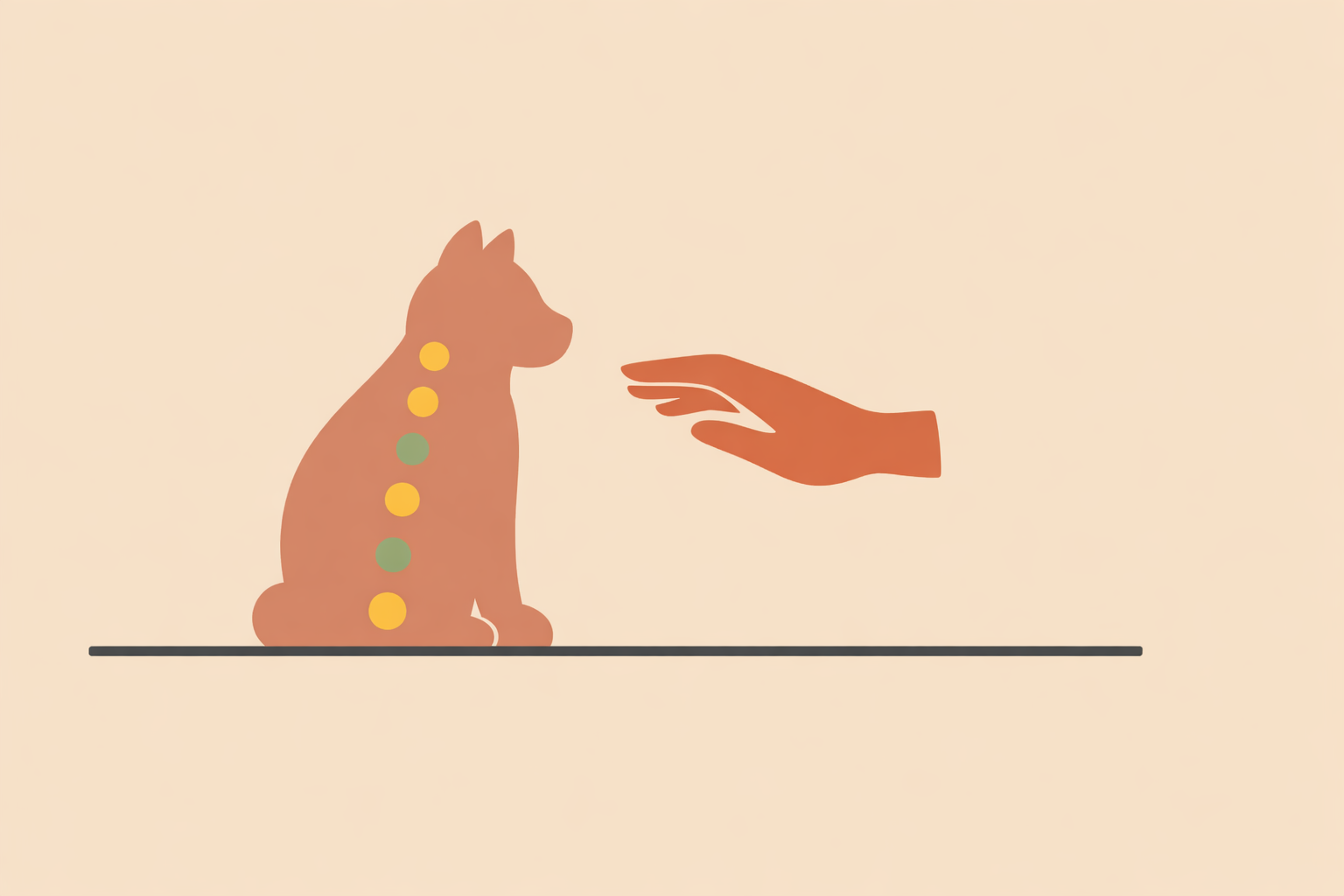
Used this way, chakras guide attention without overriding what the animal is communicating. The familiar seven-chakra map becomes a set of themes to observe:
- Root: grounding, stability, security
- Sacral: fluidity, play, responsiveness
- Solar plexus: agency, boundaries, confidence
- Heart: social ease, warmth, connection
- Throat: expression, voice, ease around contact
- Third eye: attention, orientation, awareness
- Crown: spaciousness, quiet presence
This framing keeps the work humble. If your map suggests one theme but the animal turns away, their response leads. The chakra lens serves observation; it never outranks consent.
In practice, that might look like sitting beside a rabbit and reflecting on root qualities—secure footing, steadiness, comfortable distance—without touching at all. With a cautious cat, a heart reflection might be no more than softening your own chest and noticing whether the cat’s breathing stays easy.
This approach also prevents over-interpretation. There’s no need to label an animal as “blocked” or “imbalanced.” You’re tracking comfort, agency, and willingness in real time.
Ground yourself before you make contact
Animals respond strongly to human state. Arriving settled and steady often makes even light touch feel quieter to a sensitive animal, so begin with your own regulation.
Grounding isn’t a performance. It’s reducing noise in your body and attention. When your breath is tight or your shoulders are braced, even gentle contact can feel intrusive.
A practical pre-session ritual can take under two minutes:
- Place both feet on the floor or settle evenly in your seat.
- Let your jaw soften and your shoulders drop.
- Breathe out slightly longer than you breathe in for three slow cycles.
- Name a few sounds and visual details around you.
- Rub your hands and forearms slowly to bring warmth and presence into them.
- Set a quiet intention such as, “I am here to observe and support, not to make anything happen.”
Sensitive animals often respond first to how you arrive, not what method you plan to use. A calm practitioner doesn’t guarantee participation, but it creates a safer-feeling atmosphere for choice.
Before greeting a sensitive greyhound, you might warm your hands, relax your wrists, and offer a still, neutral hand only once your breathing has settled. Many animals approach differently when the human body is genuinely quiet.
Consent signals: how animals say yes, no, and enough
Consent with animals is an ongoing conversation. The clearest “yes” is voluntary participation that the animal can end at any time.
A helpful rhythm stays simple: approach, pause, offer, pause. Come in indirectly, pause without reaching, offer a hand or quiet presence, then pause again to see what the animal chooses.
If the animal leans in, stays soft, or re-engages after your hand leaves, you can continue gently. If they stiffen, turn away, leave, flatten, freeze, or begin rapid self-soothing behaviors, you stop or step back.
Stillness deserves special care. In overwhelmed animals, freezing or unusual stillness can signal stress, so the session should slow down and create more space.
Consent also varies by species. Dogs often show willingness by leaning in or returning after a pause. A cat’s purr doesn’t automatically mean “continue.” Rabbits, birds, and reptiles often communicate through distance, orientation, and tolerance of your presence rather than active touch-seeking.
A practical internal script helps: approach diagonally, stop, offer, touch briefly if invited, remove your hand, and wait. Let the animal request the next step.
A gentle 10–15 minute chakra-informed session
With sensitive animals, short and spacious tends to land better than long and intense. Ten to fifteen minutes is often plenty, and ending earlier can still be an excellent session.
Start with the environment. Lower background noise, reduce strong odors, provide secure footing, and ensure the animal has a clear way to move away.
Then follow a steady flow:
- Minute 0–2: Arrive and ground yourself. Let the animal choose distance. If they stay away, remain hands-off.
- Minute 2–4: Offer a still hand or quiet presence. If the animal remains loose or approaches, add one light touch-and-release at a neutral area such as the shoulder or side of the chest.
- Minute 4–8: If consent continues, use brief contact of a few seconds at a time, with longer pauses in between. Watch breath, posture, facial softness, tail carriage, and whether the animal re-engages.
- Minute 8–12: Weave in two or three chakra reflections as themes rather than techniques. Root may mean noticing stability and ground contact. Heart may mean warmth and social ease near the chest without pressure. Throat may mean softening your own voice and avoiding direct contact at the throat.
- Minute 12–15: End while comfort is still high. Remove your hand, thank the animal quietly, and let them move away first.
Evidence limited, which makes a modest, observational approach even more fitting. Traditional hands-on support still has real value, especially when it stays within clear, gentle limits.
This structure also prevents drift. The goal is a cooperative, low-load experience: observe, invite, respond, and close before the animal becomes saturated.
How to adjust for dogs, cats, horses, rabbits, birds, and reptiles
The chakra lens can translate across species as metaphor, but consent and touch must always be species-specific. What feels supportive to one animal can feel invasive to another.
- Dogs: Willingness often shows up as leaning in, soft eyes, easy breathing, or returning after a pause. Discomfort may look like lip licking, yawning, turning away, panting, scanning, or leaving.
- Cats: Choice matters greatly. Many do best when you sit low and let them decide location and duration. Brief touch-and-release often works better than sustained contact, and purring should not be treated as automatic consent to continue.
- Horses: Approach from an angle rather than straight on. A horse’s wide-angle vision and more limited forward depth perception can make frontal approaches feel more intense. Space, orientation, and environment matter as much as touch.
- Rabbits: Their prey sensitivity means hands-off presence is often the best first choice. If touch is invited at all, keep it brief and easy to leave.
- Birds: Many birds interpret direct gaze as pressure, so hands-off work is generally safer than touch. Quiet presence and respect for distance usually matter most.
- Reptiles: Handling can be stressful for many reptiles, so observation-led, minimal handling is typically the safest approach. In many cases, the most respectful support is calm, non-invasive presence.
Across all species, sensitivity is individual too. One confident rabbit may approach readily while another prefers no touch at all. One older dog may welcome a hand on the shoulder, while another finds even that overwhelming on a given day.
The practitioner’s role is to stay responsive to what this animal, in this setting, is ready for right now.
Common pitfalls and when to pause or stop
The most common mistakes happen when the session gets driven by a preferred outcome. That can look like chasing a reaction, interpreting stress as a “release,” or continuing just because the clock says you should.
Animal-led work avoids those habits.
- Do not impose energy. If you find yourself trying to make the animal settle, step back.
- Do not turn chakras into verdicts. There are no species-validated chakra touch maps recognized in mainstream manual-therapy references.
- Respect clear physical boundaries. Avoid direct work over infections, acute inflammation, tumors, recent surgical sites, or suspected blood clots.
- Stop for escalating distress, defensive behavior, collapse, marked breathing changes, or inability to settle. These are red flags that the session should end and may warrant veterinary input.
- Keep the work low-force. No restraint, no forceful pressure, no joint manipulation, and no dramatic storytelling about what the animal “needs.”
Chakra, meridian, and Qi-based frameworks reflect generations of lived practice and traditional use. They offer a meaningful lens, especially when paired with humility, cultural respect, and close observation.
If a dog turns away while you’re holding a heart reflection, take it as clear information. Remove your hand, soften your body, and let the dog decide what happens next.
Supporting sensitive animals without overwhelm
For sensitive animals, less is often kinder. The real skill is noticing what the animal is communicating and honoring it moment by moment.
Let chakra wisdom stay a compassionate map rather than a system to impose. Root stability, heart connection, and throat ease can guide your attention, while consent, species norms, and safety guide your actions.
Build sessions on grounded presence, natural breathing, brief contact, generous pauses, and a clear willingness to end early. A “successful” session may look like a rabbit choosing to remain nearby, a horse softening through the eye, or a cat walking away calmly when they’ve had enough.
Endings like that protect trust. For sensitive animals, trust is often the most meaningful outcome you can support.
Explore Animal Massage Certification
Build consent-led, low-intensity touch skills for sensitive animals with the Animal Massage Certification.
Explore Animal Massage Certification →