


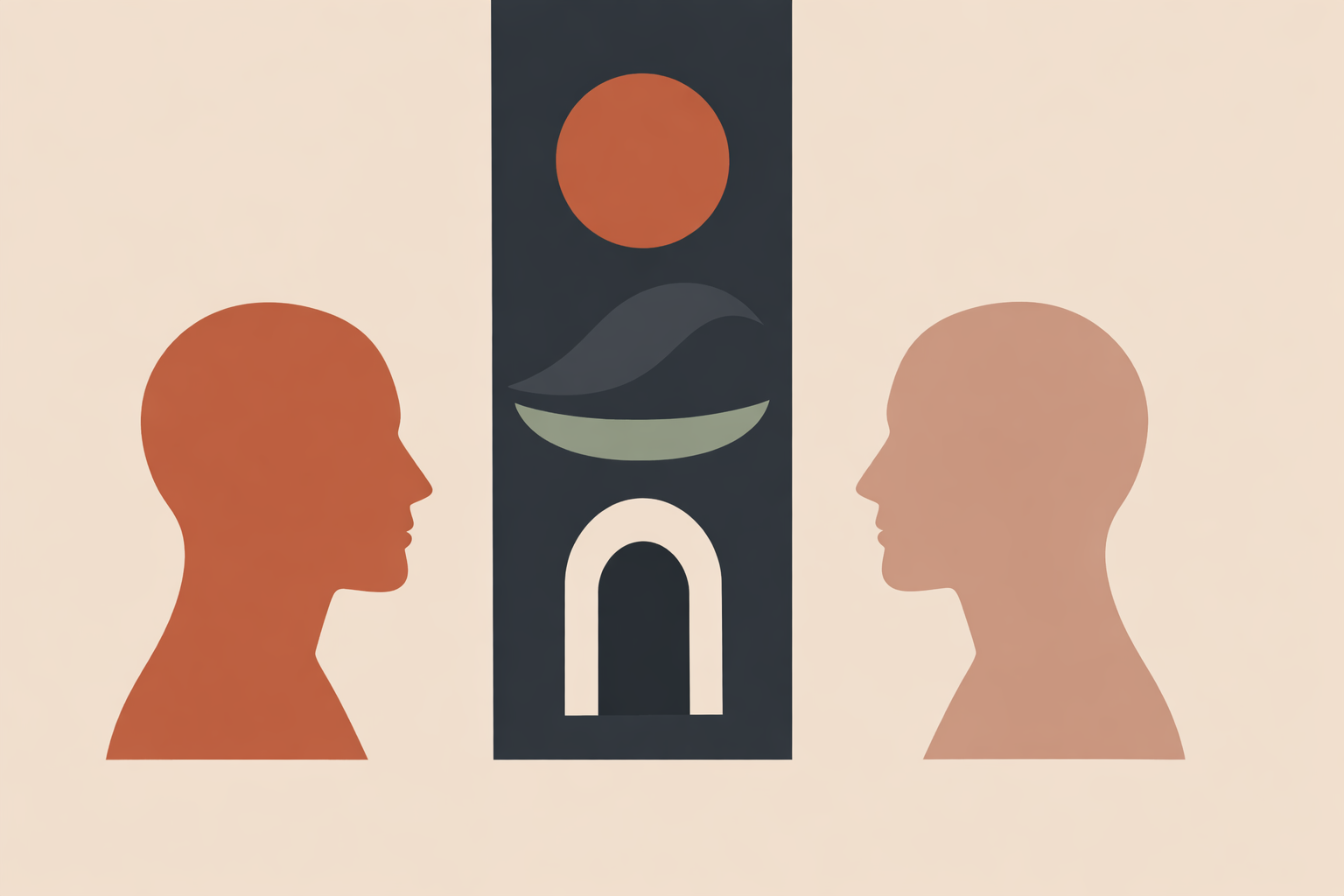
The default move in early art-based coaching is to decode images: black means grief, snakes mean transformation, red means anger. It sounds useful, but it often creates pressure, pulls authority away from the client, and turns art into a test. A steadier approach is simpler: let the image speak in the client’s language, not yours.
Key Takeaway: Client-led symbol work helps clients turn images and dreams into grounded action without overreach. Start with what is visible, invite feelings and associations, ask what the image means today, and close with one small next step. The process stays safer, more respectful, and more useful when meaning remains client-owned, culture is handled with humility, and intensity is paced with care.
Why Symbols Matter in Art Life Coaching
In art life coaching, images often arrive the way dreams do: compact, layered, and fuller than a tidy verbal explanation. A door, river, bridge, spiral, animal, or storm can hold a whole season of life at once.
Art-making can externalize experience, giving shape to what’s hard to name. Once it’s on the page, the client can witness it, explore it, and reshape it at their own pace.
Many practitioners see motifs return across sessions: circles, roots, thresholds, paths. Rather than pulling from fixed symbol dictionaries, it’s often more accurate to treat these as living material that carries attention, tension, hope, or transition in this client’s life right now.
Images can also be easier to approach than direct conversation. That’s why symbol work tends to go best when it begins with gentle observation, then follows the client’s lead.
- Composite example: Sam sketches a small canoe under heavy blue waves. When asked, “What part of the image feels most alive?” Sam points to the oar and says, “That’s my morning walk. Small, but it steadies me.” The session then turns toward strengthening what already supports them.
- Useful prompt: “If this image were a dream from last night, what feeling would you wake up with?”
Start With What Is Visible
A simple discipline keeps symbol work grounded: describe first. Before asking what something means, name what is actually there. “I notice a red circle in the center.” “There are jagged lines at the edges.” “The figure looks tiny beside the mountain.”
Description keeps the space non-intrusive and gives clients room to discover meaning instead of reacting to yours. Often, that pause is what makes symbolic exploration feel steady and spacious.
From there, ask what stands out, what draws their eye, or what feels most alive. Observation opens the door; the client chooses where to go.
When Symbol Work Becomes Overreach
Symbols are rich, and it’s natural to feel tempted to explain them. Overreach begins when richness turns into certainty: the artwork becomes a hidden exam, meanings get assigned too quickly, or the coach steers toward a preferred story.
Fixed interpretations like “snakes always mean rebirth” or “black always means heaviness” can sound confident, but they flatten personal meaning and can erode trust. When the coach claims authority over the symbol, the client’s own knowing gets pushed aside.
Coaching works best when it stays present-focused and growth-oriented: supporting reflection, steadiness, values, and aligned action. That doesn’t require grand interpretation.
- Overreach: “You used a lot of black, so this must mean despair.”
- Client-led reframe: “I notice a lot of black. What does that color carry for you today?”
- Overreach: “The bridge means you are afraid of change.”
- Client-led reframe: “What does the bridge suggest to you?”
Good symbol work is rarely about being impressive. It’s about being accurate to the client’s lived experience.
A Simple Five-Step Flow for Client-Led Meaning
A light structure keeps the process clear while leaving meaning where it belongs: with the client.
- Describe: What is visible here?
- Feel: What part of the image feels warm, tense, heavy, open, sharp, or alive?
- Associate: What memories, places, people, or life situations come to mind?
- Meaning: What does this image mean for you today?
- Action: What small action, experiment, boundary, or conversation does it invite this week?
This flow works because it respects timing. Meaning doesn’t need to be forced; it emerges through attention.
It also helps to keep direction collaborative. “Where would you like to go next?” prevents drifting into intensity and reinforces client authorship.
Useful questions include:
- “What drew you to this image?”
- “What feels most alive here?”
- “What part do you want to stay with?”
- “What does this symbol mean in this season of your life?”
- “What is one step this image is asking of you now?”
Scenario: Lina paints a crossroads with one narrow sunlit path and one broad shaded road. Her associations settle around “a quiet, honest yes.” The action she chooses is simple: a daily ten-minute check-in with the question, “What is my honest yes today?” The image has done its work.
Art Methods That Hold Symbols Lightly
The strongest methods are often simple containers that invite depth without demanding it. You don’t need complexity to do meaningful symbol work; you need steadiness, choice, and a clear next step.
Mandalas, Thematic Drawing, and Expressive Collage
Mandalas, thematic drawing, and expressive collage remain steady favorites because they balance structure with freedom. They give clients a way in, while leaving room for surprise.
- Mandalas: Offer a circle and a prompt such as, “Fill this with what supports your center this month.” Afterward ask, “Which part surprises you?”
- Thematic drawing: Prompts like “Draw your current crossroads,” “Sketch your boundary as a landscape,” or “Show me your energy this week” make inner experience visible.
- Expressive collage: Clients gather images, colors, and textures that match a felt sense. This can help when words feel too narrow or effortful.
Collage becomes especially useful when it’s linked to a real-world commitment: a support to ask for, a boundary to hold, or a habit to protect.
When symbols feel charged, give them more space rather than more interpretation. Slow the pace, pause more often, and let a little uncertainty do its quiet work.
From Guided Imagery to Daily Action
Light guided imagery can open symbolic material gently. A client might imagine walking a path, entering a garden, meeting a doorway, or setting down a burden and noticing what changes. What matters is whether the image reveals something honest and usable.
Afterward, drawing, painting, or collage helps the experience take form. A few lines of journaling can then carry it into the week.
- “What did this image help me notice?”
- “What feels different now?”
- “What one shift do I want to test this week?”
- “What support or boundary would make that shift more real?”
Example: After a brief visualization, Amir sketches a small seed with roots reaching toward a glass of water. His journal note says, “My mornings are the water. Protect them.” His action is simple: leave the phone outside the bedroom and begin the day with one nourishing practice before screens.
Cultural Humility With Sacred and Ancestral Symbols
When sacred or ancestral imagery appears, the pace should soften. This is not material to generalize, borrow casually, or translate into universal symbol language.
Colors and motifs don’t hold the same meaning everywhere. Meanings shift across families, cultures, regions, and lineages; what protects in one context may warn in another.
Cultural humility matters more than symbolic certainty. Let the client lead with their own terms, stories, and thresholds for sharing. If they want to name a lineage, ceremony, elder, deity, pattern, or household tradition, follow carefully. If they prefer not to explain, that boundary deserves full respect.
- Ask: “Are there family, ancestral, or spiritual meanings here you’d like to bring in?”
- Reflect their language back rather than replacing it with generic labels.
- Do not assume that a sacred-looking image is yours to explore in detail.
- Be cautious with symbols that come from traditions outside your own experience.
Traditional imagery is often relational rather than decorative. It can connect to land, kinship, ceremony, memory, and belonging. Approaching it with humility protects the client’s meaning and the cultural roots of the symbol itself.
Scenario: Priya creates a rangoli-inspired mandala. Instead of interpreting it broadly, you ask whether there are family or seasonal meanings she would like to share. She tells a story about Diwali at her grandmother’s home. That story becomes the center of the conversation, not your theory about mandalas.
Holding Intensity With Care
Symbols can be gentle, and they can also open tender material quickly. Skilled facilitation includes reading the emotional weather and knowing when to slow down, contain, or stop.
Red flags include sudden numbness, panic, disorientation, or distress that lingers after the session. When that happens, the priority is steadiness, pacing, and choosing appropriate next support.
In the moment, grounding is often enough to help a client return to the room. Practices such as feeling feet and noticing what’s visible around them can reduce intensity and support regulation.
Expressive arts processes are also linked to emotion regulation and stress reduction when the work is well-paced and held within a clear scope.
- Ground: “Let’s both press our feet into the floor and name three solid things we can see.”
- Contain: “Would it help to draw a border around this image and come back another time?”
- Offer choice: “Would you like to continue, pause, or shift to something steadier?”
- Return to the present: “What would support you for the rest of today?”
Scenario: During guided imagery, Eli goes quiet and stares at the table. You pause, orient together to the room, invite a steadier image, and close with a simple drawing of “what helps me return.” The next session is shorter and more contained. That’s good pacing.
Closing Thoughts
Symbols are most useful when they’re held lightly. Trust the client’s meaning, use clear but flexible containers, and translate insight into one or two grounded next steps.
A simple rhythm is often enough: create, witness, reflect, choose. Start with what is visible. Invite feeling and association. Ask what the image means today. Then let it become a small action in lived life.
When sacred or ancestral imagery appears, slow down and let the client lead. When intensity rises, ground and contain. If the work points beyond your scope as a coach, respond with honesty and care and help the client find the right level of support.
Done this way, symbol work becomes a respectful, creative path within creative and expressive therapies toward self-understanding, agency, and meaningful change.
Advance Art Life Coaching
Deepen client-led symbol work with practical methods in the Art Life Coach Certification.
Explore Art Life Coach Certification →










