Parts-based coaching can feel most tender right when it starts to work. Attention turns inward, emotions sharpen, and protective responses naturally mobilize. Safety comes less from doing more and more from having a steady structure for choice, pacing, and support.
That structure starts with clear agreements, stays alive through moment-to-moment consent, and grows stronger when protective parts are respected instead of pushed aside. When the pace is right, inner work remains practical, grounded, and within coaching scope.
Key Takeaway: Safe parts-based coaching relies on a repeatable safety system, not technique alone. In practice, that means setting clear scope and consent for parts work, waiting for enough Core Self presence before going inward, building trust with protective parts before approaching deeper pain, mapping inner patterns as relationships rather than isolated problems, and regulating intensity through orienting, titration, pendulation, and clear stop signals.
Protocol 1: Set scope, language, and consent clearly
Begin by naming the frame: what parts-based coaching is, what it is not, and how choice will guide the whole session. In many traditional paths of inner development, the work starts with agreement and a respectful pace that protects trust. In coaching, that becomes scope-setting and explicit consent.
Keep the language simple. “Parts” can be framed as patterns of feeling, thought, sensation, impulse, or strategy that show up in experience. They do not need to be treated as fixed identities to be useful.
Anchor the work in coaching aims such as self-awareness, present-day patterns, values-aligned choices, and stronger self-leadership in everyday life. This keeps the conversation oriented toward growth rather than drifting into territory that needs a different kind of support.
Move away from rushing for a “root cause,” relying on generic intake forms, or treating one early yes as blanket permission. Parts work asks for more specificity, more pacing, and more frequent check-ins than a standard goal-setting conversation. Client permission and collaborative pacing are central to trauma-aware parts work, helping protect scope while preserving agency.
What good consent looks like in parts work
Consent in parts work is ongoing. Because inward attention can intensify experience, the agreement needs to stay clear throughout the session.
A strong consent conversation usually includes:
- the purpose of the process
- what a typical session might look like
- what the client can pause, skip, or redirect
- how body-based attention may be used, if at all
- how notes are kept
- break options and stop signals
- what happens if the work needs a different kind of container
You might say: “We can use a parts lens to explore what happens inside when stress rises. You stay in charge of pace. You can pause, skip, or say ‘not today’ at any point. If something feels too big for coaching, we’ll slow down and discuss next steps together.”
Protocol 2: Wait for enough Core Self presence
Before going deeper, look for signs of Core Self presence: curiosity, compassion, calm, clarity, or even a small sense of space around what is being felt. The person does not need to feel peaceful. Strong emotion can be present while steadiness is present too.
You may notice subtle markers: the breath slows, the voice softens, or the language shifts from “I am completely inside it” to “Something in me is scared, and I can stay with it.” That shift signals more choice.
Treat this as a practical safety principle. When there is enough steadiness to relate to the experience, the work stays relational rather than forceful.
Keep consent active the whole way. How you respond to “not today” becomes part of the safety system. When a client pauses, declines, or redirects, take it as accurate pacing information rather than resistance. Collaborative decisions around pace support trust and keep the process grounded.
Checklist for Core Self presence and real choice
- Ask whether there is even 5% curiosity or compassion toward what is arising.
- If not, slow down and resource before exploring further.
- Before shifting to body awareness, ask permission directly.
- Remind the client that pause, skip, redirect, and stop are always valid.
- Use an intensity scale to track activation and decide when to widen attention.
- Work in short windows, then re-check.
- Return to orienting whenever presence starts to wobble.
Protocol 3: Build alliances with protective parts first
One of the most stabilizing moves in parts-based coaching is to meet protectors before approaching deeper pain. Protective parts are rarely “in the way.” They are organized around vulnerability, harm, or intense emotion, and they often form around what the system has had to manage for a long time. A review of IFS-style frameworks describes protective parts in exactly this way.
When protectors feel overridden, trauma and emotional healing work and parts-based techniques can backfire. Even well-meant interventions can create backlash if the protective layer experiences the process as too fast, too intrusive, or not fully chosen.
So lead with respect. Ask what the protector is trying to prevent. Ask what it fears would happen if it relaxed. Thank it for the role it has been carrying, especially if it has been doing that job for years.
When protectors feel understood, friction drops and trust builds from the inside out.
Checklist for protector alliances
- Name the protector respectfully and appreciate its effort.
- Ask about its job and what it is trying to prevent.
- Ask what would make the process feel safer.
- Offer small, time-limited experiments instead of open-ended exploration.
- Invite Core Self to relate to the protector rather than push it aside.
- Debrief after each experiment: what felt okay, and what did not?
Also watch for protector mimicry. Urgency to disclose everything, collapse, or serene certainty can sometimes be protective strategies rather than signs the system is ready to go deeper. Treat these moments as useful information and slow the pace.
Protocol 4: Map the system as relationships, not isolated parts
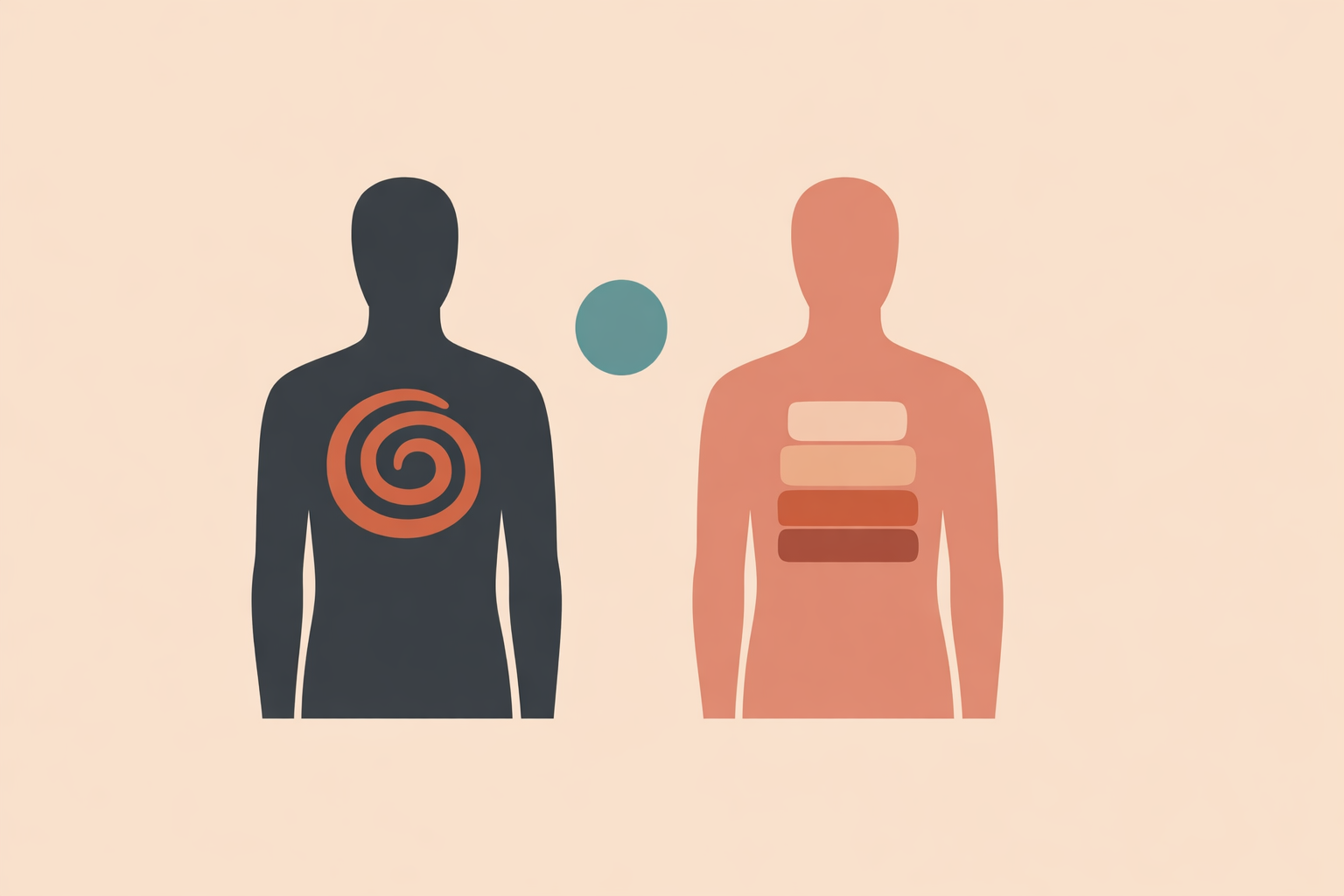
As steadiness grows, widen the view from “one part” to the relationships between parts. Inner patterns tend to organize in sequences: one activates, another reacts, another tries to contain what follows.
Mapping these loops makes the inner world more understandable and less overwhelming. It also creates more room for choice, because the pattern becomes visible before it takes over.
For example, pressure may activate a high-functioning manager, then the body tightens, then a shutdown arrives, followed by self-criticism about shutting down. Once that sequence is seen clearly, you can coach the next step with more agency.
Co-mapping also supports compassion. When someone sees that each role is trying, in its own way, to help, the system often softens.
Checklist for co-mapping inner patterns
- Identify the trigger or situation.
- Name which part shows up first.
- Track what that part does next.
- Notice what vulnerable concern may sit underneath.
- Include body cues, impulses, and emotional shifts.
- Map what happens if the first strategy fails.
- Use the client’s own language for part names and roles.
A simple map might include: trigger, first protector, body response, deeper concern, secondary protector, and a steadier next step. When the pattern makes sense, relief often follows quickly.
Protocol 5: Regulate somatic and emotional intensity
When intensity rises, slow down and widen attention. Body-focused awareness can increase emotional charge, especially if someone stays inward for too long without moving between activation and steadiness. Trauma-informed mindfulness accounts highlight why gradual pacing matters.
This is where somatic pacing skills earn their place: tracking, titration, pendulation, and containment. Guidance on body-oriented trauma work describes pendulation as moving attention between steadier resources and more charged material so the system can approach distress without overwhelm.
Keep the work brief, specific, and reversible. Let the client touch the experience lightly, then come back out to the room and the present moment. Reorientation supports integration; it is part of the process rather than a pause from it.
Checklist for somatic pacing
- Begin with orientation: the room, colors, sounds, contact with the chair, feet on the ground.
- Ask permission before focusing on sensation.
- Use short time windows and re-check often.
- Shift attention between charged and steadier places.
- Support clear physical boundaries through posture, contact, and grounding.
- Use simple language and avoid adding too much meaning too quickly.
- End with completion cues such as stretching, looking around, or feeling support under the body.
Orientation practices and a witnessing attitude often lower intensity without pushing for change. Over time, brief notes on what raised or reduced activation will help you pace future sessions with more accuracy.
How the five protocols work together
These protocols work best as one rhythm. Scope and consent create the container, Core Self presence signals readiness, protector alliances build internal trust, co-mapping creates understanding, and somatic pacing keeps the process manageable.
This relational pacing can feel slower at first, but it tends to produce steadier progress. Change holds more deeply when it grows from self-leadership rather than pressure.
Conclusion
Safe parts-based coaching is built through respect, pacing, and repeatable structure. Clarify the frame, keep choice alive, work with protectors before pressing deeper, map patterns together, and regulate intensity so the experience stays grounded and digestible.
This approach honors traditional wisdom alongside contemporary trauma-aware practice: start with agreement, move at the pace of trust, and let the inner system reveal itself in its own time. As a final note, whenever intensity stays high, consent becomes unclear, or a client needs more support than coaching can hold, it’s wise to pause and help them find the right next container, including deeper study in inner parts integration when appropriate.
Train in Parts Integration
Deepen these safety protocols in the Inner Parts Integration Coach Certification.
Explore Inner Parts Integration →