Crystal practitioners often default to one-off “big” sessions. The pattern is familiar: a new client arrives hoping for a dramatic third-eye moment, you assemble a complex grid, the hour feels potent, and two weeks later very little has settled into daily life. Without a predictable container, you end up choosing between overloading a first visit or under-delivering, and neither helps you build trust or read patterns clearly across time.
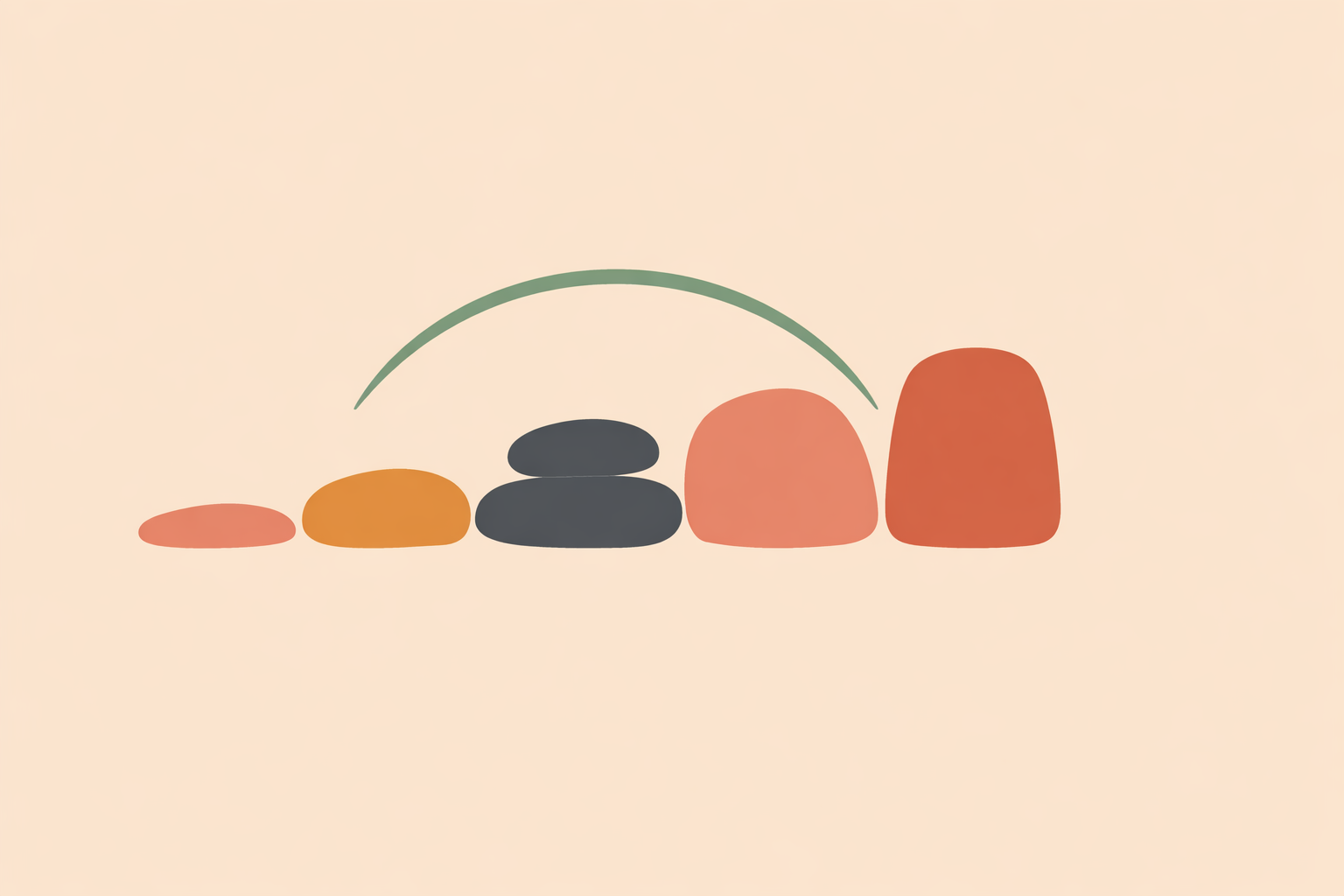
Key Takeaway: A five-session crystal layout journey gives clients a stable container and progressive depth. By repeating the outer structure, keeping a steady cadence, and adding complexity gradually, you create a process that feels easier to receive and easier to track. A simple progression works well: Session 1 for intake, intention, and container; Session 2 for grounding; Session 3 for a repeatable chakra line; Session 4 for heart and solar plexus focus; and Session 5 for insight and integration.
Session 1: Intake, Intention, and a Stable Container
The first session is not about impressing. It’s about building a dependable container that can hold the next four visits.
Begin with a grounded conversation: current themes, sleep, stress, emotional tone, and what already supports the client. Questions like “What would feel different in your week if this series supports you well?” or “What kind of steadiness are you hoping to build?” set direction without forcing a grand objective.
Then shape the space so the body can soften. Dim lights, silence alerts, keep music gentle (or use quiet), and offer simple comforts like a blanket. An uncluttered room supports an uncluttered experience.
Set intention together. A small stone in the client’s hands and a short phrase such as “Today I welcome steadiness” or “I’m open to clarity without force” helps the work feel participatory rather than something being “done” to them.
Finally, establish the outer grid you’ll repeat throughout the journey. Many practitioners use a simple structure such as clear quartz above the crown, grounding stones at the feet, and optional anchors at the hands. The exact stones matter less than the consistency in a well-held crystal-healing practice.
Consent-based language keeps this opening clean and respectful:
- “I’ll place a few stones around your field to create the container. If anything feels uncomfortable, say pause and I’ll adjust.”
- “Would you like to begin with a hand stone for intention, or shall we start with breath only?”
Session 2: Grounding Through Root and Feet Placements
Many clients think they want upper-center intensity. Most benefit first from feeling the floor, the legs, and the lower body settle.
Keep this session straightforward. Three to seven stones is usually plenty, especially for newer clients. Black tourmaline, hematite, smoky quartz, obsidian, and red jasper are classic choices for root-oriented layouts and foot placements. If you’re using a crown anchor such as clear quartz, let it stay quiet in the background while the emphasis remains low.
If you want more containment without adding complexity, try a simple frame: a stone at each hand and foot (or four stones around the mat/table). This often helps clients relax into the boundaries of the session.
Breath pairs beautifully with grounding. Longer exhalations can help the body settle, so cues like “inhale for 4, exhale for 6” fit naturally here.
A simple grounding protocol might be:
- Repeat the outer container from Session 1
- Place smoky quartz at the base of the spine
- Place black tourmaline or hematite at each ankle or foot
- Add red jasper at the knees if desired
- Keep one clear quartz above the crown
- Use a few minutes of slow breathing, then rest in silence
- Close by removing stones gradually from top to bottom or crown to feet, according to your usual method
The aim here is steadiness and orientation. When the session stays simple, your read on the client’s responses gets much cleaner.
Session 3: Building a Simple Chakra Line the Body Can Remember
Once grounding is established, you can widen the map. A simple chakra line gives the series a recognizable inner structure clients often remember right away.
A five-to-seven-stone midline layout works well because it’s easy to repeat and easy to track over time. Many practitioners use the familiar sequence from root to crown, matching stones by color and resonance. Regularity is what makes this session powerful.
Let the line rest long enough for the pattern to land, then close with the same familiar rhythm you’ve used in the earlier sessions.
A classic sequence might include:
- Root: red jasper
- Sacral: carnelian
- Solar plexus: citrine
- Heart: green aventurine or rose quartz
- Throat: blue lace agate
- Third eye: lapis or amethyst
- Crown: clear quartz
Guiding language helps the body learn the order. Quietly naming each center as you place the stones (“root, sacral, solar…”) often becomes a settling cue in itself.
If you explain symbolism, this is the moment to briefly name the traditional red-to-violet chakra progression, especially in more structured chakra balancing work. Keep it light and practical so the client feels oriented rather than overloaded.
Session 4: Heart and Solar Plexus Focus for Boundaries and Connection
By the fourth session, you usually have enough information to narrow the focus. Heart and solar plexus work often sits at the center of this stage.
In traditional chakra-based practice, the solar plexus is often associated with will, self-definition, and boundaries, while the heart relates more to connection, warmth, and openness. Working with both can be especially supportive when clients are navigating relationship strain, confidence, or the desire to soften without losing their center.
Reduce the layout to three or four stones so the theme stays clear. Citrine or tiger’s eye are common choices at the solar plexus. Rose quartz, green aventurine, or jade are often chosen for the heart. If you add anything else, keep it minimal and purposeful.
A focused version might include:
- Solar plexus: citrine
- Heart: rose quartz
- Optional throat: blue lace agate
- Optional root: smoky quartz
You can support this session with prompts that invite reflection without pushing disclosure:
- “Name one boundary you’re proud of.”
- “What kind of connection would you like to nourish more gently?”
- “Where in life are you being asked to stay open and clear at the same time?”
This is also a great point in the series to lean on brief session notes. A couple of lines after each visit (felt sense, timing, stones used) can reveal whether the client is settling, bracing, opening, or asking for a slower pace.
Session 5: Upper-Chakra Insight and Integration
The final session can open upward, while still feeling held by the same familiar container.
Keep the quartz anchor above the crown and grounding stones at the feet. That pairing brings balance when you place more attention on the throat, third eye, or crown, and it supports clarity without drift.
This is also the right time for gentle refinements: stones in the palms, a slightly more detailed upper-center layout, or a wand to connect placements more intentionally. Because the client already knows the overall structure, these additions tend to land smoothly.
A useful integration layout might include:
- Quartz cluster or point above the crown
- Amethyst at the third eye
- Sodalite at the throat
- Rose quartz at the heart
- Citrine at the solar plexus
- Hematite or obsidian at the feet
- Optional palm stones such as lapis, jade, or rhodochrosite
If you work with a clear quartz wand, you can lightly trace connections along the midline or from heart to hands to unify the layout. To close, slow sweeping passes above the body can mark the shift from active focus into completion. Keep this gentle so integration stays front and center.
End with reflection that supports agency:
- “What felt clearest today?”
- “What small action would honor that clarity this week?”
- “What part of this five-session journey would you like to keep working with?”
Closing the Series with Care
A five-session crystal journey works because steady form gives subtle work somewhere to land. As the structure repeats, the stones become easier to feel clearly, and your observations become more reliable from one visit to the next.
A few principles keep the work clean and useful:
- Consent is ongoing. Offer opt-outs for placements and check in with plain language.
- Ground first, then open. Let complexity rest on top of safety.
- Document lightly. A few clear notes after each session are enough to guide adaptation.
- Honor roots. Be clear about the lineages and traditions that inform your practice, and approach them with respect.
- Stay flexible. The five-session arc is a structure, not a script carved in stone.
Some clients will want to repeat the heart-focused session. Others do best alternating grounding and chakra-line work for a season. As always, keep your professional boundaries clear, avoid overstating outcomes, and encourage clients to seek appropriate support for concerns beyond the scope of coaching. The deeper principle stays the same: clear intention, steady pacing, and a container strong enough to let the work unfold without force.
Go Deeper with Lithotherapy
Deepen your five-session layout craft with the Lithotherapy Certification for clearer structure, pacing, and integration.
Explore Lithotherapy Certification →