The usual plan on a hectic day is to “do a longer self-Reiki session later.” By late afternoon, messages, family logistics, and the ordinary pull of the day have already eaten the space you meant to protect. Focus thins, shoulders creep up, and that later window quietly disappears.
Key Takeaway: A brief Reiki breathing practice can steady attention and help you feel more settled without needing a long session. Working with Gassho, the hara, and soft abdominal breathing creates a simple 1–5 minute reset you can use between tasks, before sessions, or at the end of the day. The same core arc can be adapted across Reiki Levels I–III while staying gentle, practical, and rooted in tradition.
Why Reiki Breathing Helps on Busy Days
Busy days split attention into pieces: one part answering messages, another planning ahead, and another still carrying what happened earlier. Reiki breathing gathers attention back into one place.
From a traditional perspective, when awareness returns to the body, energy naturally steadies. Bringing attention to the lower belly is a direct way to do that, and breath is one of the simplest bridges back within energy healing practice.
Modern summaries also suggest Reiki may support tension, mood, and rest. Public guidance also describes Reiki as gentle and accessible, which is why it fits so well into short check-ins instead of only longer sessions.
In practice, it can be very plain: set the phone down, bring hands to the belly, and take a few unhurried breaths. The shift is often subtle but real: less internal noise, softer shoulders, more of you back in the room.
Hara, Gassho, and the Foundation of Reiki Breath
This practice rests on three familiar pillars: the hara, Gassho, and natural breath.
In many Usui-informed teachings, the hara is center of gravity, sensed a few finger-widths below the navel. Resting awareness there often creates an immediate feeling of settling.
Gassho (palms together) is traditionally used to focus attention. It gives the mind one simple place to rest, which is often more effective than trying to “clear” thoughts by force.
Breath follows the same spirit. Gentle abdominal breathing is usually enough, and traditional instruction emphasizes a non-forcing approach where the breath is noticed and allowed to smooth out.
Many practitioners pair breath with intention: receive on the inhale, soften or release on the exhale. In related Reiki teachings, slow breathing is often described as stress reduction support.
Some lineages include Jyoshin Kokyu Ho, often described as a breath method for clearing the mind. Whether you use the formal name or keep it as simple Reiki breathing, the aim stays consistent: less inner scatter, more presence.
A 60-Second Reiki Breathing Reset
When you want the shortest useful version, use this one-minute reset.
- Sit or stand with soft knees and an easy jaw.
- Bring your palms together briefly in Gassho.
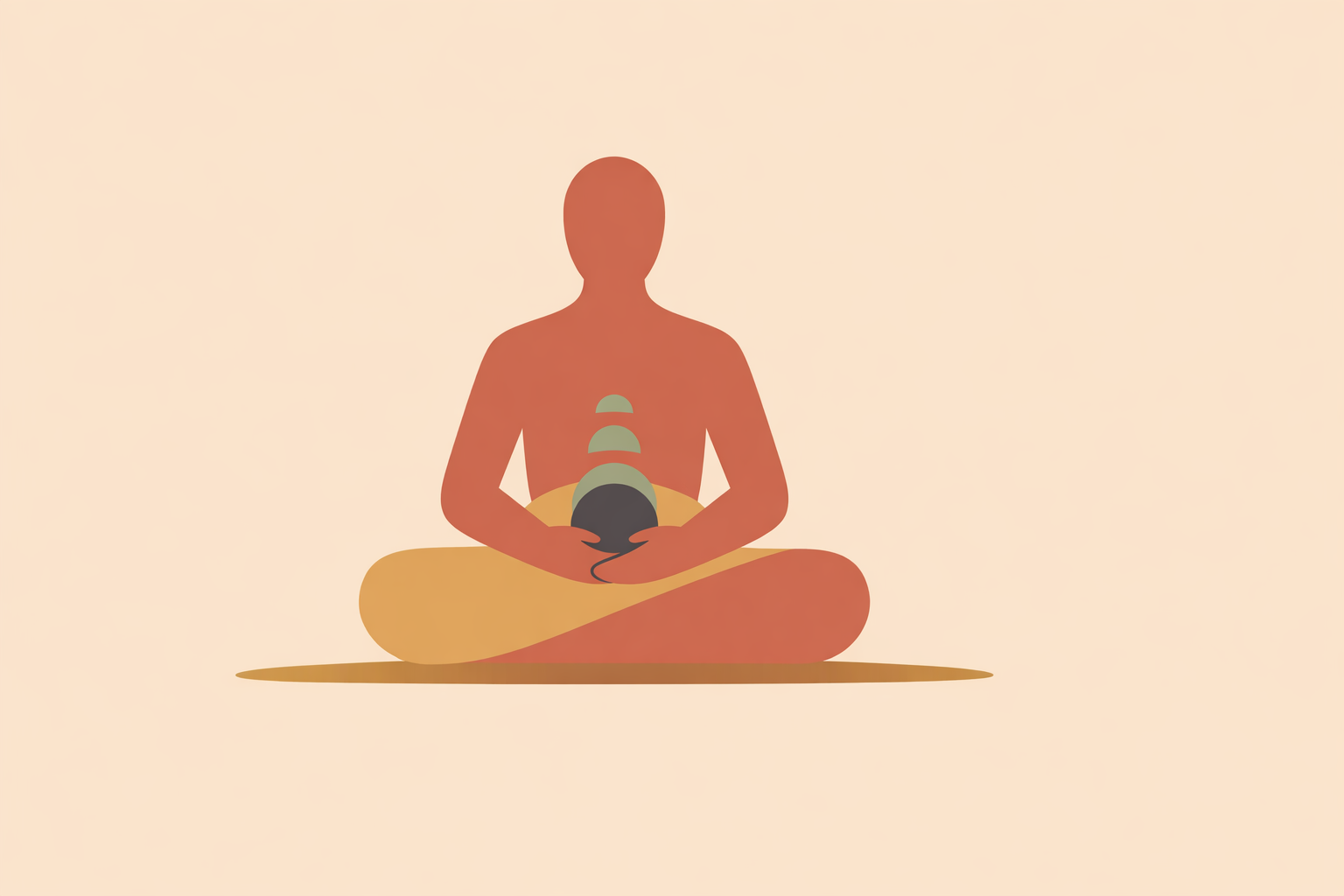
- Lower both hands to the lower belly.
- Take three slow inhales and three soft exhales.
- On the inhale, feel attention gather.
- On the exhale, let the body grow heavier and quieter.
This is often enough to interrupt a rushed mental loop and return you to a steadier pace.
Your Core 3–5 Minute Reiki Breathing Practice
When time is limited, consistency beats variety. A repeatable sequence reduces decision fatigue and makes practice easier to keep.
- Posture: Sit or stand upright without stiffness. Relax the shoulders and soften the face.
- Hands: Rest both hands on the belly, or one on the heart and one on the belly.
- Opening: Take one breath in Gassho if you like.
- Pace: Inhale for 4–5 seconds and exhale for 6–7 seconds, letting the exhale lead.
- Awareness: On the inhale, receive presence into the hara. On the exhale, soften the brow, jaw, tongue, and shoulders.
- Completion: After 12–18 cycles, take one natural breath and notice what changed.
Brief Reiki practice has also been associated with less tiredness and anxiety in short-format settings, which aligns with what many practitioners observe: meaningful shifts can happen quickly.
To close, name one concrete change you can feel right now: warmer hands, steadier breath, less neck tension, or a calmer inner tone. This trains attention to recognize everyday progress, not only dramatic moments.
Micro-Practices for Work, Home, and Transitions
The real strength of Reiki breathing is how easily it fits into the cracks of a full day.
Before a call or session: Place one hand on the heart and one on the belly. Take four slow breaths and let the exhale clear the mental residue of what came before.
After a difficult conversation: Keep your eyes open, look around the room, and notice three objects. Then rest both hands on your thighs or belly and lengthen the exhale for five breaths.
After screen time: Look into the distance, loosen the jaw, and breathe into the lower belly for six cycles. Let your gaze widen rather than lock.
When your mind is racing: Place both hands below the navel and return to a slow, comfortable exhale. Simple and effective is still effective.
When emotions feel stirred up: Placing one hand on the chest and one on the belly can help restore steadiness by bringing awareness back to the body and slowing the breath.
These pauses may last only a minute or two, yet they can change the tone of what follows by resetting posture, pace, and presence.
How Reiki Breathing Changes Across Levels I–III
The arc stays the same as practice matures: gather in, soften, return. What changes is the layer of skill and meaning you bring to it.
Level I: This stage is mainly self-focused and centers on foundational hand placements and self-practice. Traditional manuals commonly emphasize basic self-practice, so a hands-on-belly breathing sequence fits naturally.
Level II: This level commonly introduces symbol use and distance work. Some practitioners lightly add Cho Ku Rei for steadiness, Sei He Ki for emotional clarity, or Hon Sha Ze Sho Nen when offering distance Reiki support with permission. The breath can stay simple while intention becomes more precise.
Level III: At master level, practice often becomes simpler again. The breath feels more spacious, the hands settle more quickly, and presence takes less effort, which many refine further through Reiki master training.
Many teachers also pair breath with specific centers for steadiness. Some guidance brings attention to the heart through Gassho with heart level breathing, while other moments call for the stabilizing pull of the hara.
Working Gently: When to Soften, Shorten, or Pause
Reiki breathing should feel supportive, not forced. Gentleness is part of the method.
Public guidance describes Reiki as generally safe, with reported side effects usually minimal. Some people notice temporary fatigue or a stronger emotional wave afterward, which is a good reason to keep the practice proportionate.
- If the breath feels strained, shorten the practice to 30–60 seconds.
- If you feel unsteady, keep your eyes open and orient to the room.
- If you feel agitated, make the breath smaller rather than deeper.
- If emotions rise strongly, place one hand on the heart and one on the belly and return to very simple breathing.
Rapid or deep over-breathing can increase discomfort for some people, including dizziness or agitation. This is why Reiki breathing works best when it stays natural, unforced, and modest.
When in doubt, reduce intensity: shorter duration, eyes-open practice, and grounding hand placements often serve better than strong visualization. In Reiki, simpler is often deeper, especially in sensitive clients and sensitive moments.
Building a Daily Rhythm That Lasts
A single reset helps. A rhythm is what lets the benefit accumulate over time.
A workable structure looks like this:
- Morning: 3–5 minutes with Gassho, then hands to hara.
- Midday: 1–2 minutes between tasks, emails, or meetings.
- Evening: 5 minutes before bed, with hands on the belly or heart.
Across a week, these short returns add up. More importantly, they teach your system that settling is available more than once a day, not only when you finally get a long uninterrupted block.
Using one steady phrase can help the habit land: Hands. Hara. Exhale.
If you track, keep it light. Note total minutes for the week and one change you noticed, such as easier sleep or smoother transitions after work. Practitioner experience consistently shows that repetition is where steadiness grows.
Conclusion
Daily Reiki breathing works because it’s simple enough to keep and deep enough to matter. A few soft breaths with the hands at the hara can gather scattered attention back into one place, and that same short arc can support you across every stage of Reiki practice.
Keep it gentle and regular. If you feel strained or dizzy, shorten the practice and return to natural breathing. Let the breath bring you back each time the day pulls you outward.
Explore Reiki Master Certification
Deepen your steadying breath practice with the Reiki Master Certification as your Reiki skills mature across Levels I–III.
Explore Reiki Master →