Most “does self-hypnosis work?” answers miss what people actually need. Some promise instant change. Others brush it off as mere suggestion. Neither helps you choose a sensible goal, practice in a way you can repeat, or judge results in everyday life.
In practice, self-hypnosis is a learnable attention-and-suggestion skill. It supports change by narrowing focus, shaping inner imagery, and rehearsing a steadier response. Results are strongest when the goal is specific, the steps are clear, and you practice often enough for the pattern to become familiar.
Key Takeaway: Self-hypnosis works best as a practical, repeatable skill rather than a dramatic one-off experience. The strongest evidence is around pain, stress, sleep, while practitioner experience suggests results improve when the goal is clear, the method fits the person, and practice is consistent. It is especially useful for cue-linked rehearsal, steadiness, and habit support, but it should stay well within ethical scope—particularly around memory work and intense emotional material.
What Self-Hypnosis Is in Everyday Practice
Self-hypnosis is self-directed attention training. You settle the body, narrow focus, use imagery or inner language, and introduce suggestions that support a chosen response.
It isn’t mind control. And it works best as an active skill you do on purpose, not something you half-listen to while hoping for a dramatic shift.
Research links better outcomes with self-directed training. Traditional practice supports the same idea: when a person understands the steps and makes them their own, the method becomes more dependable and portable.
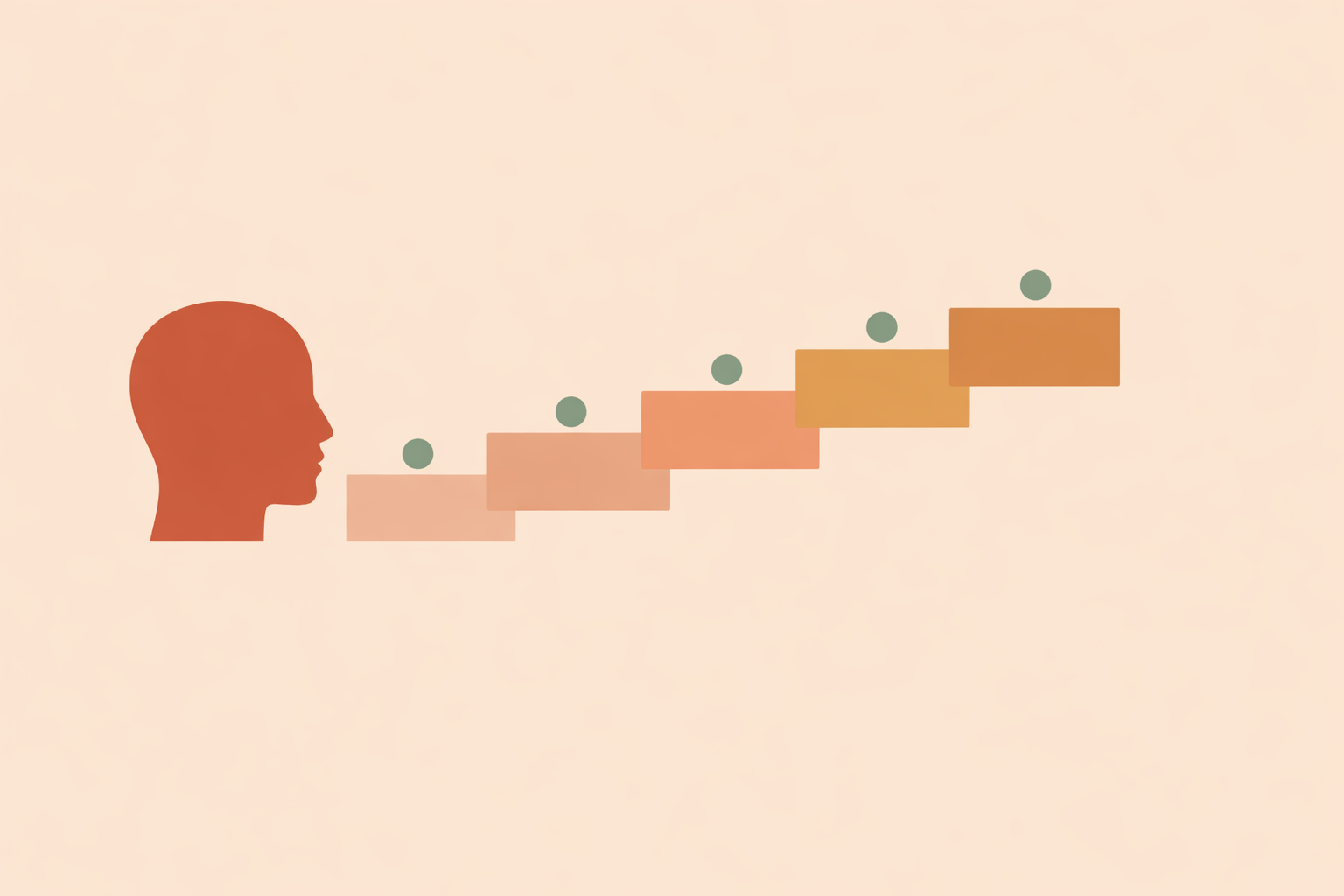
A simple sequence often includes:
- settling the breath or body
- focusing attention on one sensation, image, or rhythm
- introducing a clear suggestion
- briefly rehearsing the real-life moment
- returning to ordinary awareness
Most people don’t need anything theatrical. A few quiet minutes and believable language used consistently usually beat trying to force a “deep trance.”
Where Self-Hypnosis Helps Most
Self-hypnosis is most dependable when used for support rather than spectacle. Across research and long practitioner tradition, the clearest strengths are pain coping, stress regulation, and selected sleep outcomes.
Published work most strongly supports pain, stress, sleep. In day-to-day practice, many people also use it for habits and confidence when suggestions are paired with real actions.
That pairing matters. Self-hypnosis lands better when it gives the mind and body something specific to do.
- For stress: slow the exhale, release the jaw, pause before responding.
- For sleep: use the cue of turning off the lamp, soften the belly, lengthen the breath.
- For habits: attach a suggestion to an existing routine, like opening a laptop or stepping into the kitchen.
- For confidence: rehearse the exact moment you want to handle more steadily.
Big “total transformation” promises are less dependable. Deeper patterns usually respond to repetition, good fit, and realistic targets.
Sleep, Stress, and Habit Change: What Improves Results
Results improve when suggestions are concrete and practiced consistently. Vague intentions are hard to rehearse and hard to notice.
For beginners, three practice sessions is a sensible first milestone. Many people feel it “click” after a few weeks of regular repetition.
Practitioner experience also points to specificity: sleep-focused language tends to support sleep better than general relaxation alone. Stress support improves when the steps are taught clearly and used often enough to become familiar.
For habits and confidence, pair suggestions with an actionable plan. Instead of repeating “I am confident,” rehearse an observable behavior: “When I enter the room, I feel both feet on the floor, lift my chest slightly, and begin with my opening sentence.”
How Self-Hypnosis May Support Change
Self-hypnosis influences automatic patterns through attention, expectation, imagery, and mental rehearsal. It gives these natural processes a clear structure you can repeat.
Traditional cultures have long used rhythm, chant, breath, and story to guide attention and meaning in trance-like states. Modern self-hypnosis is a portable way to work with that same human capacity for absorbed focus.
In practice, people often notice:
- more vivid inner imagery
- a softer sense of effort
- time feeling slightly altered
- heaviness, lightness, or warmth in the body
- a stronger sense that a different response is available
Most remain aware throughout. The shift is a change in focus and responsiveness, not a loss of control.
Mental rehearsal is often the most useful piece. When someone repeatedly imagines meeting a difficult moment with steadiness, the real event can feel more familiar and easier to handle, much like structured mental rehearsal in wider hypnotherapy practice.
Why Results Vary from Person to Person
Differences in response are normal. Some people connect quickly with imagery. Others do better with body-based focus, counting, or short cue phrases. Session length preferences vary too.
Practitioner experience suggests three factors matter most:
- fit between the method and the person
- fit between the suggestion and the goal
- enough repetition for the response to become familiar
Research also links stronger outcomes with learning self-directed methods instead of relying only on passive listening.
Fit-testing helps. Try a few short approaches on different days—a breath count, a body scan, a simple inner image—then rate ease and usefulness. Build on what feels natural and effective.
How to Build an Effective Self-Hypnosis Practice
The most useful plans stay simple: choose one target, link it to one cue, practice most days, and track one or two signs of change.
A workable 10-minute structure looks like this:
- Minutes 0-2: settle with slower breathing
- Minutes 2-4: narrow attention with counting, a word, or an image
- Minutes 4-7: repeat one or two clear suggestions
- Minutes 7-9: rehearse the real-life moment
- Minutes 9-10: reorient and return
Useful suggestion style:
- keep it short
- make it specific
- link it to a real cue
- focus on what to do, not only what to avoid
Examples:
- “When I see the meeting invite, I take one slow breath and relax my shoulders.”
- “When I turn off the lamp, my exhale lengthens and my body settles.”
- “When discomfort rises, I soften around it and choose my next step calmly.”
- “When my feet touch the floor, I drink water before anything else.”
Tracking keeps it honest. Measure something simple for a few weeks: a midday stress rating, time to settle for sleep, or whether the desired habit happened. Look for movement, not perfection.
Respecting Tradition and Staying Within Safe Scope
Self-hypnosis deserves both respect and restraint. It can be a valuable support tool, but it’s not appropriate for every goal.
A clear boundary is memory work. Hypnosis can increase confidence in memories without improving accuracy, which is why “memory recovery” approaches (such as age regression or attempts to verify repressed memories) sit outside responsible scope.
Extra care is also needed with emotionally charged past events. VA guidance notes the possibility of false memories and strong emotional reactions when hypnosis is used to work through past material.
More broadly, if practice brings intense distress, disorientation, or a sense of losing grounding, stop the session. Reorient: open the eyes, feel the feet, name the room, drink water, and seek appropriate support.
Cultural respect matters too. If your approach draws inspiration from older trance traditions, acknowledge roots with care. Let rhythm, breath, or story inform your practice without lifting sacred forms out of context.
Conclusion
Self-hypnosis does work in practice, especially when it’s used for the kinds of goals it handles well, learned as a repeatable skill, and checked against real-life results.
The strongest support is in pain coping, stress regulation, and selected sleep outcomes. Many practitioners also value it for confidence, habit support, and rehearsal for challenging moments when suggestions stay realistic and action-linked.
One goal, one cue, a few minutes of regular practice, and honest observation: that’s where self-hypnosis becomes genuinely useful in hypnotherapy and NLP and in broader professional hypnotherapy work.
Train in Professional Hypnotherapy
Deepen your skills with the Professional Hypnotherapy Certification and apply ethical, goal-focused hypnosis methods confidently.
Explore Professional Hypnotherapy →