Most practitioners know the moment a session turns slippery: a client’s story leaps across decades, body cues don’t line up with the narrative, and your attention splits between tracking details and staying well-regulated. The instinct is to gather more context, hunt for a single origin point, or let the hour run and hope a theme emerges. Often, that leaves everyone holding more fragments, not more clarity.
A co-created personal history timeline offers steadier ground. It’s a simple, client-led map that organizes events, meanings, and body cues across time so patterns are easier to spot and the work is easier to pace. Done well, it lowers pressure to “cover everything,” and it supports gentler emotional updating instead of repetitive retelling.
Key Takeaway: Timeline mapping gives practitioner and client a shared structure for organizing biography, body cues, and meaning, so sessions can be paced by state rather than by story volume. When the map is simple, collaborative, and well-bounded, it helps patterns stand out, supports coherent self-understanding, and creates a practical bridge from recognition to new emotional learning.
Why Timeline Mapping Brings Clarity to Complex Stories
When a story arrives in scattered pieces, the person isn’t the problem. The missing piece is a shared structure that can hold the material. Without a map, it’s easy to chase individual scenes instead of noticing the arc that connects them.
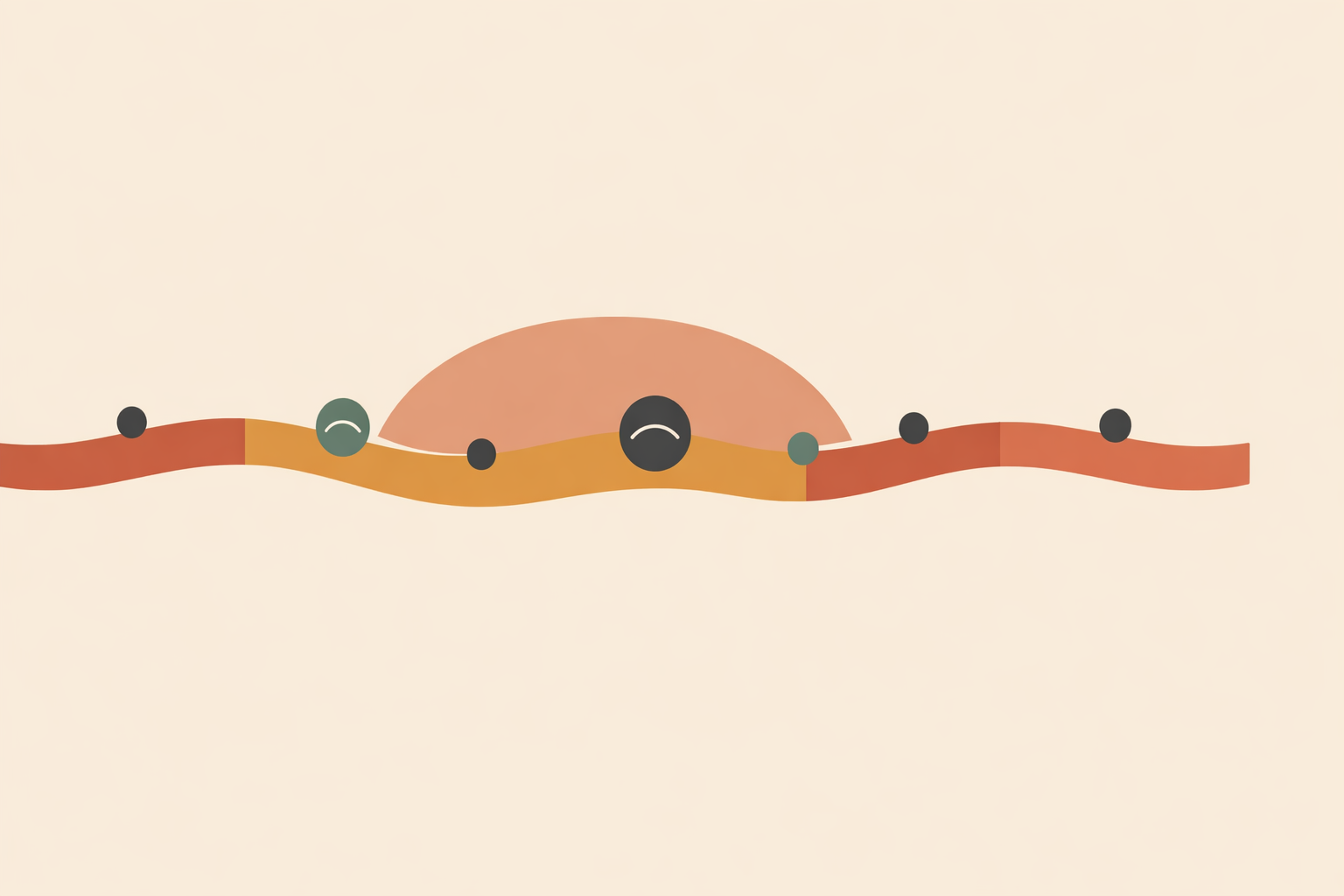
A simple left-to-right timeline from early life to the present quickly changes the quality of the conversation. Key moments, repeating stress periods, meaningful supports, and body responses can sit in one visible field. That naturally shifts the work away from root-cause hunting and toward sequence, context, and pattern.
So the guiding questions become: What keeps repeating? What helped? Where does the system need more support? Those questions tend to be both kinder and more useful.
If a story starts scattering, offer a light invitation: “Let’s sketch the arc of this so we can see it more clearly.” Mark three moments and one support. That small scaffold often shows where to slow down, where to resource, and where an old loop is still running.
What a Personal History Timeline Can Look Like
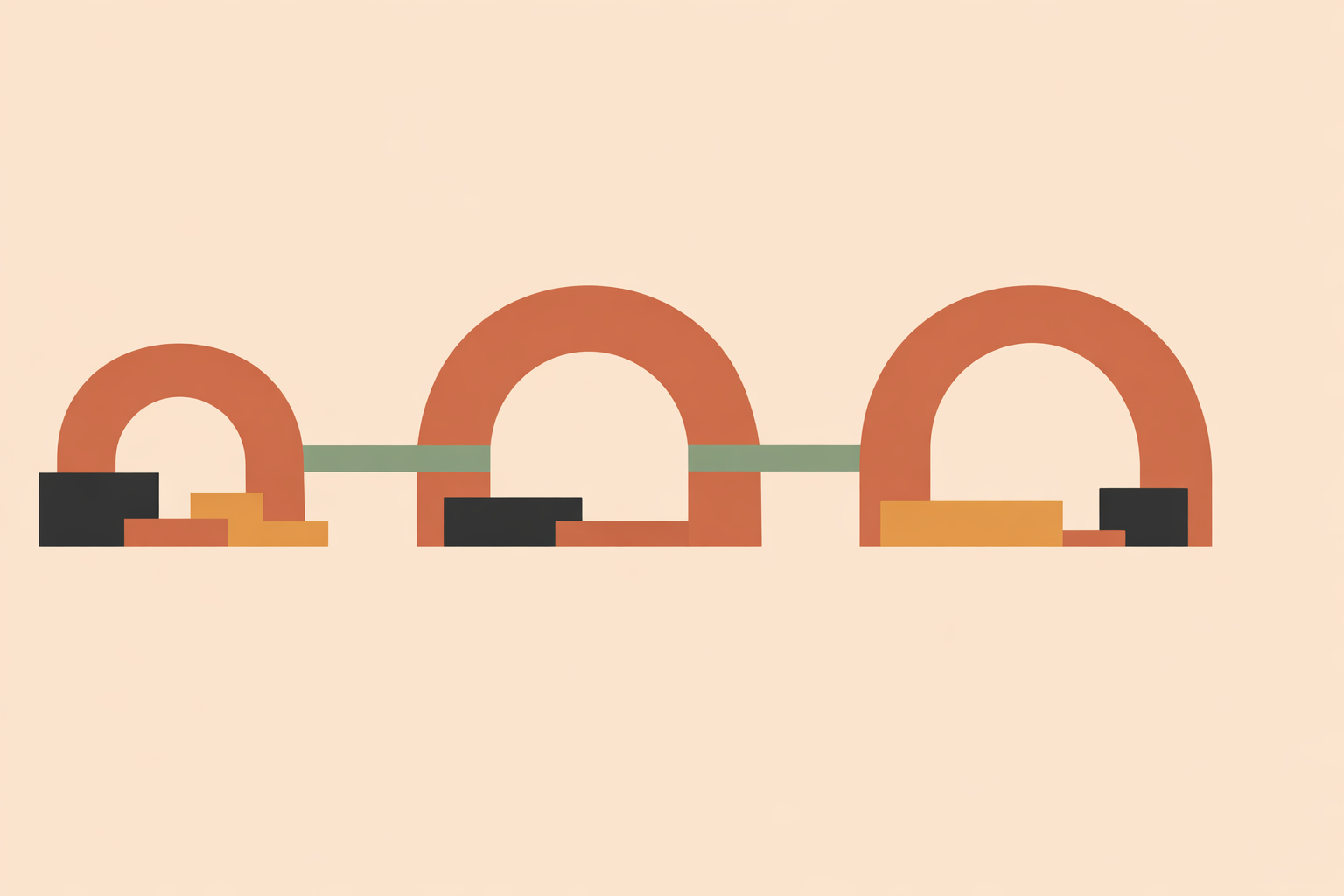
A personal history timeline doesn’t need to be elaborate. Start with a horizontal line and label it with ages, years, or life chapters, then add only the “tracks” that serve the client.
- Relationships and belonging
- Home, place, or major transitions
- Body cues and energy shifts
- Emotional climate or key meanings
- Supportive people, practices, or places
Simple symbols or colors can reduce overwhelm and make the map readable at a glance.
- Red dot: stress spike
- Blue line: steadiness or support
- Spiral: confusion or overwhelm
- Star: nourishing resource
Include what steadied the person, not only what strained them. Islands of safety help the process stay grounded while harder chapters are named. A grandmother’s kitchen, a choir, a seasonal ritual, a trusted teacher, a beloved landscape: these often carry as much weight as the difficult events.
Some clients prefer words; others find drawings and symbols hold feeling more naturally. There’s good reason for that: autobiographical reflection has been linked with well-being and identity integration, which helps explain why creative mapping can deepen the process.
How a Visual Life Map Helps Patterns Stand Out
Once experiences and body cues are visible in one place, patterns often show themselves quickly. A client who saw three breakups as separate events may notice each one was followed by a work surge and then an energy crash. Another may see every relocation came with chest tightness, sleep disruption, and social withdrawal.
This is one of timeline work’s quiet strengths: it helps people see themselves in context. Research connecting narrative coherence with well-being and meaning supports what many traditional practitioners have long observed: the way a life is organized and understood deeply shapes how it’s lived.
The map also helps externalize body-based responses without judgment. When someone marks “tight throat before speaking,” “frozen shoulders in conflict,” or “heavy fatigue after family gatherings,” the body becomes legible rather than mysterious. That shift often softens shame and invites a more compassionate reading of what the system learned to do.
Once patterns are visible, decisions get easier. You can see which chapter needs more resourcing, which theme spans decades, and which protective script might be ready for revision.
Why Timeline Work Can Support Emotional Updating
A timeline doesn’t only collect history. It can open a doorway into new learning.
When autobiographical memories are brought into awareness, they can become more open to change. Reconsolidation work suggests retrieved memories can enter a labile state where emotional meaning is more available for updating. In the same spirit, life narratives are continually revised over time.
The map gives you a gentle way to approach a charged chapter without getting lost inside it. The goal is steady contact: enough emotional truth to be meaningful, and enough present-time support and choice for something new to register.
That’s why timeline work often lands differently than free-form storytelling. A scattered retelling can keep old meaning on repeat. A visible structure supports new meaning to form because the person can locate the past while staying anchored in the present.
Using the Timeline to Pace Sessions by State
Once the timeline exists, let it guide pacing. The aim is not to cover every chapter; it’s to stay within a workable range and move with what the person can genuinely engage.
Read state, not story volume. Track breath, speech, posture, gaze, tone, and shifts in presence as the person looks at a point on the map.
If activation rises quickly, pause and support settling before continuing. If the person becomes flat, distant, or hard to reach, treat that as equally important information. The map shows exactly where those shifts happen, which makes it easier to adjust together.
Many practitioners mark state cues directly on the timeline:
- Breath shallow or steady
- Shoulders braced or soft
- Speech rushed or measured
- Energy collapsed or available
- Contact with support present or absent
Used this way, the map becomes a live compass. It shows where to go slowly, where to strengthen support first, and where there’s enough steadiness to continue.
A simple in-session agreement can sound like: “Before we touch this chapter, let’s find one resource from that time or from right now. If your breath tightens, we slow down. If you stay grounded, we continue.”
From Recognition to New Emotional Learning
Seeing the pattern matters, but recognition alone isn’t always enough. Durable change usually comes when insight is paired with a new emotional experience, a core theme in emotion and the brain work.
Reconsolidation theory suggests enduring change is more likely when old expectations are disconfirmed and a truer experience is felt in real time.
Emotion plays a central role. Some writers describe emotion as a catalyst in memory updating, which aligns with what many practitioners see in practice: explanation can orient, but felt experience reorganizes. Research also suggests positive emotional induction after recalling a difficult autobiographical memory can soften its charge in some groups.
In practice, that often looks like:
- Choosing one point on the map, not five
- Bringing it gently into awareness
- Pairing it with present-time steadiness, support, resonance, or compassion
- Naming the updated meaning in simple language
Then anchor the shift with a small follow-through in daily life. Brief practices tend to land well after demanding timeline work:
- Three extended exhales
- One minute of humming
- A short sway or orienting practice
- A kind message to a trusted person
- Stepping outside for air and light
Timing can matter too. Reconsolidation research points to a 4–6 hour window after recall when follow-up support may be especially meaningful, so linking the session to one small supportive action later that day can be a strong choice.
When to Adapt Timeline Work Carefully
Timeline mapping is powerful, and it should never be forced. Some people do best building the map slowly over several sessions, especially when life history feels fragmented or easily overwhelming.
Start with broad chapters rather than dense detail. Mark supports early. Keep the present visible. Let the map earn depth over time.
Organized autobiographical work can be especially clarifying for people with long overwhelm histories. Narrative approaches suggest constructing trauma narratives can help organize difficult memory material, while good craft remains the same: go slowly and avoid flooding the process with detail.
Watch for rumination. If the map turns into endless analysis, simplify: shorten the timeline, reduce explanation, and return to the observable—body cues, supports, and a few central meanings.
Culture matters, too. Not everyone relates to time as a straight line of dates. Some people remember by seasons, migrations, kinship, ceremony, or place. In those cases, adapt the form. A circle, braid, pathway, or seasonal wheel may fit better than a conventional timeline. Keep symbols client-generated where possible, and approach cultural forms with humility and respect.
How to Close Timeline Sessions Well
Because timeline work can bring a lot into view, closure matters. Try not to end in the middle of activation. Summarize what became clear, name at least one support, and give the body a clear signal that the session is complete.
Useful closing practices include:
- Naming one insight and one support from the same chapter
- Marking how the body feels now compared with the start
- Adding one future-facing note to the map
- Choosing one micro-practice for the next 24 hours
A small ritual can help too, as long as it stays simple and appropriate to the client:
- Step across an imagined threshold from then to now
- Place warm hands over heart and belly for three breaths
- Write the updated self-statement on a card and place it in the future section of the map
These gestures help bring shape, dignity, and completion to work that could otherwise feel open-ended.
Conclusion: A Timeline Can Become the Backbone of the Work
Used with care, a personal history timeline becomes far more than a note-taking tool. It gives practitioner and client a shared structure for seeing biography, body cues, repeating meanings, and sources of support in one place, which naturally makes sessions feel more grounded and coherent.
From there, the timeline supports clearer pattern recognition, better pacing, and gentler emotional updating. It stays flexible, too. Many clients keep adding notes, adjusting meanings, and noticing new sensations between sessions, so the map becomes an evolving practice rather than a one-time exercise.
Start small: three life markers, two supports, one active body pattern, and one simple follow-through. With time, that map can become a steady backbone for respectful neuroscience and brain health work that helps people reshape internal scripts without endlessly rehashing the past.
Train in Deep Neural Repatterning
Deep Neural Repatterning Certification supports state-based pacing and emotional updating when working with personal history maps.
Explore the DNR Certification →