Many yoga teachers can cue a strong vinyasa, yet struggle to weave the eight limbs into a typical class without derailing the pace. Teach philosophy on top of a fast flow and the room can lose momentum; skip it completely and students may walk out with a workout rather than a practice.
In most modern spaces—where time is tight and attention is scattered—the most effective answer isn’t more explaining. It’s better structure: small, repeatable ways for students to feel breath, ethics, and attention inside the movements they already know.
Key Takeaway: Instead of adding long explanations, embed the eight limbs through repeatable structures: breath-led sequencing with drishti and light bandha, one practical yama or niyama micro-theme, and a simple closing arc that turns attention inward toward pratyahara, dharana, and dhyana.
Lesson 1: A Breath-Led Ashtanga Flow That Holds the Eight Limbs
This arc uses breath, gaze, and subtle energetic engagement so students can sense how the limbs weave through a familiar flow. Instead of adding philosophy as commentary, the practice itself becomes the teacher.
In the Ashtanga tradition, breath and attention aren’t accessories—they organize the whole experience.
“Most fundamentally a breathing practice using movement as the vehicle,”
is a phrase teachers return to because it keeps things simple and true. When breath leads, movement steadies, attention gathers, and posture starts to feel like one limb among many.
You can name that up front: “Today we’ll let breath lead everything. With drishti and bandha, we’ll steady attention so all eight limbs are present—even inside a simple flow.” Used well, breath, drishti, and bandha can steady attention without you needing a long talk.
Run This as a 60-Minute Class
- 0–5 min | Arrival: Seated or constructive rest. Invite natural ujjayi. Offer a simple rhythm of roughly 6 breaths per minute with a gently lengthened exhale: “Inhale 4, exhale 6—soft and quiet.” Slow breathing is also linked with improved heart-rate variability, echoing what practitioners have long noticed in steady, breath-led work.
- 5–12 min | Sun Salutations: A x3, B x2. Name the triad (breath, drishti, bandha) as the thread. Offer one drishti in each pose: navel in down dog, thumbs in plank, nose in forward fold. Keep the count steady and modest.
- 12–30 min | Standing flow: Build a plainspoken arc from foundational postures (Padangusthasana variations, Trikonasana, Parsvakonasana, Prasarita, Parsvottanasana). Cue, “Exhale to stabilize, inhale to lengthen.” Keep transitions light—or skip every other vinyasa—to protect breath quality and support joint safety.
- 30–45 min | Seated shapes: Dandasana, Janu Sirsasana, Marichyasana A/C options, easy twist. Longer holds give students space to listen inward, so stay a few breaths beyond the usual pace.
- 45–55 min | Backbody + fold: Gentle bridge or supported bridge, then Paschimottanasana with props. Finish with a soft inversion option such as legs up the wall.
- 55–60 min | Stillness: A minute of quiet pranayama followed by savasana.
As you move through class, thread the limbs with brief cues—light touches that keep the flow intact:
- Yama/niyama: “Ahimsa: move with non-harm.” “Satya: be honest with your edge.”
- Asana: Favor stability over spectacle. “No rush, no strain.”
- Pranayama: “If breath shortens, simplify the pose; breath is the lead.”
- Pratyahara: “Soften the outer gaze; listen inside the breath.”
- Dharana: “Keep one spotlight: breath, drishti, or low-belly lift.”
- Dhyana: “Let the spotlight widen to include body and breath together.”
- Samadhi: In savasana, “Rest in what’s here.”
Keep bandha cues simple and usable. “Gently draw the low belly in on empty, then keep just 10% of that tone” often introduces uddiyana awareness without strain. For mula bandha, “a subtle lift at the pelvic floor” is usually plenty—especially for newer students who need an anchor, not an athletic demand.
Steadiness stays the priority: pace for breath, offer props early, and normalize stepping back. Pain is never the goal. As David Keil puts it,
“use the tools of breath and movement to establish a base of awareness”
—and from that base, the subtler limbs can naturally emerge.
Lesson 2: Yama and Niyama Micro-Themes Students Can Use Today
The first two limbs become much easier to teach when they’re translated into tiny actions. One clear line, a few well-timed cues, and a simple 24-hour experiment is usually enough to make them real.
This is especially important because many people’s primary exposure to yoga is posture-focused, not the full eight-limb system. When you bring yama and niyama into the room, the practice widens—without you needing to slow class down.
Frame them as everyday companions: yamas as relational ethics, niyamas as personal observances. Practiced in full, the eight limbs are meant to guide daily choices, not just what happens on the mat. Think of it like this: the sequence trains the body, and the theme trains the way someone meets their life.
The method stays beautifully simple:
- Pick one focus: ahimsa, satya, asteya, brahmacharya, aparigraha, saucha, santosha, tapas, svadhyaya, or ishvara pranidhana.
- Give one anchor line: “Today’s thread is satya—honesty.”
- Repeat 2–3 cues: during class that point back to the theme.
- Offer one home experiment: for the next 24 hours, plus a reflection question.
Plug-and-Play Examples
- Ahimsa: “Choose a pace that lets breath stay kind.” In stronger sequences: “Leave 10% in the tank.” After class: replace one harsh inner comment with a kinder one.
- Satya: “Practice honest range—enough sensation to feel, not so much you brace.” Invite students to notice one place they override their truth and try the opposite today.
- Asteya: “Borrow less from future you; stop one round before fatigue.” Off the mat, notice one small place where attention, time, or credit is taken unconsciously, and repair it.
- Brahmacharya: Frame it as wise use of energy. “Focus it where it counts; avoid leaks—fidgeting, comparing, checking out.” Home: one tech boundary tonight.
- Aparigraha: “Release the extra 5% of effort. See what happens.” Home: clear one small surface and notice the effect.
- Santosha: “Practice being satisfied with this breath.” Keep contentment immediate and embodied.
- Tapas: “Small, consistent heat.” Invite students to keep one tiny practice for seven days, such as five breaths before opening email.
- Svadhyaya: Add a 60-second body scan in a fold. After class: “What did I learn about my patterns today?”
- Ishvara pranidhana: “Place it down.” Let one worry be offered to the exhale.
Keep the tone practical and respectful. The Ashtanga Studio Berlin team captures this blend of effort and release:
“Strength, endurance, and sweat are unique aspects… However, the effort is rewarded. The body becomes stronger, more flexible, and more relaxed; thoughts gain clarity, and through deep letting go, we can free ourselves from what is no longer helpful.”
When students feel that directly, ethics stop sounding abstract—they become lived experience.
Short scripts help the theme land without taking over your teaching style:
- In standing poses: “Satya here means pick a stance that’s honest for today’s hips, not last month’s.”
- In balancing: “Aparigraha—if you wobble, soften your grip on the outcome. Keep breath as your measure.”
- In a stronger hold: “Tapas isn’t punishment, it’s steady warmth. Hold three more honest breaths or lower with kindness.”
Close with one small home action and one question. Students remember what they try—and one thread per class builds depth without heaviness.
Lesson 3: Use the Closing Sequence for Pratyahara, Dharana, and Dhyana
The final 15 minutes of class are often the easiest place to include the inner limbs. With a few clear steps, your usual closing becomes a natural bridge into meditation.
Traditionally, pratyahara is the inward turning of attention—a continuation of asana and pranayama, not a separate “advanced” skill. In most rooms, it’s enough to soften the visual field, quiet the pace, and offer one steady point of focus.
A 15-Minute Inner-Limbs Arc
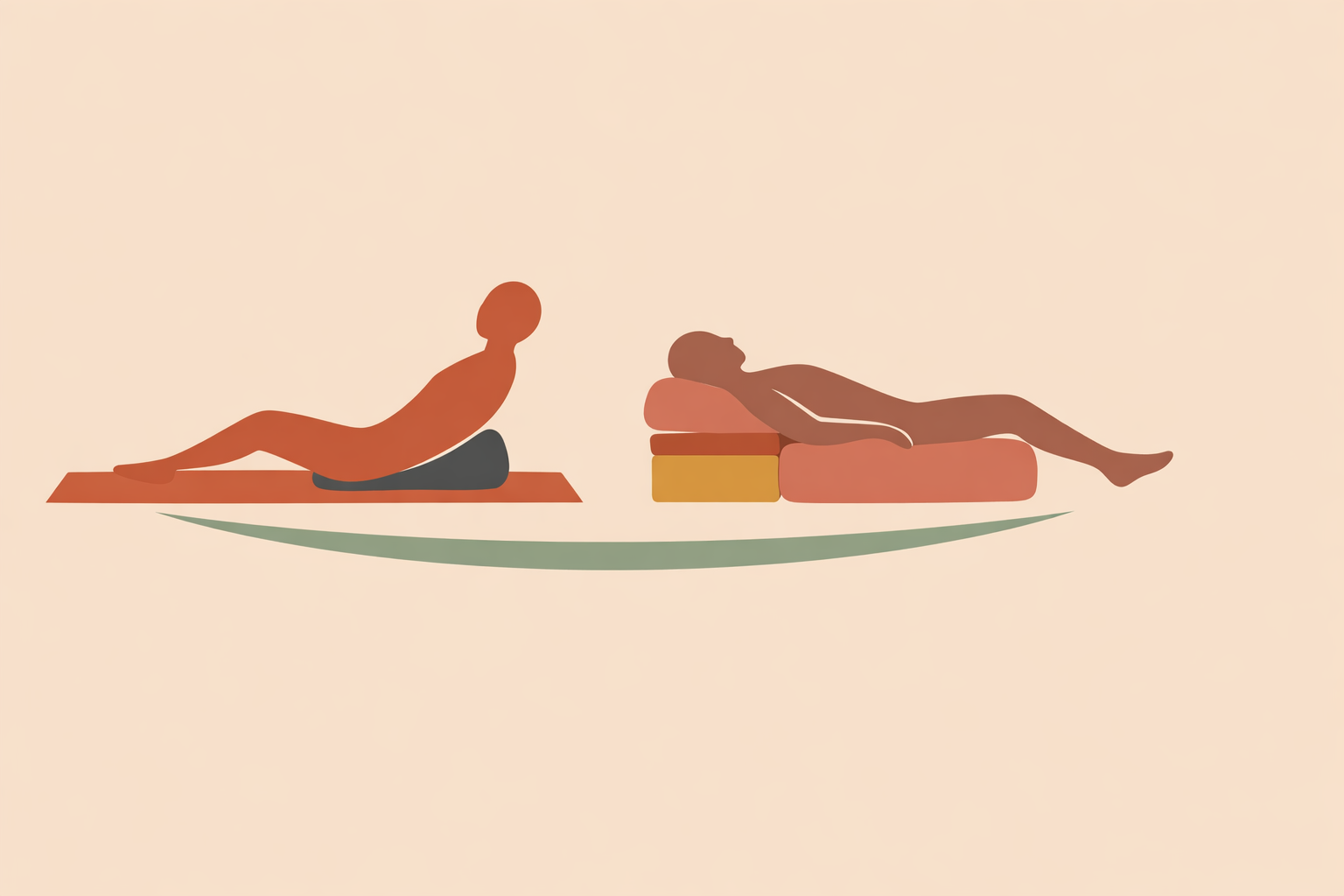
- Minute 1–3 | Grounded breath: Supine or seated. Offer gentle paced breathing at about 6 breaths per minute. “Feel the exhale arrive; rest attention there.” Paced breathing can support autonomic patterns over time and is associated with reduced anxiety for many people.
- Minute 3–6 | Pratyahara cues: “Let the lids be heavy; sound moves to the background, breath comes forward.”
- Minute 6–11 | Dharana practice: Choose one: breath counting from 1–10, a simple mantra such as So-Hum, or a fixed inner visual point. Prompt: “When attention wanders, kindly return.” Even 30–60 seconds of repeated clear focus can train attentional steadiness.
- Minute 11–15 | Dhyana transition + rest: Drop the counting. “Let attention flow continuously with breath—no effort to shape it.” Sit in that quiet for a couple of minutes, then move into savasana.
If you introduced bandha earlier, soften it here: a light lift on empty to gather attention, then full release. Essentially, bandha becomes less about effort and more about inner organization.
Keep it accessible: offer options lying down, seated, or on a chair; use a bolster or eye pillow. If the room is restless, shorten it—two 60-second rounds of breath counting with a pause between can be surprisingly effective. Here’s why that matters: for many busy people, the eight limbs become real not through intensity, but through simplicity they can repeat.
Leave a final minute for silent reflection: “Name how you feel—one word. Keep it with you.” In inner-limb practice, consistency tends to outperform intensity, because repetition teaches the nervous system the pathway.
Bring the Eight Limbs into Your Next Class
Choose one shift and teach it this week: a breath-led sequence, a single yama or niyama thread, or a closing arc into quiet focus. Keep it small, kind, and repeatable.
Many people first meet yoga as posture alone. Yet the eight limbs were always meant to carry practice beyond shapes into attention, conduct, and daily life. With consistent paced breathing and simple concentration, people can shift how they feel and how they relate—without turning class into a lecture.
Start with one limb, one line, one structure. Teach it for a month, then refine it based on what students actually experience. The most sustainable changes are usually the smallest: one breath cue, one ethical thread, one minute of closing attention—repeated until it becomes part of the class culture.
To close, keep the work grounded in integrity: credit your sources, name lineage where appropriate, and use consent-centered language in verbal and hands-on guidance. As with any breath or attention practice, invite choice, keep pacing humane, and encourage students to step back when needed. Taught with warmth, clarity, and steady care, the eight limbs stop being ideas and start becoming something students can recognize in themselves—one class at a time.
Train as a Yoga Teacher
Deepen these eight-limb teaching structures with the Yoga Teacher Certification.
Explore Yoga Teacher Certification →