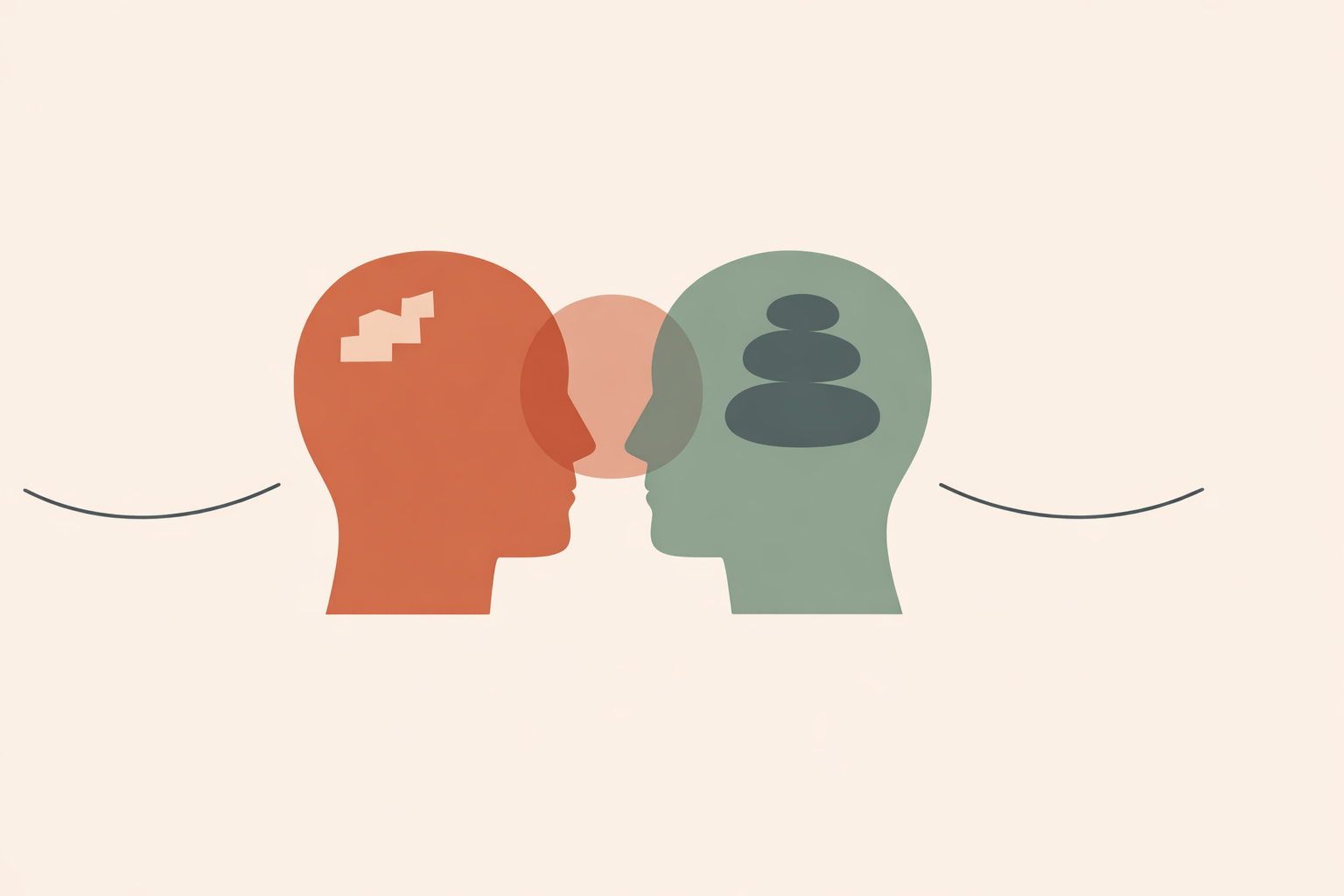
Emotional intelligence often gets mistaken for staying calm, sounding kind, or reading the room smoothly. That can look good until someone goes quiet, a partner reacts sharply, or a group tips off-balance after one tense moment. What holds up then isn’t performance; it’s practice: skills you can repeat that slow down assumptions, protect dignity, and help you respond with clarity.
Key Takeaway: Emotional intelligence becomes more dependable when you train it as a set of daily relational skills. This 12-week plan moves through six two-week phases: redefining emotional intelligence and noticing patterns; building body awareness and steadiness; deepening empathy without losing boundaries; aligning action with values; bringing skill into conflict, boundaries, and consent; and integrating culturally rooted, whole-person supports for long-term growth.
Weeks 1–2: Redefine Emotional Intelligence and Notice Your Patterns
Emotional intelligence is a set of learnable capacities: noticing emotion, understanding it, and responding with care. Practically, it’s getting more accurate about what you feel, what you assume, and what you choose next. The NIH describes emotional intelligence in terms of identifying emotions, regulating them, communicating effectively, empathizing, and handling tension constructively.
The first shift is learning to separate observation from interpretation. Under stress, the mind assigns meaning fast. Training emotional intelligence means slowing that step down, without turning it into self-criticism.
For one week, take a minute after any charged interaction and log:
- What happened
- What you felt
- What happened in your body
- What you observed directly
- What you inferred or assumed
- What value or need was touched
Example:
- Situation: “They checked their phone while I was speaking.”
- Emotion: “I felt dismissed.”
- Body: “Jaw tight, chest hot.”
- Observation: “Their eyes were on the screen for about 10 seconds.”
- Interpretation: “I am not important to them.”
- Need: “Presence, respect, attention.”
In Week 2, widen the lens. Emotional expression is shaped by family, culture, language, power, and context. Some people were rewarded for showing emotion; others learned that restraint was safer. Maturity looks like fit-for-context clarity and care, not one “right” style.
Build a wider emotional vocabulary. Move past broad labels like angry, sad, fine, or stressed. Naming experience with precision makes it easier to work with, and it becomes even more useful when you practice those words in everyday conversations, not just after conflict.
Close this phase with a simple repair structure:
- Observation: “When I was sharing and you looked at your phone…”
- Emotion: “…I felt overlooked and tense.”
- Request: “Could we take five minutes now with no distractions?”
This is emotional intelligence you can see: better choices in real interactions.
Weeks 3–4: Build Somatic Awareness and Steady Your Response
Before words sharpen, the body usually speaks first: racing heart, clenched jaw, shallow breath, numbness, heat in the face. These aren’t inconveniences to override. They’re early signals that you’re leaving steadiness, and they can guide you back.
Week 3 is about learning your own cues. Track what your body does before you shut down, get reactive, over-explain, or jump into fixing. When you can recognize the pattern early, you can interrupt it with more gentleness.
A one-minute sequence many practitioners use:
- Orient: Slowly look around and name three things you see.
- Contact: Notice your feet on the ground or your body against the chair.
- Release: Soften your jaw, shoulders, or hands.
- Exhale: Let the out-breath lengthen naturally.
- Name: Quietly label what you notice: “tight chest,” “heat,” “pressure,” “buzzing.”
This exact sequence comes from practice wisdom rather than a single strong research source, but the wider principle is well supported. Gentle slow breathing has been associated with steadier stress regulation over time.
Week 4 strengthens your ability to stay present long enough to choose your response. Regulation isn’t suppression; it’s staying in contact with an experience without being driven by it. That steadiness supports empathy as well. Research suggests emotion regulation is linked with healthier empathic responding.
Create a pause plan you’ll actually use. When you feel overloaded, protect connection and clarity with language like:
- “I want to stay in this well. I need 20 minutes, then I’ll come back.”
- “I need a short pause so I can respond cleanly.”
- “Can we stop for two minutes and continue with more steadiness?”
Predictable pauses work because they’re clear and followed through. You’re not disappearing; you’re returning with more presence.
Weeks 5–6: Deepen Empathy Without Losing Yourself
Empathy doesn’t mean absorbing another person’s feelings, and it doesn’t require rushing to advice. Strong relational skill stays close while keeping boundaries intact.
In Week 5, practice a five-part listening loop adapted from active-listening principles:
- Listen fully
- Reflect what you heard
- Validate the significance of the experience
- Clarify what matters most
- Ask what kind of support is wanted
NIH guidance on active listening supports skills such as reflection, clarification, avoiding assumptions, and listening before responding. In the moment, it can sound like:
- “I’m with you. Keep going.”
- “So when the plan changed, you felt sidelined.”
- “That makes sense.”
- “What feels most important about it?”
- “Do you want listening, or would ideas help?”
That final question protects the other person’s agency and reduces “accidental fixing.”
Week 6 brings boundaries into empathy. If you over-identify, over-function, or take responsibility for everyone’s emotional state, train a quick internal check:
- What am I actually feeling?
- What belongs to the other person?
- What is being asked of me here?
- What is mine to offer today?
Then pair care with a clear limit: “I care, and I can stay with this for 15 minutes now. After that, let’s think about the next step.” The goal is generous support without blur or resentment.
Keep context in view, too. Not everyone has equal permission to show emotion openly. Respectful listening includes noticing those differences and interpreting more slowly.
Weeks 7–8: Let Values Guide Action and Use Relational Micro-Skills
Empathy needs direction. Values give emotional intelligence a backbone, especially when it’s tempting to appease, avoid, or shape-shift.
In Week 7, name five relational values that matter to you—honesty, reciprocity, steadiness, warmth, accountability, repair, spaciousness, or others that fit your life. Then turn each one into a practical commitment:
- “If I feel pressured to say yes, I will ask for time before answering.”
- “If I miss a message that mattered, I will acknowledge it directly rather than pretending it did not happen.”
- “If resentment starts building, I will make a clear request before it hardens.”
This is how emotional intelligence becomes lived behavior: action that matches who you want to be in connection.
Week 8 focuses on micro-skills that help your inner work land well with others: open questions, accurate paraphrase, and assumption-checking. Active-listening guidance supports clarification and paraphrasing to reduce miscommunication.
Try these in your next difficult conversation:
- Open question: “What part of this felt most important to you?”
- Paraphrase: “So being left out of that exchange landed as not mattering.”
- Assumption check: “I am guessing you want repair more than blame. Is that right?”
Close this phase by linking presence to one concrete action. “I hear that my delayed replies leave you guessing. I value reliability, so I’m going to set a check-in time.” Consistent action builds trust faster than reassurance.
Weeks 9–10: Bring Emotional Intelligence into Conflict, Boundaries, and Consent
Conflict doesn’t have to mean rupture. Often it’s where unspoken expectations and needs finally surface. Emotional intelligence helps you stay in contact with what’s true without moving into attack or self-erasure.
In Week 9, use a conflict map before you respond:
- Trigger
- Body response
- Story you started telling yourself
- Need underneath the reaction
- Request you want to make
- Boundary you may need to name
Then speak in specifics rather than global judgments:
- Observation: “When the travel plan changed yesterday morning…”
- Impact: “…I felt anxious and out of the loop.”
- Need: “I need shared decision-making around larger expenses.”
- Request: “Can we decide those together by Friday next time?”
- Boundary: “If it happens again, I’ll pause my part until we realign.”
This structure turns emotional charge into a clear relational message.
Week 10 focuses on boundaries and consent. A boundary names what you will do, offer, allow, or step back from. Consent is strongest when it is clear, informed, voluntary, and open to change.
In real life, it can sound like:
- “I can talk about this tonight for 20 minutes.”
- “I am willing to continue if we stay respectful.”
- “I want to pause here and revisit it tomorrow.”
- “That exercise does not feel right for me today; I’d prefer another approach.”
For practitioners, this is where ethical scope becomes visible in everyday communication. Name the purpose of an exercise, offer alternatives when you can, and make it normal for clients to pause, decline, or ask questions. Clear agreements support autonomy and trust.
Weeks 11–12: Integrate Whole-Person and Culturally Rooted Support
Now the work expands beyond what happens mid-conversation. The wider conditions of life shape how steady, resourced, and connected someone can be.
Week 11 maps relational well-being in context. Healthy connection often includes respect, mutuality, belonging, agency, and room for difference. It’s also influenced by workload, language, disability, discrimination, family expectations, and access to supportive community.
Create a one-page map with three areas:
- Personal: sleep rhythms, movement, nourishment, rest, creativity
- Relational: trusted friends, elders, mentors, peers, family, community circles
- Environmental: spaces that feel grounding, nature, spiritual or cultural practices, routines that help you settle
Then ask: what is available now, and what needs tending?
Use this phase to respect real differences in how people regulate and communicate. Some think best by writing. Some need more time before answering. Some find eye contact steadying; others find it overwhelming. Emotional maturity includes flexibility that keeps clarity and care possible, which also sits within broader positive psychology and wellbeing practice.
Week 12 brings in ancestral and traditional supports. Across cultures, people have long used shared song, ceremony, blessings, rhythm, food practices, time in nature, and communal gathering to restore steadiness and belonging. A growing review of traditional arts and cultural events found associations with social connectedness, reduced stress, emotional expression, and stronger community identity.
Not every meaningful practice needs a modern study behind it. Many forms of steadiness are first proven through lived tradition and repeated experience: an evening song with family, lighting a candle at dusk, preparing tea with full attention, or visiting the same natural place each week. Choose practices with respect, cultural care, and honesty about what is truly yours to carry.
To consolidate the full 12 weeks, choose a 30-day continuation plan that can support both emotional intelligence and wellbeing:
- Daily: a three-minute body check-in and one values-based request
- Weekly: one conversation where you consciously use the listening loop
- Monthly: a simple repair ritual such as sharing one gratitude, one regret, and one hope
Conclusion: Treat Emotional Intelligence as a Relational Practice
Emotional intelligence becomes trustworthy through repetition. The real work stays brief, regular, and observable: noticing sooner, pausing more cleanly, asking better questions, making clearer requests, and repairing with less charge.
After a difficult interaction, review it through five capacities:
- Self-awareness: What was I feeling?
- Regulation: How did I create space before reacting?
- Empathy: How well did I understand the other person’s experience?
- Values: What mattered most in how I responded?
- Social skill: What did I actually say or do that helped?
Progress tends to show up in ordinary ways:
- Fewer impulsive replies
- More direct, respectful requests
- Cleaner boundaries
- Quicker repair after missteps
- Greater tolerance for differences in pace, style, and expression
For practitioners, this path also calls for integrity: clear agreements, cultural humility, respect for autonomy, and an honest sense of scope. For everyone, it comes back to returning to breath, language, values, and relationship, especially when it’s inconvenient.
That is what makes emotional intelligence real: one grounded pause, one clearer word, one more skillful conversation at a time—and for those wanting a more structured professional route, emotional intelligence certification can deepen that practice.
Train Emotional Intelligence Skills
Deepen these practices with the Emotional Intelligence Certification for more structured, real-world relational skill-building.
Explore Emotional Intelligence Certification →