Most practitioners are taught to lean harder on empathy when a session intensifies. In real practice, that can backfire. You feel what the client feels, urgency rises, and boundaries begin to bend: extra check-ins, over-functioning, late-night rumination, and a subtle loss of proportion. The client’s distress starts organizing your choices, and your effort shifts from supporting their agency to easing your own discomfort.
The steadier correction is simple: let empathy inform you, and let compassion lead you. Empathy helps you register what is happening. Compassion brings steadiness, discernment, and proportionate action. It keeps the connection warm while protecting self-other boundaries, scope, and choice.
Key Takeaway: Boundaries hold more reliably when compassion—not raw, undifferentiated empathy—guides your response. Empathy gives relational information; compassion helps you stay clear, choose wisely, and care without over-carrying. In practice, this means noticing when resonance has tipped into urgency, repairing the boundary in the moment, and building structures that let caring remain sustainable over time.
Empathy and compassion are not the same thing
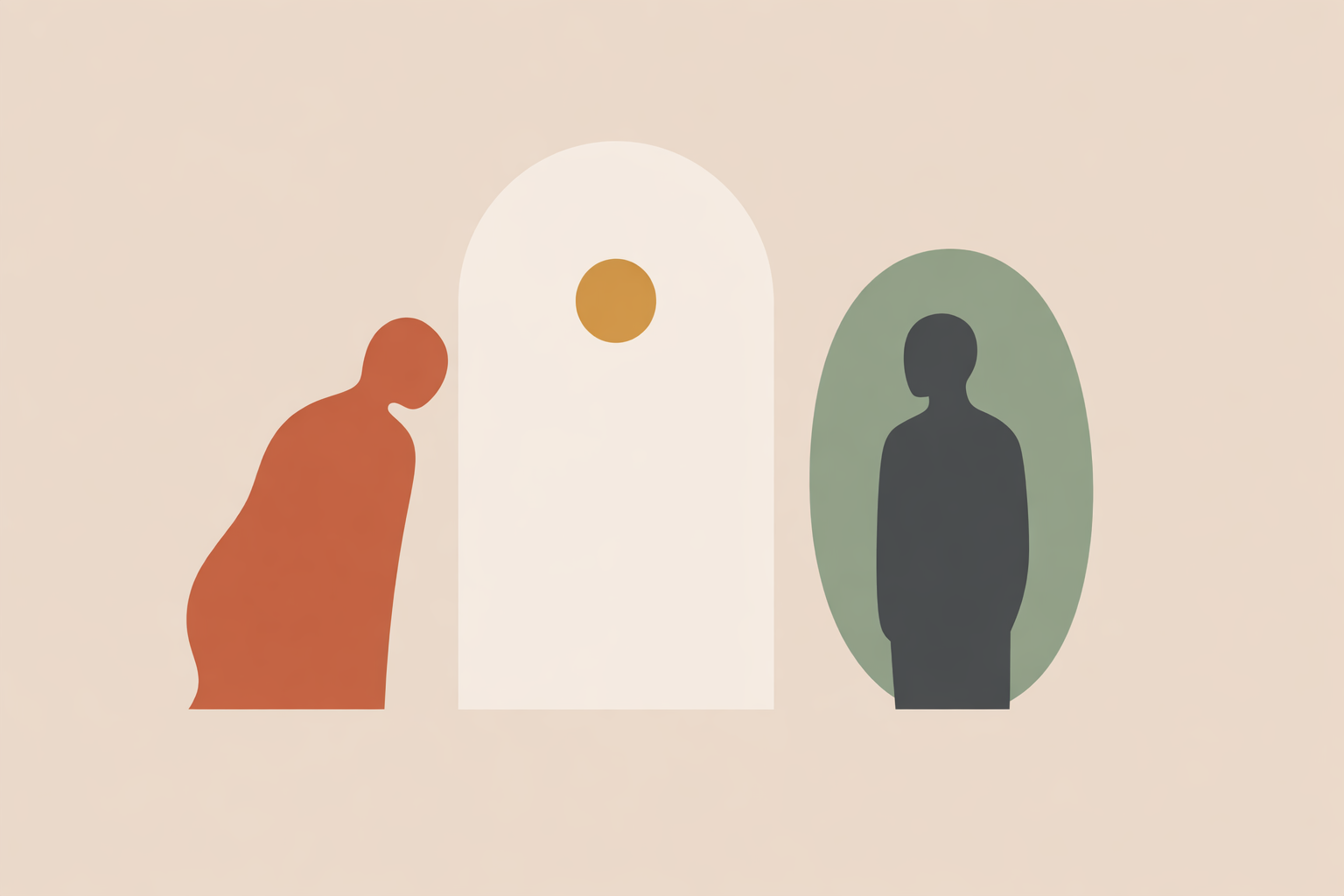
Empathy and compassion are closely related, but they do different work. Empathy helps you sense another person’s inner world. Compassion helps you stay close without fusing.
Cognitive empathy is perspective-taking: understanding what someone may be thinking, feeling, or needing without merging with it. Affective empathy is resonance: feeling with them. Both matter, and both offer relational information, but neither automatically points to wise next steps.
Compassion adds direction. It is caring contact shaped by steadiness, choice, and proportion. In lived practice, compassion sounds less like “I must make this better now” and more like “I am here, and I will respond in a way that supports this person without losing myself.”
Traditional and community-based lineages have long modeled this stance. Elders, midwives, and community guides in many cultures learn to stay close to pain without becoming consumed by it, supported by role, ritual, and ethics. Stay present, and keep your feet on your own ground.
Where empathy alone frays boundaries
When empathy isn’t paired with differentiation, three patterns commonly appear in intensified work: contagion, rescuing, and withdrawal.
First, blurred boundaries. You absorb the atmosphere of the session so fully that clarity drops. Thinking gets foggy, the body tightens, and proportion slips.
Second, rescuing. When you feel distressed by a client’s pain, it’s easy to over-deliver: longer sessions, extra messages, over-preparing, solving problems that were never clearly handed to you. Often it’s an attempt to settle your own inner urgency.
Third, withdrawal. When intensity feels like too much, some practitioners go distant. They become overly procedural, change the subject, or emotionally step back to avoid being flooded.
These patterns look different, but they often share the same root: not enough self-other separation in the moment. Over-involvement in one session can flip into avoidance in the next.
Cues usually show up in the body first:
- held breath
- tight jaw
- sudden fatigue
- mental urgency
- the thought, “I have to fix this now”
Treat these like dashboard lights. They’re signals to slow down and re-center, not proof you’ve done anything wrong.
Compassion as a boundary ally
Compassion supports warm differentiation: caring deeply without carrying it all. You stay emotionally available while keeping enough distance to think clearly and act within scope.
Research on compassion points toward self-other differentiation as part of this shift. Compassion helps you remain connected without over-identifying.
Many practitioners notice the change physically. The jaw softens. Breathing deepens. Curiosity returns. Instead of reacting from urgency, you can ask a better question: what would actually serve here?
That question restores boundaries fast. It moves you away from proving care through access or over-effort and back toward support that’s clear and workable.
In the room, it can sound like:
- “I’m here with you. Would you like to pause for a breath or focus on one next step?”
- “We have ten minutes left. Shall we use them to ground or to clarify what matters most?”
- “I care about this, and I want to support you within our agreed container.”
Compassion is caring with structure.
A practical in-session shift: connect, differentiate, choose
When intensity rises, a simple three-step sequence helps: connect, differentiate, choose.
Connect. Name what you’re noticing in a grounded way. “I can see this matters a great deal.” This keeps the person accompanied rather than managed.
Differentiate. Return to your body and role. Feel your feet, lengthen your exhale, soften your shoulders, and remember: the feeling belongs to them, and steadiness belongs to you.
Choose. Offer one bounded next step. “Would it help to pause and breathe, or would you rather map one practical action for today?”
This sequence is not a formal protocol. It’s a reliable rhythm for interrupting empathic over-identification before it spills into rescuing or withdrawal.
Consent strengthens the process further. Before shifting direction, offering an interpretation, or bringing in a body-based exercise, ask:
- “Would you like to stay with this feeling, or shift toward something practical?”
- “Shall we continue, pause, or change focus?”
- “Would support look more like witnessing right now, or more like structure?”
Sometimes the wisest move is a respectful step back. If you’re nearing the edge of your role or the client’s current capacity, name that gently and return to steadier ground. That is discernment.
Sustaining compassionate boundaries over time
Boundary strain rarely appears all at once. It builds when caring repeatedly exceeds structure, which is why sustainability is shaped by rhythm and culture as much as personal skill.
Workload and organizational support are closely tied to long-term sustainability. Caseload pressure, lack of autonomy, poor scheduling, and weak leadership culture all make steadiness harder to maintain.
This matters for solo practitioners too. Your calendar is part of your ethics, and so is your recovery time. Supports that keep you strong include:
- brief resets after emotionally heavy sessions
- protected admin blocks
- peer reflection or consultation
- clear communication around contact expectations
- spacing depth-focused sessions with enough room to reset
Many ancestral and traditional practices add an important reminder: practitioner care is often built into the structure of the work. Ritual openings and closings, shared responsibility, communal roles, and seasonal pacing reduce the pressure to become the sole container.
Self-compassion belongs here too, as a stabilizing discipline. A quiet inner cue between sessions can be enough: this is hard, I do not need to carry it alone, and I can choose the next kind, competent step.
Cultural humility keeps boundaries humane. Expectations around silence, emotional expression, touch, time, and availability vary. Asking what feels respectful for the person in front of you often protects the relationship better than assuming your norm fits everyone.
Choosing attuned compassion as your baseline
The throughline is clear: empathy helps you sense; compassion helps you respond. When empathy leads alone, boundaries blur more easily. When compassion leads, warmth and clarity tend to stay together.
Practically, this means feeling with someone without abandoning your own center. It means noticing urgency before acting on it, asking permission before directing the process, and offering support that protects both care and scope.
Strong boundaries are not a withdrawal from caring. They’re one of the forms caring takes as it matures. You don’t need to carry everything to stay deeply present.
As a closing caution, compassion-led boundaries still require ongoing reflection: your role, agreements, workload, and cultural context all shape what’s appropriate. When those pieces are tended, attuned compassion stays warm, clear, and sustainable enough to keep serving the work well.
Explore Emotional Intelligence Skills
Emotional Intelligence Certification helps you build steadiness, discernment, and clearer boundaries when sessions intensify.
Explore Emotional Intelligence →