Parents often ask whether equine support can be a good fit for autistic children. Barn partners may hope for a program that helps autistic participants feel more engaged and confident. At the same time, expectations can get tangled: some families imagine riding lessons paired with big promises, while others are looking for specialist support that sits outside a coach’s credentials. The answer isn’t to offer more—it’s to name the work clearly, so families know what you do, horses are respected as partners, and your practice stays ethical and sustainable.
Key Takeaway: Equine support can be meaningful for autistic participants when it stays within clear, non-clinical scope and focuses on observable, practical goals. Predictable routines, sensory-aware pacing, and respectful horse partnership help build participation, communication practice, confidence, and self-regulation—while timely collaboration keeps the work ethical and sustainable.
Why horses can feel especially accessible for autistic participants
Many autistic people feel more at ease around horses because barns tend to run on rhythm and routine, with a clear, nonverbal way to connect. For practitioners, this matters: sessions often land best when they’re predictable, embodied, and not overly dependent on talking things through.
Horses naturally invite presence. Their pace asks for steadiness, and their responses are immediate without being abstract—one reason this work has been trusted across generations of horsemanship and traditional, relationship-based approaches to well-being.
Rhythmic movement, strong nonverbal cues, and whole-body listening can make the equine environment feel especially compatible for many autistic participants. Put simply: there’s often less pressure to “perform” socially, and more room to communicate through movement, proximity, timing, and shared focus.
That quality of presence matters. As one field association puts it, “Because horses react instinctively to human emotions and behaviors, they serve as honest, nonjudgmental partners,” a sentiment Eagala also shares about nonjudgmental partners.
Temple Grandin has long emphasized the depth of this bond: “horses can help us to develop a sense of trust, empathy, and compassion,” reflecting long-standing wisdom about equine attunement (Temple Grandin).
Families often notice simple, practical benefits too: being outdoors, moving together, and sharing a meaningful activity. One parent reflected, “We were able to be outside, moving around, and connecting with the horses,” finding that the barn created space to process and bond (family story).
When movement, routine, and connection come together, the barn can feel easier to navigate than spaces built mainly around conversation. Many people meet themselves more easily there.
Know your lane: hippotherapy, therapeutic riding, and equine-assisted coaching
Clear terminology protects everyone involved. “Equine therapy” gets used as a catch-all, but the work under that umbrella varies widely in training, goals, and accountability.
The American Hippotherapy Association describes hippotherapy as the use of horse movement by physical, occupational, or speech professionals within a formal plan of care. That is specialist work and should be named as such. The AHA also offers recommended terminology because vague language quickly creates confusion.
Therapeutic riding usually centers horsemanship, participation, and skill-building. Equine-assisted coaching (or equine-assisted learning) is different again: it focuses on experiential growth through structured activities with horses, with emphasis on communication, self-awareness, confidence, teamwork, and regulation strategies—not clinical outcomes.
Mainstream overviews also emphasize specify scope, because “equine-assisted therapy” can otherwise refer to very different services. Field reviews similarly call for clearer terminology so goals, responsibilities, and safeguards don’t get blurred.
If you are a coach, say so plainly. If you offer riding instruction, name that clearly too. Precision builds trust.
How equine work supports learning: rhythm, sensation, and live feedback
In equine settings, progress often begins with movement, attention, and relationship—one reason horse-based work can feel so different from room-based support.
The horse’s pelvic movement offers vestibular and proprioceptive input—essentially, body signals that help the nervous system track balance and position. In specialist settings, professionals use that movement with specific intent. For coaches, the takeaway is practical: a steady rhythm and pace can help many people organize attention and feel more grounded.
Just as important is responsiveness. Participants often learn that small changes in posture, breathing, and tone can reliably change what the horse does next. Think of it like a real-time mirror: the horse responds to what’s actually happening in the moment, not to what someone hopes is happening.
Many practitioners also observe stronger participation, turn-taking, and direction-following over time—without needing inflated claims. The horse offers a natural shared focus that supports communication practice, and research has described gains in shared attention in equine contexts.
Eagala describes this as experiential: rather than only talking about patterns, people meet them in real time. Linda Kohanov speaks to the same truth: “Horses help us to learn about ourselves, and to overcome our fears and limitations,” pointing to growth that unfolds through relationship and practice (learn about ourselves).
For a coach, this is the heart of the modality: using rhythm, sensory experience, and relational feedback in service of confidence, communication, self-awareness, and participation.
What meaningful progress looks like in everyday life
Meaningful progress in equine sessions is usually modest, visible, and cumulative. It may look like a steadier arrival at the barn, smoother transitions, longer engagement with a task, clearer requests, or less hesitation around the horse—small shifts that families recognize because they show up outside the arena.
In non-clinical settings, participants often need fewer prompts as routines become familiar, and many become more willing to try unfamiliar tasks as trust grows. Consistency supports confidence, and confidence supports participation.
Research reviews report measurable benefits in areas such as balance and coordination for some participants, while other summaries describe marked improvements in behavior, social functioning, and self-confidence in structured programs. Held with nuance, these findings sit comfortably alongside what many practitioners witness year after year.
Client voices make the changes more tangible. “Working with horses showed me how to be more aware of my feelings,” one person shared. “I could recognize anxiety and frustration as well as confidence and relaxation in myself” (client voice).
Staff in veteran programs describe a similar arc—confidence, mindfulness, boundary-setting, and trust—developing through gradual change, not instant transformation.
A strong benchmark for your own work is simple: look for participation, communication moments, growing self-awareness, and practical regulation strategies that travel into daily life.
Your scope as an equine-assisted coach
Equine-assisted coaching supports growth, learning, and well-being. It does not involve diagnosis, clinical planning, or claims that belong to licensed professions.
Coaching frameworks define coach scope around behavior change, goal-setting, and supportive partnership rather than assessment or clinical intervention. In day-to-day practice, that means working with what is observable and teachable—and collaborating well when needs extend beyond your lane.
Equine-assisted coaching is well suited to goals such as:
- Self-awareness: noticing breath, posture, pace, and energy through the horse’s responses.
- Communication practice: making clear requests, listening, waiting, and taking turns.
- Emotional self-regulation: using simple grounding and pacing strategies during handling and leading.
- Sensory coping: choosing distance, speed, and task in ways that support comfort and engagement.
- Participation: joining routines, sharing roles, and following through with meaningful barn tasks.
These are often exactly the outcomes families want: confidence, connection, communication practice, and social participation. Horse-based coaching can be a natural fit when it’s framed honestly and delivered consistently.
When to collaborate or refer
A clear scope doesn’t limit good practice—it strengthens it. Some people need specialist support, and noticing that early is part of ethical work.
If the main goal involves complex speech needs, neuromotor function, highly specific sensory rehabilitation, or intensive emotional support, a licensed professional may need to lead or co-support the process. In horse-based contexts, hippotherapy belongs to qualified professionals using horse movement in a formal plan of care.
Professional guidance across coaching fields also highlights the value of timely referrals and steady boundaries. Your role isn’t to do everything—it’s to offer excellent support within scope and build a trustworthy network around the participant.
Common referral cues include:
- Frequent falls or very poor balance in everyday activities.
- Need for specialized seating, significant physical assistance, or adaptive tack.
- Intense distress responses around the barn that exceed a coaching container.
- Requests focused on managing a condition rather than learning or participation goals.
- Safety concerns that require specialist oversight.
Handled well, referral builds trust rather than weakening it. Families usually appreciate honesty—especially when it comes with warmth and a clear next step.
Designing autism-friendly, horse-centered sessions
The most effective sessions are predictable, sensory-aware, and respectful of both the participant and the horse. Good design reduces friction before the main activity even begins.
Practical adaptations may include smaller groups, shorter sessions, visual schedules, gradual exposure, and non-riding options like grooming, leading, or liberty-based work. These choices widen access without diluting the depth of the experience.
A simple structure often works well:
- Before arrival: share a visual map, what to wear, and what the environment may sound or smell like.
- Warm-in: begin with a consistent opening such as greeting, grooming, or a short orientation.
- Core activity: choose one or two focused tasks with clear choice points.
- Cool-down: close unhurriedly with horse care, reflection, and a predictable ending.
- Notes: record observable shifts such as initiations, transitions, and strategies used.
It also helps to borrow the strengths of structured delivery without crossing professional boundaries. Predictable routines, clear roles, and thoughtful pacing support safety and steadiness. Equine settings are inherently multisensory, and multisensory input can be grounding or overwhelming depending on the person and the day.
Horse welfare must remain central. Reviews emphasize horse welfare as a defining feature of ethical programs. The horse is not equipment; the horse is a sentient partner whose signals, capacity, and willingness matter.
Temperament is often more important than breed or appearance when choosing a suitable horse for this work. Research notes that unique temperament is shaped by both genetics and environment—matching what experienced horse people already know: the best partners for connective work are calm, responsive, and emotionally steady.
As Eagala reminds us, horses are nonjudgmental partners, not props.
Building a thoughtful equine practice
A strong equine practice grows through clarity, reflection, and steady skill-building. You don’t need to overreach to make the work meaningful.
The most sustainable approach is holistic: viewing equine sessions as one part of a wider support landscape that may include family routines, education, community life, and other forms of coaching or guidance. Reviews increasingly point toward integrated support rather than treating horse-based work as a standalone answer.
Many contemporary practitioners also emphasize individualized goals, participant agency, and respectful, neurodiversity-affirming language. Research reflects this shift toward individualized goals, and traditional practice echoes it in a different way: people thrive when they’re met with respect and given a pace they can truly inhabit.
Keep your standards high: document clearly, define success in observable terms, and keep refining your craft. Predictability, consent, pacing, and sensory awareness support better experiences for both humans and horses.
Client stories often capture the deeper personal value of the work. One participant shared, “I now have a stronger self image, better communication skills, and I feel like I have my life back” (renewed self-image).
Over time, mature practice is built less by collecting techniques and more by deepening relationship, horsemanship, ethics, and community understanding.
Conclusion
Equine work can be powerful relational support for autistic participants when it stays grounded in honest language, clear goals, and ethical scope. The most meaningful outcomes are often the easiest to observe: more participation, clearer communication, stronger confidence, and greater ease in self-regulation.
Research offers promising evidence in several areas, while practitioner experience and long-standing tradition continue to show why horses matter so deeply in human growth. The wisest stance is neither inflated nor dismissive—it’s respectful, evidence-aware, and rooted in what the work genuinely offers.
With that clarity, you create space where autistic participants, families, and horses can meet each other with dignity and trust. And as with any good coaching practice, the essentials hold: stay within scope, collaborate early when needed, and let consistency do its quiet work over time.
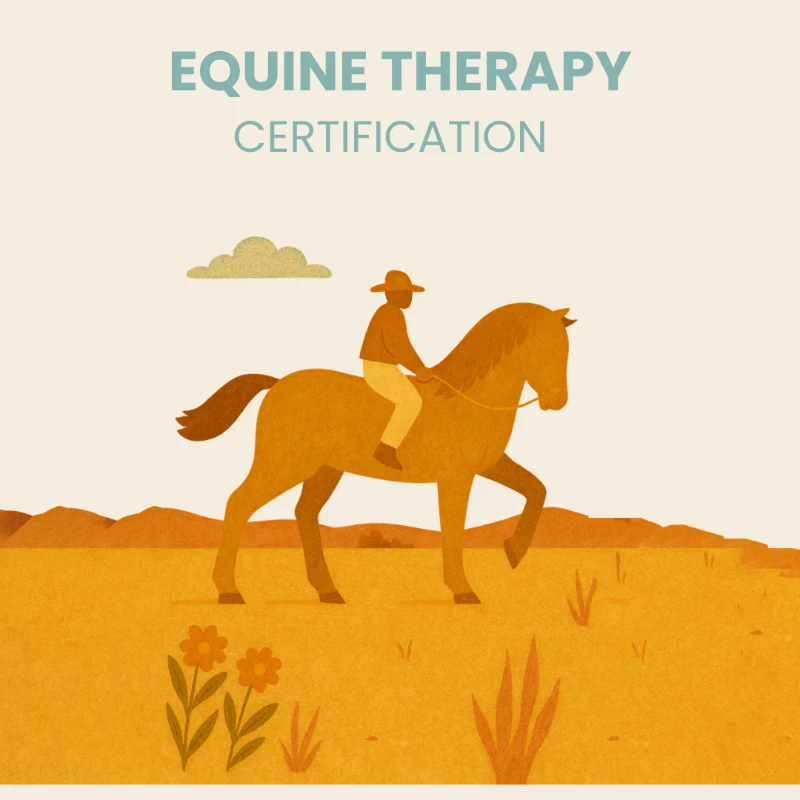
Train with Equine Therapy Practitioner
Equine Therapy Practitioner helps you deliver horse-centered, scope-aware sessions with clear goals and ethical boundaries.
Explore Equine Therapy Practitioner →