Fertility coaches are often asked for certainty in situations shaped by uncertainty. Clients may arrive carrying pressure, shame, relationship strain, and a flood of conflicting advice. In a non-clinical role, the work isn’t to promise outcomes—it’s to protect autonomy, reduce overwhelm, and help people make grounded choices. That’s where evidence skills matter most.
Used well, evidence isn’t academic decoration. It’s a practical safety tool that helps you sort signal from noise, speak about possibility without overclaiming, and hold traditional knowledge with respect. It also helps keep hope honest—which is often far more supportive than certainty.
Key Takeaway: Evidence skills help fertility coaches stay ethical and client-led by naming what’s known, what’s uncertain, and what’s tradition- or experience-based. When you translate research clearly, communicate risk without overclaiming, and use tools like apps as supports rather than authorities, you protect autonomy and reduce overwhelm.
Evidence as a safety anchor in fertility coaching
Evidence skills protect trust. They help coaches offer grounded support without slipping into promises, pressure, or false certainty—especially in fertility work, where clients are often emotionally tender and highly exposed to persuasive claims online.
People navigating fertility challenges commonly experience shame spirals and relationship strain. In that context, even kind suggestions can land as “one more thing to get right,” which can quietly increase pressure and self-blame.
This is why evidence skills are inseparable from ethics. They help coaches separate reliable information from hype and set realistic expectations without becoming clinical or cold. Clients don’t need certainty from you—they need steadiness, honesty, and room to choose.
- In-session script: “Here’s what we know, here’s where evidence is thinner, and here’s what that could mean for you. You’re in the driver’s seat. I’m here to support your process, not to promise outcomes.”
When safety and clarity lead, hope becomes more durable.
What counts as evidence in holistic fertility work
In holistic practice, evidence is broader than published research alone. It includes modern studies, long-standing tradition, practitioner observation, and client experience. Each stream adds something valuable—and each needs to be named honestly so clients can use it wisely.
A practical way to work is to hold four streams together:
- Research: What do published findings suggest?
- Tradition: What has been carried forward through lineage, ritual, herbs, bodywork, or community practice?
- Practitioner observation: What patterns have you seen repeatedly in real coaching spaces?
- Client experience: What feels aligned, sustainable, and meaningful for this person now?
This wider view matters because formal evidence frameworks often rank meta-analyses above embodied or lineage-based knowledge. That hierarchy can be helpful for certain questions, but it doesn’t erase centuries of practice or lived experience. It simply means you describe the “why” behind a suggestion with care: tradition-strong, research-limited, or supported by both.
Across cultures, longstanding traditions—herbal blends, ceremonial practices, and pelvic or abdominal self-care—have supported people through fertility-related rites of passage for generations. Many clients already live within that landscape. A thoughtful coach doesn’t flatten it into “unproven,” and also doesn’t present it as unquestionable. They help clients relate to tradition with respect, context, and discernment.
When evidence is transparent rather than rigid, clients can choose with confidence instead of compliance.
How to read fertility research without getting lost
The most helpful way to read research is as a translator, not a headline chaser. The grounding question is simple: what did they actually measure?
Many supplement and lifestyle fertility studies focus on intermediate outcomes—things like hormones, egg-related measures, or semen parameters—rather than time to conception or live birth. That distinction matters because lab-marker improvements don’t always translate into the real-world outcomes clients usually care about most.
So even when an idea seems biologically plausible, it’s wise to keep the claim sized to the evidence. Antioxidant approaches, for example, may make sense mechanistically, yet reviews still suggest uncertain effects on key outcomes.
It also helps to watch how results are framed. Relative risk language can make effects look larger than they are, and publication bias can amplify early excitement by making positive findings easier to find than disappointing ones.
- Quick study scan: Who was included? What was measured? What outcome actually changed? Was the effect described in absolute or relative terms? Does this resemble the client in front of you?
- Client translation: “This was linked with a change in a marker, but we do not have strong evidence that it changes conception outcomes.”
Clarity isn’t pessimism. It’s respect.
Weaving traditional wisdom with modern evidence
Traditional fertility support doesn’t need to be pushed aside to make room for modern research. The deeper task is integration: allowing culture, story, and data to sit at the same table—without confusing one for the other.
Across cultures, practices such as herbal preparations, ceremony, prayer, rest rituals, and hands-on self-care have been used to support people through fertility-related transitions. For many clients, these aren’t “alternatives.” They’re family knowledge, spiritual grounding, and cultural continuity.
Ethical integration starts with curiosity: what does the client already value, what does the practice mean in its original context, and are there any safety considerations worth checking? It also means naming origins, crediting teachers and lineages, and choosing language that avoids appropriation.
- Integration steps: Ask what practices matter to the client; explore cultural context; check fit and safety; agree on gentle experiments; reflect together; adjust without drama.
- Respect practice: If a practice belongs to a protected or specific lineage, consider encouraging connection with rooted teachers rather than repackaging it.
Tradition offers depth. Research offers context. Good coaching helps clients use both with consent and discernment.
Talking about risk, hope, and uncertainty without causing harm
Language shapes pressure. In fertility coaching, a curious, transparent tone can make the difference between support and subtle coercion.
People facing fertility struggles often carry earlier losses, family expectations, and the feeling that time is closing in. Under those conditions, certainty-selling language can feel comforting in the moment, but it often increases pressure over time—especially if things don’t go to plan.
This is where evidence skills become communication skills. Instead of overselling, speak in plain, conditional language. Essentially, you’re naming what a practice may support, what remains unclear, and what the client can reasonably expect right now—while keeping the focus on quality of life, self-trust, steadier routines, and informed choice.
- Phrase bank: “This may support your overall well-being.” “We don’t yet know how much this changes outcomes.” “Let’s explore what feels supportive and sustainable for you.”
- Expectation reset: “This isn’t a switch to flip. Think of it as building a steadier base while you move through a demanding season.”
- Consent check: “Would you like information first, or space to process what you’re feeling?”
Clear language protects dignity while leaving room for real hope.
Using evidence to hold scope and boundaries
Boundaries are part of good support. Evidence helps coaches know when to continue, when to pause, and when to encourage wider support.
Fertility-related distress is often intertwined with earlier reproductive experiences, loss, and family pressure. Trauma-aware skills help fertility coaches recognize hyperarousal, shutdown, or dissociation—then respond with pacing, choice, and grounding rather than pushing through.
Some presentations call for support beyond coaching. Persistent hopelessness, ongoing numbness, or thoughts of self-harm are clear signs that specialized mental health support is needed. Likewise, situations such as sudden severe physical pain, significant unintended weight loss, or escalating relationship violence warrant urgent referral to appropriate services.
Clear scope isn’t about becoming distant. It’s about being precise about what you offer—education, body literacy, lifestyle support, emotional regulation skills, reflection, and accountability—and equally precise about what you don’t.
- Boundary tools: Scope statement in your welcome materials; consent and privacy notes; session summaries; clear referral language.
- Gentle referral script: “I care about you and want you to have the widest net of support. This goes beyond what I offer. Would you be open to me sharing options you can choose from?”
Good boundaries don’t weaken trust. They strengthen it.
Assessing apps, trackers, and online advice with discernment
Digital tools can support cycle awareness, but they shouldn’t become unquestioned authorities. A healthy stance is simple: treat digital data as clues, not commandments.
Clients often arrive with screenshots, app predictions, wearable scores, and algorithm-generated fertility windows. These tools can be useful—especially when they support body literacy and consistent observation—but they work best when interpreted in context.
For cycles in transition, such as postpartum or perimenopause, or in situations that alter cycle patterns, observation and patience are often more appropriate than prediction. Put simply, when patterns are shifting, a confident-looking forecast can create more confusion than clarity.
- App discernment checklist: What inputs does it use? Does it rely mostly on calendar assumptions? Can users log real-time signs? Does it show uncertainty? Does it make privacy choices clear?
- Client script: “Let’s pair what the app suggests with what your body is showing. Your body leads; the tool assists.”
The goal isn’t perfect prediction. It’s a steadier relationship with personal rhythms, informed by both observation and discernment.
Making evidence skills part of your ongoing practice
Evidence skills deepen over time. You refine them session by session: learning to read studies without exaggerating, to honour traditional practices without appropriation, to communicate uncertainty without becoming vague, and to stay compassionate without stepping outside scope.
This isn’t about becoming a walking database. It’s about becoming a trustworthy companion who can hold complexity with steadiness. Research, traditional knowledge, practitioner insight, and client preference all belong; the skill is showing clients which is which.
Start with one habit: read outcome claims more carefully, translate numbers into plain language, ask more about cultural practices that already matter to the client, and slow down when certainty feels tempting. Over time, evidence stops feeling like a separate task and becomes part of how you listen, speak, and guide.
“Here’s what we know, here’s where evidence is thinner, and here’s what that could mean for you. You’re in the driver’s seat—I’m here to support your process, not to promise outcomes.”
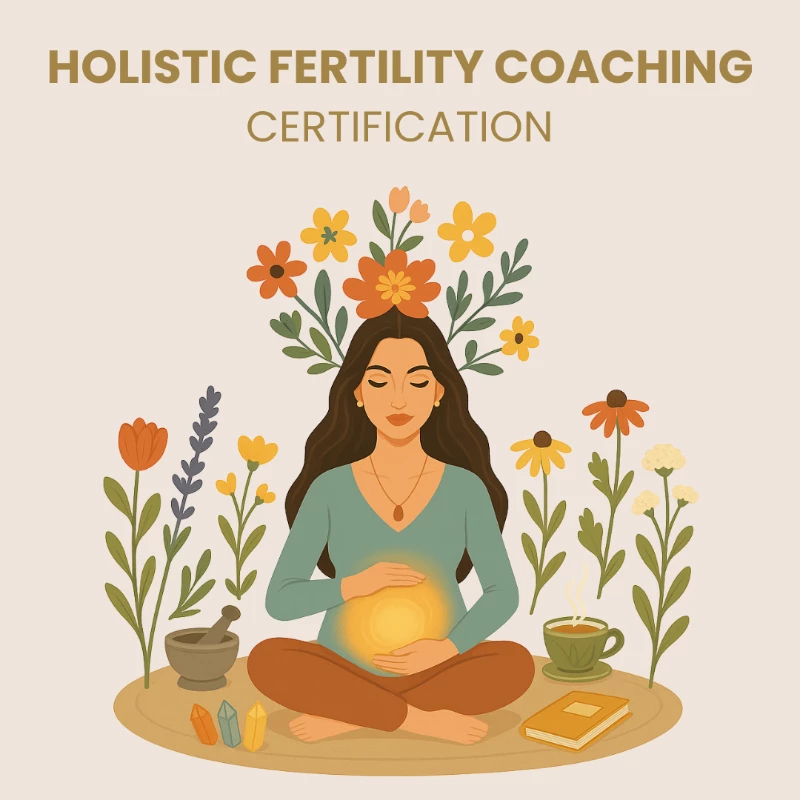
Master evidence-led fertility coaching
Deepen your research literacy, scope boundaries, and client-centered communication in the Fertility Coach Certification.
Explore Fertility Coach Certification →