Many practitioners default to “fight-or-flight” and a quick calming cue when a client spikes mid-session. That shorthand can help, yet it often misses what clients actually live with: powering through a presentation and crashing an hour later, or feeling the same racing heart as excitement one day and dread the next. With a fuller brain–body map, stress stops looking like personal failure and starts looking like a pattern you can predict, time, and support.
Key Takeaway: Stress literacy is more than naming “fight-or-flight.” It means understanding how the brain predicts demand, how body signals are interpreted, how fast and slower stress waves unfold, how attention and planning narrow under load, and how life context shapes recovery. With that map, practitioners can offer clearer education, more useful support, and more ethical, scope-aware conversations.
Why stress literacy matters beyond fight-or-flight
Stress is rarely just a dramatic reaction to an obvious problem. It’s a whole-system shift that involves perception, appraisal, autonomic changes, hormone signaling, attention, memory, emotion, behavior, and recovery. In practice, this matters because many clients arrive carrying shame: “Why am I like this?” Clear stress literacy replaces self-blame with understanding.
A steady reframe helps: stress is the system mobilizing resources in response to a demand. That mobilization can be genuinely useful for focus and readiness. Trouble starts when activation keeps stacking up without enough recovery, flexibility, or support.
Good education stays concrete. Instead of “I’m overwhelmed,” help clients name what’s happening: jaw tension, shallow breath, hot face, blank mind, tunnel vision, stomach tightness, irritability, or an urge to rush. Once a pattern has words, choices become easier.
How stress begins: prediction and body sensing
Stress often starts before anything “bad” happens, because the brain is constantly predicting and adjusting the body for what it expects next. This anticipatory process is often described as allostasis. The system prepares ahead of time rather than waiting for events to force a response.
So a rising heart rate on the drive to an important conversation, or shoulders bracing before opening an email, doesn’t mean someone is irrational. It means their system is preparing.
At the same time, interoceptive networks read internal signals like heartbeat, breathing, and gut sensation, then interpret them in context. That’s why the same chest flutter can feel energizing in one moment and alarming in another. Sensation and meaning travel together.
In a session, one gentle question can open the room: “What did your body expect was about to happen?” It often reveals more than “What happened?” on its own.
Fast stress pathways: autonomic arousal in everyday language
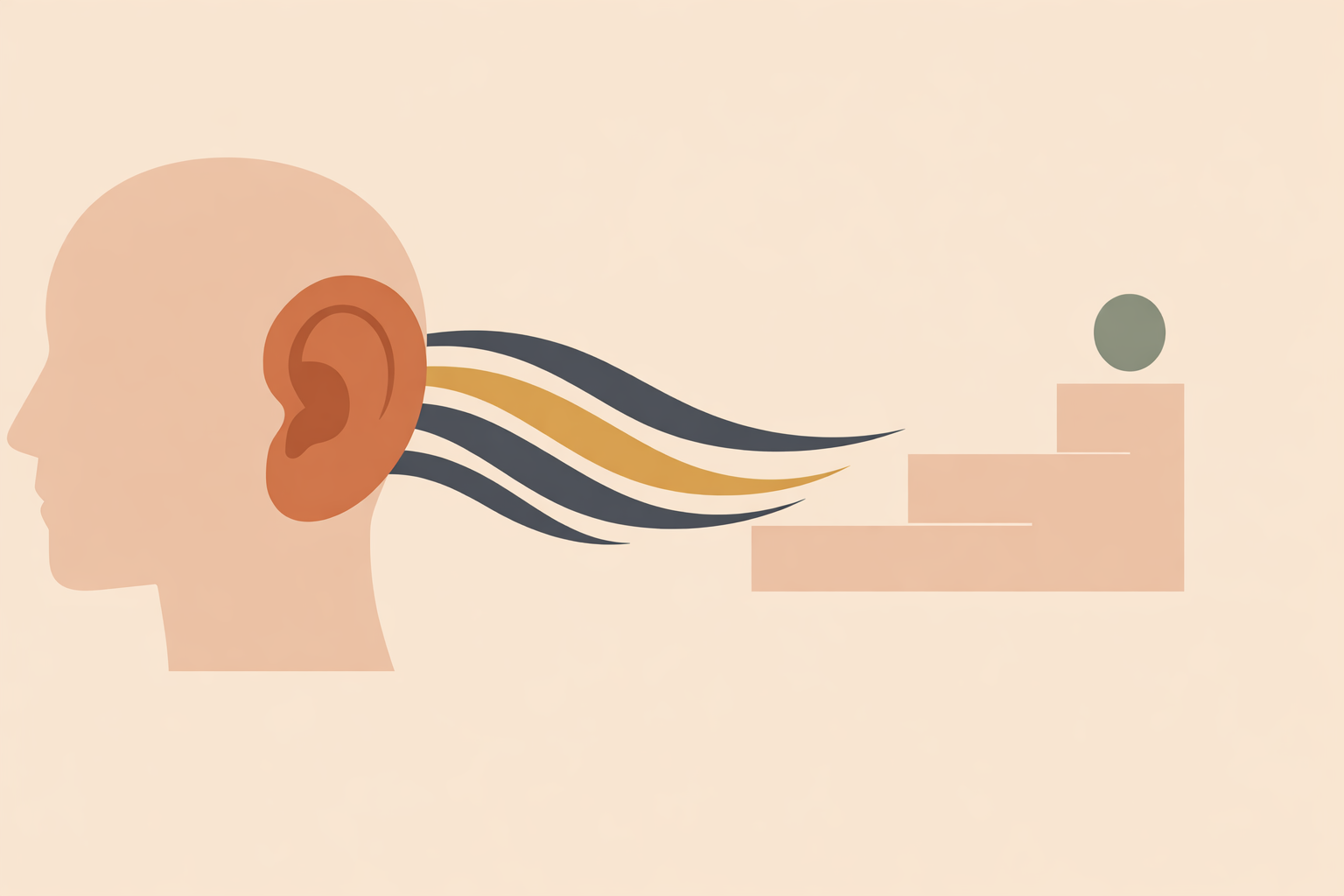
When demand lands, the autonomic nervous system moves quickly. This fast wave shows up as immediate changes in breath, heart rate, muscle tone, vigilance, and readiness.
Within seconds, catecholamines such as adrenaline and noradrenaline ramp up rapidly and drive many of these shifts. Clients don’t need a biology lecture, but they often feel relieved hearing that a racing heart, cold hands, dry mouth, or a sudden jolt of alertness are real body events, not character flaws.
Plain language works well here:
- “Your system hit the gas.”
- “Your body mobilized before your thinking mind caught up.”
- “The signal is real, even if the meaning is still becoming clear.”
Activation also isn’t automatically something to suppress. Sometimes the skill is riding the wave well. An orienting pause, a slower exhale, a drink of water, standing up, reducing stimulation, or choosing one next step often supports the moment better than forcing “calm.”
Slower stress waves and the later crash
Not all stress runs on the same clock. After the first autonomic surge, a slower hormone-based wave can keep shaping experience, which helps explain why someone can perform well and then feel depleted later.
Many clients recognize the “later crash”: they handle the meeting, the family demand, the travel day, or the hard conversation, and then notice heaviness, irritability, fatigue, or a flat mood afterward. It helps to normalize this pattern as a timing issue rather than a weakness.
A straightforward explanation might sound like this: “The body uses a fast system for immediate mobilization and a slower system for sustained demand. So it makes sense that the after-effects can show up later.”
This is where purposeful recovery earns its place. A decompression window after high demand is often what allows the system to settle fully. Depending on the person and their culture, that might look like a short walk, a nourishing meal, quiet time, movement, prayer, journaling, or reducing input before the next task.
How stress changes attention, memory, and planning
Under high or prolonged stress, thinking often narrows toward immediate priorities, with reduced working memory and less flexibility. People may struggle to hold multiple steps in mind, switch tasks cleanly, or plan ahead.
Stress also biases attention toward what feels most salient or risky, while background details fade. In everyday life, that can feel like tunnel vision, forgetfulness, or mental blankness.
So when planning gets shaky during a stressful stretch, it’s often reduced bandwidth rather than lack of motivation. A helpful practitioner stance is to support the load instead of judging the person.
Useful scaffolds include:
- writing one clear goal before a demanding conversation
- capturing only the next two actions instead of the whole plan
- using a timer for one short work block
- externalizing tasks onto paper rather than holding them mentally
- sorting concerns into “now” and “later” columns
These structures match how stress reorganizes attention and executive function. They also help clients feel capable again, which reduces shame and strengthens follow-through.
Allostatic load: reading patterns in context
When demands repeat and recovery stays limited, the effects accumulate as allostatic load, the cumulative cost of repeated adjustment. The same stress mediators that support adaptation in the short term can become burdensome when the pattern becomes constant.
This wider lens matters because stress is never only about individual willpower. Workload, discrimination, financial insecurity, migration, language barriers, and resource access can all shape stress exposure and recovery. Many clients are navigating pressures that are structural, relational, and cultural as much as personal.
So the practitioner’s job isn’t only to notice activation. It’s to ask what conditions are shaping it, and what supports are realistic inside that life. This keeps the work humane and prevents flattening complex experience into a vague label like “dysregulation.”
Biology and experience keep influencing each other through learning, environment, and regulation. Patterns can become ingrained, and with steady, context-sensitive support, people often regain flexibility over time.
Traditional practices and modern stress support
Across cultures, people have long used breathing, movement, contemplation, ritual, relationship, and community to support balance. These practices weren’t built from trend cycles. They were refined through lived experience, careful observation, and shared wisdom over generations.
Respecting tradition doesn’t mean forcing a single approach on everyone. It means treating these practices as legitimate tools within a broader conversation about human regulation, resilience, and well-being.
In modern coaching settings, traditional approaches can sit alongside stress education beautifully when offered with consent, cultural respect, and real choice. A grounding walk, a breathing pattern, chanting, stillness, gentle movement, time in nature, community meals, or a protected rest day can become part of a client’s support landscape when it truly fits their values and day-to-day reality.
Session-ready language that increases agency
Clear words can be supportive all by themselves. When clients understand what stress is doing, they usually feel less alone and less confused by their own responses.
You might say:
- “Stress is your system mobilizing to meet a demand.”
- “There may be a fast wave and a slower wave.”
- “Let’s notice the pattern before we try to change it.”
- “Would support look better right now as grounding, planning, movement, or a pause?”
- “Let’s reduce the amount you have to hold in your head.”
Micro-practices can stay simple:
- lengthen the exhale for a few breaths
- look around and name a few colors or shapes in the room
- press the feet into the floor and notice contact
- write the next one or two actions only
- reduce stimulation for a short period
Structure matters too. A two-item action list, a visual timer, a post-event decompression ritual, or a regular recovery window can do more for some clients than abstract advice about “managing stress.”
Keeping the work ethical and within scope
Stress literacy supports ethical practice because it keeps the work clear and grounded. Practitioners can offer education, pattern recognition, supportive practices, and compassionate structure without overstating certainty or stepping beyond their role.
It helps to name that directly: “I can support you in noticing stress patterns and building practical supports. If something needs a different level of care, we can talk about next steps.”
That kind of phrasing protects both client and practitioner. It also reinforces a healthy principle: support works best when it stays collaborative, honest, and tied to real life.
Conclusion
Stress is more than fight-or-flight. It begins in prediction, is shaped by body sensing and meaning-making, moves through fast and slower waves, and changes how attention, memory, and planning are organized. Over time, it’s also shaped by recovery, culture, environment, and the realities of daily life.
For practitioners, this wider map brings more precision and more kindness. It replaces shame with language, strengthens timing, and supports flexible, respectful, real-world choices.
The aim isn’t a permanently calm state; it’s greater adaptability: enough activation to meet life, enough settling to recover, and enough awareness to move between the two with more choice. As always, support should be individualized, culturally respectful, and matched to the level of help someone needs.
Explore Neuropsychology Certification
Build deeper stress-literacy skills with the Neuropsychology Certification to support clients with clearer, scope-aware education.
Explore Neuropsychology →