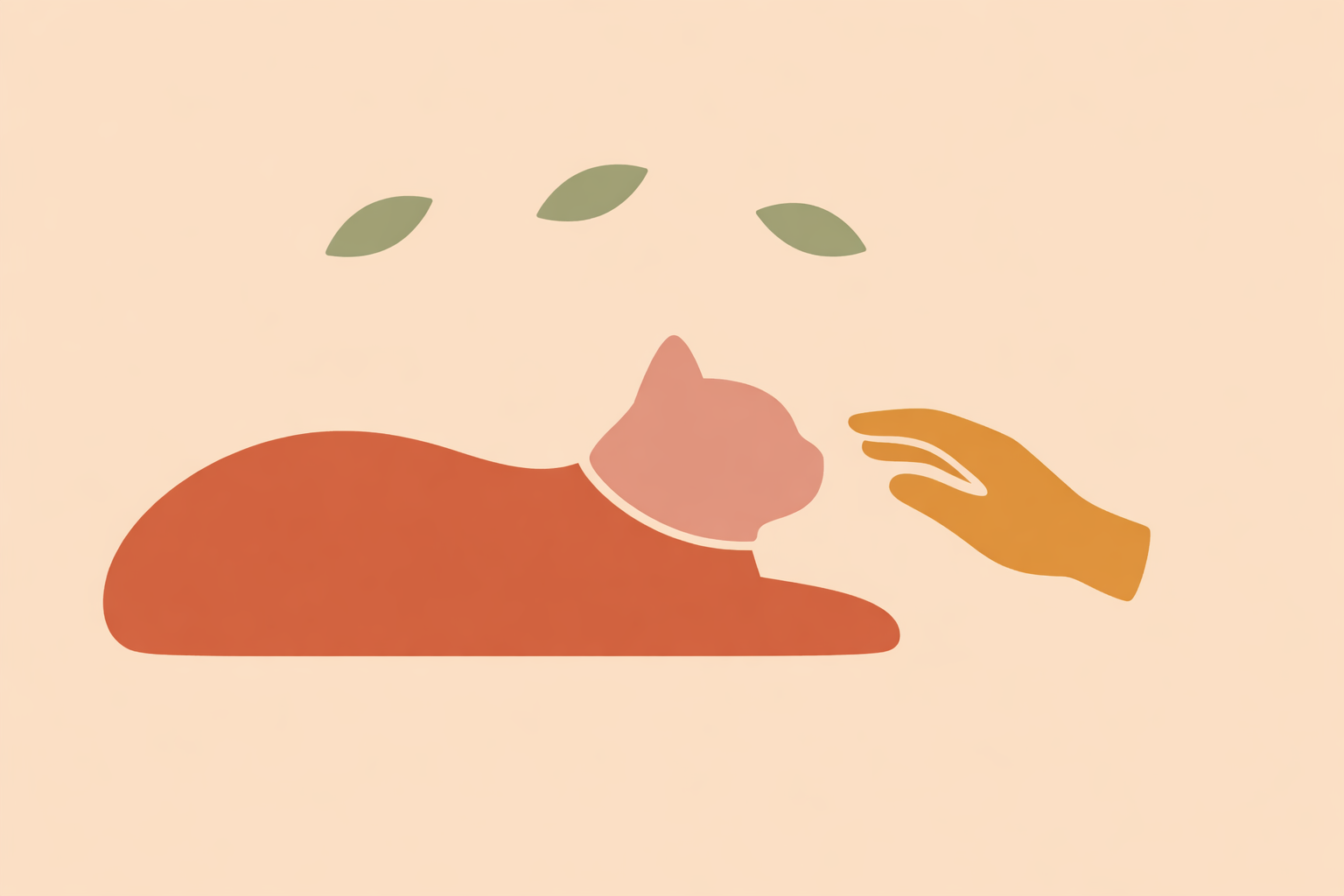
Most practitioners meet the sensitive cat the same way: a body that startles at small sounds, accepts two strokes, then stiffens, flicks, or swats. The instinct is to slow your hands a little and add more technique. A few minutes later the cat is over threshold, you have lost permission, and trust has narrowed rather than grown.
For sensitive cats, calming touch works best as consent-led co-regulation. The aim is to create a predictable experience the cat can join, pause, or leave. That means a quiet setup, short check-ins, steady rhythm, and a small number of simple touches repeated kindly.
Key Takeaway: Calming sensitive cats responds best to consent-led pacing inside a predictable, low-stimulation routine. Start with a familiar, quiet, dim space and let the cat choose whether to engage. Use short check-in strokes, slow effleurage, and well-tolerated areas such as the head, cheeks, chin, and ears before broadening to shoulders, back, or tail base. Keep sessions brief, repeatable, and easy to anticipate, with consistent openings and closings that help the cat stay settled.
Prepare a Low-Stimulation Space First
The environment does much of the calming before your hands even move. A quiet, dimly lit space without strong scents or sudden sounds gives a sensitive cat a better chance of receiving touch as soothing rather than intrusive.
Whenever possible, work where the cat already rests. Familiar places often settle arousal quickly because they already feel safe. Cats also do better when they have secure resting places available and can choose them freely.
Your own state shapes the session. Sit at the cat’s level, let your shoulders drop, and allow your breathing to slow before you offer your hand. Sensitive cats usually settle more easily with steady rhythm than with elaborate technique, a practical foundation in animal wellness.
- Dim the lights.
- Silence alerts and reduce sudden noise.
- Use the same blanket or resting spot when possible.
- Offer your hand to sniff before touching.
- Begin with one stroke and a pause.
Consistency is supportive. The more familiar the setup feels, the less the cat has to evaluate in the moment.
Start With Slow Effleurage
Once the cat chooses to stay, begin with slow effleurage: whole-hand gliding strokes in the direction of the fur. It’s simple, rhythmic, and easy for the cat to read.
For sensitive cats, lighter and slower usually lands best. Do one unhurried glide, then pause. If the cat stays soft, repeat. If the body tightens or attention shifts away, shorten the stroke or stop.
Effleurage is widely valued for supporting relaxation in short interactions, and its predictability often matters as much as the touch itself.
- Use full-hand contact rather than fingertips.
- Follow the coat direction.
- Count slowly through each stroke.
- Pause after one or two passes.
- Keep pressure feather-light.
When you’re unsure, do less and wait. With enough space between touches, preference becomes obvious.
Head, Face, and Ears Are Often the Best Entry Points
For many cats, the safest starting point is the head. The forehead, cheeks, chin, and the base of the ears are often welcomed before broader body contact.
Start small and stay unhurried. One slow forehead stroke, a tiny cheek circle, or a gentle chin glide is often plenty for the first minute.
Ear work can be especially settling when done with restraint. Soft circles at the ear base, light tracing along the edges, or a quiet resting touch near the base may help some cats downshift, particularly when sound sensitivity is part of their pattern.
- Three slow forehead strokes.
- One or two small circles on each cheek.
- Light strokes under the chin.
- Optional ear-base circles if the cat leans in.
This work is most effective when it feels understated, giving the cat room to meet the touch halfway.
Broaden to Shoulders, Back, and Tail Base Carefully
When the cat is clearly settled with head work, you can widen the session. Shoulders and upper back often hold tension, and many cats accept gentle contact there when the rhythm stays slow and the pressure stays light.
Use tiny circles around the upper shoulder blades or short glides beside the spine rather than directly on the bony midline. Keep the aim on ease.
For some cats, the tail base is also welcome. Slow circles or a quiet resting hand near the sacrum can feel grounding once trust is established. For others, it’s too stimulating, so let the response decide.
- Keep shoulder circles small.
- Work beside the spine, not on it.
- Return often to a familiar area such as the forehead.
- Use tail-base contact only if the cat stays soft.
If you see skin ripples, stronger tail movement, or a sudden change in breathing, reduce pressure, shorten the session, or return to the head and close.
Use Stillness for Belly, Chest, and Paws
The most vulnerable areas call for the most restraint. Belly and paws are not essential for a calming session, and many cats prefer they’re left alone.
If the cat truly invites more contact, begin with stillness rather than movement. A resting hand on the chest, upper abdomen, or shoulders can feel more containing than continued stroking. For nervous cats, static holds are often easier to process than repeated motion and sit well within animal massage practice.
Paws deserve an especially conservative approach. If you explore them at all, keep movements tiny and stop at the first hint of withdrawal.
- Try a resting hand for two breaths.
- If the cat stays soft, add one brief glide.
- If the cat shifts away, end that area immediately.
- Do not push through a maybe.
Respecting a small no prevents a bigger no later.
Keep Sessions Short and Predictable
Sensitive cats usually respond best to brief sessions. Even 10-minute interactions involving gentle contact can reduce stress, and many cats prefer even shorter windows.
Think in micro-sessions: a few minutes, repeated often. Regular short contact builds trust because the rhythm becomes familiar. Cats also benefit from predictable human interaction rather than irregular or forced contact.
Use the same opening and closing each time. Predictable routines play an important role in reducing stress-related behavior in cats, and the same principle supports calming touch.
- Start the same way each session.
- Work for a few minutes, not until the cat is tired of it.
- Pause often.
- Close with the same two or three touches.
- Let the cat leave without being called back.
A simple ritual might be: hand to sniff, one forehead stroke, two cheek circles, one head-to-back glide, brief still hand on the shoulders, then close. Repetition gives the cat something recognizable to trust.
Energy Awareness and Traditional Practice
In traditional lineages, cats are often understood as highly responsive to presence, steadiness, and the quality of attention behind the hands. Many practitioners see that a calm, grounded touch changes the whole tone of a session, even when the movements are minimal.
If you work with the language of Qi, keep it simple. The intention is to help the interaction feel smooth and settled. Breath, pace, and an unhurried presence are part of the method.
This blends naturally with physical touch: one hand resting lightly at the chest, one near the shoulders or tail base, a few slow breaths, then a single closing glide. The cat doesn’t need complexity when quiet contact is already working.
Used respectfully, traditional frameworks deepen sensitivity and sharpen observation. The cat’s feedback remains the clearest guide.
Closing Thoughts
Calming massage for sensitive cats comes down to trust: a quiet environment, clear consent, short check-ins, and steady rhythm. When those pieces are in place, simple touch goes a long way.
Slow effleurage, head and cheek work, careful ear-base circles, tiny shoulder movements, and a still resting hand can all support a calmer routine when they’re repeated consistently and stopped the moment the cat asks.
Keep boundaries bright near the end: stop early, avoid restraint, and adapt to the individual cat in front of you. If a cat becomes more settled, blinks more softly, or returns sooner next time, the work is landing. Trust grows one predictable session at a time, which is central to a broader animal wellness approach.
Train in Animal Massage
Build consent-led touch skills with the Animal Massage Certification for calmer, safer sessions with sensitive cats.
Explore Animal Massage Certification →