Many beginners approach foraging like a quick scan: spot a familiar leaf, check an app, pick a handful. It feels straightforward until the details start to matter. Plants change shape across the season, safe species can share space with risky look-alikes, and a healthy-looking patch can grow in a contaminated place.
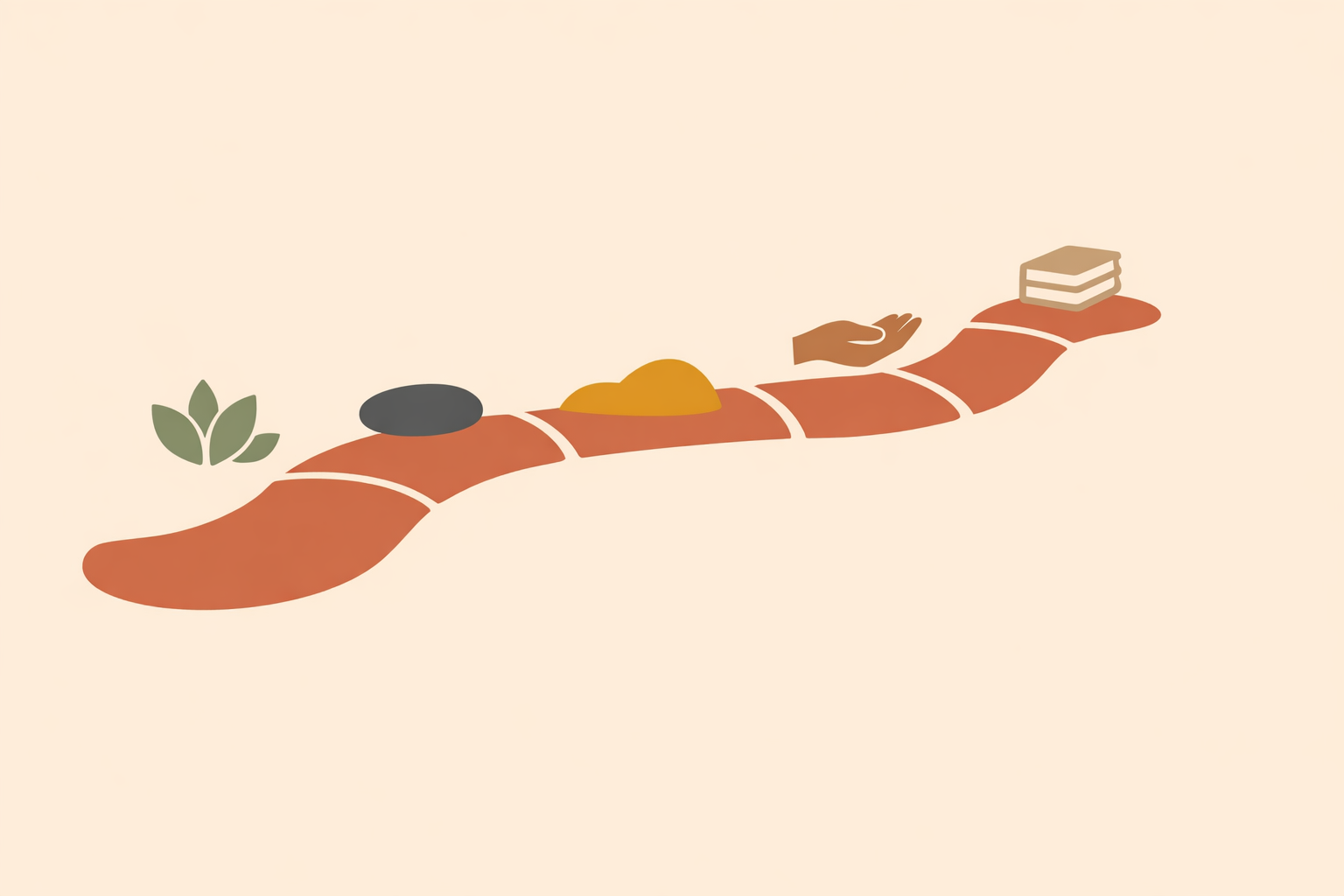
Real confidence comes from a repeatable field loop. Observe first, identify by ruling out, assess habitat and specimen quality, harvest within local rules and with respect, then keep notes so each walk sharpens the next.
Key Takeaway: Responsible beginner foraging is a repeatable field loop, not a one-off identification. Read the landscape before touching anything, identify with multiple features, assess site quality before harvesting, gather lightly and legally, and record what you saw so the next walk becomes clearer.
Skill 1: Observe Before You Touch
Safe foraging starts with empty hands and a slower pace. Before you focus on a single plant, read the place it’s growing in.
Look for moisture patterns, sun and shade, slope, and signs of disturbance like mowing, dredging, or heavy foot traffic. This wider view quickly narrows what you’re likely to find in that season and habitat, and it also helps you notice when something feels “off.”
Start with overall form. Is it a basal rosette, vine, shrub, upright annual, or something that hugs the waterline? Is it solitary or forming a colony? Which neighboring plants are consistently sharing that ground? Context often teaches faster than close-ups alone.
Season is part of identification, not an afterthought. Plant appearance can shift enough over the life cycle to confuse even careful beginners, especially when leaves, stems, and overall habit change between early growth and seed stage.
A simple ritual helps: take three minutes to pause and list what you see—soil texture, insect activity, browsing, nearby water, flowering stages, and which plants are fading while others are emerging. This is how pattern recognition gets built.
When a plant interests you, photograph it four ways:
- the whole plant in habitat
- the stem and leaf arrangement
- the flower, fruit, or seed structure
- the base where it meets the soil
Those images are far more useful later than one “pretty” close-up.
Picture a damp woodland edge in April. Instead of grabbing the first bright green leaf, you notice rich soil, shade, buds just forming, a garlic scent, and a colony pattern that fits the season. Whether you harvest or not, that careful seeing is the foundation skill.
Skill 2: Identify by Ruling Out, Not Just Matching
Most mistakes begin with “it looks like.” A steadier approach treats your first thought as a hypothesis, then tests it until alternatives fall away.
Use a simple sequence:
- Start with a hypothesis: “This might be chickweed.”
- Confirm at least five independent features.
- Check whether the season and habitat fit.
- Actively look for likely look-alikes.
- Compare your conclusion against more than one reference.
Useful features include leaf arrangement, margins, stem structure, flower details, fruit or seed, scent, sap, and overall habit. The goal is to make misidentification harder, even when you’re excited.
This matters because toxic relatives can grow right beside familiar edible plants, sometimes emerging at the same time in the same conditions.
For the carrot family in particular, vague cues lead people astray. “Ferny leaves” won’t protect you. Check stem texture, scent, blotching, bracts, bloom timing, and habitat together, and write notes that focus on disproof: what would make this not the plant you want it to be?
With fungi, keep standards even higher. Small differences can matter, and one photo or a single app suggestion is rarely enough. Many skilled foragers keep mushrooms in a stricter category and gather only the species they know intimately in their own region, using a sequence like these mushroom identification checks.
Apps still have value, mainly as prompts for further checking. Over time, it helps to build your own look-alike library with side-by-side photos and notes of the species that are commonly confused where you live.
A field note might read: “Hypothesis: cow parsley. Ruled out poison hemlock by stem texture, scent, bracts, and habitat.” That mindset keeps your attention on differences rather than hopeful matching.
Skill 3: Assess Habitat and Specimen Quality First
Correct identification is only step one. A plant also needs to come from a place—and a patch—worthy of gathering from.
Start with the broader setting. Some locations should slow you down immediately, even if the plants look vigorous. Plants can absorb pollutants from areas affected by herbicides, pesticides, heavy metals, or industrial runoff.
As a working rule, be cautious around:
- road verges and high-traffic edges
- drainage ditches and culverts
- old industrial lots or mine-adjacent ground
- field margins that may have been sprayed
- shorelines or low catchments that collect runoff
In farming regions, field edges can be exposed to sprays even when the wider landscape feels wild. Traditional field sense is useful here: consider what water carries and where it settles. Floodplains, low pockets, and compacted catchments often collect whatever moved downhill.
Also scan for animal pressure. Dog-height paths, goose-grazed banks, and livestock lanes can be fouled in ways that aren’t obvious at first glance. In those areas, it’s usually wiser to skip low-growing herbs altogether.
Then check the specimen. Leave anything moldy, bruised, wilted, heavily insect-ridden, or stressed. A clean site can still hold poor-quality plants.
If you do gather from a clean place, wash carefully at home. Washing helps with dirt and surface debris, but it can’t turn a poor site into a good one.
Picture watercress in a roadside ditch. The ID may be solid, but runoff, animal traffic, and stagnant culvert water change the decision. Walking away isn’t a missed opportunity; it’s sound judgment.
Skill 4: Harvest Lightly, Legally, and with Respect
Once you’re confident in the plant and the site, the next question becomes: what’s appropriate here?
Begin with access and local rules. Public paths, protected areas, and private land all come with different expectations. Some places restrict gathering altogether, and uprooting is often prohibited. Learn the local guidelines before you pick.
Choose abundance over scarcity. Work with common, thriving patches and leave isolated or struggling plants alone. This builds good habits and protects pressured populations.
A conservative approach looks like this:
- take a small share from a large, healthy patch
- move through the patch rather than thinning one spot
- favor renewable parts such as tips, leaves, flowers, and fruits
- leave roots and bark alone unless you have much deeper experience
Roots and bark can damage or kill a plant, so they’re rarely beginner-friendly. Tips, leaves, flowers, and fruits are usually easier to gather cleanly and with less impact.
Good foraging also carries a sense of relationship. A patch should still look healthy when you leave. Wildlife needs its share, and other people may value that place for gathering, study, or simple enjoyment.
Respect extends beyond the plants. Ask permission on private land. Learn local names and uses with humility. When a place is shaped by Indigenous or community protocols, follow them carefully and avoid borrowing stories or practices out of context.
Imagine a vigorous stand of nettles along a river terrace. Instead of stripping one clump, you take a few tops from here and there, leaving the stand looking almost untouched. That’s what a mature harvest looks like.
Skill 5: Keep Notes So Your Judgment Keeps Growing
The walks that teach the most aren’t always the ones that fill a basket. Progress comes from remembering what you observed, what you ruled out, and why you chose to harvest or leave a plant behind.
A simple field-note template is enough:
- date, time, and weather
- location and habitat
- suspected species and growth stage
- diagnostic features observed
- look-alikes considered and ruled out
- abundance
- decision: harvested or left in place
- reason for the decision
- questions to revisit next time
Consistency matters more than perfect wording. Record uncertain moments with care. “Left in place because stem pattern did not fit” is a strong note, because it trains restraint and accuracy.
Over time, notes become a personal map of season and place: when a patch first emerges, when it peaks, what plants tend to grow alongside it, and which look-alikes show up at confusing stages.
Many practitioners also keep a look-alike library, with one page comparing an edible species to the inedible, toxic, or protected species most often confused with it locally. This builds calm, reliable recognition.
A filled-in note might look like this:
May 17, early evening, overcast after rain. South-facing hedgerow with rich loam. Suspected cleavers. Features observed: weak square stems, whorled leaves, clinging texture, sprawling habit. Compared against bedstraw and young hedge-parsley. Abundant patch. Harvested two small handfuls and left the rest untouched. Question for next visit: confirm flowers in two weeks.
That kind of record turns interest into a steady practice, grounded in observation rather than luck.
Bringing the Skills Together
Reliable beginner foraging is built on rhythm. Read the landscape first. Form a careful hypothesis. Identify by ruling out. Check the site before anything goes in your basket. Harvest lightly, if at all. Then write down what the walk taught you.
One boundary supports every step: if there is real doubt, leave it. This discipline protects you, protects the landscape, and keeps your learning on a clean path.
On your next walk, keep your hands empty a little longer. Notice slope, moisture, neighboring plants, disturbance, growth stage, and patch quality. Come home with observations, not just a haul. With repetition, your practice becomes steadier, safer, and more rewarding, whether you are building toward foraging certification or a broader grounding in herbalism and plant medicine.
Explore Foraging Foundations
Build safer, repeatable field skills with the Foundations of Foraging Certification.
Explore Foundations of Foraging →