


On many geobiology visits, the conversation starts with discomfort and equipment: poor sleep, a stiff neck, a meter that spikes near the nightstand. You measure, tidy cables, and still sense you may be missing the lever that actually changes the room. One of the most helpful shifts is also the simplest: look at where someone spends the most time, and question the placement itself. When location becomes a variable, small, reversible moves often matter more than adding another device.
Key Takeaway: Hartmann’s enduring value is not certainty about a fixed invisible grid, but a place-first method. In modern geobiology, that means mapping rooms, paying close attention to long-stay positions such as beds and desks, testing modest repositioning, and combining subtle observation with ordinary environmental basics. Used with integrity, Hartmann-inspired work supports clearer decisions, calmer communication, and practical experiments that can be reviewed over time.
Hartmann network history and the shift toward place-first practice
The contribution associated with Ernst Hartmann is a steady re-centering of the work: the occupant matters, and so does the spot they occupy. Traditional accounts place his early observations in the 1930s in clinics and homes, later developing into a broader grid concept. By the early 1950s, Hartmann referred to a Globalgitternetz (1952), which helped give practitioners shared language for what many had already begun to notice in practice.
From there, a reliable habit emerged: sketch the room, mark the bed, desk, or chair, and ask whether the position itself is linked to strain or ease. That sounds obvious now, yet it pushed everyday geobiology toward clearer site awareness and more consistent floor-plan work.
By the early 1960s, the community was also becoming more organized. Historical accounts note the Forschungskreis für Geobiologie was founded in 1961, with Hartmann and Reinhard Schneider among the supporting figures. The benefit was continuity: more peer exchange, more consistent terminology, and a stronger culture of assessing rooms as systems rather than isolated symptoms.
Practitioners often connect Hartmann with the “location problem.” Regardless of whether that phrase marks a formal milestone, the working question remains powerful: what is happening in this spot, and what changes if you alter the arrangement? It keeps the work practical, testable, and grounded in the lived reality of the home.
How practitioners map the Hartmann grid in a room
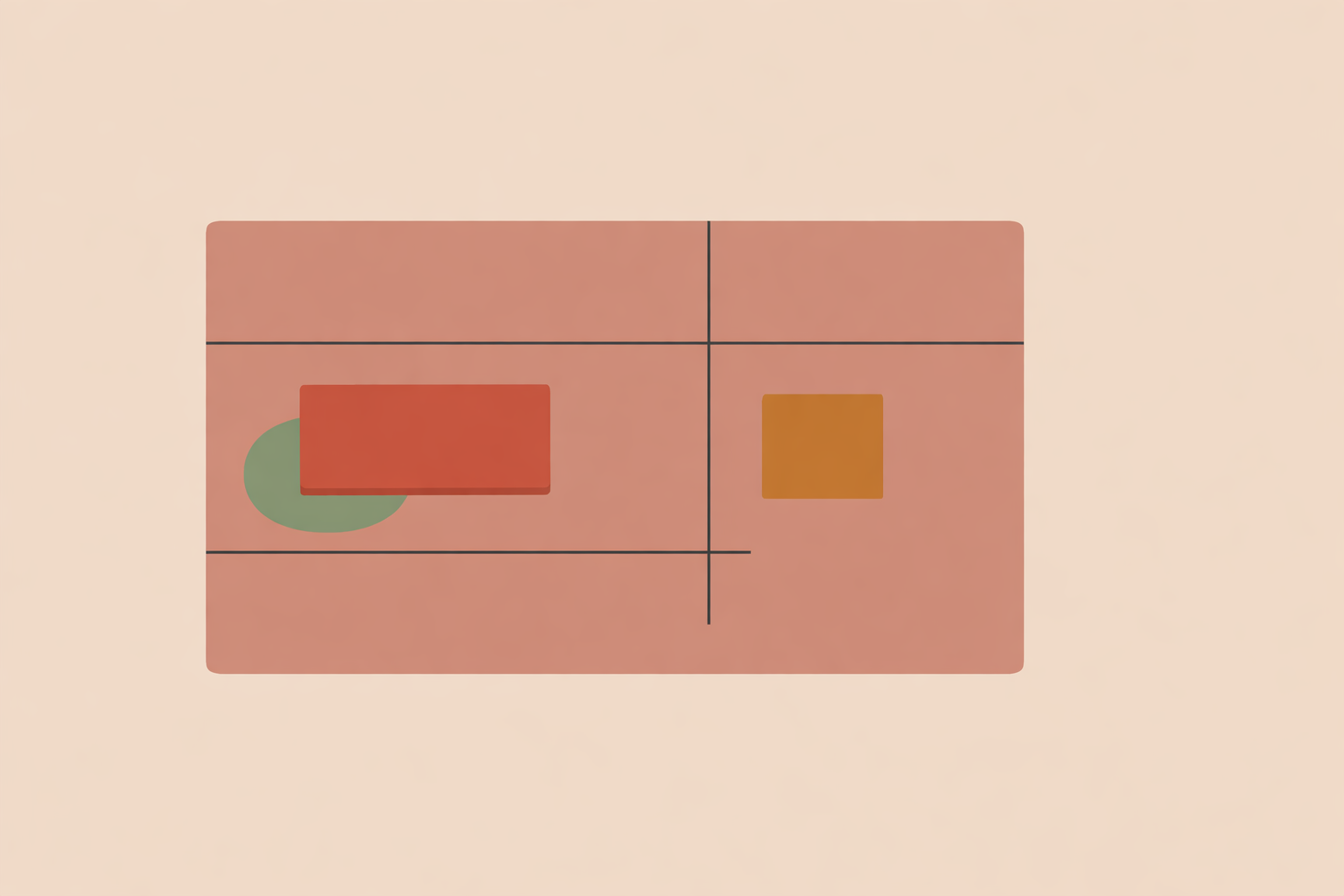
In practitioner tradition, the Hartmann grid is typically described as a rectangular lattice oriented roughly north-south and east-west. Spacing and band width vary by source, setting, and practitioner. In day-to-day work, the method matters more than the measurements: identify possible lines, mark crossings, and compare them with long-stay locations.
The bed is usually the first checkpoint, followed by desks, favorite chairs, and any place someone reliably spends hours. This is where Hartmann-inspired practice shines: it gives structure to observation and makes it easier to run calm, reversible trials.
A simple room-mapping process may look like this:
- Sketch the room and mark north as accurately as you can.
- Note the position of the bed, pillow, desk, and chair.
- Use your usual sensing method to explore likely north-south and east-west bands.
- Mark suspected crossings near long-stay positions.
- Test a modest repositioning and keep notes for several days.
A map has value when it leads to a fair test. Treat the drawn grid as a working hypothesis, then let the occupant’s experience and the room’s patterns confirm what deserves attention.
Parallel grids and instruments in the wider geobiology tradition
Hartmann’s model sits within a wider radiesthetic and geobiology tradition. Many lineages also describe a diagonal pattern often called the Curry network, alongside other telluric patterns that practitioners link to geology, underground water, building materials, and built form. Used well, these models function as comparative frameworks for reading a place rather than as rigid overlays.
The same applies to the instruments that grew up around this work. The Lecher antenna is historically associated in geobiology with Reinhard Schneider and later practice within physical radiesthesia. In the field, practitioners have used it to compare perceived qualities of materials, rooms, or site features, rather than as a conventional meter.
Rods, pendulums, lobe antennas, and Lecher antennas can support disciplined attention and consistent note-taking. Their strength shows up most clearly when they’re used within a coherent observational method, documented carefully, and checked against outcomes after a change in layout.
This continuity helps explain why many site workers still begin where it counts most: beds, desks, and layout choices that shape hours of daily exposure, a practical foundation also reflected in energy healing training.
Evidence, critiques, and what testing does show
A strong geobiology practice makes room for both tradition and scrutiny. Mainstream geophysics has not established the Hartmann grid as a reproducible physical structure. Practitioners can respect that boundary while still valuing the lived pattern many people observe when long-stay positions change.
Variability is also part of the landscape. Reports about spacing, width, and even orientation differ enough across practitioners and settings that strict replication becomes difficult. In practical terms, that’s one reason experienced practitioners lean on repeat observation, comparison across rooms, and measured repositioning trials.
One blinded experiment is often discussed in this area. In that study, a presumed geopathically stressful location did not change objective work performance compared with a neutral location, but participants did report feeling worse in the presumed stress zone. For practitioners, this is a useful reminder to take subjective experience seriously, document it carefully, and keep testing changes rather than arguing theory.
This is also where clear-eyed tool use matters. Rods and pendulums are responsive to the user, and subtle micromovements can influence results. That reality doesn’t cancel the craft; it calls for good process and a calm, comparative approach.
Useful ways to reduce bias include:
- making more than one pass through a room,
- pausing when tired or emotionally charged,
- asking a neutral observer to note positions,
- marking suspected lines before discussing impressions,
- testing changes over days rather than deciding instantly.
What still works from Hartmann-inspired site work today
The most durable part of Hartmann-inspired practice is straightforward: prioritize long-stay locations, then test modest changes. Beds and desks matter because duration matters. A position used for many hours deserves more attention than a doorway crossed for ten seconds.
This remains highly workable in present-day geobiology. If a suspected crossing falls near the pillow, start small: move the bed slightly, observe, and keep your language neutral so the household can judge results without pressure.
In real site work, a three-layer assessment keeps things grounded:
- Measured: light, noise, moisture, temperature, electrical clutter, and other ordinary environmental factors.
- Observed: floor-plan mapping, body impressions, animal behavior, plant vitality, and spatial feel.
- Reported: sleep quality, clarity, ease, restlessness, and the occupant’s own sense of the room.
This layered approach respects tradition while staying practical. Hartmann mapping becomes a scaffold for attention, helping you decide what to try first and what to track over time.
A visit note can stay refreshingly simple: moved bed 45 cm to clear a suspected crossing near the pillow; reduced glare from bedside lighting; rerouted charger cables; invited 10 nights of observation before the next review. Notes like this make follow-up easy, and they keep the work focused on outcomes.
Practicing Hartmann mapping with integrity
The tone of the work matters as much as the technique. Fear-heavy language can unsettle occupants and make the room feel worse before anything has even been tested. A steadier approach is to describe what you notice, name uncertainty plainly, and offer reversible next steps.
Start with basics before subtle interpretation: airflow, dampness, lighting, temperature, noise, and cable clutter. Then, if Hartmann-style mapping suggests a pattern near a long-stay position, add a small experiment and track it with care.
A clear modern workflow often includes:
- starting with ordinary environmental observations,
- mapping suspected bands and crossings,
- focusing first on beds and desks,
- offering low-cost positional changes,
- tracking the outcome over time,
- revising your interpretation if the room tells a different story.
If you use comparative scales such as a Bovis biometer, present them as internal practitioner language rather than objective meters of well-being. The same principle applies to subtle tools overall: they support observation and decision-making, and they work best when paired with clear notes and honest follow-up.
Simple wording keeps the process collaborative: “I’m noticing a possible north-south band near the pillow. Let’s move the bed slightly, soften the evening light, and observe the room for a week.”
Conclusion: why the Hartmann network still matters
The continuing value of the Hartmann network lies less in proving a fixed invisible structure and more in preserving a practical discipline of attention. It reminds practitioners to study the room as carefully as the person, to respect the influence of long-stay locations, and to work through careful, reversible adjustments rather than grand claims.
That is why Hartmann’s legacy still has life in modern site work. It brings tradition, observation, floor plans, subtle tools, and everyday environmental common sense into one coherent process, which is also central to geobiology certification training. The main cautions are simple: avoid fear-based framing, document what you do, and let outcomes guide the next step.
Explore Geobiology Certification
Build a place-first practice like this with the Naturalistico Geobiology Certification.
Explore Geobiology Certification →








