If you run plant-based sessions in a school, community program, or other organised setting, a familiar question tends to show up quickly: what outcome is this supporting, and how will we know? In practice, the answer is less about the plants and more about the purpose, facilitation, and record keeping behind the session.
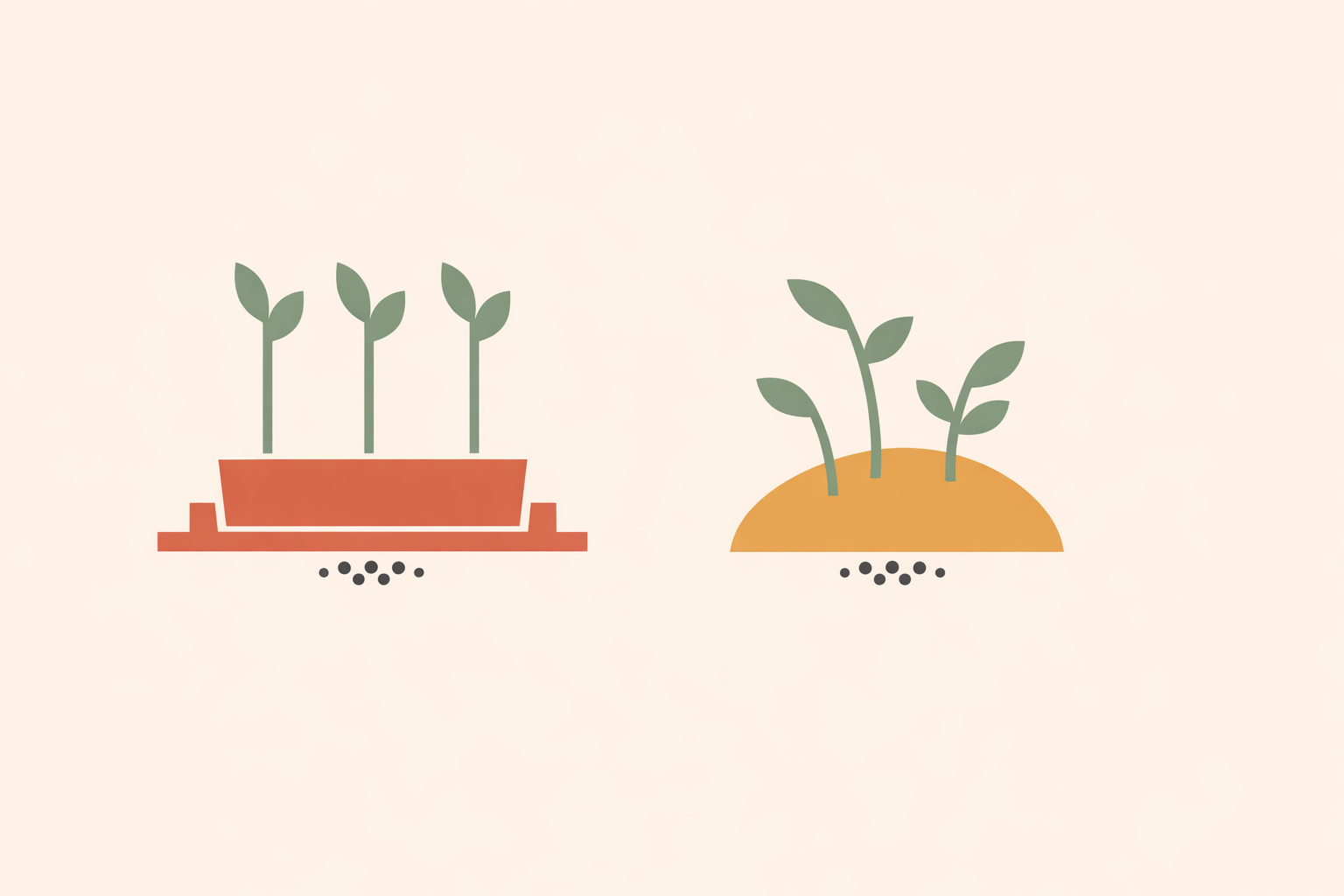
Two labels often get used for similar-looking activities: horticultural therapy and therapeutic horticulture. From the outside, both might include sowing, watering, harvesting, or sensory exploration. The difference shows up in the plan, the adaptations, and the documentation.
Key Takeaway: In plant-based practice, your label signals method and accountability. Horticultural therapy is structured, goal-directed, and documented. Therapeutic horticulture is participation-focused, accessible, and centered on well-being. The clearest way to tell the difference is to look at the plan, the adaptations, and the record keeping—not just the title.
Horticultural therapy vs therapeutic horticulture: the core difference
The plants may be the same, but the intention and accountability are different.
Horticultural therapy is a structured practice. A trained practitioner facilitates plant-based activities to support specific goals within an established plan, with outcomes documented over time.
Therapeutic horticulture is active or passive plant involvement used to support programme goals and well-being. It is commonly more open-ended, with the emphasis on participation, connection, sensory experience, and inclusive design.
Even one simple activity can sit in different places depending on how it’s held. Sowing bean seeds can be:
- Ordinary gardening when it is done for pleasure, habit, or food growing without any structured facilitation.
- Therapeutic horticulture when a group uses the activity to explore texture, choice, calm, or connection.
- Horticultural therapy when the same task is graded and adapted to support an individual goal, with observations recorded after the session.
That’s why the most important question isn’t “What are we doing?” It’s “What is this session designed to support, and how are we showing that?”
Five questions to choose the right model
If you’re unsure which label fits your work, these questions usually bring the answer into focus.
- Who is facilitating? If you’re expected to design graded tasks, adapt activities for individuals, and document progress, the work is likely closer to horticultural therapy. If you mainly guide inclusive plant experiences for groups, it may be therapeutic horticulture.
- What kind of goals are you holding? Individual, observable goals point toward horticultural therapy. Broader aims such as participation, enjoyment, sensory exploration, or community connection fit naturally within therapeutic horticulture.
- How are activities adapted? Individualised task grading suggests horticultural therapy. Designing one activity so many people can join in different ways suggests therapeutic horticulture.
- What records do you keep? A documented plan, session notes, and progress tracking are strong signs of horticultural therapy. Attendance, reflective observations, and programme notes are more typical of therapeutic horticulture.
- Where does accountability sit? If others rely on your notes to understand whether a goal is being supported, you’re working in a more structured model. If your role is to create a meaningful, accessible experience without individual outcome tracking, therapeutic horticulture may be the better fit.
Many practitioners move between these two styles across different settings. The aim isn’t to choose the “higher” label; it’s to choose the accurate one.
What horticultural therapy looks like in practice
Horticultural therapy is structured and person-led. The practitioner sets clear aims, shapes activities deliberately, and records what happened so the next session can build on real observations.
Goals can include areas such as coping skills, confidence, problem solving, socialisation, sensory experience, memory, and physical participation. In real sessions, these often overlap.
A plan might include goals such as:
- Complete three stages of potting-on with adapted tools over four sessions.
- Use two preferred grounding strategies during plant-care activities in a six-week group.
- Initiate more interaction during paired gardening tasks.
Activity analysis is a core skill here. Seed sowing, for example, can be broken into steps: gathering materials, preparing soil, opening packets, grasping seeds, placing them, watering, labelling, and cleaning up. Each step can be adjusted to better support the person and the goal.
Partial participation matters, too. Someone can take part meaningfully without completing every stage. One person labels pots, another waters, another chooses varieties. Contribution and success stay intact.
Across many traditions of land-based practice, practitioners have seen a steady pattern: when people experience mastery, rhythm, and responsibility with living plants, confidence often grows alongside the seedlings.
What therapeutic horticulture looks like in practice
Therapeutic horticulture often starts with a welcoming question: how can this space invite people in?
The emphasis is on meaningful plant experiences that support well-being, expression, and participation. You might see this approach in schools, community gardens, residential settings, workplaces, and neighbourhood projects, sometimes under a variety of programme names.
Facilitation is usually process-focused. AHTA notes that in horticultural therapy the activity process matters more than the end product, and that mindset supports therapeutic horticulture especially well. The session makes space for noticing, choosing, touching, smelling, sharing, resting, and contributing in different ways.
That can look like:
- Inviting participants to compare leaf textures or herb scents
- Offering seated and standing work options
- Using visual signs and predictable layouts
- Creating quiet corners for those who want less stimulation
- Welcoming stories, seed memories, and cultural plant knowledge
Inclusive design is central. The more ways people can join in, the more the garden becomes a place of belonging.
Why plant-based settings can feel supportive
Traditional knowledge has long held that time with plants, soil, weather, and seasonal rhythms can settle people and reconnect them to themselves, to others, and to place. Modern research adds useful language for parts of this experience, without replacing what practitioners have observed across generations.
Work grounded in attention fatigue suggests that natural settings can help restore focus and reduce strain. A 2024 umbrella review also reported positive well-being effects across horticultural programmes, while noting limitations across the evidence base.
For many practitioners, this lines up with lived experience: being outside, working with living systems, and taking part in simple plant-care tasks often helps people settle and reconnect. Individual responses vary, but the pattern is strong enough that skilled facilitators build it into their session rhythm from the start.
Ethics, safety, and honest framing
Whichever path you take, credibility rests on alignment: your method, your claims, and your records should match.
Start with the environment. Consider tool use, lifting, repetitive movement, uneven ground, heat, cold, water, irritant plants, pollen, insects, and seasonal changes. Plant choice also shapes how welcoming the session feels, from scent strength and sap to thorns, fragility, and cultural meaning.
Language matters. Plant-based work can support calm, confidence, participation, and connection, but it should be framed as support rather than a guarantee. Trust grows when you stay specific about what you’re offering and attentive to how people respond.
Evaluation can be straightforward. Notes on attendance, participation, preferred activities, observable progress, and participant reflections are often enough to guide improvement. In more structured work, clearer goal tracking fits. In open, community-based work, reflective observations may capture the richest outcomes.
The shared standard is simple: make promises you can stand behind, create conditions that support growth, and keep records that reflect the work you actually do.
Choosing the right label for your work
Both horticultural therapy and therapeutic horticulture are valuable. They serve different functions, and each can be done with skill and integrity.
If your work is built around individual goals, structured adaptation, and documented outcomes within an established plan, horticultural therapy is likely the best fit. If your work centres on accessible plant experiences, participation, community, and well-being, therapeutic horticulture may be the more accurate label.
The setting alone doesn’t decide the name. A school garden, workplace garden, community plot, or residential courtyard can hold either model. Method is what makes the difference.
Choose the label your facilitation, accountability, and records can truly support. From there, let the garden do what it reliably does: offer a living place where people can participate, connect, and keep growing within nature and outdoor therapy work.
Train in Horticultural Therapy
Build structured, goal-led sessions with documentation skills in the Horticultural Therapy Certification.
Explore Horticultural Therapy →