The message lands in your inbox: “Can you help my dog with arthritis?” At the same time, a supplement brand is dangling an affiliate deal if you repeat their “anti-inflammatory” talking points. A local veterinarian asks how you describe your work. A wearable app wants ongoing activity data—and permission to reuse it for “insights.”
This is everyday animal naturopathy in 2026: more interest, more tools, and much firmer expectations around identity, scope, consent, culture, and data. The temptation is to improvise. The more professional move is to standardize how you communicate and work—before a session, a post, or a referral puts you under pressure.
Key Takeaway: To practice animal naturopathy with integrity in 2026, anchor your identity as a non-veterinary wellness coach, communicate within a disciplined scope, and make consent, referrals, cultural respect, and privacy-by-design routine. Clear claims, careful documentation, and secure data habits build trust with guardians and veterinarians alike.
Step 1: Define your role as an animal wellness coach (not a vet)
The strongest guardrail is a clear identity: you support animal well-being as a coach, not as a veterinary professional. When that’s steady, your language, offers, and client expectations naturally stay aligned with both ethics and the law.
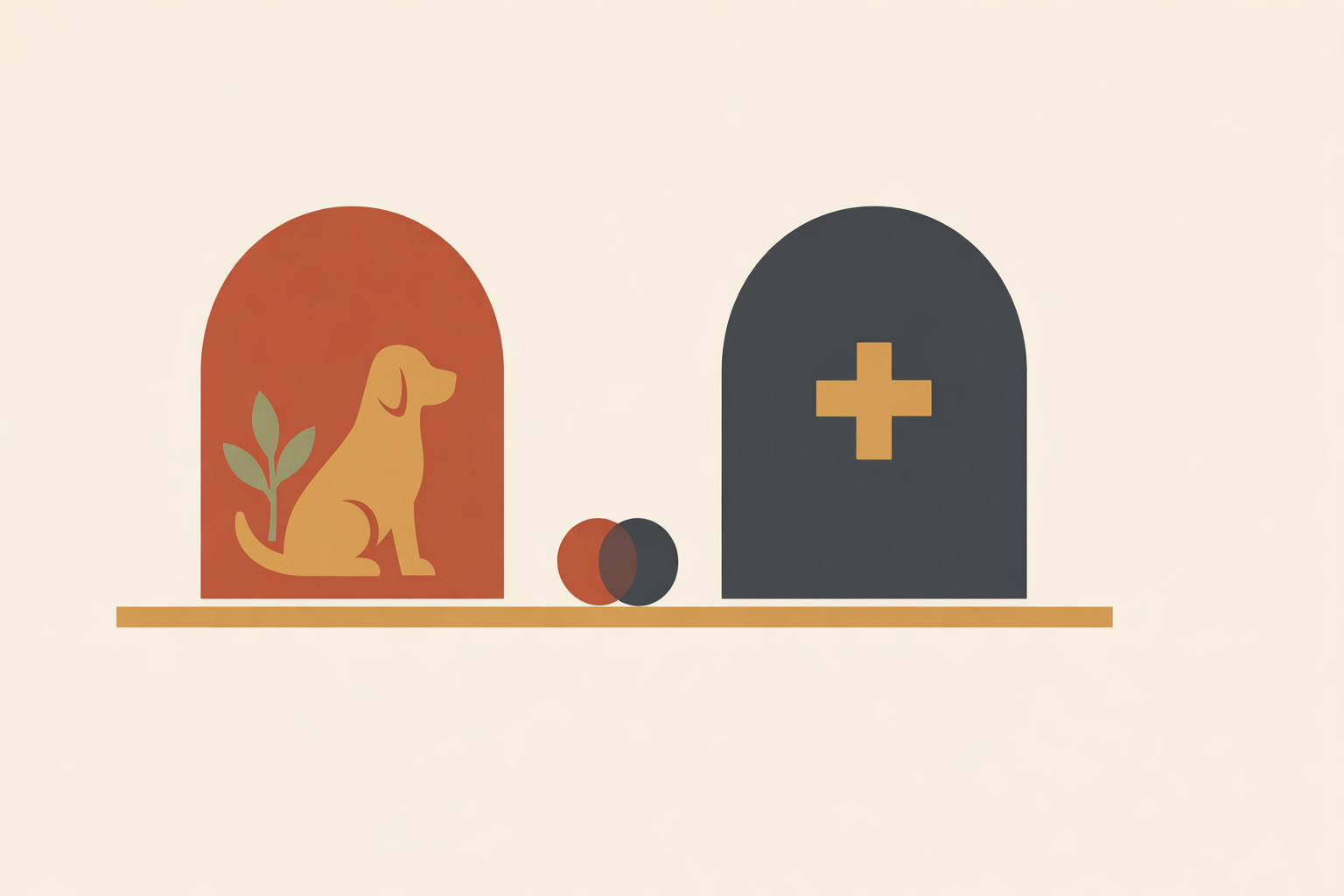
A practical boundary helps: clinical acts—like diagnosing, prescribing, and treating—belong to licensed veterinary professionals. Your lane is supportive work: nutrition, daily routines, home environment, and ancestral wellness practices that help an animal feel more comfortable and resilient.
Your professional identity as protection
Think of identity as your seatbelt. Put it everywhere: your website, intake forms, email templates, and call scripts. If anyone ever asks, “What did you tell guardians you do?” your materials should answer clearly and consistently.
- Use phrases like “I provide coaching on nutrition, lifestyle, and home environment to support your animal’s well-being.”
- Add a standing note: “I collaborate with veterinarians and refer whenever clinical assessment is needed.”
- Keep proof of disclosure in each record—checkboxes, signed forms, or time-stamped emails.
Language that keeps you inside your scope
Your words set the emotional tone and the expectations. Keep your phrasing supportive, and avoid anything that sounds clinical.
- Say: “support,” “optimize,” “nourish,” “comfort,” “environmental fit,” “ancestral approaches.”
- Avoid: “diagnose,” “treat,” “prescribe,” “cure,” “remedy,” or implying disease resolution.
- Use a simple, repeatable line: “I’m an animal wellness coach, not a veterinarian.”
Step 2: Ground your ethics in ancestral traditions and modern codes
Ethics land best when they have deep roots and clear modern structure. Many skilled animal naturopaths build from lineage-based wisdom while practicing with transparent boundaries, informed consent, and continuous learning.
Traditional systems have long held a whole-being view of animals. Ayurveda speaks in terms of balance and harmony—often described through Vata, Pitta, and Kapha—rather than chasing a single symptom. Traditional Chinese Veterinary Medicine also centers patterns and energetics, using structured ways to observe balance and disharmony across species. These frameworks remind practitioners to look at the animal’s full context: food, stress, routines, relationships, seasonality, and environment.
Modern ethical codes support the same intention: reduce avoidable risk, communicate honestly, and work within a clear scope. In practice, that often looks like transparent explanations, careful records, and a strong habit of collaborating when veterinary input is needed.
Where research aligns with tradition, it adds helpful language for today’s guardians. For example, markets and industry research discuss omega‑3 in pet-care contexts and curcumin in animal-focused wellness landscapes—often framed around comfort, mobility, and general well-being. What this means is you can honor tradition while also speaking in evidence-informed, responsible terms.
As practitioner Ruth Hatten puts it, “I empower animal lovers to nurture their animals holistically, supporting body, mind, and spirit with individualized care.”
It also helps to remember: some critics point out there’s limited direct research on “naturopathy” as a single formal category for animals. Rather than weakening the work, that’s a prompt to stay disciplined—avoid overpromising, track outcomes, and keep your ethics as strong as your intentions.
Step 3: Turn rules and expectations into everyday practice decisions
Rules only matter when they shape your everyday choices—especially what you say, what you offer, and what you document. Across the US, EU, and UK, the themes that show up again and again are straightforward: clear non-veterinary identity, honest claims, and realistic promises.
Identity and honest claims
- Describe yourself as a non‑veterinary coach or practitioner focused on lifestyle, nutrition, and environmental support.
- Avoid language that suggests veterinary services or clinical decision-making.
- If you discuss herbs or supplements, frame them as well-being supports rather than as preventing or resolving specific conditions.
Realistic promises
- Promise the process: a supportive plan, check-ins, education, and collaboration where needed.
- Avoid guaranteed outcomes and dramatic “before-and-after” claims.
- When you make general well-being claims, tie them to reasonable explanations (like nutritional roles) and add published sources where you can.
Documentation as a daily discipline
- Keep your wording consistent across your website, social posts, forms, and spoken scripts.
- Record your scope explanation, consent, and any referral/signposting to veterinary support.
- Maintain simple dated notes that show you stayed in your lane.
Step 4: Make informed consent and guardian education your daily habit
Consent and education aren’t just administration—they’re how trust is built. The strongest practices make clarity routine from the first message to the final follow-up.
Start with agreements that plainly state what you do and don’t do. Good consent forms for animal wellness commonly:
- Define the coaching role and clarify that you are not providing veterinary services.
- Describe limits and potential risks of natural approaches in plain language.
- Emphasize collaboration with veterinary professionals and encourage regular check-ups.
- Include cultural sensitivity clauses that acknowledge the origins of any indigenous or lineage practices you may draw upon.
Then bring the paperwork to life with education. Handouts, short videos, and step-by-step checklists help guardians feel capable—so the plan becomes part of daily life, not a one-time download.
- From paperwork to partnership: Review the agreement out loud and invite questions. Offer bilingual or multilingual options where relevant.
- Use plain scripts: “Here’s my role, here’s where a veterinarian leads, and here’s how we work together.”
- Confirm understanding: Ask guardians to summarize the plan in their own words, then note that summary in your records.
As one guardian shared after a plan focused on nourishment and gentle supports, “Not only has the diet plan and supplementation helped Nala… we’ve never seen her enjoy her meals so much.”
That’s the outcome you’re aiming for: informed guardians who feel steady, engaged, and ready to support their animals between sessions.
Step 5: Use referrals and collaboration to protect everyone
Referrals aren’t a failure—they’re a strength. They protect the animal, build guardian confidence, and show unmistakably that you respect your scope.
A simple internal rule helps: if you notice signs that could point to an undiagnosed or unstable issue—sudden behavior change, acute distress, suspicious lumps, wounds, persistent vomiting or diarrhea, unexplained weight loss, or anything that feels seriously “off”—pause and point the guardian to a veterinary professional for assessment.
- When to refer immediately: Any red-flag signs, sudden deterioration, or situations where delaying evaluation could raise risk.
- How to refer well: Use a standard note that summarizes observations, current supports, and guardian goals; offer to coordinate on nutrition and lifestyle once veterinary guidance is in place.
- How to document: Time-stamp the referral, the guardian notification, and whether you’re pausing or narrowing your work until input arrives.
Collaboration also fits the direction of the wider industry. The animal health market was estimated at USD 68.7 billion in 2025, reflecting growing investment in animal well-being. As attention grows, so do expectations—especially around scope, claims, and professional boundaries.
Step 6: Use traditional knowledge with cultural and ecological respect
Lineages aren’t toolkits—they’re living cultures. Working with traditional knowledge ethically means giving credit, seeking permission where appropriate, and protecting the ecosystems that sustain the plants and practices you draw from.
Many holistic fields now explicitly warn against cultural appropriation—especially commercializing protected rituals, symbols, or sacred plants without collaboration and consent. Put simply, the standard is relationship, not extraction.
- Credit sources and name teachers when they’re comfortable being acknowledged.
- If a practice is community-specific (ceremonial elements, sacred plants, protected symbols), seek mentorship, collaboration, or permission rather than lifting it out of context.
- Explain cultural origins to guardians so their choices include understanding and respect.
Global heritage guidance supports this approach too. UNESCO highlights the value of clear credit and benefit-sharing when integrating ancestral practices into contemporary work. One practical way to live that value is to build regular giving into relevant offerings—supporting knowledge-keeping communities or cultural organizations connected to what you share.
Ecological care is part of cultural care. When popular botanicals are overharvested, both habitats and communities can be harmed.
- Choose sustainable botanicals: Prefer cultivated or abundant species; avoid threatened plants.
- Align with conservation guidance: Check IUCN or local conservation lists when in doubt.
- Share benefits: When appropriate, contribute to habitat restoration or community-led conservation tied to the plants and lineages you draw from.
As one contemporary practitioner‑researcher describes her path, it’s about “understanding the unseen connections between humans [and] animals,” a felt intention many of us share.
Step 7: Protect client data, wearables, and AI insights in 2026
Data is now part of everyday practice: intake forms, session notes, wearable metrics, and sometimes AI-assisted organization. Ethical practice means protecting that information with the same care you bring to your coaching plan.
Privacy enforcement is no longer theoretical. In the EU, GDPR fines have climbed into the billions of euros. Wearable guidance also warns that activity and vitality indicators can fall into special category data—bringing stricter expectations like explicit consent, data minimization, and privacy-by-design. Those same rules apply to key rights around wearable data streams, such as access, correction, deletion, and portability.
These expectations are spreading. Industry analysis notes many organizations can see only about one‑third of where their data lives, which is exactly why “data mapping” is increasingly treated as a basic professional habit—not an enterprise-only task.
- Map your data: List what you collect, where it’s stored, who can access it, and how long you keep it. Delete what you don’t truly need.
- Consent, plainly: Use separate checkboxes for coaching notes, wearables, and optional AI tools. Explain each one in clear language.
- Wearables, carefully: Collect the minimum; disable geolocation unless essential; set retention limits (for example, deleting raw data after 90 days and keeping only summaries).
- AI, thoughtfully: Prefer privacy-first tools; don’t put identifiable details into public models; clarify that AI may assist with organization or suggestions but never replaces human judgment or veterinary guidance.
- Security basics: Strong passwords, multi-factor authentication, reputable vendors, and Data Processing Agreements where possible.
- Rights requests: Keep a simple process for access, correction, deletion, and export—and practice it so you can respond calmly.
Conclusion: Build an ethical, evolving practice that can keep growing
In animal naturopathy, integrity isn’t a side task—it’s the foundation. When your identity is consistent, your work honors tradition, your collaboration is active, and your data practices are solid, you do more than stay compliant. You become someone guardians and veterinary professionals can trust.
That trust matters even more as the field grows. The companion animal health market was valued at about USD 9.03 billion in 2024 and is projected to expand strongly over the next decade. As expectations rise, ongoing ethics education becomes part of professional maturity; in many fields that benchmark against bodies like IPHM, CMA, and CPD, it’s common to see expectations around 40 hours of continuing professional development every two years, with dedicated ethics content.
For animal naturopaths and wellness coaches, that rhythm keeps skills and guardrails evolving together—deepening lineage knowledge, staying current with nutrition and herbal research, and strengthening consent, communication, and data protection.
One closing caution to hold: the more popular this space becomes, the more tempting it is to drift into bigger promises, looser boundaries, and casual data habits. Let scope be your anchor, consent be your partnership, referrals be your strength, and record-keeping be your quiet proof of integrity.
Explore Animal Naturopathy Certification
Apply clear scope, consent, and ethical traditions in practice with the Animal Naturopathy Certification.
Explore Animal Naturopathy →