When sessions start to drift, adding more prompts or more materials rarely fixes the core problem. What helps is a stronger container: a calm space, clear agreements, and art processes that let meaning surface at its own pace. With that foundation in place, even simple materials can open honest reflection and practical change.
Key Takeaway: Art-informed coaching is most effective when the structure does the heavy lifting. Begin with a grounded space, clear intention, and a facilitation style that matches the moment. From there, use short warm-ups, guided imagery, mandalas, collage, journaling, and symbol work to surface insight, then translate what appears on the page into small, lived actions.
Build a safe, art-ready space
Start with the room and your own presence. A calm, grounded facilitator and a thoughtfully arranged space communicate safety before a word is spoken.
Keep materials simple and within easy reach: a few types of paper, colored pencils, oil pastels, two brushes, a small watercolor set, tape, a glue stick, and a small stack of scrap images for collage. Leave one clear work surface per person, plus tissues and water nearby.
You might dim the overhead lights, turn on a warm lamp, and say, “Your art can be messy or minimal—both are welcome.” Often, that alone helps people settle.
- Soft, indirect light
- Visible exits and a clear path through the room
- A trash bin and hand wipes within reach
- A simple permission cue such as “You can pause, pass, or ask for time”
- A few grounding objects like smooth stones or a weighted lap pad
The aim is not a perfect studio. It is a space that feels contained, respectful, and easy to use.
Set intention before making
Before anyone picks up a pencil, co-create an intention and a clear container for the session. This keeps the work purposeful without tightening it into something rigid.
A simple prompt works well: “If our time gives you one feeling or one insight today, what would you want it to be?” Write the client’s words on a card and keep it visible on the table.
- Time box: “We’ll create for 40 minutes, then reflect and choose a next step.”
- Autonomy: “You choose what to share. Silence is welcome.”
- Scope: “We’re here for well-being, self-discovery, and growth. If another kind of support would serve you better, I’ll help you find it.”
For a series, a visual agreement can help the work stay steady. Invite the client to choose two simple symbols for the journey, then add shared promises such as “I can pass,” “My work stays private,” and “We close with one small action.”
Choose the right facilitation stance
Good facilitation is not about interpreting the art. It is about choosing the right amount of structure for this person, today.
When someone feels tender, unsure, or overloaded, a non-directive stance is often the kindest option. Offer a theme rather than a tight instruction: “Draw what your energy feels like right now using any color.” Then reflect what you notice without assigning meaning: line pressure, spacing, repetition, contrast.
When someone wants clarity around a specific goal, a more directive approach can create momentum. You might say, “Make three quick images: Past, Present, Preferred Future. Two minutes each. Use only four colors.” The structure helps patterns show themselves quickly.
Useful language includes:
- “What part of this image wants attention first?”
- “Would you like a reflection on color or composition?”
- “Would it help to add something, remove something, or simply pause here?”
In every case, let the client author the meaning. Your role is to notice, invite, and help them stay in relationship with what they have made.
Use warm-ups to shift from thinking to sensing
Two or three minutes of low-stakes art play can move people out of over-analysis and into direct experience. That shift often brings more honesty with less effort.
- 30-Line Warm-Up: Fill a page with 30 different lines, then circle two that stand out. Ask, “If these lines had advice, what would they say?”
- Color Breath: Inhale while shading with one color, exhale with another. Ask, “Which felt easier today?”
- Blind Contour: Draw your hand without looking at the paper, then finish the sentence, “I don’t have to get it perfect to…”
These practices work because the hands give the mind one simple task to follow. Brief tactile engagement often focuses attention and softens stress in a way that feels immediate.
Blend guided imagery with mark-making
Guided imagery and art belong together. When you weave them gently, people often reach inner landscapes that are harder to access through conversation alone.
Try a short sequence:
“Close your eyes. Picture a place where you feel settled. Notice the temperature, the ground beneath you, and the distance around you. Now open your eyes and place three shapes on the page that belong to that place.”
After a minute or two, ask, “Which shape wants more space?” or “What in this image feels most supportive?”
This kind of work has deep roots across cultures. It also echoes what is known about guided imagery: inner pictures can gather attention and encourage steadiness. In practice, the value is often less about explanation and more about access. People can see something on the page before they can name it in words.
Work with mandalas and thematic drawing
A circle offers a natural boundary. For many people, that alone creates enough structure to explore more freely.
Invite a client to work inside a circle with a prompt such as, “Inside this shape, draw today’s inner weather. Around the outside, add what supports you.” In session, it can also function as a simple grounding task when someone feels scattered.
You might use:
- Center: “Draw the quality you need most this week.”
- Four sections: “Show four roles or responsibilities you’re carrying.”
- Outer edge: “Add three marks for small actions in the next two days.”
There is also some support for the calming effect of circular art tasks, including research on mandala coloring. In practice, many facilitators notice that the circle itself helps hold attention.
Thematic drawing can be just as useful. Prompts like “Road Ahead,” “Storm and Shelter,” or “The Mountain and the Pack” give shape without over-directing. Keep the theme spacious, then ask, “What surprised you?” or “What in this picture needs support?”
Use collage for story and identity work
Collage is especially helpful when words feel too neat or too limited. As people assemble fragments, their personal narrative often starts to reorganize.
Try this: “Choose five images, colors, or textures that match the sentence ‘This is changing.’ No words, only visual pieces.” Once the collage is complete, ask, “If this were a scene in a story, what came just before it? What comes next?”
That sequence often opens identity and story work without forcing a polished answer. Art-based approaches such as collage can support personal narrative and identity exploration, as described in identity work.
You can deepen the process by inviting a brief first-person response:
- “I am the…”
- “I hold…”
- “I am changing because…”
These lines do not need to be literary. They only need to sound true.
Add journaling and free association after the image
Once the art exists, a short burst of writing can catch insights that might otherwise evaporate. Brief free association helps preserve what is fresh and still forming.
Invite 60 to 90 seconds of uncensored writing: “Write every word that comes to mind as you look across the page. No punctuation, no editing.” Then look together for clusters, repeated words, or emotional shifts.
A simple two-column structure can also help:
- What the image may be saying
- What I want to do with this
Writing supports meaning-making and reflection, and reviews of expressive writing describe writing benefits when experience is translated into words. In creative and expressive therapies, the aim is practical: help the insight travel beyond the page.
Let symbols and color stay client-led
Symbols are useful because they stay alive. A ladder, a river, a locked gate, a gold thread—each carries meaning, and the meaning belongs to the person who made it.
Instead of explaining symbols, ask questions that keep ownership with the client, much like careful symbolism in artwork work:
- “What kind of ladder is this?”
- “What does this color know that the others do not?”
- “If this shape could speak, what would it ask for?”
The same is true for color. While research explores color effects on attention and mood, lived meaning varies by person, culture, and context. Personal and cultural associations come first.
One practical method is to place small notes beside three elements the client names and label them using the client’s exact words. Those labels become steady anchors in later sessions.
Use dream fragments as raw material
Dream work in coaching does not need heavy interpretation. Often, it is enough to treat dream fragments as evocative images and ask what they touch in waking life.
Invite the client to sketch one dream scene in three minutes, using only the essential forms. Then ask, “What from yesterday seems to live inside this image?” That question often brings out day residue, unfinished emotion, or a hidden priority.
This approach stays grounded. Sleep supports memory consolidation, and dream imagery can offer material that feels vivid enough to work with. The aim is to notice what the image brings forward, not to force a final answer.
Turn images into action
Insight matters most when it changes something in daily life. Once an image has meaning, help the client convert it into a small, visible action.
- Focused vision board: One page, one theme, three time horizons.
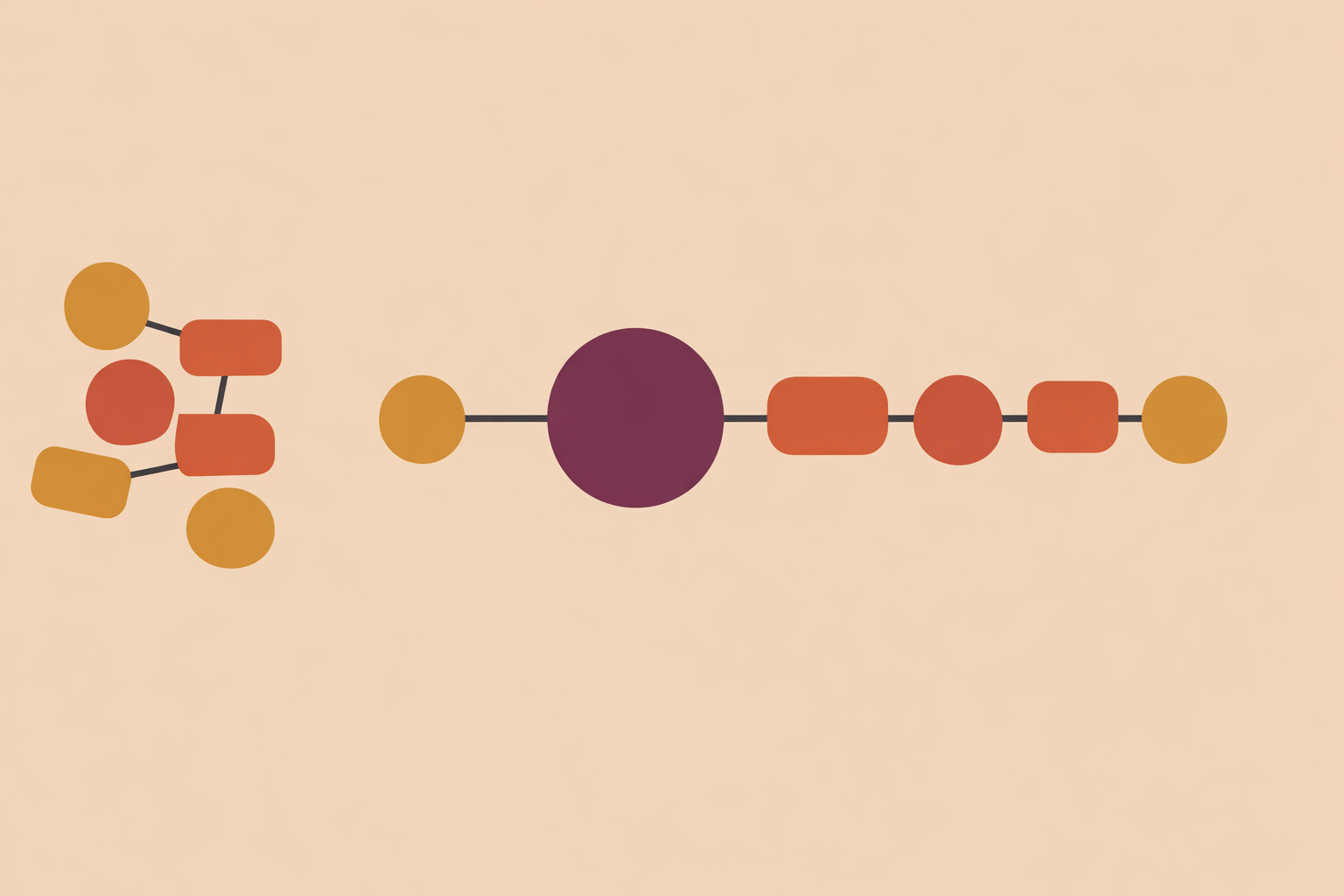
- Mind map: Place the main goal at the center, then branch into resources, people, habits, obstacles, and environment.
- Visual contract: Two images for the “why,” three checkboxes for the “what,” and one date for the “when.”
Mind maps can support planning and recall, with evidence for mind mapping as an organizing tool. Pair the visual plan with a clear if-then statement to strengthen follow-through; research on implementation intentions points in that direction.
For example: “If it is 8:15 p.m., then I put my sketchbook on the kitchen table.” Small, concrete links help the image enter ordinary life.
Track progress visually
Art makes change visible. Photographing artwork each session and reviewing it periodically helps clients notice shifts that would otherwise be easy to miss.
Create a simple image timeline. Every few sessions, look back together and ask:
- “What is changing in color, space, or energy?”
- “What themes keep returning?”
- “What feels more available now than it did before?”
This keeps progress concrete without reducing the work to numbers alone.
Teach simple regulation micro-practices
Short art-based micro-practices are easy to teach and easy to remember. They are especially useful between sessions, when someone needs a quick way to steady attention.
- Three-Color Ladder: Make three strokes in a calming sequence while breathing out slowly.
- Breath Box Tracing: Draw a square and trace each side with one phase of the breath.
- Contain and Return: Draw a small shape around one looping thought, then close the page and come back later if needed.
Clients often notice a shift within a couple of minutes. The value lies in repetition and simplicity: these can be done at a desk, at the kitchen table, or before a difficult conversation.
Bring body cues onto the page
Art becomes more powerful when the body is included. Before choosing colors or themes, invite three simple gestures that match the person’s current energy: reach, curl, sway, press, soften. Then ask them to translate each gesture into a mark.
This creates a useful sequence:
- Gesture to mark: the body leaves a trace
- Mark to meaning: the trace begins to speak
- Meaning to action: the insight becomes usable
A short journal completion can close the loop: “Today my body asked for _____Art Life Coach Certification. I will honor it by _____.”
Rehearse change with images
Images can help rehearse new behavior. Working visually, rather than only talking through a habit, often makes the new response easier to access in the real moment.
Try four quick panels:
- Trigger
- Pause
- Choice
- Follow-through
Under each panel, write one short present-tense line: “I breathe.” “I say no clearly.” “I return to what matters.” This kind of rehearsal is supported by work on mental practice.
After image-based rehearsal, many people find the real-life moment feels more familiar, as though they have already walked it on paper.
Adapt the work for groups
Group art processes need structure that protects both individuality and belonging. Begin with clear agreements: shared airtime, confidentiality, choice around sharing, and respect for difference.
Simple group formats work well:
- A silent start with three minutes of color or shading
- Pairs reflecting back strengths they notice in each other’s images
- A closing wall display with gratitude notes
If the group is culturally mixed, invite people to name any symbol, color, or image from their own background that they want held with care. That small step often changes the quality of the room. It signals that expression is welcome without flattening meaning.
Document lightly and respectfully
Documentation should support continuity, not take over the process. With consent, photograph the artwork and store it securely. In your notes, keep to essentials:
- Key image anchors
- The client’s own words
- One or two agreed next steps
A brief recap can be enough: one image thumbnail, one sentence about the session’s central theme, and one reminder of the chosen action. Avoid long interpretations. Let the art remain a living reference point rather than a fixed verdict.
Measure change without flattening the process
Not everything valuable can be counted, but a light structure helps people notice evolution. Choose two or three indicators that matter to the client.
- A before-and-after rating for calm, clarity, or energy
- A weekly yes-or-no check for one or two micro-actions
- Changes in self-language over time
This keeps the work grounded in lived change while preserving its depth and nuance.
Ethics, scope, and cultural respect
Art-informed coaching asks for clear boundaries and real humility. Name your scope in plain language. Be transparent about what you offer, what you do not offer, and when a client may benefit from another kind of support.
Choice matters throughout the process: choice in what to make, what to share, what to name, and whether to continue with an image at all. That is one of the simplest ways to uphold dignity and care.
Cultural respect matters just as much. If you work with forms such as mandalas or motifs from living traditions, acknowledge roots and avoid presenting borrowed forms as generic inventions. If you use a circle simply as a neutral container, say so. Respectful practice does not mean avoiding tradition; it means meeting tradition honestly.
A simple 60-minute session flow
For a practical session structure, keep it straightforward:
- 0:00–0:05 Arrival and orientation
- 0:05–0:08 Intention setting
- 0:08–0:12 Warm-up
- 0:12–0:22 Main image-making process
- 0:22–0:30 Free association and reflection
- 0:30–0:40 Action planning or visual mapping
- 0:40–0:50 Visual contract or micro-practice selection
- 0:50–0:60 Closing reflection and consent for photo archive if used
This rhythm gives enough structure to hold the process while leaving room for what emerges.
Troubleshoot common sticking points
Most sticking points soften when you make the task smaller and more concrete.
- “I’m not creative.” Offer three shapes in two minutes.
- Too much talking. Set a brief making period before more words.
- Perfectionism. Switch to less precise materials or use the non-dominant hand.
- Overwhelm. Return to the floor, the breath, and simple containment.
- No follow-through. Turn the insight into one specific if-then action.
A useful line is, “We can always make the canvas smaller.” Folding the page into quarters often changes everything.
Art as a steady ally for change
Art-informed coaching works because it gives people another way to know themselves. A line, a circle, a torn fragment, a patch of color—these small forms can reveal what is stuck, what is tender, and what is ready to move.
With a safe container, clear intention, and respect for client-led meaning, images become practical. A mandala can become a boundary. A collage can become a clearer story. A quick sketch can become one small promise kept in daily life.
Hold the process with care, and keep your boundaries clear. Use research where it helps, and trust time-tested creative practice where it leads. Let culture, context, and personal meaning guide the work, and help the client carry what they find forward, one small step at a time.
Advance Your Art Coaching
Build stronger session containers with the Art Life Coach Certification and translate creative insight into real-world change.
Explore Art Life Coach →