


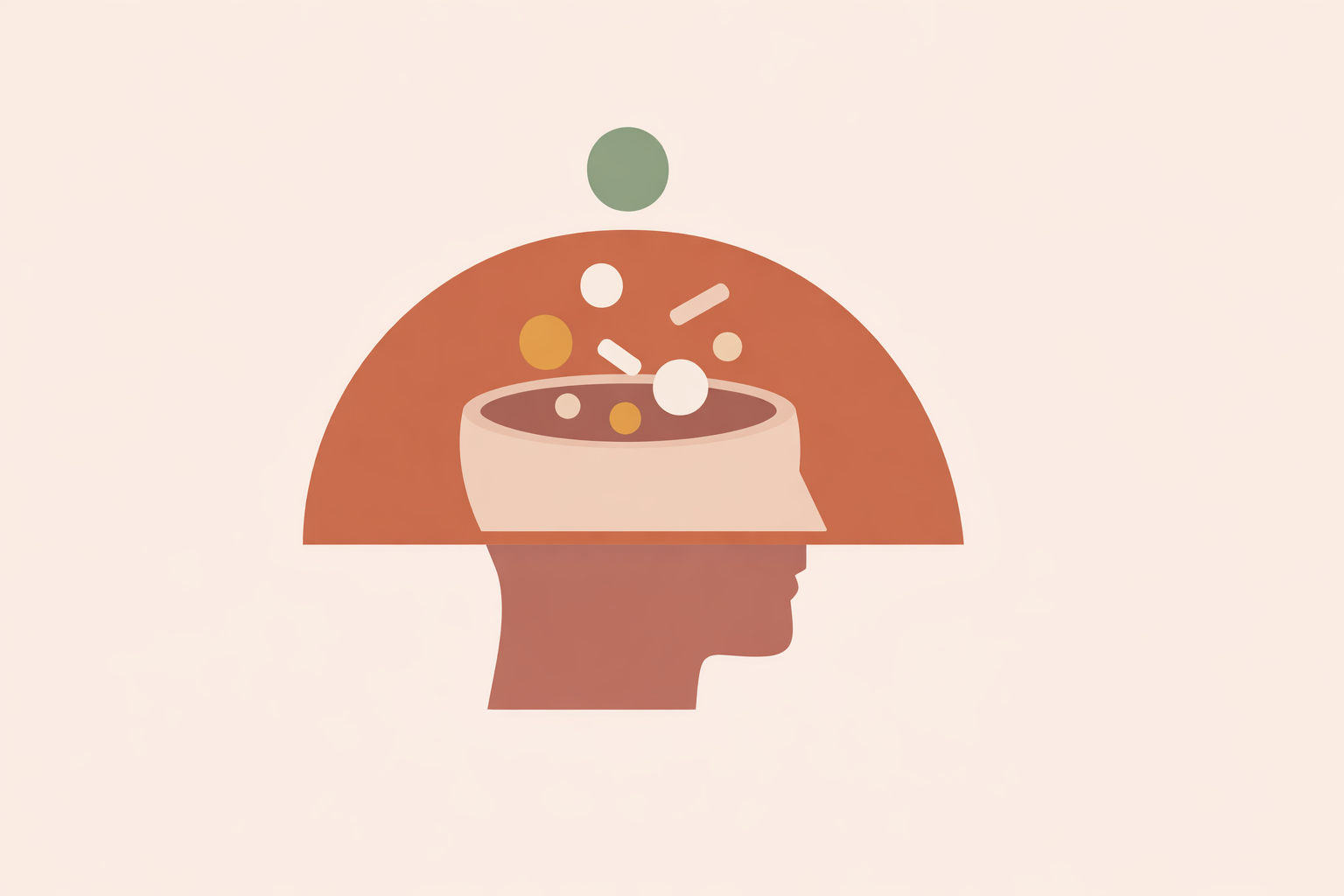
When a client’s week derails, the usual coaching reflex is to push harder: tighten the plan, add a checklist, increase accountability. On tough days, that often misses what’s really happening. The client’s system is in mobilize mode, and access to planning, flexible thinking, and nuanced judgment has narrowed. What looks like inconsistency is usually reduced bandwidth, not low motivation.
Stress-aware coaching starts with a steadier frame. Tough days are shifts in access. When activation is high, the aim isn’t ideal performance. It’s to work skillfully with the state that’s present, protect dignity, and make the next step easy to reach.
Key Takeaway: Coaching tough days starts with recognizing stress as a temporary brain–body state that changes access to attention, memory, decision-making, and perspective. Brief activation can sometimes sharpen attention, but repeated or prolonged activation tends to reduce capacity for planning and clear judgment. In practice, that means stabilizing first, simplifying the next move, and relying on external supports rather than memory alone. Thoughtful coaching language, low-load systems, and culturally respectful regulation practices can help clients move forward without shame.
Stress, Attention, and Working Memory
When a plan seems to vanish by mid-morning, the plan hasn’t necessarily disappeared. Access to it has.
With high activation, the mind tends to favor fast, simple responses over reflective, multi-step thinking. In that state, working-memory deficits are more likely, and it becomes harder to filter distractions.
In real life, that often looks like:
- forgetting the next step while doing the current one
- rereading the same message without taking it in
- losing the thread during a sequence of tasks
- struggling to reframe when something unexpected happens
High activation is also linked with disruption in executive function and cognitive flexibility. So when a client says, “I know what to do, but I can’t access it,” they’re often describing the moment accurately.
Stress can also tilt recall. Emotional elements may feel louder, while neutral details become harder to retrieve, which can make memories feel incomplete or one-sided.
Two prompts that reliably reduce load:
- “What is the smallest step that takes less than five minutes?”
- “What can we get out of your head and into a visible system?”
Example: “Write ‘3:40—send confirmation email—done when sent’ on a sticky note, place it on your keyboard, and set a 3:35 alarm.” One cue, one window, one clear finish line.
Executive Function Under Pressure
Planning, shifting, inhibiting, and deciding rely on networks that are sensitive to stress. When activation stays high, these functions become harder to access.
Over time, prolonged activation is associated with changes in prefrontal systems and memory-related networks involved in sequencing and retrieval. In the short term, stress can impair prefrontal processes, which makes reactive responding more likely.
For coaching, the implication is straightforward: fewer choices work better than more. Constraints reduce load and bring traction back sooner.
Useful language in session:
- “Let’s choose between two options only.”
- “We don’t need the full plan right now; we need the next visible move.”
- “We can revisit the third option tomorrow.”
Often, that’s enough to restore forward motion.
Stress, Emotions, and Social Perception
When activation rises, emotional tone and social interpretation tend to shift. That’s why the same conversation can feel easy one day and heavy the next.
Stress can pull processing away from reflective control and toward faster, emotion-linked responses. Many people become more reactive and find it harder to access language-based, future-oriented reasoning.
Emotions don’t come from a single “emotion center.” They arise from coordinated networks involving memory, salience, threat detection, bodily signaling, and attention. This broader view keeps coaching grounded in what the client is actually experiencing, not a simplistic label.
A prompt that helps many clients regain choice: “Let’s name this more precisely. Is it pressure, fear, grief, frustration, shame, or something else?”
Socially, stress can narrow perspective. Under strain, people often become more black-and-white, more sensitive to criticism, and less able to imagine other viewpoints. Social threat can intensify threat attention and reduce flexibility under load.
Two questions to widen the lens:
- “What did the person actually say or do, and what meaning did your stressed mind add?”
- “Before deciding what they intended, what are two other explanations that could fit?”
When activation becomes a long-running pattern, behavior can tilt toward a more vigilant and reactive style. Naming it gently keeps clients out of shame and inside choice.
Stabilize, Simplify, Then Strategize
On tough days, stabilization comes before productivity. When the system is overloaded, more pressure usually adds friction.
Overload also loops: missed tasks raise threat, threat constricts executive capacity, and reduced capacity leads to more missed tasks. Most clients recognize this pattern as soon as it’s named.
The practical response is to interrupt the spiral with a short sequence: stabilize, simplify, then strategize.
A Five-Step Script for Low-Bandwidth Days
- Notice: “What tells you your system is running high right now?”
- Name: “Let’s call today a low-bandwidth day. Nothing is wrong with you; access is limited.”
- Narrow: “Choose one anchor task for the next 20 minutes.”
- Next step: “Write the next action in a simple verb-noun form.”
- Review: “What helped, and what needs adjusting for the next stretch?”
The same structure adapts well to common patterns:
- Scattered: “List three musts, circle one, and schedule the other two.”
- Frozen: “Stand up, sip water, open the document, and type the title only.”
- Overcommitted: “Which two commitments can be renegotiated today?”
- Ashamed: “What would neutral self-talk say about this moment?”
Single-tasking with a clear time window and completion cue is often kinder than demanding multitasking. The stress–performance relationship is not linear: moderate activation can support simpler or well-practiced tasks, while high or prolonged activation tends to undermine complex reasoning.
Recovery restores what higher-level thinking depends on. Sleep, rhythmic movement, nourishment, social connection, and quiet are foundational in many traditional lineages for good reason, and modern coaching practice sees the same effect: steadier recovery improves follow-through.
Designing Stress-Aware Systems
When bandwidth drops, systems should carry more of the load than memory does.
External supports aren’t a weakness; they’re smart design. Calendars, checklists, alarms, visual cues, templates, and written summaries reduce what a client has to hold internally, which matters when attention and working memory are under strain.
A useful reframe is: “The goal isn’t to remember everything. The goal is to build a system that asks less remembering of you.”
A simple four-bucket tool works well in session:
- Do now: choose one anchor task for the next 20 to 30 minutes
- Schedule: place two tasks into actual time slots with alarms
- Delegate or request support: write one clear ask and send it
- Release: consciously drop one low-value task
Chronic stress and executive function often intersect here, and implementation intentions can also help on pressured days: “If I catch myself rereading the same message three times, then I will stand up, drink water, and write one clarifying question before replying.”
Small rituals prevent confusion later. A brief post-meeting three-bullet summary is often enough:
- Decisions made
- Next actions with owner and date
- Waiting for
That 90-second habit can save a surprising amount of time on low-bandwidth weeks.
Culturally Respectful Regulation Practices
When clients need to settle enough to think clearly, familiar practices are often the most supportive. A practice that feels culturally rooted, personally meaningful, or lineage-aligned is usually easier to trust and repeat.
This may include gentle movement, rhythm, song, prayer, time in nature, craft, tea, mantra, or quiet reflection. The coach’s role is to support reconnection with what already makes sense in the client’s world, rather than imposing a trend.
Breathwork can help some people when it’s offered with grounded expectations. Slow paced breathing can create a modest shift in access for the next step, and it works best as an option rather than a promise.
A helpful prompt is: “Which ways of calming, connecting, reflecting, or restoring energy already feel familiar and respectful to you?”
Choice matters even more when someone has a history of overwhelm or strong sensitivity. In those cases, eyes-open practices, external orientation, or relational co-regulation often feel more workable than inward-focus exercises. In general, trauma-informed work emphasizes more choice and fewer surprises.
Often, thinking tools come back online after the body state shifts. Under stress, people can have reduced access to executive functions that cognitive strategies rely on, which is why brief settling before problem-solving tends to work so well.
Keeping Scope Clear and Supportive
Neuroscience and brain health approaches can support stress-aware coaching by strengthening self-observation, language, routines, boundaries, and follow-through. It helps clients build systems that respect real life, and it normalizes low-bandwidth days without surrendering agency.
Scope still matters. When overwhelm is persistent, intensely destabilizing, or significantly disruptive to daily functioning, it’s appropriate to name that with care and encourage broader support while continuing to coach within role and scope.
A simple way to say this is: “We can keep working on your goals while you connect with broader support as well.”
Conclusion
Tough days are rarely proof of laziness or lack of commitment. They’re more often a temporary shift in access.
With that understanding, coaching gets cleaner and kinder. Stabilize first, simplify the next move, then build strategy. Use systems instead of memory, and make room for regulation practices that feel familiar and respectful to the client.
In practice, this can sound very simple: “Let’s call today a low-bandwidth day. We’ll protect your energy, choose one step, and work with the state that’s here.” That stance builds trust, and over time, it builds capacity.
Explore Neuropsychology Certification
Deepen your stress-aware coaching skills with the Neuropsychology Certification.
Explore Neuropsychology →










