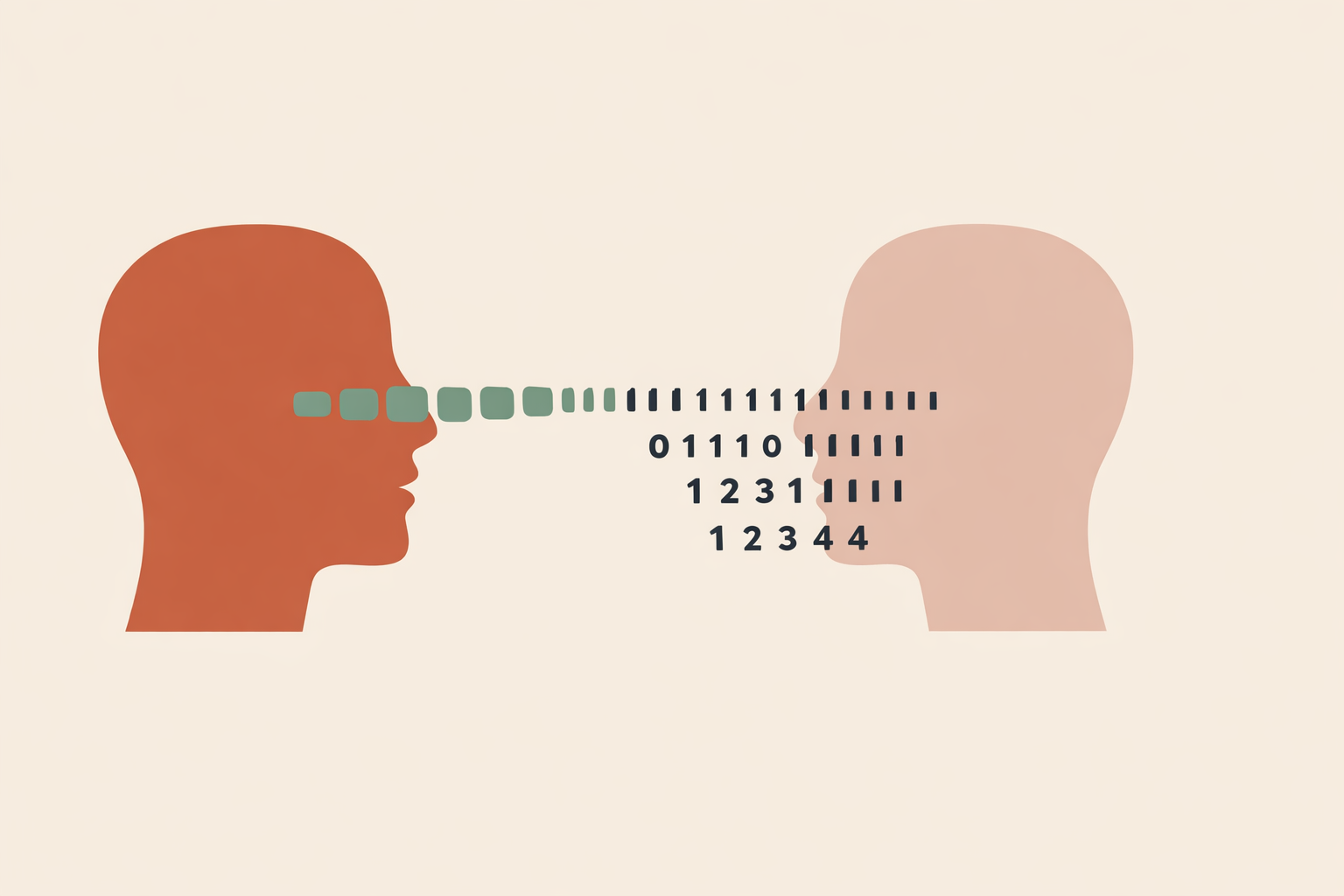
Most adult numeracy support still starts in the wrong place: a worksheet, a test, or a quick scan for what someone “can’t do.” For adults who’ve carried years of frustration with numbers, especially dyscalculia, that approach often misses what matters most. Progress usually begins when numbers are brought back into real life—bills, buses, recipes, and deadlines.
Functional numeracy builds confidence and skill through everyday choices. Rather than chasing speed or school-style performance, the focus stays on what helps someone check a receipt, compare two prices, plan a journey, or organize a week with less strain. Done well, this supports fewer mistakes in daily tasks and a steadier relationship with numbers over time.
Key Takeaway: Functional numeracy works best when it is life-first, strengths-led, and practical. For adults with dyscalculia, that often means starting with a conversation rather than a test, choosing real tasks such as money or time, using calculators and visual supports early, and teaching through concrete routines that can travel into daily life.
Step 1: Map the Person’s Everyday Math Landscape
Start with a conversation, not a test. A strengths-first “math landscape” shows where numbers already live in someone’s day, what feels manageable, what feels charged, and where a quick win is most likely.
This reduces shame and brings lived competence to the surface. With adults who freeze when they feel evaluated, a calm, respectful interview often reveals more than a test-led start.
Ask concrete questions:
- Where do numbers show up during your week?
- What tasks do you avoid?
- What already works, even a little?
- Do money, time, cooking, travel, or forms feel easier than other areas?
- What would make daily life feel calmer this month?
Stay culturally aware as you listen. Many people grew up with shared, visible ways of handling quantities: counting cash aloud, double-checking market totals together, or using familiar household measures rather than formal units. These are part of the person’s numeracy story, and they often carry real wisdom.
As you map the landscape, name existing know-how clearly. Adult numeracy research notes that many people lean on money and day-to-day decisions as a foundation for functional maths, even when they don’t see themselves as “good at maths.”
A first-session map might look like this:
- Shopping totals: uneasy but important
- Checking change: avoid
- Bus times and route numbers: stressful
- Cooking from memory: fairly comfortable
- Monthly bills: overwhelming
From there, choose one meaningful target that’s close at hand. Keep it specific. “Feel better at maths” is vague; “Check one grocery receipt up to £25 this week” is something a person can actually do.
Step 2: Start With Money Tasks That Show Up Every Week
For fast, meaningful traction, money tasks are often the best starting point. They show up frequently, carry emotion, and connect naturally to real-world decisions, so small wins here can quickly restore a sense of agency.
Research on adult numeracy consistently finds that everyday maths is often experienced through money, making money-related tasks a strong entry point.
Useful starting points include:
- Adding a short shopping list
- Checking change
- Comparing unit prices
- Reading a bill
- Splitting a shared expense
- Creating a simple category budget
For adults with dyscalculia, even discounts, totals, and change can take a lot of effort. That’s exactly why these routines deserve patient, practical support, including approaches used in math anxiety and dyscalculia coaching.
Keep practice stepwise. For example:
- Total two items
- Then total three items
- Then compare the result to the receipt total
- Then add a discount or tip once the earlier steps feel steady
Introduce external systems early. Many adults feel the biggest relief from calculators, category-based budgets, or automated payments rather than from mental arithmetic alone. Adult numeracy reviews describe calculators and similar survival strategies as common in everyday coping.
A simple money routine might look like this:
- Open the calculator before shopping starts
- Add each item as it goes into the basket
- Pause after every two or three items
- Photograph the receipt afterward
- Record the final amount in one note on the phone
This kind of structure is sound support design. The goal is to make helpful habits feel natural in daily life.
Step 3: Rebuild Time Sense With Visible Supports
After money, time is often the next pressure point. Many adults with dyscalculia struggle with reading time, sensing time passing, estimating duration, and planning sequences that depend on timing. When time feels slippery, the whole day can feel harder than it needs to.
The most effective move is usually to externalize time. Make it visible, audible, and structured instead of relying on internal estimation.
Support tools can include:
- Visible timers
- Phone alarms
- Calendar reminders
- Written step lists
- Padded travel estimates
- Simple morning or evening routines
Many adults run late because durations are misjudged again and again, not because they don’t care. A supportive routine can change that quickly. If a journey usually takes 28 minutes, planning for 45 can be a smart bridge while confidence builds.
Teach only the time maths that unlocks daily life:
- Reading a departure time
- Working out when to leave
- Adding a buffer
- Estimating how long a task usually takes
- Breaking a routine into a few stable steps
For example, a leave-on-time routine might be:
- Appointment at 3:00
- Aim to arrive at 2:50
- Travel time: 28 minutes
- Add 15 minutes of padding
- Leave at 2:07
- Set alarms for 1:50, 2:00, and 2:07
Keep it concrete. Stability comes before speed.
Step 4: Use Measurement, Space, and Navigation to Make Numbers Tangible
Once there’s a little steadiness with money or time, broaden the work into things that can be touched, seen, and tested. Measurement, spatial estimation, cooking, and navigation are especially useful because quantity becomes something you can experience directly.
Dyscalculia can affect measurement, spatial estimation, and navigation in ways that are easy to miss. Distances, numbered directions, route steps, and size comparisons can all create friction. At the same time, these areas offer quick feedback, which makes practice feel grounded.
Useful examples include:
- Halving or doubling a recipe
- Checking whether an item fits in a space
- Following a route with stop numbers or platform numbers
- Comparing lengths, weights, or volumes during household tasks
Visuals and hands-on supports can make quantities feel more stable. Coins, measuring cups, drawn budget circles, fraction strips, and number lines can strengthen conceptual understanding for learners who struggle with maths.
A practical progression is Concrete → Representational → Abstract.
- Concrete: handle the coins, pour the rice, mark the route
- Representational: sketch the parts, draw the line, make a simple table
- Abstract: write the numbers or calculation
This CRA sequence helps learners connect symbols to real quantities. A review of dyscalculia support found the CRA approach especially useful for building understanding.
Examples you can use in session:
- Recipe halving with real measuring tools
- A tape-measure check for furniture and doorway width
- A written three-step route card for a regular journey
- A paper model showing how a weekly budget is divided
Let the person experience the quantity before asking them to hold it in symbols alone.
Normalize Tools, Automation, and Familiar Counting Practices
Strong support goes beyond skill-building. It also creates an environment where numbers feel easier to handle day after day. That means normalizing tools and visible supports without apology.
Calculators, notes apps, reminders, templates, and spreadsheets are practical bridges to steadiness. Many adults already use calculators, and adult numeracy research describes these kinds of aids as common coping strategies.
Automation can also reduce strain:
- Auto-pay for recurring bills
- A single weekly shopping routine
- Category labels in banking apps
- Recurring reminders for key tasks
- Simple spreadsheets for repeat decisions
It’s also worth honoring familiar cultural ways of managing quantities. Shared counting, verbal double-checking, tallying, grouping, bead-based counting, and market-style estimation reflect human ingenuity around number work. Used respectfully, they help adults feel supported in ways that fit who they are.
Self-advocacy helps too. Many adults benefit from having calm, practical scripts ready for work or daily administration.
- “I work best with written figures and a calculator.”
- “Please give me a minute to check that number.”
- “A simple template will help me do this accurately.”
The point is access.
Use a Repeatable, Low-Load Session Flow
Adults who feel overloaded by numbers rarely benefit from long, dense sessions. A shorter, consistent structure protects working memory and makes progress easier to see.
A simple pattern is 5–20–10:
- 5 minutes to settle, orient, and set one small goal
- 20 minutes for one focused real-life task
- 10 minutes to reflect and plan the next repetition
This pacing aligns with guidance that emphasizes lowering working memory demands so learners can stay with the essential task.
In the opening minutes, set up an easy win, such as checking a three-item receipt or comparing two subscription prices.
During the main practice block:
- Keep steps visible
- Use one scaffold at a time
- Think aloud together
- Pause as soon as overload appears
- Return to the last steady step before adding anything new
In the final few minutes, ask:
- What felt easiest?
- Where did it wobble?
- What tool helped most?
- What is one real-life repetition to do before next time?
Over time, the cadence itself becomes supportive. The structure feels familiar, tools get used sooner, and confidence grows from repeated success in ordinary life.
Closing Perspective
Adults with dyscalculia don’t need more pressure around numbers. They need support that respects how numeracy actually shows up in life: starting with relevance, practicing with real tasks, and building on strengths that may have been overlooked for years.
When you begin with a person’s real math landscape, focus on money and time where needed, make quantities tangible, and normalize supportive tools, numeracy work becomes more humane and more effective. The changes can look small from the outside—a checked bill, a calmer shopping trip, an on-time arrival, a recipe adjusted with confidence—but in lived experience, those moments are major.
As a final note, keep support tailored. Some people progress quickly with routines and tools, while others need more time to rebuild trust around numbers. If anxiety is high or daily functioning is significantly affected, consider coordinating with appropriate educational or accessibility services, or drawing on broader neurodiversity and learning differences support, so the person gets the level of support they deserve.
Train in Dyscalculia Support Coaching
Build life-first numeracy strategies with the Dyscalculia Support Coach Certification.
Explore Dyscalculia Support Coach →