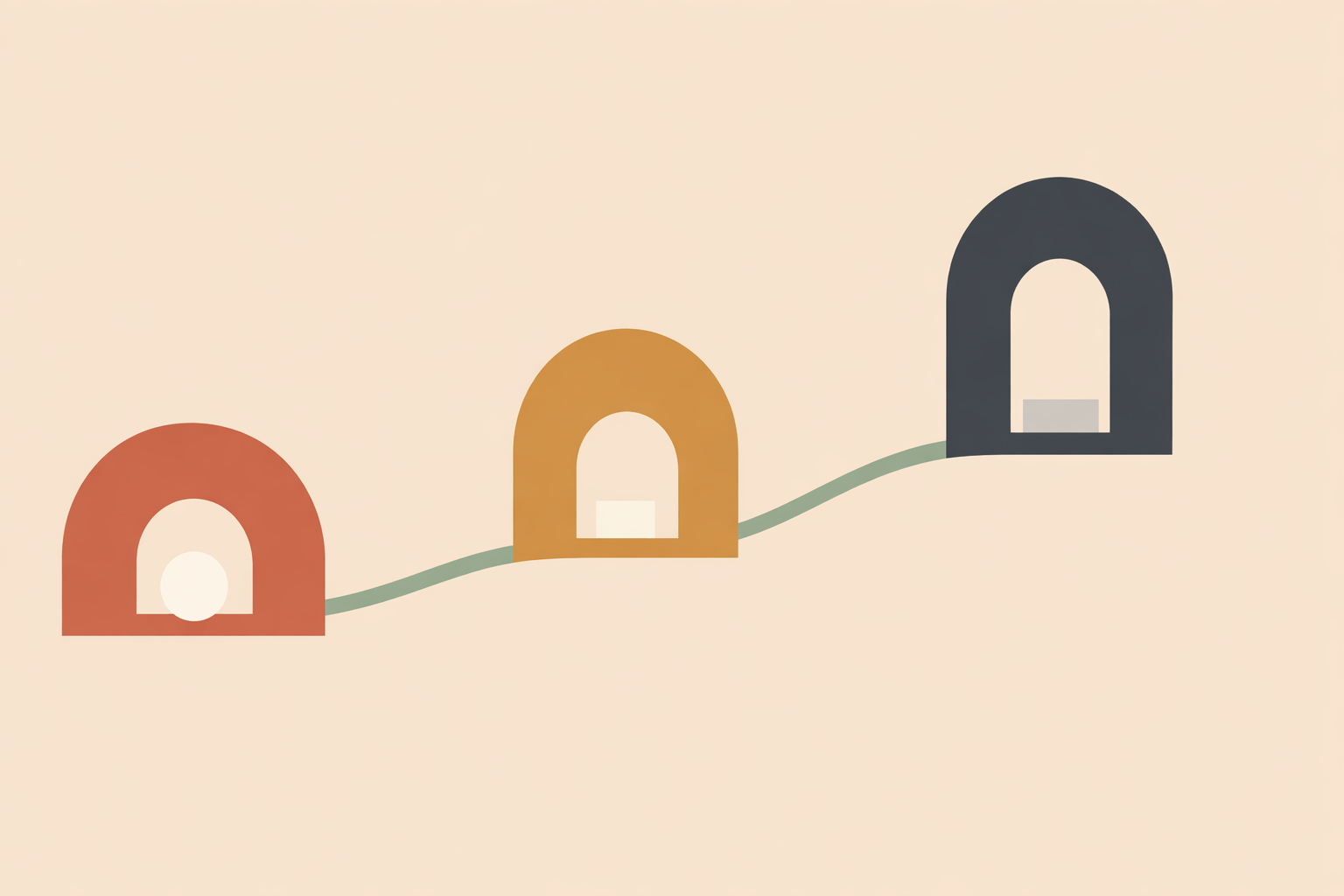
Many practitioners feel the squeeze to “fix the math” fast. Families want relief, schools want better performance, and adults want fewer costly mistakes with money and time. The usual response is to push harder on content: more drills, tighter timelines, more pressure. When numbers already carry tension, that approach often backfires.
A steadier path is to support the person before pushing the task. In practice, that means blending working-memory support with number sense and everyday numeracy over a short, focused arc. Three sessions are often enough to create momentum without overwhelming cognitive bandwidth.
Key Takeaway: A focused three-session arc can make math support more workable by reducing unnecessary load, externalizing steps, and building practical tools the client can use in daily life. Session 1 maps patterns and pressure points, Session 2 embeds supports directly into math tasks, and Session 3 carries those supports into money, time, and navigation. The goal is not to force “normal” performance, but to help clients build a personal playbook that fits how they think.
Session 1: Map How Working Memory Shows Up in Math
Start with dignity, not performance. A useful opening is: “There’s nothing to prove today. We’re just getting curious about how numbers feel and what helps.” That shift alone often changes the tone.
Begin with stories, not scores. Before any task, invite the client to describe their experience.
- “Tell me about a time numbers helped you.”
- “Tell me about a time numbers felt unfair.”
- “What happens when a timer appears?”
- “What helps you stay steady—movement, music, visuals, pauses?”
As they speak, sketch a simple one-page profile: big-picture first, loses place mid-problem, likes rhythm, avoids timers, benefits from color. This becomes your map for the next two sessions.
Use low-stakes tasks to observe the process. The goal is to notice where the work becomes heavy.
- Number line warmup: place 0, 10, 20, 50, and 100 on sticky notes, then ask where 37 belongs.
- Mental math with immediate writing: “What is 28 + 16?” Offer a whiteboard right away and watch whether writing supports the flow of thinking.
- Everyday numeracy task: read a sample bus schedule and choose which bus gets closest to 3:10 pm.
Often, what emerges is familiar: the client understands more than they can hold at once. Your job here is to spot which supports reduce that tax most effectively for this person.
Thread in regulation as part of the task. Keep a pause card visible. Offer standing or sitting. Leave room for silence. Between tasks, a brief breathing reset can help the client settle. Research on slow breathing suggests it can support autonomic balance and reduce stress activation, which is why many practitioners find it useful before number-heavy work.
Then build awareness with short reflection prompts:
- “What helped there?”
- “Where did you have to hold too much?”
- “What could we put on the table so your mind holds less?”
By the end of Session 1, you want a clear pattern map that points to action. A note might read: “Loses place when scanning rows. Color strip helped. Writing partial sums reduced overwhelm. Wants rhythm for counting.”
Session 2: Build Supports Directly Into Math Tasks
Session two is where the environment starts doing more of the work. The aim is straightforward: make the thinking visible and reduce what the client has to juggle internally.
Use concrete, visual, and symbolic steps in order. A concrete-to-abstract sequence is often the most accessible route, and it aligns well with everyday dyscalculia intervention strategies. Start with objects, move to drawings, then move to symbols.
For example, if you’re exploring percentages in a shopping context:
- Concrete: use a $20 price tag and physical coins to show 10% off
- Representational: draw a bar for $20 and shade the discount portion
- Abstract: write the calculation once the structure is already clear
Layer external supports generously at first. Use what helps the client stay oriented, such as:
- a place-value mat
- a number line on the table
- highlighters for key numbers
- a “Plan / Do / Check” worksheet
- scratch paper for interim steps
The principle is practical: offload what doesn’t need to stay in the head.
Bring in rhythm or movement where it fits. For some clients, stepping while skip-counting or tapping a beat for groups of ten helps attention settle. Traditional counting tools also remind us that number work has long been tactile and rhythmic, not just abstract pencil-and-paper.
Where it suits the client, an abacus can be especially effective. Some research has linked abacus training with improved working memory in certain learners. Even without formal training, the broader lesson holds: clear structure plus repeated movement can make number relationships easier to hold.
Teach a short think-aloud routine. A simple structure like “Say – Place – Check” works well:
- Say: “My plan is to find 10% first.”
- Place: move the objects, draw the bar, or underline the key numbers.
- Check: “Does this match my plan?”
At the end of each task, capture one short reflection so the client builds a usable “support menu”:
- “Color helped me track the decimal.”
- “Tapping tens kept me from losing count.”
- “Drawing first made the symbols easier.”
Fade supports gradually. If the client succeeds with coins, drawing, and rhythm, remove one support at a time and watch what changes. This protects confidence while still building independence.
Session 3: Carry Those Supports Into Everyday Numeracy
Session three moves from practice tasks to lived situations. This is where the work becomes immediately useful.
Choose one real-world goal first. Keep it specific: “I want to track weekly spending without getting lost at checkout,” or “I want to arrive on time without panicking over the clock.” Then build the supports around that goal.
- Money: use labeled envelopes or categories such as Food, Transport, and Fun, with simple icons and written weekly amounts.
- Time: create a short anchor-point schedule with prompts like “7:50 shoes on” and “8:05 out the door.”
- Navigation: draw a landmark strip for one route using simple sketches and spoken steps.
External structure is often more effective than asking the client to “just remember.” It places the sequence in the environment, where it can be seen and used.
For clients who struggle with time passing intuitively, visible planning helps. Many practitioners work from the assumption that time blindness is common enough in neurodivergent lives that it deserves thoughtful design from the start, especially across neurodiversity and learning differences.
Use a short plan–do–debrief cycle.
- Plan: What tools will you use?
- Do: Act out the situation with the supports in place.
- Debrief: What worked, and what needs adjusting?
A note might read: “Rounded prices up while shopping and stayed under budget,” or “Visual schedule helped me leave on time, but I still need a transition alarm.”
Add self-advocacy scripts. Once the client knows what helps, give them language to ask for it clearly.
- “I focus best with written steps. Could you send the key points in advance?”
- “I use large-print tables and visual supports. I’d like to keep those with me.”
- “I process time more clearly when I can see it written out.”
End by gathering everything into a one-page working-memory playbook. Keep it simple and easy to glance at, so the client knows what to reach for when numbers start to feel slippery.
How to Adapt the Arc Across Ages, Contexts, and Cultures
The structure stays the same: map, embed, carry. What changes is pacing and load.
Some clients do well with three standard sessions. Others need shorter meetings, more repetition, or more space between sessions so the tools can settle into daily life. A teen with steady school support may move quickly. An adult balancing work, family, and fatigue may do better with briefer sessions and one clear focus each time.
Helpful adjustments include:
- one main task per session for clients who tire quickly
- short check-ins between sessions by message or voice note
- family or team coordination, where appropriate and with the client leading
- repeating the same support across several contexts before adding new ones
Regulation also travels across settings. Many practitioners use a few rounds of 4-in, 6-out breathing because it’s easy to remember and quick to repeat. The point is readiness.
Honour cultural and ancestral number practices respectfully. Many communities have long used tactile, visual, and rhythmic systems for counting and grouping: beads, knots, finger patterns, tally marks, chants, and other embodied methods. These approaches fit naturally with a coaching style that values real-world usability.
Use them with respect, not as decoration. Ask what already feels familiar or meaningful to the client.
- beads or seeds for grouping and regrouping
- clapped or stepped rhythms for counting by 5s or 10s
- an abacus where it fits the client’s background, interest, or learning style
- color-coded marks or household objects for visible quantity tracking
The question is always: does this create more clarity, more dignity, and more ease?
Conclusion: A Smaller, Steadier Way to Change the Math Story
When working-memory support and numeracy are blended thoughtfully, numbers often become less threatening and more workable. Session 1 notices the pressure points. Session 2 builds supports into the task itself. Session 3 carries those supports into money, time, and navigation, where they matter most.
What changes is not only performance, but agency. The client gains language for how they work, tools that reduce overload, and a growing sense that math doesn’t have to be a constant struggle between effort and shame.
Three sessions won’t fit every goal, and some clients benefit from ongoing practice and reinforcement. Still, a short arc like this creates a strong foundation for dyscalculia support: clear patterns, practical supports, and a personal playbook the client can keep using in daily life.
Used this way, three thoughtful sessions can shift the story from “I can’t do this” to “I know what helps.” And that’s a meaningful base to keep strengthening, one real-life number at a time.
Train in Dyscalculia Support
Build on this three-session arc with the Dyscalculia Support Coach Certification.
Explore Dyscalculia Support →