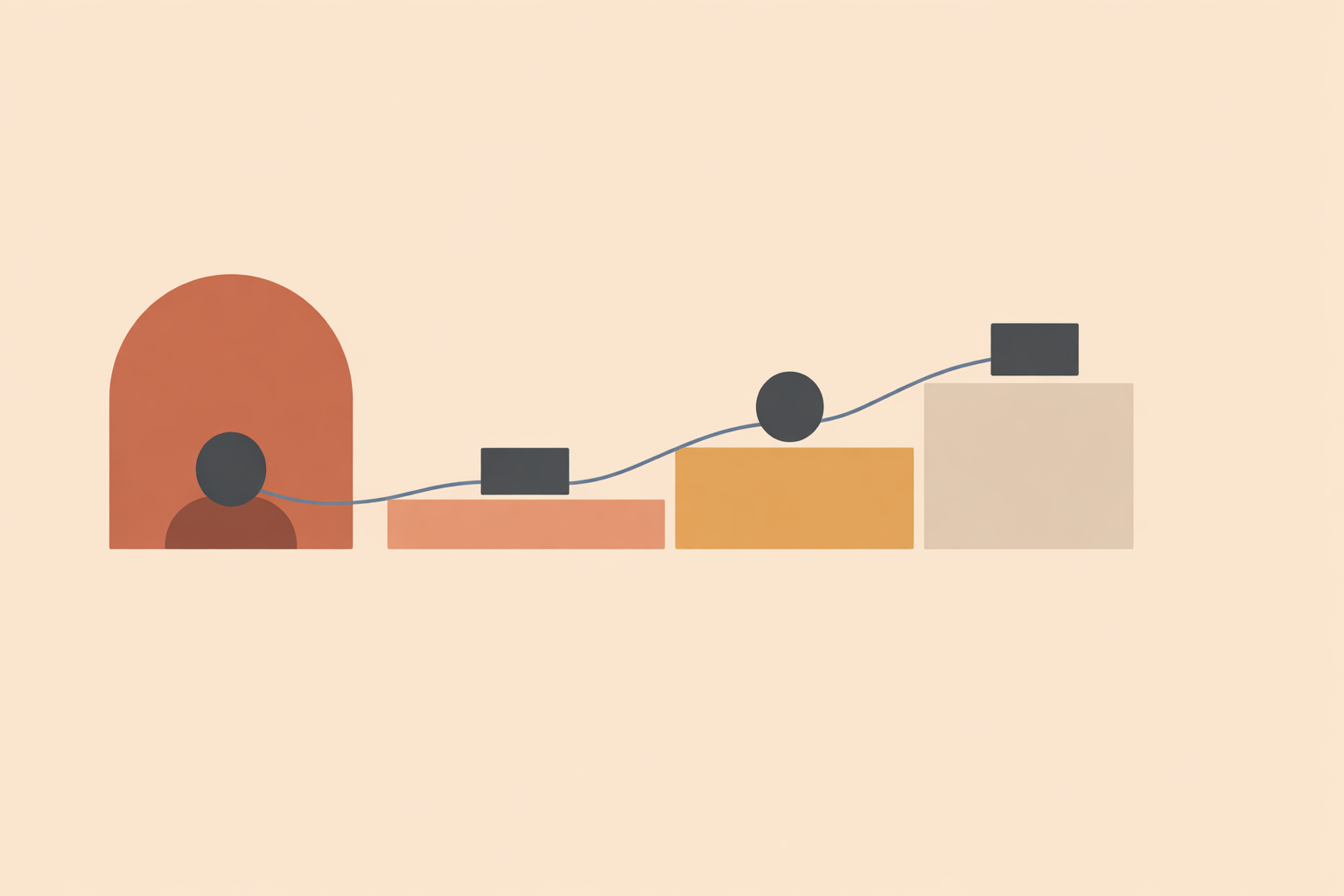
In APD coaching, it’s easy to pick a device and hope everything else falls into place. A client struggles on group calls, you suggest a remote mic, and the first week looks promising—until the next staff meeting brings crosstalk, room echo, and end-of-day fatigue. The tool gets abandoned because the environment is still demanding and the energy cost stays high. Teachers or managers may not be aligned on how to run the room, and questions can quickly drift into assessment or fitting, which sit outside coaching scope.
A steadier path is a person-led, context-aware plan that reduces listening load where it actually happens. Coaching stays focused on daily use, routines, self-advocacy, and collaboration, while specialist teams handle assessment and device fitting. When that boundary is clear, the work becomes more practical and easier to sustain.
Key Takeaway: Effective APD assistive technology planning is person-led and context-specific. The strongest plans begin with goals and values, map listening load across the day, match tools to real environments, support regulation and recovery, and build the social agreements that make those tools usable in everyday life. Coaching stays focused on habits, support, and advocacy while specialist teams handle formal assessment and fitting.
Step 1: Start with the person, not the device
The most useful plans begin with what matters to the person. Before discussing tools, clarify where listening feels manageable, where it breaks down, and what change would actually improve daily life.
This keeps the work grounded in real priorities rather than gadget-chasing. It also helps you choose supports that fit values, preferences, and the settings they move through. Some people want low-profile supports. Others care most about conserving energy, reducing social friction, or feeling more confident in group settings.
Scope clarity belongs here. Coaches can map listening load, trial everyday supports, build routines, and strengthen self-advocacy. Formal assessment, specialist interpretation, and device fitting belong with audiology and education teams.
Helpful opening questions include:
- “Tell me about a recent moment when listening felt easy, and one when it felt hard.”
- “If we improved one situation this month, what would make the biggest difference?”
- “What kinds of support feel comfortable and respectful for you?”
- “What do you want more of—clarity, confidence, less fatigue, or all three?”
A simple short-term goal works well. For example: “Follow seminar discussion more easily and finish without a crash afterward.” From there, choose one or two target contexts and keep the plan manageable.
Key move: let the person’s values guide every later decision.
Step 2: Map listening load across the day
Once the goal is clear, look for when and where listening becomes costly. A week of gentle observation usually reveals more than assumptions.
For many people, APD-related difficulties show up most in noisy groups, echoey rooms, and fast multi-speaker exchanges. That pattern points directly to where environmental changes and tools will matter most.
Use a simple log that tracks context, effort, clarity, and recovery. Keep it light enough that the person will actually use it.
- Context: Tuesday staff meeting, glass-walled room
- Time: 3:00–3:45 p.m.
- Speakers: 7, frequent interruptions
- Background: ventilation hum, hallway noise
- Effort: 8/10
- Clarity: 5/10
- Recovery needed: 20 minutes quiet
- Supports used: none
Over a few days, patterns emerge. Mornings may be steadier, lunch spaces may be draining, or any long multi-speaker conversation may require a buffer afterward. When people can see fatigue building across the day, they’re more able to plan supports in advance instead of waiting until they’re overloaded.
Circadian-aware scheduling can also help in practice. Place auditory-heavy tasks during higher-energy times when possible, and protect brief resets before and after.
Coach tip: treat the log as compassionate data. The point is not to prove struggle. The point is to notice patterns and respond wisely.
Step 3: Match assistive technology to real contexts
The strongest plans rarely rely on a single tool. A more reliable setup combines clearer sound, visual access, and small room adjustments.
For many people, remote microphones become the backbone in classrooms, meetings, or other listening-heavy spaces. They bring the main voice forward so speech is less affected by distance and background noise.
Live captions and speech-to-text can be just as important. Research suggests that text captions can buffer the effects of background noise on speech memory, and many practitioners recognize the same thing day to day: when key information is visible, the mind doesn’t have to hold every word in auditory working memory.
Environmental shifts often improve access immediately. In reflective or noisy spaces, soft furnishings, closed doors, sitting closer to the speaker, and one-speaker-at-a-time norms can make speech easier to follow.
In practice, context-matching might look like this:
- University seminar: remote mic, key terms reviewed in advance, seat near the front, brief recovery break afterward
- Team meeting: live captions, clear turn-taking, closed door, written action points
- Family dinner: music off, one voice at a time, visual notes for plans or decisions
Principle: pair a clearer signal with visual support and a kinder environment. The combination is often what makes the difference.
Step 4: Support regulation so the tools can work
Tools land best when the nervous system has some room to work. Building regulation and recovery into the plan from the start makes every other support more usable.
Many people can name early signs that listening strain is rising: jaw tension, shallow breathing, zoning out, irritability, or the urge to withdraw. Catching those signals early often prevents a bigger fatigue spike later.
Simple resets are usually enough:
- water break and a few slower exhales after a demanding listening block
- a brief visual rest by looking down at notes or out of a window
- steady sensory anchors such as comfortable seating or a familiar object in hand
Polyvagal-informed coaching can be useful as a practical framework for noticing state shifts and responding early. The language doesn’t need to be technical. The value comes from recognizing when support needs to change.
Traditional regulation practices can also sit naturally alongside modern tools. Humming, rhythmic movement, song, drumming, and time outdoors are familiar in many cultural lineages and can help people settle before or after listening-heavy situations. Used respectfully, these practices support steadiness and help the plan hold.
When a person knows mornings are clearer, that awareness can shape scheduling. When they know a meeting always requires recovery time, that time can be protected in advance.
Coach move: normalize breaks and pacing as skillful design, not weakness.
Step 5: Build self-advocacy and shared agreements
Assistive tools work best when the people around the client understand how to support their use. Without shared agreements, even well-chosen supports can become awkward or quietly dropped.
Self-advocacy works best when it’s practical and specific. Short scripts are often the easiest to use:
- “Could we keep to one speaker at a time? It helps me follow.”
- “Can we switch on captions for this call?”
- “Please send the key points in writing afterward.”
- “I hear better when I’m sitting closer to the main speaker.”
Guidance in education settings consistently highlights how taking turns and identifying speakers clearly makes communication supports more workable in real-world settings.
Start with universal supports whenever possible. Captions, written agendas, moderated speaking pace, pre-reading key terms, and thoughtful seating often help the whole group.
For students, steady classroom routines can lower listening load without singling anyone out. Helpful options include gaining attention before speaking, sharing outlines, emphasizing key information, pre-teaching vocabulary, offering notes, and using peer support structures. Guidance also supports pre-teaching vocabulary and providing materials in advance to lower demand.
Coach tip: when a request works well, save the wording. Effective scripts are worth reusing.
Step 6: Track what actually helps and refine the plan
Once supports are in place, keep the plan alive by reviewing what improves clarity, what reduces effort, and what still drains energy.
A lightweight daily or twice-weekly check-in is enough:
- Context: Thursday seminar
- Strategies used: captions, front seating, written outline
- Effort: 6/10
- Clarity: 7/10
- Recovery: 5-minute walk outside
- Note: easier than last week when captions were off
Over time, these notes reveal which combinations are worth keeping, which need adjustment, and where another layer of support is needed. They also strengthen collaboration: families, teachers, and managers often notice practical details, while specialist teams can respond to technical questions and fitting needs.
If a pattern becomes obvious—captions plus turn-taking consistently improve clarity, for example—make that support standard. If something isn’t helping, adjust the setup, the environment, the timing, or the routine around it.
Coach move: celebrate reduced effort and shorter recovery time. Those changes often matter more than perfect performance.
Conclusion: Bring the whole plan together
A strong APD support plan begins with the person and expands outward: goals first, then listening-load patterns, then tools matched to context, then regulation, recovery, and shared agreements that make those tools usable in real life.
This approach is practical and respectful. It doesn’t frame the person as a problem to be fixed. It asks what conditions support clarity, steadiness, and participation, then builds those conditions with care.
Some supports are specialized, and some are everyday design choices. Both matter. Remote microphones, captioning, seating choices, pacing, visual supports, quieter rooms, and recovery buffers can work well together when they’re chosen deliberately.
Ethical coaching also means clear boundaries. Coaches support habit-building, reflection, communication, and advocacy. Specialist teams handle formal assessment and fitting. When each role is respected, the person receives more coherent support, including within neurodiversity and learning differences work more broadly.
As a closing note, tools and strategies still need thoughtful, respectful implementation: consent, comfort, and cultural fit matter, and workplace or school policies may shape what’s possible. Keep tracking patterns, keep refining what helps, and keep the person’s values at the center.
Explore APD Coach Certification
Apply these planning steps in practice with the Auditory Processing Disorder Coach Certification.
Explore APD Certification →