Most dyslexia support still starts at the page: more phonics, longer drills, tighter data cycles. Practitioners often see a ceiling quickly. Focus frays, shame creeps in, and progress does not always carry into everyday reading. By the end of the week, the teen who “won’t try” may be depleted, and the adult who tracks well with audio may still freeze in a crowded inbox. The issue is often less about effort and more about the conditions for learning.
From an embodied, neurodiversity-affirming lens, dyslexia is a whole learning profile. Strong literacy practice stays central, but it lands better when paired with sensory awareness, movement, rhythm, sleep habits, and multimodal tools, so access and confidence grow together.
Key Takeaway: Effective dyslexia support works best when literacy practice is paired with steadiness, access, and learner autonomy. Mapping states, adjusting the environment, using short movement resets, supporting sleep rhythms, and blending text, audio, visuals, and interaction can make reading work more usable across ages.
Map states and sensory patterns before pushing literacy work
If a learner shuts down after a long day, the most helpful question is not “Why are they resisting?” but “What state are they in?” Many dyslexic learners drop into low energy after sustained effort, especially after school or long stretches of reading. In coaching, this can look like flat energy, heavy posture, slower processing, or a strong urge to avoid one more word-based demand.
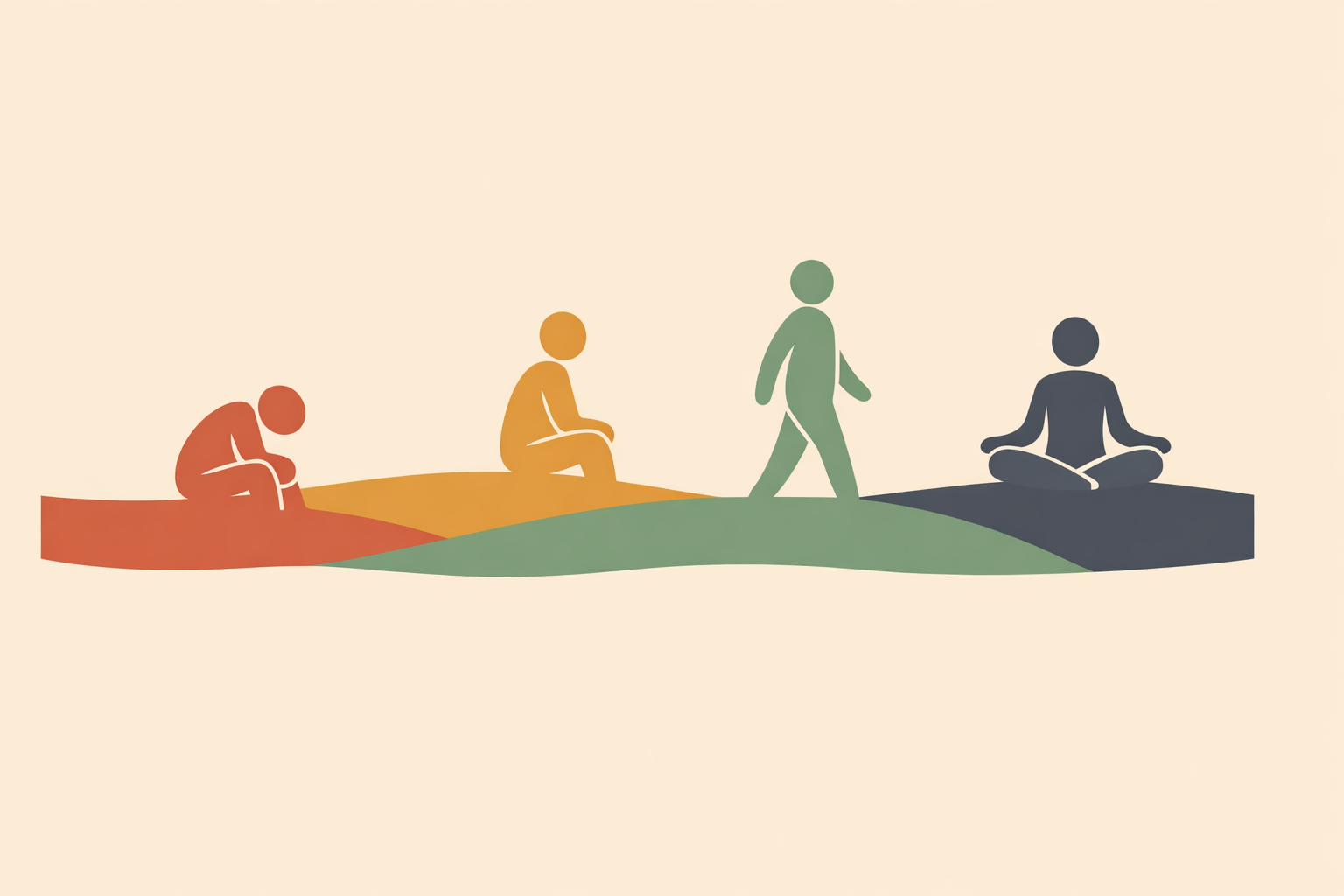
State mapping helps you work with the learner in front of you. Keep it simple:
- Green: settled, present, ready
- Amber: tense, distracted, effortful
- Blue: foggy, flat, low-energy
- Red: overwhelmed, rushed, reactive
Invite the learner to describe their cues. They may notice jaw tension, shallow breathing, busy thoughts, heavy limbs, blurred tracking, or visual overload. That shared language turns “behavior” into useful information.
Next, map the sensory ecosystem around the reading task. Notice what changes when you adjust:
- Lighting
- Visual clutter
- Noise level
- Seating position
- Access to movement
- Page spacing or text presentation
Sensory-aware environmental changes such as movement breaks, adjusted lighting, and flexible seating can lower stress and widen learning capacity across ages.
Co-regulation belongs here too. Some learners settle through your pacing, your tone, a predictable opening ritual, or a shared reset. Thirty seconds of box breathing plus one minute of cross-crawls can be a reliable “start button” without needing to make it a big event.
A practical script: “Before we read, let’s check your color. If you’re in Amber or Blue, we reset first and then decide how to begin.”
Use short movement rituals to support focus
Small, predictable movement usually works better than ambitious plans that don’t stick. For many dyslexic learners, a brief burst of rhythmic movement before reading supports steadier focus. The principle is consistent: regulate first, then ask for literacy effort.
In classroom guidance, movement supports concentration, attention, and energy regulation for learners of different ages.
Try a study-start ritual that takes less than two minutes:
- 8 slow cross-crawls
- 10 wall push-ups or shoulder rolls
- 5 steady breaths with hands on ribs
- 12 minutes of reading or word work
This “micro-dose” is often enough to shift the learner from scattered effort into usable attention. Over time, it can also reduce dread because the body learns a predictable bridge into reading.
Across the week, regular moderate movement on most days can support attention and executive functioning in profiles that overlap with dyslexia. This doesn’t need to look formal. Walking to the shops, dancing in the kitchen, cycling, or a short after-school kick-about can become steady regulation anchors.
The main point is consistency. Familiar movement woven into ordinary life tends to be more sustainable than highly structured routines.
Bring rhythm and coordination alongside reading
Rhythm and balance can be useful companions to literacy work. For some learners, they add steadiness and timing that make reading tasks easier to enter.
One well-known school-based evaluation linked a vestibular-cerebellar program to improved reading fluency, alongside gains in phonological skills, balance, and test performance in children with reading difficulties.
This kind of work can stay light and playful. You might use:
- Clap-and-say syllable patterns
- Beanbag toss with word segmentation
- Stepping sequences while sounding out words
- Balance work before brief reading practice
When learners respond well, rhythmic sequences practiced a few times per week often strengthen coordination and support reading-related skills. Rhythm can also organize attention and improve timing for language tasks.
Some practitioners observe that retained primitive reflex patterns can affect posture and attention in certain learners, and that gentle reflex-style movements can improve stamina for some. Keep this as one strand within a wider plan, led by observation and what the learner actually benefits from.
A helpful framing sentence is: “We’re using rhythm and coordination to support readiness and ease, not to force a result.”
Support sleep and daily rhythms to make learning stick
Sleep is a quiet foundation of learning. When sleep is unsettled, reading practice often feels heavier and is harder to carry into the next day.
Research indicates dyslexic children have more sleep problems than peers. Sleep-related differences have also been associated with reduced memory consolidation, which can help explain why some learners need more repetition.
Sleep deserves a place in a thoughtful support plan. Consistent sleep and wake timing, morning daylight, and less screen input before bed can support regulation and reading readiness.
A simple “Sun-Moon” rhythm can help:
- Morning: curtains open quickly, light exposure early, a few minutes of stretching or walking
- Evening: dimmer lighting, fewer screens, calm sensory input, predictable wind-down
These rhythms also fit well with family and cultural routines already present in the home, such as shared music, prayer, storytelling, gentle stretching, or quiet reading together.
If snoring, gasping, persistent insomnia, or severe night waking keeps showing up, note the pattern and encourage the family to seek support from an appropriate health professional. Your role stays centered on routines, observation, and well-being.
Use multimodal tools to expand access without lowering expectations
Once the learner is more settled, literacy work can become more flexible and productive. Many dyslexic learners do better when information comes through more than one channel.
Combining text, audio, visuals, and interactive elements can improve comprehension and engagement for learners who struggle with single-mode instruction.
Text-to-speech is especially useful. It can lower cognitive load while keeping expectations high, and seeing and hearing words together has been shown to support phonemic awareness and orthographic knowledge in dyslexic children.
A flow-based 30-minute block might look like this:
- 2 minutes: movement reset
- 8 minutes: paired reading with text-to-speech
- 10 minutes: visual mapping of key ideas with color or symbols
- 6 minutes: build, trace, say, or type target words
- 4 minutes: reflect on what felt smooth and what to adjust
This structure reduces unnecessary switching while keeping the learner active. It also respects the reality that some people understand content best when they can hear it, see it, and organize it visually.
Learner autonomy matters too. Many dyslexic adults focus better when they can choose pace, font size, sound conditions, task order, or which tool to start with. Honoring preferences reduces friction and often increases follow-through.
Turn individual strategies into home and school rituals
The most durable support rarely lives in one session alone. It becomes part of the learner’s daily environment through home rhythms, school expectations, and shared language around regulation and access.
That’s why it helps to move from isolated tips to collective rituals. A family or school doesn’t need dozens of strategies. A few that everyone understands and repeats will usually carry further.
A one-page co-regulation plan might include:
- A shared signal for “pause” or “reset”
- An after-school snack-and-movement routine
- A sensory-aware reading space with low visual clutter
- A short evening wind-down rhythm
- A familiar reading-start ritual
At school, it helps to normalize supports as everyday learning tools. Movement breaks, visual organizers, flexible seating, page windows, and audio support can be offered as resources that help many learners engage.
Culture matters here as well. Shared song before bed, a walk after dinner, community dance, elder storytelling, or quiet morning prayer may already be doing regulatory work for the learner. When approached respectfully, living traditions can become powerful anchors for learning readiness.
Conclusion: Build a living practice, not a fixed formula
Dyslexia support becomes more effective when reading is treated as a whole-body, whole-life skill. Movement, rhythm, sensory awareness, sleep habits, neurodiversity and learning differences, multimodal access, and relational steadiness all belong alongside clear, targeted literacy practice.
This approach works best when it stays modest, repeatable, and responsive. Notice the learner’s state, adjust the environment, regulate first, teach clearly, and keep what helps.
Keep cautions in view without letting them dominate: strategies will vary by individual, and sleep red flags deserve appropriate professional attention. With that in place, small consistent choices often add up to support that feels kinder and functions better in real life.
Explore Dyslexia Coach Certification
Deepen these embodied, multimodal supports with the Dyslexia Coach Certification.
Explore Dyslexia Coach →