When choices pile up, many managers respond by pushing harder: longer hours, tighter schedules, more tools, faster replies. Yet late-day calls often get narrower and more rigid, because constant deciding quietly drains the capacities that support sound judgment.
If you lead, teach, coach, or hold space for others, you have probably felt this shift. By mid-afternoon, the quick win starts replacing the right call, complex work gets deferred, and options seem to shrink. Usually, this is not a motivation problem. It is a depleted decision budget.
Key Takeaway: Decision fatigue is a predictable decline in judgment quality as choices accumulate across the day. The most effective response is to reduce avoidable choices, protect your best decision windows, build simple reset rituals, and support the daily rhythms that keep clarity steady.
How Cognitive Load Erodes Clarity
Attention and working memory are finite. Every decision draws from the same pool, whether it is a strategic call, an awkward email, a scheduling conflict, or a string of small approvals.
As load accumulates, the functions that keep judgment steady begin to soften. Research connects sustained effort with reduced executive control, and reviews describe a drift toward easier choices as mental strain rises.
In day-to-day work, cognitive load often looks like too many inputs, too many interruptions, and too many unresolved decisions competing for the same bandwidth. Flexibility shrinks first. You can still function, but with less discernment.
One useful check is to sort today’s decisions into three buckets: high-stakes, medium, and low. When the low-stakes bucket is crowded, that is usually where your best energy is leaking.
Early Signs of Decision Fatigue You Can Actually Notice
Decision fatigue often becomes visible before it feels overwhelming. Catching it early makes it much easier to respond well.
Common signs include slower responses, repeated checking, extra task switching, irritability, reduced flexibility, and a tendency to consider fewer options. These are widely recognized early signs of slipping decision capacity.
In teams, it can show up as inconsistency: indecision in one moment, then a rushed call the next. Both can come from the same overload, and workplace literature links strain with indecision and impulsivity.
High-interruption roles are especially exposed. Frequent context shifts pressurize working memory, which can make later choices more rigid or careless. Open tabs, nonstop messaging, and reactive workflows often leave people mentally “used up” long before the day is done.
When you notice the shift, a calm script helps: “This decision matters, and we are narrowing too fast. Let’s return to it tomorrow morning with two fresh options.” A well-timed pause protects quality without creating drama.
Decide Less, Not Faster
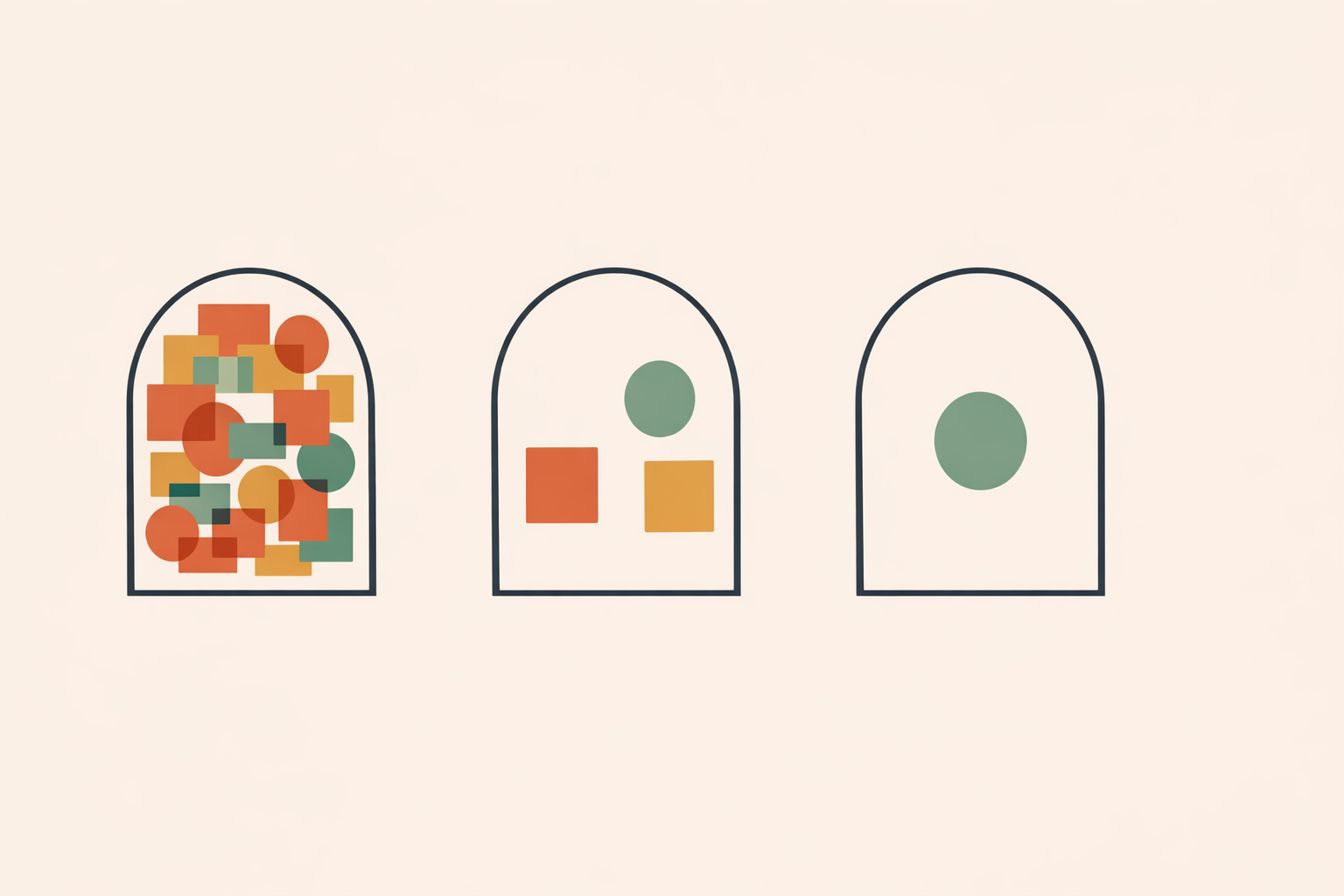
The strongest response to decision fatigue is often subtraction. Remove the choices that never needed your full attention in the first place.
Defaults, rituals, templates, and SOPs act like steadying rhythms. They reduce repeated friction and preserve your clearest thinking for what genuinely requires discernment.
Traditional ways of living have long respected rhythm as practical support for clear judgment. That same principle works beautifully in modern professional life: when repeated choices are handled by routine, more energy stays available for what is nuanced, relational, or time-sensitive.
Practical examples include:
- wearing a familiar work uniform or rotating set of outfits
- using the same format for session notes, proposals, or follow-ups
- creating fixed rules for meetings, approvals, and inbox triage
- setting a standard lunch on workdays
Templates and checklists shine for recurring work because they reduce memory strain and support consistency. A sensible default also prevents “plausible options” from draining time without adding much value.
Start small: pick one recurring “decision sink” and turn it into a weekly default. The benefit compounds across dozens of micro-choices.
Protect Your Best Decisions With Timing and Sequencing
When you decide often matters nearly as much as what you decide. For many people, the first focused part of the day offers the clearest judgment.
Workplace reviews repeatedly flag time of day as a meaningful factor in decision quality. When the morning is spent on low-value choices, the more consequential calls later in the day get made with a thinner reserve.
Place your most important decisions earlier, before meetings, messages, and small approvals claim your attention. Even a brief morning prioritization can create a noticeable lift in steadiness.
Batching helps too. When related decisions are grouped together, you reduce the drag of constant context switching. For example:
- client reviews on one afternoon
- budget approvals in one dedicated block
- content decisions on a single themed work session
- team check-ins separated from deep planning
Try a simple experiment: create two morning decision blocks and give each block a single theme. Notice whether your harder choices feel cleaner by the end of the week.
Microbreaks and Short Resets That Keep Momentum Intact
You do not need a long pause to interrupt a fatigue spiral. Short, intentional resets often restore steadiness before the next decision is made from depletion.
A lack of breaks is regularly associated with higher decision fatigue at work, and research suggests brief microbreaks can improve vigor and reduce fatigue. Light movement can also lift energy without derailing the day.
Not every pause restores equally well. Screen-free breaks tend to reset attention more cleanly than work-adjacent scrolling. A short walk, a few slower breaths, stepping outside, stretching, or writing down open loops can help the nervous system settle and improve follow-through.
Keep a small reset menu you can use between tasks:
- two minutes of slow breathing
- a three-minute walk without your phone
- one page of handwritten notes to clear mental clutter
- standing stretches with long exhales
- one minute with eyes closed and shoulders relaxed
The aim is rhythm, not perfection. Small resets across the day often support better work than waiting for a single, longer recovery window that never appears.
Sleep, Nourishment, and Daily Rhythm Matter More Than People Admit
Clear judgment is shaped by daily rhythm as much as by skill.
Traditional systems have long honored dawn-to-dusk patterns as supportive of steadier perception and cleaner choices. Modern fatigue science echoes part of that wisdom: when sleep drops, decision quality often drops with it.
Research shows sleep loss affects decisions, in part through its impact on attention, working memory, and other functions that hold judgment together. In practical terms, sleep debt is one of the most modifiable drivers of poor late-day calls.
Nourishment matters too, even in professional settings where it gets minimized. Many coaches notice that people make shakier decisions when they go too long without eating, rely on quick sugar, or try to think clearly while under-fueled. Big swings between hunger and spikes can destabilize steadiness, and attention-supportive food rhythms are often part of the same picture.
A steadier pattern looks like:
- consistent sleep and waking times where possible
- regular meals rather than long stretches of under-fueling
- water through the day instead of catching up late
- less reliance on caffeine once the afternoon begins
If demanding decisions routinely land late in the day, support them like they matter. Water, a balanced snack, and five minutes outdoors can be basic, and basic support is often exactly what preserves clarity.
Shape Low-Fatigue Environments, Not Just Stronger Individuals
Decision fatigue is not only personal. It is structural. Many people are trying to “be more disciplined” inside systems that are noisy, ambiguous, and interruption-heavy.
Workplace reviews point to contributors such as high workload and weak culture. In practice, that often means unclear requests, scattered approvals, overlapping communication channels, and constant low-grade urgency.
Leaders, educators, and practitioners can reduce background drain by building cleaner norms:
- decision windows: place more consequential decisions earlier in the day where possible
- clear intake: every request arrives with a due date, owner, and clear outcome
- fewer channels: one home for a given type of request
- protected focus: defined times when interruptions are minimized
- shared defaults: recurring choices handled by agreed process rather than reinvention
Founders and senior team members often assume exhaustion comes from sheer volume. Just as often, it is the endless stream of micro-choices that drains creativity and bandwidth. When the system improves, people frequently feel lighter without doing less meaningful work.
Build Sustainable Clarity One Constraint at a Time
The most supportive approach to decision fatigue is thoughtful constraint.
That usually means:
- automating or templating routine choices
- placing high-stakes calls earlier
- batching similar decisions together
- using short resets before fatigue tips into reactivity
- supporting sleep, meals, hydration, and rhythm
- designing team norms that reduce ambient load
Once you recognize the pattern, the response is refreshingly humane: decide less, decide earlier, and recover in smaller ways. Protect attention as something valuable rather than endlessly available, a perspective that also sits at the heart of neuroscience and brain health work.
Begin with one experiment you can keep: a morning decision block, a standard lunch, a shared intake template, or a two-minute reset between calls. Consistent small changes tend to create more clarity than occasional bursts of willpower.
Clarity grows from kind structure. When workflows and rhythms support you, better decisions become easier to make and easier to sustain, which is central to practical neuroscience coaching and the wider brain health perspective.
Train Neuroscience Coaching Skills
Connect decision-fatigue patterns to brain-based tools in the Neuroscience Coach Certification.
Explore Neuroscience Coach →