Clients rarely arrive asking for neuroscience. They show up anxious, foggy, reactive, or discouraged—and many quietly assume they should be coping better. In that moment, a simple, human explanation of what stress does to the brain can change the entire tone of the conversation: not “What’s wrong with me?” but “My system is under strain, and there’s a reason this feels hard.”
That shift softens shame and makes follow-through more realistic. Breathwork, grounding, and routine-building land best when they sit inside a story that actually makes sense under pressure.
Key Takeaway: A simple, accurate “brain story” helps clients reframe stress responses as protective physiology—not personal failure—making supportive actions easier to follow through on. Using a memorable map (alarm, planner, librarian) clarifies why overwhelm, brain fog, and reactivity happen, and where gentle practices can help.
Why stress-and-brain education belongs in holistic practice
A clear brain-based explanation helps clients stop interpreting stress responses as personal weakness. From a holistic perspective, this isn’t a departure from tradition—it’s another way of naming what skilled practitioners have observed for generations: when strain is high, clarity narrows, memory slips, and wise choice gets harder to access.
Used well, this kind of education protects dignity. It gives a compassionate frame for losing words, forgetting simple tasks, overreacting, or feeling unable to start what they know would help—so the client can work with the state they’re in, instead of fighting it with willpower.
The aim isn’t terminology. It’s a short, memorable “brain story” they can recall in real life.
A simple three-part map: alarm, planner, and librarian
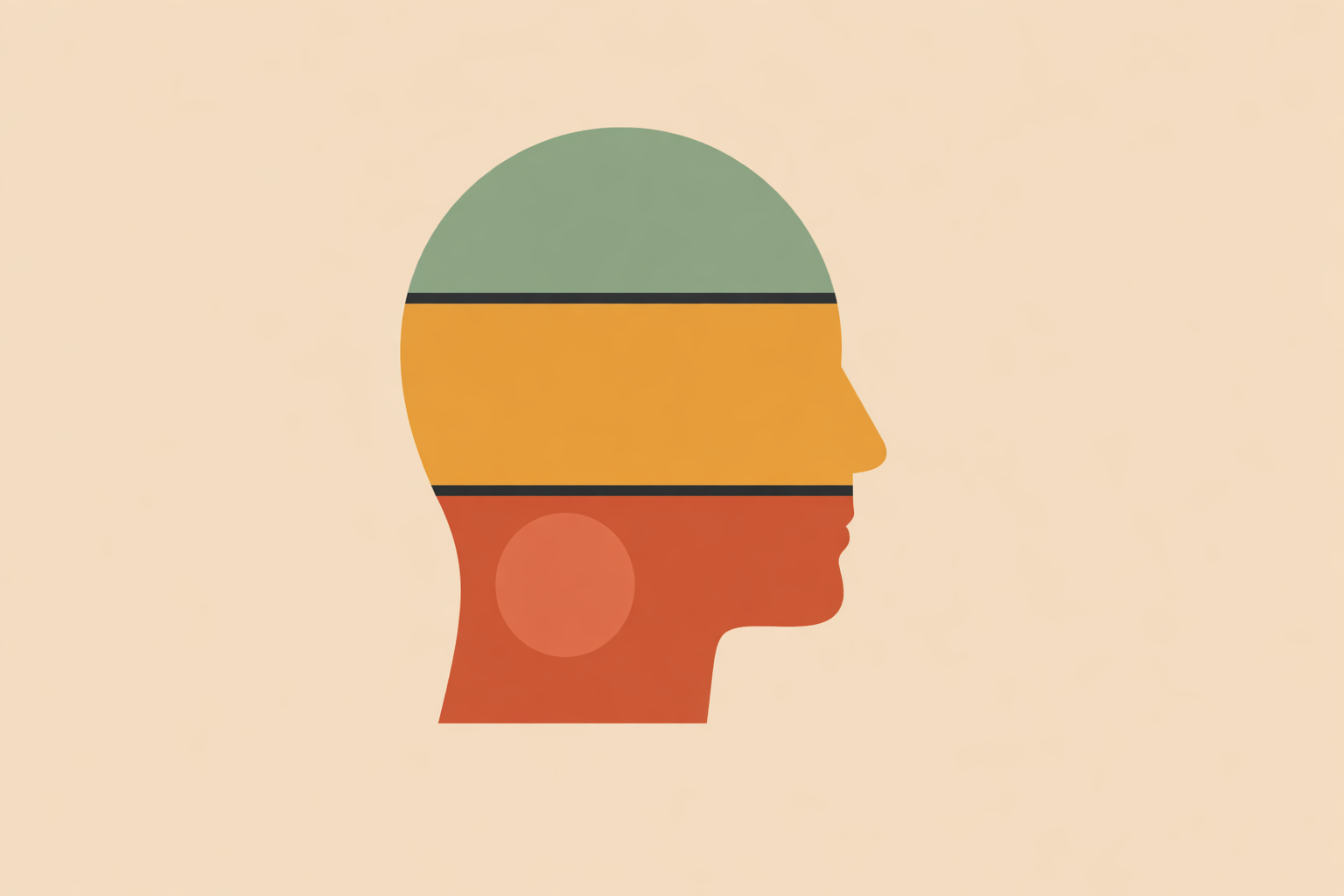
The easiest version to teach is a three-part map: alarm, planner, and librarian. It sticks because it’s concrete and immediately relatable.
- Alarm system (amygdala): scans for danger and prepares fast action. Under ongoing strain, it can become more vigilant, with heightened activity and even shifts in size over time.
- Wise planner (prefrontal cortex): supports perspective, organizing, prioritizing, and pausing before reacting. With prolonged stress, these circuits can become less efficient, making it harder to organize and prioritize.
- Memory librarian (hippocampus): helps file new memories, track context, and retrieve details. Stress can contribute to fuzzier recall and a weaker sense of mental order.
Put simply: when the alarm gets loud, the planner and librarian have less room to do their jobs. That’s why someone can feel reactive, forgetful, mentally “narrow,” or unable to see options they’d usually see clearly.
“Nothing’s wrong with you—your brain is protecting you.”
Often, that one line lands more deeply than a long explanation.
Ready script 1: explaining acute stress in the moment
In acute stress, the brain can flip from reflective to reactive very quickly—sometimes within seconds, especially when pressure feels sudden or uncontrollable.
In that moment, keep it simple: validate the state, name it clearly, and offer one or two actions that create space for the planner to come back online.
Use this when someone is activated right now:
- “Let’s slow this down. Your alarm system is loud right now, so your planner and librarian have stepped back.”
- “That can make it hard to find words, remember the plan, or think in shades of grey.”
- “Nothing is wrong with you. This is a stress state.”
- “We’re not going to force clarity. We’re going to create the conditions for it.”
- “Start with your breath. Inhale gently, and make the exhale a little longer.”
- “Now look around the room. Name three colors you see and one sound you can hear.”
- “Good. Now choose something small: would you rather sit back, stand up, or keep talking as you are?”
- “We only need the next step, not the whole answer.”
Here’s why that matters: short bursts of stress can temporarily weaken the planner’s circuits through catecholamine surges, so working memory and flexible thinking dip. Attention also narrows, which is why people can get stuck on one detail and lose the wider picture.
Practically, orienting to the room, lengthening the exhale, and offering a small choice helps widen that narrowed state. Even a couple of minutes can create a meaningful shift.
A useful closing line is:
“Your brain did exactly what it is built to do under pressure. And now we’re helping it come back.”
Ready script 2: explaining chronic stress and brain fog
When stress has been present for a long time, people often describe feeling dull, forgetful, edgy, unmotivated, or oddly unlike themselves. A clear explanation can be deeply relieving here—because it gives the experience a name without turning it into an identity.
Long-term strain tends to train the brain toward threat-handling and away from flexible reflection. Over time, the system may favor fast, familiar responses while organization, memory, and perspective feel less available. Think of it like running too many background apps: the device still works, but everything feels slower and less responsive.
Modern research supports this pattern. Chronic stress is linked to changes that can impair working memory and cognitive flexibility, and ongoing strain can gradually sideline reflective control in favor of more defensive responding.
Use this when someone feels stuck, depleted, or foggy:
- “What you’re describing makes sense to me.”
- “When stress runs for a long time, the alarm system gets stronger through repetition.”
- “At the same time, the parts involved in planning, memory, and perspective can get less support.”
- “That can look like brain fog, forgetfulness, indecision, or feeling on edge even when nothing obvious is happening.”
- “This is not a character flaw. It is an adaptation.”
- “The good news is that the brain responds to repeated supportive inputs too.”
- “We don’t fix this with pressure. We rebuild capacity with rhythm.”
From there, guide clients back to foundations: consistent sleep, regular movement, nourishing food, steadier pacing, and meaningful connection. Many stress-related changes can soften when daily life includes recovery inputs like these.
A dignifying way to close is:
“Your system learned survival well. Now we help it remember steadiness.”
Ready script 3: explaining hope, plasticity, and daily change
Once clients understand why they feel the way they do, the next question is usually some version of: can this change?
Often, yes—gradually rather than dramatically. The brain remains plastic across the lifespan, meaning repeated experiences and habits can reshape function over time.
That’s good news for real life. People don’t need perfect conditions or heroic effort; small, repeated practices count. Human studies also suggest the hippocampus can show beneficial change with supportive training and lifestyle patterns.
Use this when someone needs realistic hope:
- “Your brain changes through repetition.”
- “What you practice, you strengthen.”
- “That means tiny daily choices matter more than occasional big efforts.”
- “We’ll use a few simple levers: breath, movement, sleep, connection, and meaning.”
- “Slow-exhale breathing for a few minutes can support a calmer state and create more room for choice.”
- “Regular movement, even in short bouts, helps support memory and processing speed.”
- “Sleep is when the brain does important memory filing and integration, including memory consolidation.”
- “A genuine check-in with a trusted person can soften stress reactivity and help you feel more resourced.”
- “Meaning matters too. The practices that root you—prayer, time outdoors, qigong, music, gardening, ritual—give the nervous system somewhere safe to return.”
You can summarize all of that in one short phrase:
“No heroics required. Just gentle persistence. Your brain is listening.”
How to weave this with ancestral and traditional wisdom
This model works best when it’s adapted with cultural care. Modern science can offer a simple structure; tradition, lineage, and lived practice give it depth and humanity.
- Use familiar metaphors. If your clients resonate with heart-mind, grounding, vital force, rhythm, or inner weather, let those images carry the explanation.
- Stay functionally accurate. Even in traditional language, keep the core message clear: under strain, alarm rises and reflection gets harder.
- Honor daily rhythm. Traditional systems have long emphasized sleep, food, movement, breath, and relationship as the ground of well-being.
- Be culturally humble. Ask which metaphors feel natural to the client. Don’t force borrowed language that isn’t yours or theirs.
- Keep it practical. The goal isn’t to impress. It’s to help someone understand their experience and take the next useful step.
When done well, the explanation feels both modern and old in the best way—rooted in long-standing observation, expressed in language people can use.
Closing perspective
A calm, usable explanation of stress and the brain deepens trust quickly. It gives clients language for what’s happening without reducing them to it—and it opens the door to action through understanding rather than pressure.
Practice these scripts out loud until they sound like you. Keep what’s clear, soften what feels overly technical, and choose metaphors that match the person in front of you. The point isn’t perfect wording; it’s helping people feel less broken and more able to participate in their own growth.
Cautions still matter, but they don’t need to dominate the conversation. Stay within your scope, avoid overclaiming, and treat research as supportive context rather than unquestionable truth. Neuroscience coaching, traditional knowledge, practitioner observation, and evidence-informed framing can sit together well when held with humility.
Train as a Neuroscience Coach
Build confidence explaining stress states and behavior change with the Neuroscience Coach Certification.
Explore Neuroscience Coach Certification →