Many practitioners are trained to lead with abstinence, tighter boundaries, or “try harder” motivation. In real sessions, that approach often lands as blame. Shame rises, honesty drops, and the conversation collapses into willpower debates. You lose time arguing about intent instead of building a shared map of what’s actually happening.
A more helpful starting point is straightforward: addiction is a learned brain-and-behavior pattern that became efficient under stress. Difficult, not defective. Changeable, not doomed. A short, human explanation can move someone from “What’s wrong with me?” to “my brain learned this”.
Key Takeaway: Explaining addiction as a learned brain-and-behavior pattern can reduce shame while protecting agency. When clients understand reward, cues, stress, and habit in plain language, they often become more able to notice patterns, plan around pressure points, and practice steadier alternatives.
Why this explanation helps reduce shame
When people understand addiction as a pattern involving reward, stress, learning, memory, and self-control, the story often shifts from “I’m broken” to “my system adapted.” That shift creates breathing room for honesty and practical change.
Many clients need to hear this message early: “Nothing about you is broken. Your brain learned a strong pattern to manage stress and get relief. We can help it learn a different one.” In practice, this framing lowers shame and supports agency.
This also doesn’t have to become fatalistic. Addiction involves real changes across brain circuits, and people can still regain control through support, repetition, and context shifts.
Two small language shifts can change the tone immediately:
- Use person-first language: “a person experiencing addiction” rather than an identity label.
- Lead with curiosity: “What did the substance help with today?” often opens more than “Why did you do that?”
It also helps to say clearly that addiction is not a simple moral choice. Repetition reshapes systems linked with reward, stress, and self-control, which helps explain why the pattern can become compulsive.
Frame addiction as a learned pattern, not a life sentence
A steadier frame is to treat addiction as a learned pattern—powerful, yes, but still a pattern. People often begin using voluntarily, and repeated exposure can gradually reshape motivation, reward, stress, and control so the behavior starts to run on autopilot. In accessible public language, addiction develops over time.
I often use the image of a path through long grass. The first walk is awkward. After many walks, there is a visible trail. Eventually it becomes the easiest route, while other paths grow over. The brain got efficient at what it repeated.
This explanation helps clients hold two truths at once: the pattern is deeply practiced, and it is still changeable. It also keeps coaching conversations steadier than “quit or else,” because it centers skill-building and repetition.
A one-minute script is often enough: “Your brain practiced a relief path because it helped, especially under stress. Now we’ll practice other paths until they feel more available again.”
Explain reward and dopamine in simple language
Start with the basics: the reward system helps us move toward what keeps us alive, connected, and engaged. Food, bonding, movement, novelty, and belonging all matter here. It’s a guidance system, not a moral judge.
Substances can send unusually strong signals into this system, which helps explain why the experience can feel so gripping. A practical way to describe dopamine is “this matters.” It helps the brain learn what to notice, move toward, and remember.
Most substances target the reward system in ways that strongly reinforce repetition, so ordinary pleasures can start to feel less compelling by comparison.
It also helps to explain tolerance early. After repeated strong signals, the brain adapts, and the same amount may produce less effect. Continued use can lead to tolerance, which is one reason people escalate over time.
Finally, clarify that there’s no single “addiction center.” These patterns arise from multiple interconnected systems involved in reward, stress, judgment, learning, and behavior control, which is part of why neuroscience and brain health can be such a useful frame.
Show the loop of cues, cravings, and action
Craving is not a character flaw. It’s often a learned motivational response linked to cues like people, places, times of day, body states, emotions, smells, or routines. Daily-life cues can trigger cravings even before the substance is present.
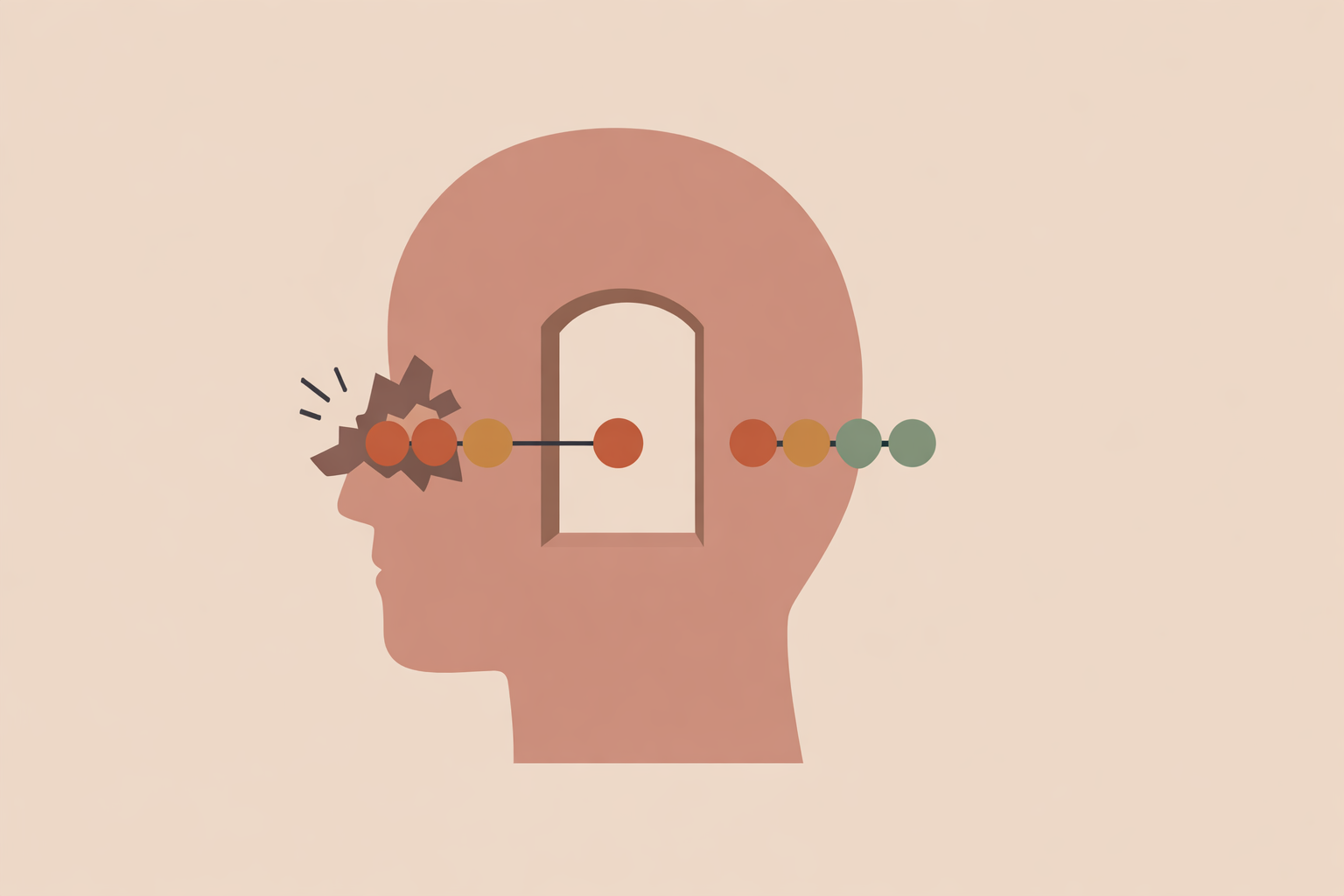
Visible mapping helps because it turns “why did you do that?” into “where is the loop grabbing you?” A simple loop is:
- cue
- thought or feeling
- urge
- action
- immediate effect
- later consequence
Ask the client to sketch one recent loop and keep it concrete: end of shift, tight chest, passing a familiar shop, then using for quick relief. Once the loop is on paper, the conversation usually becomes calmer and more practical.
As habits deepen, people often notice more substance-related cues and the behavior can feel increasingly automatic. Automatic doesn’t mean permanent. Practice reshapes patterns.
A quick drill many clients can remember: “Name three cues you’re likely to meet tomorrow. For each one, choose one micro-action you could try first.” That might be drinking water after work, texting a supportive friend at 7 p.m., or transferring money before a high-risk purchase becomes possible.
Early pleasant experiences matter, too. When a substance feels rewarding at the start, the brain stores that memory and reaches for it later.
Explain stress, relief, and withdrawal simply
Many people shift from using to feel good toward using to feel normal. That shift often sits at the intersection of stress, difficult emotion, and withdrawal discomfort. Repeated use can dull responsiveness to everyday rewards, while stress systems become more active during withdrawal, pulling the person back toward relief.
One public clinical overview describes the role of the extended amygdala in stress and withdrawal states. You rarely need that term with clients. The usable version is usually: “Your system isn’t chasing celebration anymore; it’s chasing relief.”
That line often lands because it replaces self-blame with preparation.
A simple pressure plan can help:
- Notice early signs: jaw tension, shallow breathing, restlessness, racing thoughts.
- Choose one fast relief that won’t worsen tomorrow: cold water, paced breathing, brief movement, stepping outside, or sending a supportive text.
- Debrief later: “What helped for five minutes? What might help for fifteen?”
Stress also narrows attention toward immediate relief. Naming that in advance supports better planning when pressure hits.
One important safety note belongs here. Withdrawal from alcohol or sedatives can be dangerous and may require qualified local support. As practitioners and coaches, we stay within scope and encourage appropriate urgent support when immediate risk is present.
Keep hope grounded in neuroplasticity
The same nervous system that learned the pattern can learn another one. Neuroplasticity means the brain strengthens what it practices.
Hope becomes believable when it’s tied to small, repeatable steps. Recognizing a cue earlier, delaying use, reaching out before acting, or improving sleep can be meaningful signs of underlying brain change.
Mixed motivation is also normal. Someone can want to stop and still want relief. Rather than arguing with that ambivalence, good coaching helps the next skillful step feel more available.
Context shapes outcomes. Routines, relationships, sleep, movement, food, and community rhythm gently set new defaults. Learning new behaviors and rewards can reshape connectivity over time, and many traditional systems have long reinforced this through structure, repetition, and belonging.
Often one short experiment is enough to begin: a few minutes of movement in the morning, a calming practice before a known trigger point, and one intentional connection in the evening. Repetition turns small practices into a new path.
Turn brain science into everyday conversations
Keep explanations brief and collaborative. Ask permission, offer one idea, then return to the person’s lived experience. The goal is clarity, not a lecture.
Useful language swaps include:
- “What happened right before the urge?” instead of “Why did you do that?”
- “What felt available in that moment?” instead of “You chose this.”
- “How possible does this alternative feel?” instead of “Can you do it?”
Teach-back is a strong tool. Ask the person to explain the cue-to-urge loop in their own words. If they can say it simply, they’re more likely to use it under pressure.
Environmental design is especially practical. Changing routes, removing cues, adding supportive contacts at risk times, preparing non-alcoholic options, or planning money transfers can function as cue reduction rather than a test of willpower.
Scope matters throughout. We can offer education, reflective listening, habit planning, accountability, and encouragement. We do not manage withdrawal, and we refer onward when the level of risk or complexity exceeds our role, including when a neuroscience coach certification lens helps clarify what belongs in coaching and what does not.
Bridge neuroscience with traditional and ancestral wisdom
Across cultures, repetitive harmful behavior has long been understood through the language of imbalance, disconnection, grief, hunger for meaning, or loss of belonging. That older map fits naturally beside a brain-based explanation.
The nervous system responds to rhythm, relationship, meaning, and relief. Traditional and ancestral practices such as circle, chant, movement, breath, prayer, land-based work, and storytelling often support regulation, belonging, and steadier sources of reward. When these practices come from a person’s own lineage or community, they can be deeply grounding.
The key is humility. Ask which practices feel authentic and alive for the person, rather than borrowing from traditions without context. Avoid turning living traditions into performance or reducing them to a “brain hack.”
This is also where harm reduction can be held with dignity. Reducing immediate risk, increasing connection, and building realistic supports can coexist with cultural and spiritual meaning-making. The aim is steadier well-being and a path the person can actually walk.
Conclusion: a plain-language story clients can remember
Here is a simple version many practitioners carry into sessions:
“Substances send a very strong reward signal, so the brain learns that this matters. Over time, the brain gets better at noticing and seeking it, while ordinary joys can feel dimmer. Cues like people, places, stress, or certain times of day can start the loop quickly. After enough repetition, the pattern can feel automatic. None of that means you are doomed. It means your brain practiced one path many times. With support, safer planning, and repeated alternatives, the same brain can practice new paths.”
From there, progress rarely looks perfectly linear. Stress, grief, conflict, illness, or surprise cues can sharpen urges. Lapses become useful information about where the loop still has strength, not proof of failure.
When language is kind, clear, and grounded, people can hear possibility in their own story. For many, that’s where change begins, and a broader neuroscience and brain health perspective can help practitioners keep that explanation steady.
Study the Neuroscience Coach Certification
Deepen your client explanations with the Neuroscience Coach Certification and apply brain-based change tools more confidently.
Explore Neuroscience Coach Certification →