Home EMF checks often start as a jumble of numbers. Peaks shift with wireless traffic, magnetic fields rise and fall with household electrical load, and it’s easy to get fixated on a single gadget instead of the way a space is actually used. The approach that consistently helps is turning the home into a readable map, built around everyday living patterns.
When the layout becomes clear, decisions get lighter: where a bed feels calmer, which desk position is more supportive, which devices are worth moving now, and which can wait. For practitioners who blend building-biology habits with geobiology awareness, mapping also makes room for both instrumental measurement and an intuitive reading of place.
Key Takeaway: Effective home EMF work depends on mapping exposure where people actually spend time, not chasing isolated readings. Start by defining the purpose of the survey and the zones that matter most. Then build a simple floor plan, establish a clean baseline, map low-frequency and wireless patterns separately, compare indoor findings with the outdoor environment, and turn the results into a color-coded plan that supports practical changes and retesting.
Step 1: Clarify the purpose of the survey
Start with the question the map needs to answer. Are you optimizing sleep, lowering general household load, or reviewing a work area where someone spends long hours? The purpose sets the depth and pace.
Next, keep field types distinct as you plan. Low-frequency electric and magnetic fields often relate to wiring, panels, motors, and current flow. Wireless fields behave differently and need a different survey rhythm. Separating these early prevents confusion later.
Mark the zones that matter most on a simple floor plan:
- pillow position
- crib or child’s bed
- desk chair
- sofa corner
- kitchen standing spot
- breaker panel
- meter location
- major appliances
- router and cordless phone base
Many practitioners begin with bedrooms for a straightforward reason: long-duration positions shape cumulative exposure more than brief passes near an obvious device. Time spent near sources gives the map its practical meaning.
If your work includes subtle-space assessment, note that intention now. Some geobiology practitioners combine instrumental findings with dowsing, Lecher antenna work, or other traditional ways of reading place. Used respectfully, that second layer can sit alongside the measured map and deepen how a home is understood.
Step 2: Draw a floor plan and build a simple measurement grid
With the purpose set, turn the home into a measurable landscape. Sketch each room roughly to proportion, then overlay a simple grid so every reading has a clear location.
A complicated system isn’t required. In most homes, regular spacing of around 1 to 1.5 meters is enough to reveal the main pattern. Consistency matters more than precision artistry.
Choose one measurement height and keep it stable for comparable points. Then add special readings at pillow height or desk height where they matter.
To keep the map easy to interpret later:
- label each point with a simple code such as B2 or LR4
- mark pillow-height points separately
- add symbols for routers, panels, meters, and large appliances
- leave room for a color legend
Geobiology practitioners often keep subtle observations on a separate layer, such as lines, crossings, or qualitative notes about the feel of an area. Keeping this distinct from technical readings preserves clarity for both.
Step 3: Establish a clean baseline first
Before tracing sources, take a baseline. Stand away from walls and active devices, let the meter settle, and note the general background. This becomes the reference point for everything else.
Timing matters. RF exposure varies with wireless traffic, and magnetic fields change with household electrical load. A quiet mid-morning reading may not match the same spot on an active evening.
Also prevent your own gear from skewing results. Personal wireless devices can dominate nearby readings at close range. Move phones, watches, and wireless earbuds out of the room or place them on airplane mode while mapping.
For wireless checks, capture both a peak and a short average when possible. Peak restrictions and time-averaged limits are handled differently in public standards, and that difference is useful at home too. Peaks reveal bursts; short averages show the steadier background.
Keep notes beside readings so the data stays usable:
- time
- location code
- meter mode
- peak or average
- brief context, such as “family home, evening streaming”
Step 4: Map low-frequency fields room by room
Begin low-frequency mapping where people stay still the longest. In most homes, that means starting with the bed, especially the head position.
This is a practical priority. The most useful readings are often the ones attached to places someone uses for hours each day, even if they’re not the biggest numbers in the house.
Move slowly along walls, corners, and furniture edges, paying attention near headboards, breaker-panel walls, appliance backs, and desks with clustered cables. Look for pattern shifts, not just spikes. A stronger band along a wall can matter more than a sharp peak in a spot no one uses.
In ordinary homes away from strong sources, background magnetic fields often sit in a relatively narrow range, roughly from hundredths to tenths of a microtesla. When a room stays consistently above that typical background, a specific driver is often involved. Elevated indoor fields are commonly linked to wiring patterns, appliances, transformers, or nearby external sources.
To separate internal from external causes, compare readings under different electrical conditions. Testing with circuits on and off can clarify whether the main source is inside the home. If the field drops sharply with selected circuits off, the source is likely internal. If the pattern remains, look beyond the room or beyond the building.
A useful low-frequency checklist includes:
- head, torso, and foot positions on the bed
- both sides of the headboard wall
- 30 cm and 1 m from suspect walls
- under and behind desks
- near breaker panels, meters, and major appliances
As you go, mark where fields rise and where they settle. That turns measurement into a real placement guide.
Step 5: Map wireless fields and RF gradients
Wireless mapping has its own rhythm. With RF sources, distance often explains the pattern quickly.
Near routers, cordless phone bases, smart meters, baby monitors, and phones, readings often pulse and drop rapidly as you step away. Pulsed emissions and strong short-range intensity are characteristic of many household RF sources.
Measure at several distances rather than relying on a single number taken beside a device. Stepping back in stages gives clearer guidance for placement.
In many homes, the strongest readings appear very close to active sources, remain meaningful around a meter, and often drop much further beyond that. Field strength decreases quickly with distance from small sources.
Pay special attention to:
- pillow height near bedroom walls
- nightstands with phones or chargers
- desk seating positions
- children’s beds near routers or adjacent smart devices
- cordless phone bases
Some cordless phone bases deserve extra scrutiny because DECT base stations may keep transmitting even when the handset is docked. If one sits near a bed or long-stay chair, moving it can change the map quickly. Increasing separation from DECT devices reduces measured exposure.
Step 6: Walk outside and compare the wider environment
If an indoor pattern doesn’t add up, step outside. A quick perimeter walk often explains what the room alone can’t.
External infrastructure can shape indoor readings even when internal wiring is tidy. Nearby infrastructure can influence indoor low-frequency patterns, especially near power equipment or distribution routes.
Homes close to transmission corridors may also show a clearer low-frequency background indoors. High-voltage power lines can elevate indoor magnetic-field levels regardless of room layout.
Wireless patterns can also arrive from outside the building. A short loop outdoors, noting readings every few meters, can show whether one side of the house consistently runs higher than the others.
During the walk, note:
- which façade shows stronger readings
- nearby power infrastructure
- neighboring wireless equipment if obvious
- outdoor peaks that line up with indoor problem zones
This step often prevents unnecessary indoor changes. Sometimes the best move is relocating a bed or desk to a calmer side of the room, rather than chasing a device that isn’t driving the pattern.
Step 7: Turn the readings into a map you can read instantly
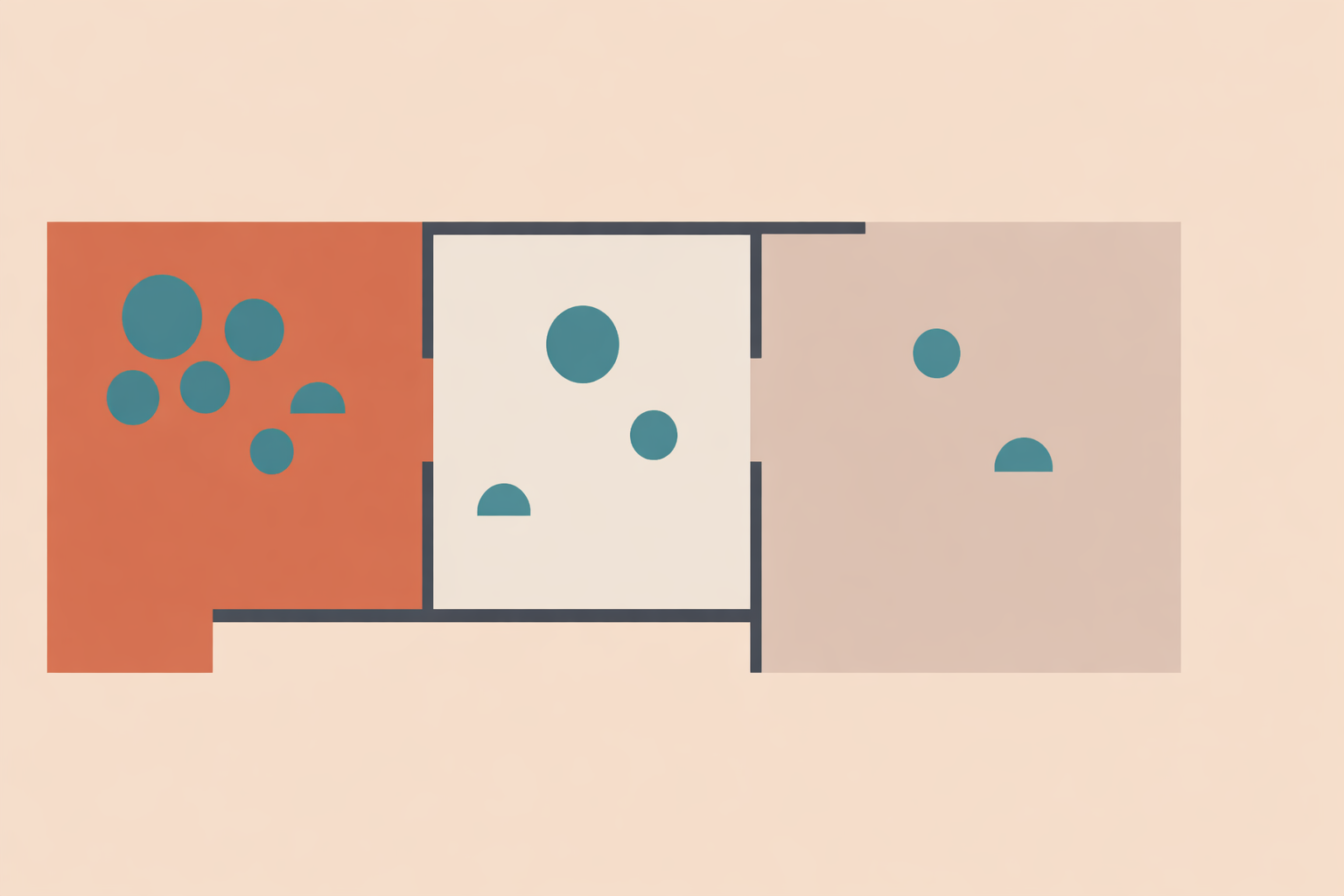
Transfer readings onto the floor plan and color-code them so the pattern is clear at a glance.
A simple traffic-light system works well:
- green for the gentlest areas
- yellow for moderate attention
- red for areas worth changing first
Keep the legend consistent with the reference values you’re using. The map should support decisions, not bury the household in technical detail.
Think in zones as well as dots. Background clusters describe the overall feel of a bed area, work area, or sitting area, while still allowing you to flag distinct hotspots.
Then relate the colors to real life. Long-stay positions matter most, and time near sources is what makes the map useful. A favorite chair or a child’s bed deserves more attention than a sharper point no one occupies.
If you include subtle-space observations, add them lightly and keep them legible so the technical map still stands on its own.
Step 8: Use the map to guide simple, high-impact changes
The best changes are usually modest and testable. A good map tends to point to a handful of moves that are easy to try, measure again, and keep if they help.
Two principles carry most households: distance and timing. Distance reduces exposure for both low-frequency and wireless sources, and switching devices off when they aren’t needed can lower the background in a room. Switching devices off and increasing separation are among the most straightforward ways to reduce household exposure benchmarks.
Common high-value changes include:
- moving the bed away from a wiring-dense wall
- relocating a router away from bedrooms
- shifting a cordless phone base several meters from rest areas
- untangling power strips and adapters under desks
- turning selected devices off overnight
- favoring wired links where practical
Focus on beds, desks, and other long-stay zones first. That’s where small shifts can make the biggest difference in day-to-day comfort.
Hidden hotspots are often ordinary-looking: behind a headboard wall, under a desk where cables collect, or along a wall facing outdoor equipment. Careful mapping makes these patterns obvious without guesswork.
For households that feel especially reactive to their environment, begin with grounded spatial changes and steady retesting. It keeps the process practical and respectful, without overreaching into sweeping explanations.
Conclusion: Make EMF mapping a living household skill
Good home EMF mapping is about reading the home as a lived environment. Define the purpose, create a grid, establish a baseline, map low-frequency and wireless patterns separately, compare indoor and outdoor influences, then use the results to guide clear placement decisions.
Revisit the map when the home changes. New devices, furniture shifts, a child moving rooms, or changes outside the building can all reshape the pattern enough to justify a fresh look.
Keep records that stay simple and consistent: meter settings, times, heights, room codes, and post-change readings. Over time, this becomes far more trustworthy than a one-off survey.
For geobiology practitioners, this work can remain both measurable and intuitive. Instruments reveal structure; traditional place-sensing adds a second layer of meaning. With discernment and clean boundaries, the two approaches complement each other and support homes that feel calmer for rest, clarity, and well-being.
A few closing cautions keep the work grounded: readings vary by time of day, devices, and household activity; personal wireless gear can skew results at close range; and public standards focus on short-term thresholds rather than long-stay comfort. Use the map as a guide, retest after changes, and prioritize the spaces where life actually happens.
Explore Geobiology Certification
Apply your home-mapping skills through deeper place-reading methods in the Geobiology Certification.
Explore Geobiology →