Most energy practitioners learn quickly that naming colors and vibes, on its own, rarely helps someone move forward. A person arrives knotted with self-critique before a promotion, you sense a murky blue at the throat, and thirty minutes later you are improvising. They may feel seen, but nothing links your impressions to choices they can make tomorrow.
When aura work becomes a disciplined mapping process for emotional healing, everything steadies. You ground first, sense layer by layer, and translate what you notice into co-created themes and right-sized actions. Intuition stays accountable, the person stays in charge, and you gain a repeatable way to track change across sessions in energy healing.
Key Takeaway: Effective aura work is a practical mapping process that links sensed field patterns to ethical, client-led emotional change. Start with a shared language for the biofield, build a clear consent container, ground body awareness before scanning, and use a repeatable hands-off process. Then turn observations into a co-authored emotional map, choose simple supportive practices, and track changes over time so the work stays clear, kind, and useful.
Understand Aura Work as Emotional Mapping
A strong starting point is shared language. Different traditions speak of prana, qi, subtle bodies, and the human aura. Many modern practitioners use “biofield” as a broad bridge between lineages. Words vary, but the premise remains familiar: the aura is a living field that reflects emotional life and can guide change.
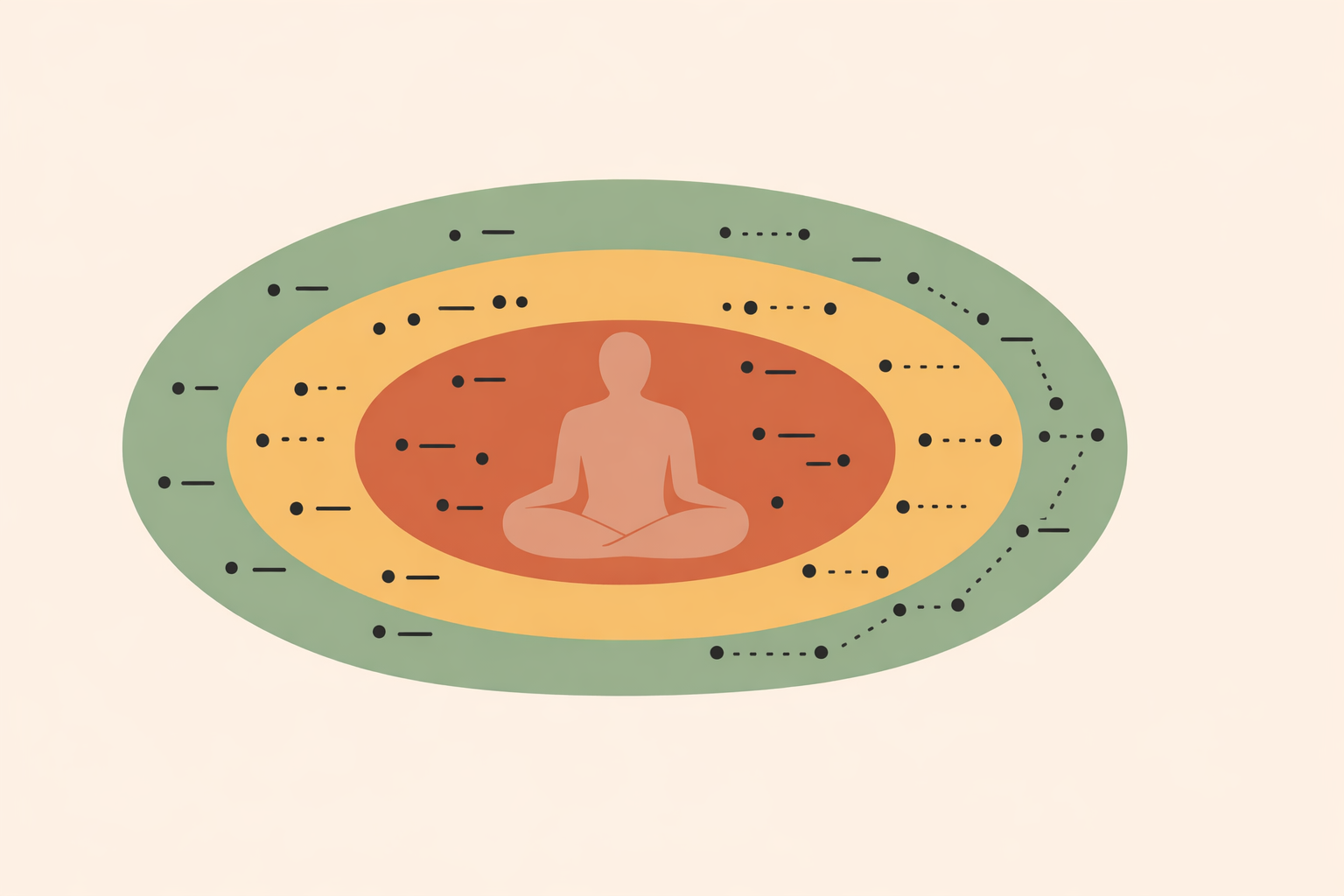
Traditional systems often describe a multilayered aura, with qualities that echo physical sensation, emotion, thought, and transpersonal meaning. Whether you experience these as distinct layers or shifting qualities within one field, the mapping principle holds. When experience is given shape, emotion becomes easier to navigate.
That practicality shows up immediately in session flow. If someone arrives with a tight chest and looping self-critique before a major transition, an aura map can organize your next steps. Density around the chest, fogginess near the throat, and agitation above the shoulders naturally suggests a sequence: settle the body, soften the chest, then support clearer expression.
Even brief notes keep the work grounded: “Chest matte/dense; throat blue-grey fog; mid-back sticky around work stress.” The aim is not spectacle. The aim is a living map that connects subtle perception to supportive next steps.
Build a Clear and Respectful Container
Before any scan, build the container. Aura work lands best when it is collaborative, plainspoken, and respectful of the traditions it draws from. Use inclusive language, acknowledge cultural roots when referencing systems like chakras or meridians, and keep your tone gentle rather than absolute.
Client agency is the foundation. A simple line changes the whole dynamic: “I’ll share impressions as possibilities, not facts, and you can adjust or decline anything that does not fit.” That protects the relationship and reduces projection, which is one of the most common ways aura reading becomes unhelpful.
It also helps to name the scope clearly. This work offers reflection, regulation, and insight, not certainty. When the frame is honest, people tend to relax and participate more fully.
Because strong feelings can surface, keep the pace unhurried and make pausing normal. A short consent script is often enough:
“We’ll attune to the energy around your body and notice colors, textures, and sensations as a map for your emotions today. I’ll check in often; you can say stop or shift anytime. We’ll keep interpretations tentative and let your experience lead. Is that okay?”
Ground Body and Awareness Before Scanning
Grounding comes first. It steadies perception and keeps aura mapping from drifting into mental interpretation. It also tends to make the session feel calmer and more coherent.
Start with direct body experience. Ask simple questions: Where is the breath easiest to feel today? What is the belly’s texture—fluttery, held, warm, numb? What do the feet notice on the floor? Quiet settings, slower pacing, and gentle focus often bring fast relief because they cue safety and support regulation.
If someone arrives overwhelmed, stay with the body longer. Sensory anchors can help:
- feeling the weight of the sit bones
- lengthening the exhale
- holding a warm cup
- placing a hand on heart and belly with permission
- noticing contact points with the chair or floor
A simple three-minute sequence works well: feel the feet, soften the jaw, inhale gently, and exhale a little longer than you inhale. Then imagine weight moving down through the legs and settling at the feet. If the person does not settle, do not rush into scanning. Grounding is the session when grounding is what is needed.
Many practitioners also suggest cleansing rituals between sessions, such as salt baths or essential oils. These do not need a mechanistic explanation to be valuable. As ritual supports, they can mark release, soften tension, and help someone return to themselves through simple aura-cleansing steps.
Scan the Aura Layer by Layer
When the field feels calmer, scan simply. Many practitioners use a slow hands-off pass a few inches from the body, moving head to toe and then back again. You may notice warmth, coolness, tingling, pressure, or stickiness. These are part of practitioner language, and they become most useful when held with care and checked for resonance.
Working in layers keeps the process clear. A straightforward sequence looks like this:
- First pass: overall brightness, dullness, expansion, or contraction
- Second pass: texture such as silky, grainy, matte, or spiky
- Third pass: color impressions, if they arise naturally
- Fourth pass: thematic zones such as chest, belly, throat, or brow
Notice first, organize second, interpret last. That order protects both accuracy and trust.
Some practitioners also orient by the field’s shape, picturing a toroidal envelope extending around the body. In that frame, zones can correlate with relational themes, life stages, or repeated patterns. Whether or not you use that model, scanning the front, back, and sides consistently helps you follow the story the field is already presenting.
A practical scan sequence might look like this:
- Stand at shoulder level and begin on one side of the body.
- Move slowly downward, pausing where sensation changes.
- Name a neutral observation: “It feels cooler near the right ribs.”
- Ask for resonance before assigning meaning.
- Continue around the back body and then complete a broad sweep from crown to feet.
Recurring charge around the shoulder blades and low back is common, especially when someone is carrying pressure, responsibility, or older emotional weight. You do not need a universal interpretation. Note what you perceive, then stay curious with the person in front of you.
Turn Aura Patterns Into a Shared Emotional Map
Interpretation is where humility does the real work. Colors, textures, cords, and zones form a symbolic language, and the map becomes useful only when your perception meets the person’s own felt sense.
A simple three-step process keeps it clean:
- Offer a neutral observation.
- Ask whether it resonates.
- Co-name the pattern together.
For example: “I’m sensing a grey-blue fog at the throat; does that connect with anything around voice or communication this week?” If they reply, “I’ve been swallowing words in meetings,” the pattern becomes shared rather than imposed. Now your map has a working theme: suppressed expression.
Color symbolism can support this stage, but keep it light. Blues often relate to communication, reds to drive or anger, greens to tenderness or repair. Muddy or dull tones often point toward strain, fatigue, or emotion that has not been fully processed. Treat these as guides, not verdicts, especially when you interpret aura colors with care.
The same goes for shapes and textures. Rips, tears, congestion, depletion, or cords can function as helpful metaphors for boundaries, attachment, or places where energy feels snagged. Use language that helps the person recognize their pattern clearly enough to work with it.
Over time, many practitioners observe a reliable correspondence: as emotions shift, the field’s perceived tone and texture shift as well. That lived feedback loop is part of what makes mapping so practical across sessions.
A simple map format is plenty:
- Color/texture: “Chest mossy green, matte”
- Theme: “Grief, breath, tenderness”
- Connection: “Hooked into late-night work loop”
- Action cue: “Breath and one boundary statement tomorrow”
The final line is where insight becomes movement.
Choose Supportive Practices From the Map
Once the pattern is clear, choose one small practice that matches it. Aura work becomes more effective when practices are simple, specific, and easy to repeat. One helpful step, done consistently, often changes more than a long list done once.
Common pairings include:
- Dense or matte areas: slow rhythmic breathing with longer exhales and a downward sweep through the field
- Throat fog: humming, toning, or speaking one clear sentence aloud
- Frayed boundaries: visualizing a soft but steady outer layer around the body
- Sticky cords: guided release with breath and a clear internal statement of separation
- Scattered upper field: attention back to feet, hips, and back body before any further interpretation
Daily ritual helps anchor the session. Many people benefit from three quiet minutes morning or evening: sweep the field with the hands, exhale through the mouth, then imagine a steadying color or texture around the body. Journaling also integrates the work best when it ends with one concrete action for the next day.
From an evidence-informed perspective, biofield and subtle energy practices are associated with improved mood in formal research, even if study language is narrower than what practitioners use in session. Evidence syntheses also suggest reduced anxiety across some biofield modalities. These findings sit comfortably beside long-standing traditional knowledge and what many practitioners observe daily: subtle practices support steadiness, regulation, and emotional ease.
Pace the Work and Track Change Over Time
Aura mapping works best as a rhythm, not a one-off performance. Weekly or bi-weekly sessions often provide enough continuity to build momentum without overwhelming the person, especially when paired with small self-practices between sessions.
Many people notice practical shifts within a few sessions: steadier mornings, easier sleep, less emotional drag. Deeper patterns usually respond to repetition and patience. Consistency matters more than intensity.
Track changes in both the field and daily life. A simple note can include:
- Field: “Back body brighter; chest less matte; throat clearer”
- Emotion: “Less dread on waking”
- Behavior: “Spoke honestly in one meeting”
- Next step: “Midweek boundary practice and back-body grounding”
This is how the work becomes cumulative. You are not collecting impressions; you are watching a pattern loosen over time with clearer progress tracking.
Keep pacing responsive. If someone feels overloaded, shorten the scan or stay with grounding and containment. If the field starts to feel muddy to you as a practitioner, simplify rather than pushing harder. Clear, steady sessions tend to support the most lasting change.
Research reviews suggest biofield approaches are generally low-risk. Good practice still rests on consent, discernment, and clear scope. Aura work serves best when it supports well-being gently, stays collaborative, and leaves people with more clarity than confusion.
Formal reviews also report modest effects for biofield approaches on pain and emotional symptoms. In everyday practice, many practitioners track simpler outcomes: kinder mornings, steadier evenings, clearer boundaries, and more room to breathe.
Keep the Aura Map Alive
An aura map is not static. It changes with breath, memory, stress, relationship, and meaning, so the work stays alive when your notes stay simple and your listening stays fresh.
Across many traditions, the enduring value is practical subtlety: hands that listen, breath that steadies, imagery that organizes feeling, and ritual that supports release when life has become heavy. Modern practitioners do their best work when they honor these roots while speaking in clear, inclusive language.
Let the map evolve from session to session. Ground first. Scan in layers. Co-create meaning. Choose one or two right-sized practices, then revisit the pattern and name what has truly shifted. Over time, the work becomes a craft in aura therapy: living, relational, and quietly transformative.
Train in Aura Therapy Certification
Deepen your scanning, consent, and mapping skills with the Aura Therapy Certification.
Explore Aura Therapy →