When clients miss deadlines or get stuck on small tasks, it’s tempting to reach for more motivation, tighter accountability, or yet another productivity tool. Often, the real issue is simpler: the bottleneck hasn’t been named. If the goal is fuzzy, the plan is overloaded, or the day is too noisy for follow-through, people keep adjusting everything and changing very little.
A more useful lens is executive functioning. If you support attention, planning, habits, or follow-through, you are already working with these capacities. What helps most is a practical way to spot where friction starts, then match support to that exact phase.
Key Takeaway: Executive-function support works best when you map skills against real-life conditions through a simple Goal–Plan–Do–Review/Revise cycle. Instead of asking why someone is not trying harder, look for the phase where things break down, then match support to that point with visible plans, small steps, environmental cues, and short review loops.
From blame to mapping executive functioning in daily life
Executive functions are control processes that help people plan, hold steps in mind, shift attention, and follow through when life is busy or changing. In coaching and education, these capacities are often described as self-regulation because they shape how a person steers attention, emotions, and behavior toward a goal.
This framing changes the whole conversation. When someone says, “I know what to do, but I still do not do it,” the most helpful next step is to locate the strained skill and the real-world conditions that are amplifying it.
Collaborative mapping also softens shame. Instead of “Why can’t you just start?”, try “What gets in the way of the first five minutes?” That question invites honesty and makes problem-solving easier.
For example, if someone struggles to pay bills, the friction may sit in several places at once:
- Task initiation: “Open the portal” is the real first step.
- Working memory: the sequence disappears unless it is visible.
- Inhibition: messages, tabs, and interruptions pull attention away.
- Time awareness: without a concrete time boundary, the task feels endless.
Once the pattern is visible, support becomes specific and humane. The aim is not to “fix” the person. It’s to improve the fit between their capacities and the conditions around them.
Use a simple Goal–Plan–Do–Review cycle
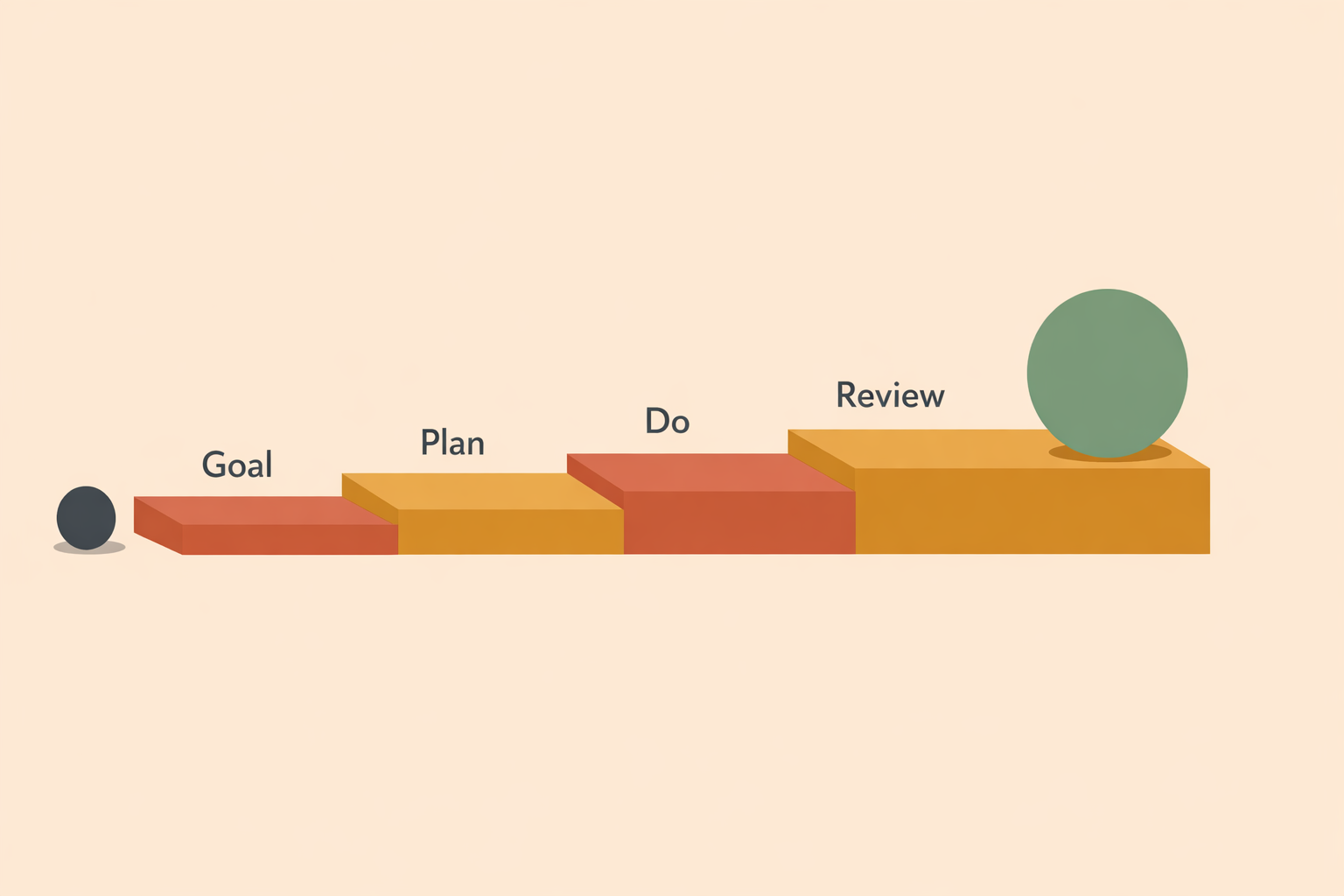
A practical way to organize executive-function support is the Goal–Plan–Do–Review/Revise cycle. This rhythm shows up across coaching and learning environments because it helps you locate the actual bottleneck, rather than treating every struggle as a motivation issue.
It also keeps the work grounded in real life. Ecological validity matters because a system only helps if it still works in a noisy home, a full calendar, or an unpredictable week.
Here is what the cycle can look like for steadier mornings:
- Goal: Leave by 8:10 with lunch and laptop, feeling settled.
- Plan: Put a 3-step checklist on the fridge, prep lunch the night before, and assign simple time markers to each part of the routine.
- Do: Keep the phone on Do Not Disturb, use a visual timer, and stage the bag by the door.
- Review/Revise: At the end of the week, ask what helped, what disrupted the flow, and what one tweak would make next week easier.
With that map in place, you can support the phase that actually needs support.
Step 1: Clarify the goal
Many so-called motivation problems begin here. The issue is often that the goal is vague, borrowed from someone else, or too abstract to guide daily action.
In the Goal phase, executive-function skills help people keep goals in mind long enough to define what matters, notice constraints, and choose a direction that can hold attention through a busy week.
This is where metacognition helps in practice. People do better when they can notice what they truly want, what their schedule can realistically carry, and what kind of structure supports them best.
A simple values-to-targets bridge often works well:
- Name a few values, such as steadiness, family presence, or vitality.
- Turn each value into one short-term target.
- Choose language that is concrete enough to show up on a calendar.
“I want to feel healthier” is too broad to steer a day. “Five minutes of morning sunlight after breakfast, Monday to Friday” is easier to picture, easier to start, and easier to review later.
Step 2: Build a plan the day can actually carry
If the goal is clear but the week still slips away, the bottleneck is often planning rather than willpower. This phase includes sequencing, prioritizing, estimating time, and getting materials ready in advance.
Planning breaks down most often when the path from intention to action stays invisible. One of the most reliable supports is to externalize the plan through checklists, written steps, staged materials, and simple procedures. Making time visible with calendars, to-do lists, or visual schedules also reduces the mental load of tracking and monitoring.
A quick Planning Scan can help:
- Sequencing: What are the next three steps, in order?
- Prioritizing: If only one thing gets done today, what is it?
- Time estimation: How long does each step really need?
- Materials: What must be ready before the task begins?
Instead of “write proposal,” a workable plan might become:
- Open the document.
- Read the outline.
- Draft bullet points for two sections.
- Mark open questions before stopping.
That shift turns a cloud of intention into a path someone can actually enter.
Step 3: Support execution with smaller steps and better conditions
Sometimes the goal is clear and the plan is sound, yet nothing moves. This is the Do phase, where initiation, sustained attention, flexibility, and state regulation decide whether the plan becomes real.
Execution is shaped by conditions. Sleep deprivation can undermine working memory and inhibitory control, so tasks that felt manageable yesterday can feel scattered or heavy today. Stress can create a similar squeeze: attention narrows, switching gears gets harder, and avoidance becomes more likely.
The best support in this phase is often simple and concrete:
- Break tasks into micro-steps.
- Use external cues such as timers, reminders, and prompts.
- Create a clear first move.
- Adjust expectations when energy is low or the environment is chaotic.
Micro-steps reduce the cost of starting. “Write for two hours” is heavy. “Draft three bullets” is light enough to begin, and once movement begins, momentum often follows.
External cues also support prospective memory and time awareness. A visible timer, a checklist placed where the task happens, or a reminder tied to an existing routine can bridge the gap between intention and action.
A simple Do-phase routine might include:
- A short arrival ritual, such as tea, three breaths, or a grounding phrase already rooted in daily life.
- One tiny starting action, like opening the file or laying out ingredients.
- A visible lane marker, such as a 15- or 25-minute timer.
- A state check: if energy is too low, switch to a lighter task or take a brief reset first.
Often, the strongest shift comes from making the start gentler.
Step 4: Review and revise so the system can improve
Weeks repeat when reflection is missing. Without a review loop, people relive the same pattern without turning it into learning.
The Review/Revise phase matters because self-monitoring and flexibility help people notice what happened, compare it with the original goal, and adjust the system rather than abandoning it.
One well-known method, Goal Management Training, uses a Stop–Define–List–Learn–Check rhythm to reduce goal neglect. Even without using the full method, the principle holds: pause, remember the goal, notice what happened, and make one practical adjustment.
A short weekly review is often enough:
- What helped?
- What got in the way?
- What is one change to test next week?
For example:
- Goal: four walks this week.
- Result: three happened.
- Bottleneck: one day ran late.
- Revise: pack shoes in advance and set an earlier reminder.
This keeps the process grounded. A missed goal becomes feedback for better design.
Keep the map culturally grounded and ethically clear
Executive-function support works best as a partnership: identify the bottleneck, co-design one small experiment, then observe what changes in ordinary life. That stance keeps the work respectful and practical.
Cultural context is part of the system. Time orientation, communication patterns, family roles, and communal rhythms all shape whether a planning approach feels natural enough to last. A plan that ignores shared responsibilities or household flow can look tidy on paper and still fall apart in real life.
Many ancestral and community structures already strengthen follow-through: shared mealtimes, collective caregiving, movement or prayer at regular times, weekly market rhythms, and household routines passed down over time. These patterns can anchor consistency more effectively than imported productivity habits, especially when they’re honored rather than overwritten.
It’s also important to stay within a clear, non-clinical scope. This kind of map is a way to understand skills in context, not to label a person. Your role may include:
- Helping someone name a meaningful goal.
- Breaking that goal into simple, visible steps.
- Shaping environments that make follow-through easier.
- Teaching supportive tools such as timers, lists, and review routines.
- Tracking changes in ordinary life, like smoother mornings or fewer missed tasks.
There are times when broader support may be appropriate. Sudden unexplained shifts in attention or memory, persistent safety concerns, or a lack of change despite strong environmental supports are signals to pause and encourage a more specialized assessment route, while continuing to offer grounded day-to-day support where appropriate.
In the end, executive-function work is about designing wisely. When goals are clear, plans are visible, starts are gentle, and reviews are honest, people often feel more organized and more at home in the life they are shaping.
Explore Neuropsychology Certification
Apply these executive-function maps with deeper brain-based context in the Neuropsychology Certification.
Explore Neuropsychology →