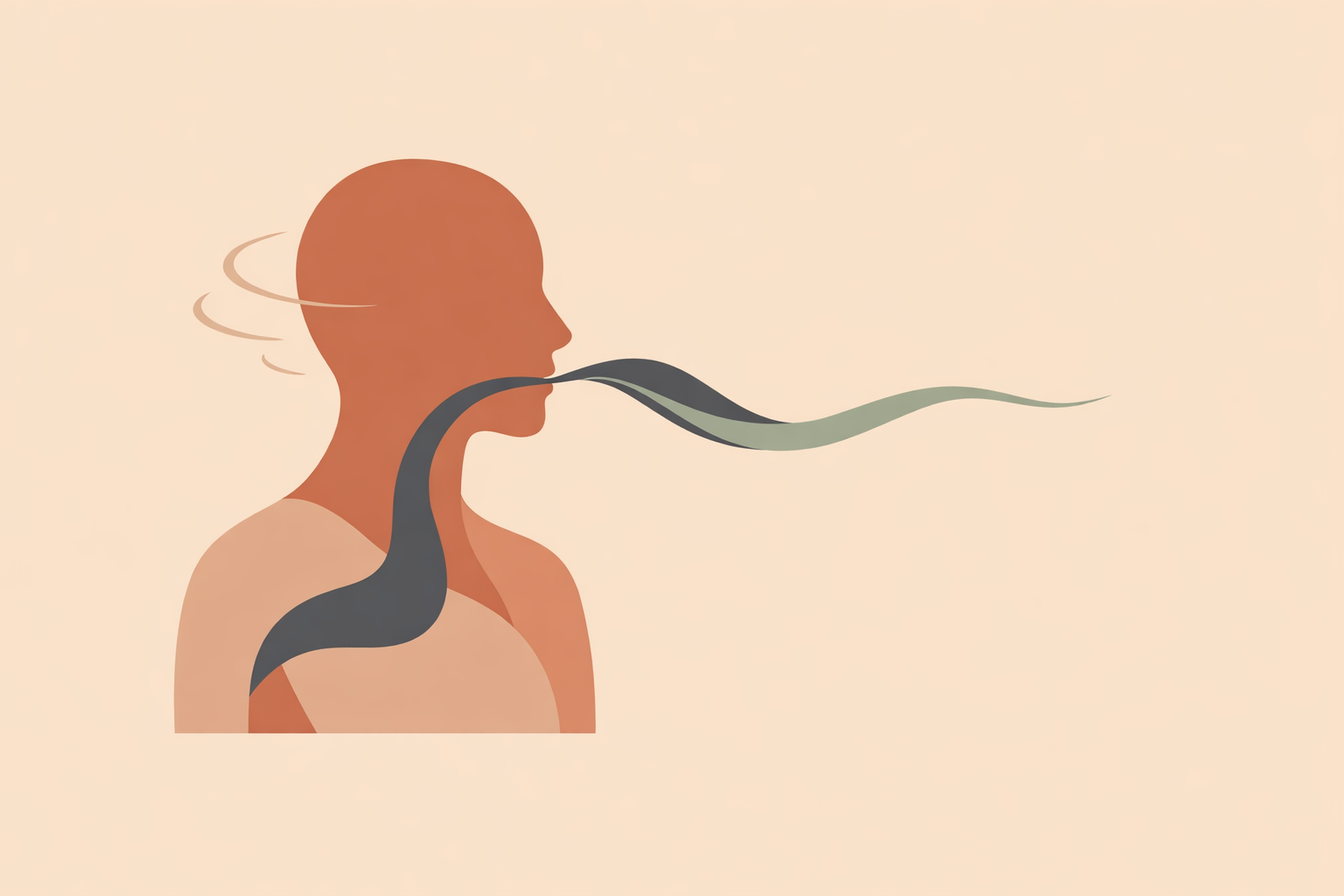
Many practitioners reach first for thoughts, triggers, or familiar scripts when a client says, “I’m anxious.” That can support the conversation, but it can miss one of the clearest signals in the room: the breath. A client may be overbreathing without realizing it, and the sensations that follow—lightheadedness, tingling, unreality, a sense of not getting enough air—can then be mistaken for proof that something is wrong. The result is often more alarm, less steadiness, and less room for choice.
Key Takeaway: Anxiety-informed breathwork becomes more skillful when you can recognize overbreathing early. In practice, that means noticing changes in rate, size, rhythm, and effort; listening for symptom clusters such as tingling, dizziness, and air hunger; and responding with smaller, quieter breaths rather than bigger ones. It also means knowing when a fast or distressed breathing pattern sits outside a coaching or wellness context and needs external support.
Why overbreathing often hides inside anxiety
Overbreathing is straightforward: the person is moving more air than the moment requires. In anxious states, the shift can happen quickly and quietly. A client might still be talking, sitting still, or trying hard to appear composed, while their breathing has already become faster, larger, or more erratic.
Many practitioners recognize the loop. A sense of threat appears, arousal rises, the breath ramps up, and the person starts to feel strange or unsettled. Those sensations then read as danger, which pushes arousal higher. Overbreathing often becomes one of the ways the anxious state keeps renewing itself.
Traditional breath-based lineages have long treated subtle shifts in breathing as meaningful information. That lens remains practical in modern sessions. Before a client can name what they feel, their breathing often shows you their system is mobilizing.
Many people don’t notice the change in themselves. They report feeling “off,” “floaty,” “tight,” or “unable to get a satisfying breath,” without realizing the breathing pattern shifted first. This is why steady observation matters.
A gentle redirection helps: “Let’s slow the moment, not force the breath. Where do you first notice movement—in the upper chest, lower ribs, or belly?” That kind of question turns a vague wave of anxiety into something observable and workable.
What changes in the breath when anxiety rises
When arousal increases, the breath doesn’t only speed up. It often gets bigger, choppier, and less coordinated. In practice, overbreathing may show up as excessive depth, repeated sighs, brief holds, or an alternating pattern of shallow and oversized breaths.
These changes matter because when ventilation exceeds the moment’s demand, carbon dioxide can drop. That shift is associated with dizziness, tingling, shakiness, and a sense of disconnection. People often assume they need a bigger inhale, even though that can intensify the pattern.
In a spiking moment, the breath usually needs less force, not more. Smaller, quieter inhales and an easy exhale tend to be more settling than any instruction to “take a deep breath.”
“When the body feels alarmed, the breath can become bigger than it needs to be. That can create strange sensations, even when plenty of air is moving.”
How to spot overbreathing in the body
The most useful observations are usually visual and audible, not numerical. Counting can help occasionally, but where and how the body is moving often tells you more.
One of the clearest cues is upper-chest dominance. Lifted shoulders, neck tension, minimal lower-rib movement, and audible or effortful breathing are common markers. Hospital physiotherapy guidance describes these as visible signs of over-breathing patterns.
Rhythm is equally informative. Uneven pacing, alternating shallow and deep breaths, frequent resets after a hold, mouth breathing, repeated sighs, and a breath that seems hard to release can all suggest discomfort. Rapid speech broken by frequent inhales can also be a useful practitioner cue.
Rate still has a place. Resting breathing rates above 15 can contribute to overbreathing-related symptoms, but a single snapshot rarely tells the whole story. Context, rhythm, effort, and the symptom pattern matter more than one number in isolation.
- Upper chest or lower ribs?
- Even rhythm or erratic rhythm?
- Nose breathing or mouth breathing?
- Any sighs, holds, or “resets”?
- Quiet breath or audible effort?
A concise note might read: “Upper chest lift, minimal lower-rib movement, two sighs in 30 seconds, brief hold before larger inhale, client reports feeling woozy.” That keeps your observations clear and neutral.
When “I can’t breathe” points to overbreathing
Often, “I can’t breathe” doesn’t mean air is absent. It means the breath feels unsatisfying. The person may be moving plenty of air and still feel as if they can’t get the breath they want.
This is where symptom clusters help. Overbreathing often comes with dizziness, chest tightness, shakiness, palpitations, tingling around the mouth, or tingling in the hands and feet. Public health summaries list numbness and tingling among common features of hyperventilation, alongside lightheadedness and difficulty concentrating.
Many practitioners also hear clients describe feeling far away, unreal, or mentally foggy. In session, these reports are useful data. They suggest the person may be caught in a breathing-driven escalation loop and needs less effort, less stimulation, and more orientation.
What matters most is how you receive the statement. Treat “I can’t breathe” as information, not exaggeration. Slow the pace, observe carefully, and support the person without rushing to force a correction.
A simple response might be: “Thank you for telling me. Let’s not push anything. Would you be open to making the next inhale a little smaller and letting the exhale leave on its own while we look around the room together?”
When fast breathing is not just stress
Not every fast or distressed breath belongs inside an anxiety frame. Heat, exertion, strong emotion, discomfort, infection, environmental factors, and substances can all change breathing. Good practice means staying observant and avoiding assumptions.
One practical distinction is whether the pattern matches the context. Breathing that increases with exertion and settles with rest is different from breathing that spikes around fear, overwhelm, or perceived danger and comes with tingling, dizziness, or unreality. Persistent, unexplained, or worsening breathing difficulty sits outside a wellness scope and calls for external support.
Neutral language helps. Instead of naming a condition, you can say, “I notice your breathing has become quicker and larger,” or, “I’m noticing more effort in the upper chest.” This keeps the interaction grounded and respectful.
Some signs call for stopping the session and seeking urgent help. Public guidance recommends urgent support when there is severe or worsening breathlessness, chest pain, confusion, blue lips, fever, bleeding, fainting, or symptoms that do not ease with rest.
A clean boundary phrase is enough: “We’re going to pause here. What I’m seeing needs support beyond this session.”
A simple framework for observing breathing in session
Breath observation works best when it feels collaborative. Ask permission, watch a few breaths without changing anything, and track only what’s most useful.
A practical framework is:
- Baseline: What does breathing look like for this person right now at rest?
- Trigger: What happened just before the shift?
- Pattern: Rate, size, rhythm, chest effort, nose or mouth, sighs, holds, audible effort, speech coordination.
- Sensations: Dizziness, tingling, air hunger, shakiness, chest tightness, unreality.
- Response: What helped—orientation, silence, smaller breaths, posture change?
- Aftercare: How long did it take to settle, and what would they choose again next time?
Open questions usually work better than heavy monitoring: “What do you notice in your breathing right now?” “Does it feel fast, large, interrupted, or hard to release?” “When did this begin?” “What seems to help it soften?”
Too much counting can increase tension for some people, so keep it light. A brief observation across several breaths is generally more useful than judging a single inhale in isolation.
How to respond in the moment
When you spot overbreathing, stabilization comes first. This is rarely the time for complex counts, long holds, or forceful methods. Fewer words, a steady tone, and simple invitations usually work best.
The first principle is to avoid making the inhale bigger. “Take a deep breath” often adds more air to a system that already has too much going in. A better direction is small, quiet, comfortable breathing with an unforced exhale.
If it suits the moment, you might invite: “Let the next inhale be smaller than you think. Then let the exhale leave without pushing.” Some people also find a softly narrowed-lip exhale helpful for slowing the outflow without strain, especially when the breath feels rushed.
Orientation can also help interrupt the internal chase for a satisfying breath. Inviting attention outward—to colors in the room, sounds nearby, or contact points with the chair—often makes smaller inhales feel safer and more available. This is a practical skill many breathwork practitioners use.
- Pause the stimulating conversation or activity.
- Orient to the room: sight, sound, touch.
- Invite three smaller inhales.
- Let the exhale trail out on its own.
- Reassess sensations before adding anything else.
One important boundary remains: avoid paper bags. Public guidance advises against using a paper bag because rebreathing can be unsafe when the cause of breathing difficulty is uncertain.
As the person settles, you can gently return attention to lower-rib movement or a less effortful pattern. The aim is not to force a perfect technique, but to restore enough ease that the person can feel choice again.
Bringing overbreathing awareness into anxiety-informed practice
Breathwork becomes more skillful when breath awareness comes before breath control. When you recognize early signs of overbreathing, name them gently, and respond with less force, anxious spikes become much more workable.
This is where traditional wisdom and contemporary guidance fit together well. The craft stays steady: observe rate, size, rhythm, and effort; ask for consent; adapt conservatively; and know when to pause and bring in outside support, especially in breathwork for anxiety or other trauma and emotional healing contexts.
For many clients, recurrent overbreathing episodes can gradually affect confidence, concentration, sleep, and everyday ease. Gentle, clear coaching helps clients relate to the pattern without fear, and practice their way back to steadier ground.
To close with good boundaries: when breathing difficulty is persistent, unexplained, or worsening, it’s outside a coaching or wellness context. Within scope, though, your presence matters. Quiet observation, small adjustments, and patient pacing are often what help the system remember it doesn’t need to fight the breath.
Train in Breathwork Practitioner Certification
Build safer, anxiety-informed breath coaching skills in the Breathwork Practitioner certification.
Explore Breathwork Practitioner →