When a client arrives anxious, it’s tempting to reach for a familiar breath pattern straight away: box breathing, 4-7-8, a long hold. Sometimes that’s exactly what they need. Other times it sparks dizziness, chest tension, or a wave of overwhelm. In groups, a broad “everyone follow me” can also nudge someone into an experience they’re not ready for.
A steadier approach is boundary-first. Breathwork for anxiety works best as a practical skill for self-regulation, held inside clear scope, meaningful consent, gentle pacing, and real choice. That foundation makes the practice easier to teach, safer to repeat, and more respectful of different histories and nervous-system styles.
Key Takeaway: Breathwork for anxiety is most dependable when it begins with boundaries rather than technique alone. Start with scope and consent, screen for readiness before using strong breath focus, begin with calming patterns, keep dosing gentle and repeatable, prepare the physical and cultural container, normalize sensations and emotions in advance, and offer real choice throughout. This creates a steadier, more ethical way to support well-being in one-to-one and group settings.
1. Start with scope and consent before technique
Set the frame before you set the breath. For anxiety support, breathwork is best offered as a grounded self-regulation skill, not a promise of transformation and not a substitute for wider forms of support.
This clarity helps people settle. When they know what the practice is for, what they might notice, and how to pause or stop, the nervous system often softens before the first guided inhale. Consent isn’t paperwork; it’s part of regulation.
Keep the opening simple and direct:
- What you are offering: guided breath awareness and regulation for steadiness
- What may arise: warmth, tingling, emotion, lightheadedness, or no noticeable change at all
- What their choices are: slow down, switch methods, rest, open the eyes, or stop entirely
A short opener is often enough:
- “We are using breath as a grounding skill for self-regulation.”
- “You may notice warmth, tingling, or emotion. None of that has to be pushed.”
- “You can pause, change, or stop at any point, and resting still counts as participation.”
This takes less than two minutes, but it changes the whole session. Care comes first, and technique can then do its job.
2. Screen readiness before inviting strong breath focus
Not everyone benefits from starting with direct attention on the breath. Some people settle quickly. Others become more activated, especially if panic is familiar or inward focus already feels intense.
A history of intense panic or a heavy trauma load can increase the chance of overwhelm during breathwork. Breath practices can still be supportive, but pacing and entry points matter.
Keep screening practical and collaborative. Listen for signs that suggest a gentler entry, a different grounding tool, or a pause before breath-led work:
- “How do you usually feel when you focus on your breathing?”
- “Do you ever get dizzy, spacey, or flooded when slowing down?”
- “Would you rather start with posture, sound, or an external anchor instead?”
If someone reports chest constriction, faintness, palpitations, recent overwhelm, or strong fear around internal sensations, scale down. Begin with orientation, visual anchors, contact points, or a simple exhale-softening cue rather than a structured pattern.
Good screening protects the relationship as much as the session. It shows attention and care, not delivery of a one-size method.
3. For anxiety, begin with calming patterns
For most anxious clients, less is more. The most reliable starting place is slow, quiet, unforced breathing with a gentle emphasis on the exhale.
Traditional practice has long linked a settled breath with a settled mind. Modern research broadly supports that direction too. Slow, nasal, diaphragmatic breathing around 5–6 breaths per minute appears especially helpful for many people, while others prefer a slightly different pace.
You don’t need an elaborate method to get benefits. A calm approach is often enough:
- Inhale softly through the nose
- Let the exhale be slightly longer than the inhale
- Keep the effort low
- Avoid strain, forcing, or dramatic volume
A simple script might be:
- “Breathe in gently through the nose.”
- “Let the exhale lengthen without pushing.”
- “Stay with ease rather than precision.”
If counting creates steadiness, use it lightly. If counting adds pressure, drop it. Calm has to be built into the way you cue the breath.
4. Keep the dose gentle and repeatable
For anxiety support, breathwork tends to work best as a steady skill, practiced in small, repeatable doses. Repetition teaches the system more than one intense session.
Consistency across days appears to matter more than a single long practice for anxiety support. Likewise, repeated practice tends to support learning better than one-off sessions.
Practical dosing that holds up in real life looks like this:
- Start with 3 to 6 minutes
- Practice once or twice daily if appropriate
- Keep the breath soft and nasal where possible
- Leave strong holds out at the beginning
For many people, the first win is repeatability. They learn they can return tomorrow without dread or performance pressure.
You can say this out loud: “We are aiming for enough practice to learn from, not enough intensity to prove anything.”
5. Use shorter sessions for highly anxious clients
When someone is very anxious, early success often comes from making the practice smaller. Short sessions feel safer, more doable, and easier to return to.
Even five minutes of daily practice has been associated with reduced anxiety and improved mood. This also matches what many facilitators observe: brief repetition often builds trust faster than longer sits.
Useful early options include:
- 60 to 90 seconds of gentle breathing, then rest
- Two short rounds instead of one longer round
- Eyes open, with attention partly on the room
- Exhale emphasis without any breath retention
Shorter practice isn’t lesser practice. For many anxious people, it’s what makes learning possible.
6. If breath focus increases worry, widen the frame
Some people feel more anxious when asked to sustain attention on the breath. This is a common response, and it deserves a flexible approach.
A review of breathing and embodiment approaches notes that outcomes vary by technique and individual. For some, attention on the breath may intensify worry at first rather than soften it.
When that happens, widen the focus. Invite external anchors and steady contact points:
- Keep the eyes open
- Look around the room slowly
- Feel feet, seat, or hands against support
- Hum softly on the exhale
- Listen to ambient sounds while breathing naturally
This often reduces the feeling of being trapped inside the body. Breath becomes one part of awareness, not the whole field.
7. Let preference guide the pattern
Not every nervous system likes counted breathing. Some people relax with ratios. Others become rigid, self-conscious, or frustrated.
In practice, uncounted breathing with an easy, exhale-leaning feel often helps people settle quickly. Research comparing slow breathing styles found similar stress reduction across slow-breathing approaches, with no special advantage from a specific counting ratio.
That supports a useful principle: don’t overvalue precision when ease is what the person needs.
Offer options instead of one rule:
- Counted: “In for 4, out for 6.”
- Uncounted: “Let the exhale last a little longer than the inhale.”
- Minimal cueing: “Soften the breath and notice the end of the out-breath.”
Preference is often what makes the practice workable and sustainable.
8. Prepare the physical and cultural container
The breath does not happen in isolation. Posture, environment, language, and cultural framing all shape what the practice feels like.
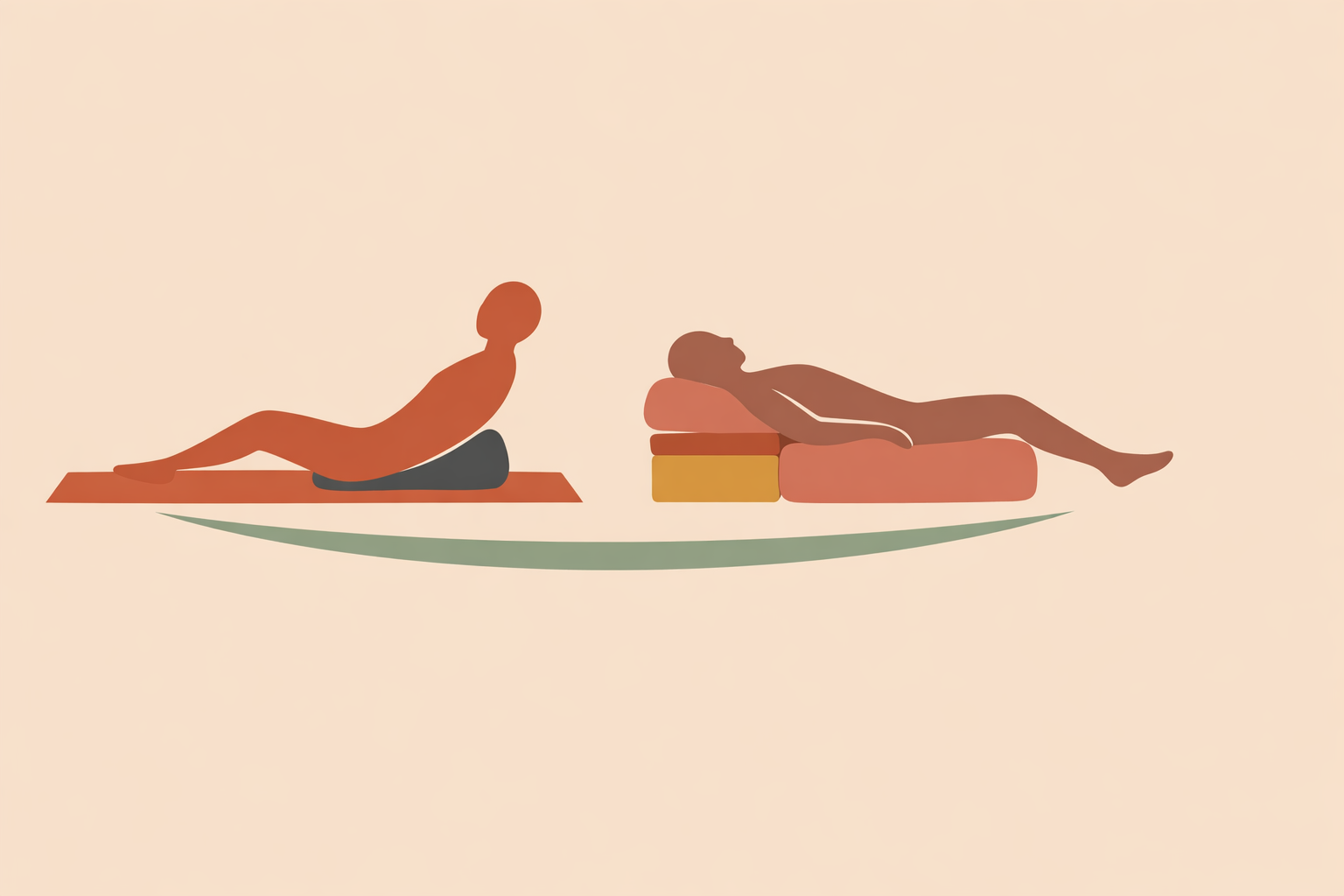
Support the body first. A chair with a back, a cushion, a blanket, and a visually calm room can make breathing feel safer and less effortful. Simple cues like soft shoulders, a relaxed jaw, and grounded feet usually go further than complicated instruction.
In groups, name choices clearly:
- Eyes open or closed
- Sitting up or resting back
- Following the prompt or resting quietly
When drawing on traditional practices, be specific and respectful. If you offer alternate nostril breathing, humming exhalations, or other lineage-based forms, name their roots plainly and stay within your training. Breathwork becomes richer when cultural origins are honored rather than flattened into generic wellness language.
9. Plan for sensations and emotions before they arise
Preparation reduces unnecessary alarm. When people know what can happen, they’re less likely to interpret every sensation as danger.
Common responses include tingling, sighing, temperature shifts, tears, yawns, and moments of deep relaxation. These can arise even in gentle practice. Normalize them without making them a goal.
Also define clear stop-signals:
- Air hunger
- Strong chest tightness
- Intense dizziness
- Feeling far away or unreal
- A sudden sense of panic
Offer a simple decision ritual they can use anytime:
- Notice what is happening
- Name it in a word or two
- Rate the intensity
- Choose to continue, slow down, or stop
This keeps agency inside the practice. Emotional expression is welcome if it comes naturally, and nothing needs to be pushed or performed.
Conclusion: Boundaries make breathwork steadier
Breathwork for anxiety becomes more dependable when it is held by clear boundaries: scope, consent, screening, calming patterns, gentle dosing, a supportive container, realistic preparation, and genuine choice.
Traditional knowledge has long understood that the breath can steady the mind when approached with patience and respect. Modern research adds helpful confirmation, while good practice still depends on discernment and skillful pacing.
Teach slowly, leave room for preference, and keep refining your cueing. If someone becomes overwhelmed, scale down, widen attention, and return to steadiness before trying again. When the frame is steady, breathwork for nervous system regulation becomes a grounded skill people can return to with trust.
Train in Breathwork Practitioner Certification
Build safe, consent-led breathwork skills with the Breathwork Practitioner certification.
Explore Breathwork Practitioner →