


You’re halfway through a referral form and the “Reason for referral” box won’t cooperate. “Possible ADHD?” feels quick, but your notes show something more specific: missed steps spike after night shifts, written checklists help, and the pattern began after a collision. Colleagues want a label; the client wants relief; you want to stay within scope and still be useful. The common trap is either reaching for jargon or sending a vague story that a specialist team can’t do much with.
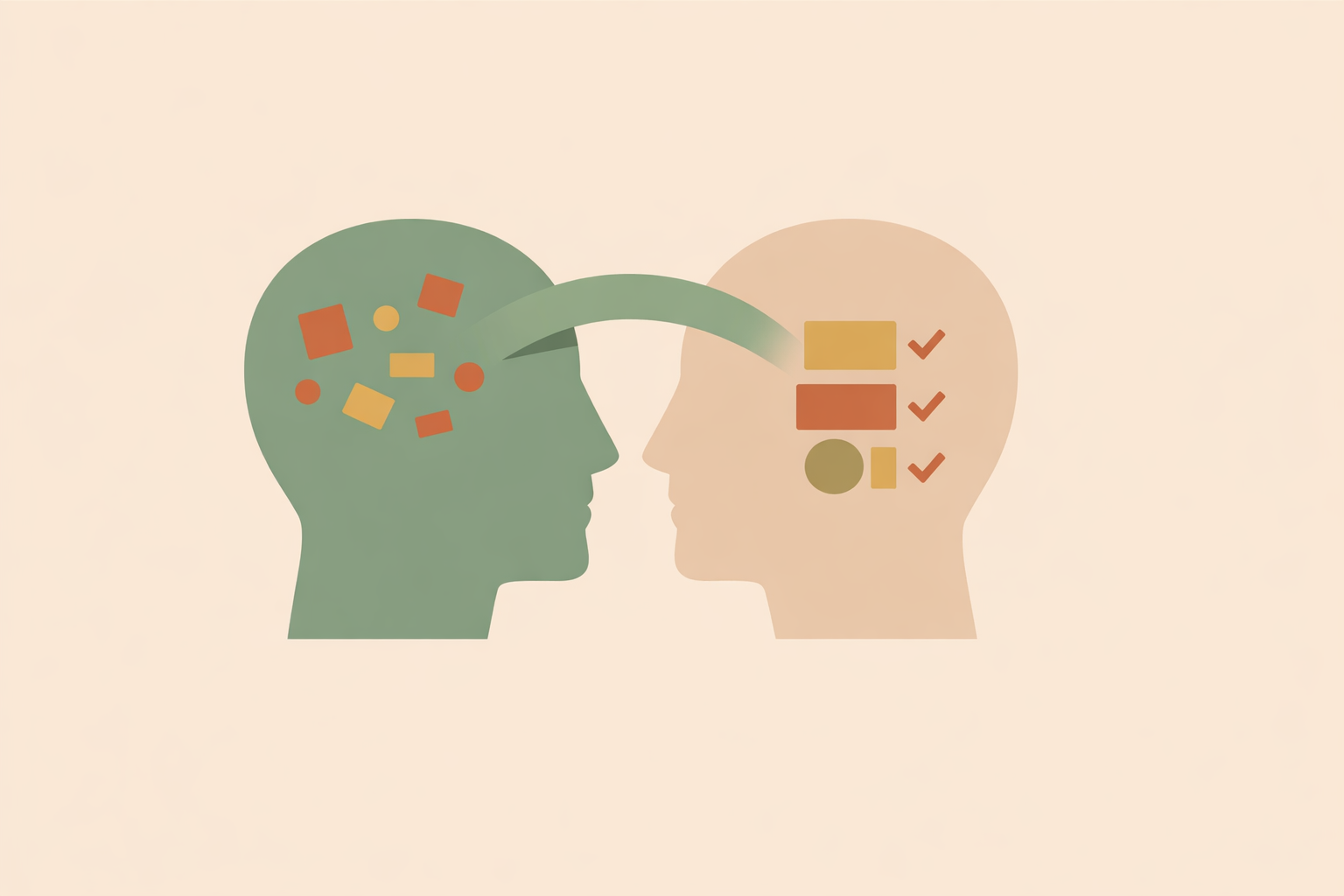
Brain–behavior language offers a practical middle path. It helps you document function, impact, context, and timeline in a way other professionals can work with, while keeping the person’s goals front and center.
Key Takeaway: Effective referrals use brain–behavior language to organize lived patterns, not labels. Start with what is happening, when it changed, what makes it better or worse, and how it affects daily life. From there, shape focused referral questions, describe attention, memory, and executive functioning in plain words, account for culture and environment, and turn any feedback that comes back into practical everyday support.
Step 1: Start With the Lived Pattern, Not a Label
A clear note rooted in the person’s lived experience usually helps more than a polished label. Begin with what happens, when it happens, and why it matters in daily life.
Instead of writing “executive dysfunction,” you might write: “When demands increase, Mateo struggles to start tasks, switches repeatedly without finishing, and loses track of steps. He completes more when we co-create a 3-step checklist.”
A simple structure keeps your notes usable:
- Pattern: What happens?
- Impact: Why does it matter in daily life?
- Context: When is it better or worse?
- Next step: What support or referral makes sense now?
Example:
- Pattern: “For 2–3 weeks, Asha forgets to pay two recurring bills unless a phone alarm is set.”
- Impact: “Late fees create stress and conflict at home.”
- Context: “Worse after late shifts; better when partner double-checks calendar on Sundays.”
- Next step: “Explore external reminders; consider asking a qualified assessor whether attention and memory under fatigue are contributing.”
If you like a faster workflow, use three columns: what you observed or the person reported, what might be shaping it, and what proportionate next step follows. That middle column protects accuracy. Sleep, grief, sensory overload, environmental mismatch, cultural expectations, and stress can all shape how a difficulty shows up.
Specialists tend to value focused questions more than early conclusions. Your job is to send a lived pattern rather than a guess about causes.
Worked note: “Pattern: Since moving to night shifts in May, Keita starts many chores but leaves them unfinished and forgets verbal instructions at work unless they’re written. Impact: Missed deadlines and rising stress. Context: Improves on days after 7+ hours sleep; worsens with interruptions. Next step: Add 3-step visual checklists at home and request a qualified assessment to explore attention under fatigue and planning demands.”
Step 2: Turn Observations Into Clear Referral Questions
Build your referral question around function and timeline. Strong referrals ask for clarification; weak referrals push toward a label.
Use this plain-language formula:
- Concern: What practical difficulty is showing up?
- Timeline: Lifelong, recent, gradual, sudden, or stress-linked?
- Context: What seems to worsen or ease it?
- Request: What would you like clarified?
- Goals: What outcomes matter most to the person?
Example: “Since a traffic collision in March, Devika reports losing track during long verbal briefings and underestimating time for complex tasks. Written bullet points and timers help. We’d value clarification about attention and planning under time pressure and fatigue to inform work routines. Goals: return to full-time scheduling and reduce missed deadlines.”
Keep background information tight and relevant. Referral requests are stronger when they clearly state the reason for referral and include only the details that make interpretation easier.
If you’re unsure how to word the request, start from the person’s own curiosity. Their question often points straight to the most respectful referral: “What aspects of attention and planning best explain these day-to-day difficulties, and which supports would best match this person’s goals?”
Step 3: Describe Attention, Memory, and Executive Function in Everyday Words
Plain language travels farther than theory. Describe what the person can do, where things break down, and what reliably helps.
Executive functioning includes goal-setting, starting tasks, holding steps in mind (working memory), inhibiting impulses, shifting strategies, and finishing plans. In everyday notes, that may sound like:
- “Knows what to do, but cannot get started.”
- “Starts five things and finishes none.”
- “Gets stuck when plans change.”
- “Does much better with external structure.”
Example: “When meetings run long, Jordan loses the thread and jumps to email. A visual agenda with time boxes keeps him present, and a 3-step checklist helps him complete most action items.”
Attention includes sustained focus, selective focus, divided attention, alternating attention, and general alertness. Naming the type makes your note easier to use. You might write: “Keeps focus during brief written lists but loses it within two minutes of dense verbal explanation, especially late in the day.”
Memory can involve learning spoken information, remembering future tasks, recalling events, or recognizing familiar material. Specificity helps here too: “Remembers new names only if seen written and repeated across the day,” or “Keeps track of appointments if the phone reminder vibrates and a sticky note is placed on the door.”
Within your role, you can explore practical supports like:
- Written summaries and teach-back after conversations
- Spaced repetition for names or terms
- Environmental cues such as one basket by the door or color coding
- Calendars, alarms, and fast note-capture systems
The goal is clarity: make patterns visible and supports testable.
Step 4: Include Culture, Context, and Traditional Knowledge
Always ask whose norms are being used. A behavior that looks unusual in one setting can be respectful, protective, or ordinary in another.
Professional guidance emphasizes multicultural fairness in assessment and interpretation because language, education, migration history, and cultural norms shape communication and performance.
This matters long before any formal assessment. If a manager says, “Naya doesn’t engage,” but Naya comes from a community where pausing before speaking shows respect, your note should describe what you can actually observe. For example: “Naya contributes more fully through written reflection than rapid group debate and offers thoughtful summaries when given five minutes to prepare.”
The same care applies to social-cognitive misreads. Assumptions about eye contact, directness, facial expression, and emotional style don’t travel neatly across cultures. Research on nonverbal communication notes that nonverbal cues can be misinterpreted when cultural norms differ.
Practical ways to work with this:
- Ask, “How does your family or community describe this concern?”
- Ask, “Which traditional supports feel trustworthy to you?”
- Note sensory load, time pressure, and environmental barriers before assuming an internal difficulty
- Use appropriate language support for complex conversations when needed
With permission, include concise cultural context in referrals when it helps prevent misreading. For example: “Cultural norms in Samir’s community emphasize deference in group settings; he communicates more openly one-to-one and in writing.”
Step 5: Know Your Scope and Recognize When Specialist Input Helps
Brain–behavior language can sharpen your observations, but it does not expand your scope. It helps you record patterns clearly; it does not authorize you to evaluate brain function or interpret specialized instruments.
Some situations call for faster escalation. Use proportionate judgment:
- Urgent specialist input: sudden or rapidly worsening confusion, seizures, slurred speech, new weakness or numbness, repeated vomiting, loss of consciousness, or severe change after injury.
- Routine but important referral: persistent changes affecting daily life, a clear drop in work or study performance, months-long post-injury fog, new difficulty with language, or notable shifts in judgment or behavior.
Assessment can be very useful for understanding functioning, but it remains one lens among others, including lived experience and context.
Mini-scenario: After a bike crash, Jae seems “not quite himself.” Three weeks later, he still forgets new instructions and becomes irritable under noise. You document examples, add gentle supports such as written steps and quieter breaks, and suggest a qualified assessment to clarify attention and sensory load, without speculating about causes.
Referral is not a failure of support. Often, it’s the most respectful next step.
Step 6: Explain the Referral in Human Language
How you explain a referral matters almost as much as the referral itself. Keep the conversation calm, clear, and choice-based.
You might say:
- Purpose and role: “You’ve described a pattern that affects daily life. My role is to support your goals and track what helps. I do not determine the cause. Would you like to explore whether a qualified assessment could clarify the next step?”
- Boundaries: “I can help organize examples, prepare questions, and build supports. I cannot tell you whether a specific condition explains this.”
- Transparency: “I’m suggesting a referral because this has persisted and is getting in the way at work. A specialist may be able to explore attention and planning in more depth. If you agree, we can share only the notes you choose.”
Clarify what the process is for, what information may be shared, and what choices stay with the person. This keeps the referral collaborative rather than intimidating.
A short script many practitioners find useful is: “We can decide together what information to share and with whom. You’re in charge of this process. I’m here to help you prepare, ask good questions, and turn any recommendations into daily routines if that would support you.”
Step 7: Turn Reports Into Everyday Support
When a report comes back, start with the through-line. What question was asked, what patterns were noticed, and what can now be tried in real life?
Read for these anchors:
- Referral question and timeline
- Information sources and context
- Any limits or caveats around interpretation
- Strengths and areas needing support
- Functional implications
- Practical recommendations
Then translate technical wording into everyday language. “Reduced verbal learning under unstructured conditions” becomes: “Spoken information is likely to land better when it is organized, repeated, and paired with written notes.”
Standardized tools can be helpful because they allow comparison with reference groups, but standardization doesn’t erase cultural, language, education, sensory, or access-related differences. Findings still need context.
When tracking change, prioritize meaningful daily indicators: completed tasks, missed commitments, reminder use, sleep consistency, recovery time after overstimulation, or how often a morning routine is followed. When people talk about “reliable change,” they usually mean change bigger than ordinary day-to-day fluctuation.
In follow-up conversations, keep strengths in the frame. For example: “Your visual skills are a strength, so let’s use them. We can turn larger tasks into a simple board with ‘Next,’ ‘In progress,’ and ‘Done,’ then review what worked.”
Finally, tailor every recommendation to real life. A paper checklist, a voice note, a family rhythm, or a prayer-time anchor can fit better than a polished system that doesn’t match the person’s world.
Conclusion: Use Brain–Behavior Language With Precision and Respect
The path is straightforward: notice the lived pattern, shape a respectful question, invite the right expertise when needed, and translate what comes back into practical support.
Keep the person at the center by organizing examples, timelines, goals, and questions. Then co-create small experiments that reduce cognitive load, such as written steps by the door, predictable transitions, visual schedules, timers, and quieter work blocks. External supports can reduce internal demand without implying anything is broken, a useful lens in both brain health work and neuropsychology practice.
Hold strengths in view as carefully as difficulties. Many people bring persistence, creativity, cultural wisdom, and adaptations that already work, and those deserve attention.
Document consent, observations, agreed strategies, referrals offered, and the limits of your interpretation. Share only what’s necessary and only with permission. Keep weaving ancestral knowledge with evolving research in a grounded, open-minded way, always asking what supports this person, in this setting, at this time.
That’s how brain–behavior language becomes part of a living practice: precise, ethical, culturally grounded, and genuinely useful.
Explore Neuropsychology Certification
Build sharper brain–behavior observations and referrals with the Neuropsychology Certification.
Explore Neuropsychology Certification →










