In creative group spaces, it’s easy to over-design an activity, lay out beautiful materials, and hope the room carries itself. In real sessions, that often shows up as awkward openings, a few voices dominating, vulnerable sharing the space wasn’t set up to hold, or strong-looking pieces with no clear next step. Online, camera norms, consent, privacy, and file handling add extra constraints. In person, access needs and the room itself shape what’s possible. And when a facilitator starts “reading” someone’s image for them, trust can erode quickly.
A steadier approach is to design the flow first, then choose materials that serve it. Strong creative facilitation begins with rhythm and agreements, then selects prompts and techniques that fit that arc. When the structure has room to breathe, participants usually feel more choice, less pressure, and a clearer path from expression to action.
Key Takeaway: Creative group facilitation works best when you design for flow inside a clear, respectful container. Start by setting agreements, access, consent, and—if you are online—explicit virtual norms. Open with a low-pressure arrival, give the session a visible rhythm, offer prompts with real choice, reflect without imposing meaning, hold intensity with calm boundaries, and close by helping participants translate insight into one small next step.
2. Build the container before anyone starts making
Materials are not the container. Agreements are, along with access, consent, and clarity about what will and will not happen in the space.
Keep group agreements brief, visible, and easy to return to:
- Confidentiality, with any real-world limits explained clearly
- Permission to pass on any activity or share
- No unsolicited interpretation of another person’s image
- Speak from personal experience
- Respect time, pacing, and different ways of participating
- Attend to access needs in the room, materials, and communication
Consent is especially important when creative work is involved. If artwork might be photographed, stored, revisited, or shared, name it upfront. If nothing will be recorded, say that too. Clear boundaries help people settle.
For online groups, the container needs even more specificity. Practical guidance for virtual groups emphasizes camera and privacy rules, clear participation procedures, technology planning, and an easy re-entry plan if someone drops off the call.
Two lines that reliably reduce pressure:
- “You never have to show your work to take part meaningfully.”
- “If your connection drops, just rejoin when you can; we’ll keep the process easy to re-enter.”
3. Open with a gentle arrival
The beginning sets the tone. People arrive carrying work, family life, overstimulation, fatigue, and inner noise. Asking for immediate depth or polished introductions is rarely the kindest starting point.
Begin with something low-risk and optional:
- Pick a color for how you feel right now and make a small swatch
- Draw one continuous line for a minute without lifting the pen
- Choose an image card that fits your intention for today
- Write three words for how you would like to leave the session
A short grounding invitation can help too: notice what you can see, feel, and hear; feel your feet on the floor; or take one unforced breath together. These simple threshold practices are common across longstanding traditions because they work: they bring attention into the room without forcing disclosure.
Make the time structure visible early. A predictable arc gives people something to lean on:
- Arrive
- Create
- Reflect
- Close
You don’t need elaborate slides. A few timings on a flip chart or a single screen is often enough. Rhythm itself is reassuring.
4. Shape the making phase with clear prompts and real choice
Once people have arrived, your role is to guide without over-controlling. The strongest prompts give enough structure to reduce uncertainty while leaving space for personal meaning.
A process-over-product stance helps here. The aim is attention, exploration, and an honest connection between what’s being made and what’s being noticed.
Directive prompts support groups that want more scaffolding:
- “Draw a bridge between where you are and where you want to be.”
- “Use only two colors for the next 10 minutes.”
- “Place what supports you on one side, and what drains you on the other.”
More open prompts work well once a group is steady:
- “Let an image emerge without deciding what it is.”
- “Choose any materials and follow what feels alive.”
- “Make marks that match your breathing or pace.”
Often, the best choice is a hybrid: set the theme, time, or materials, and leave the image open. That balance supports flow in groups and fits well within creative and expressive therapies.
Collage is especially accessible for beginners because selecting and arranging images can feel less exposing than starting from a blank page. For example: “Using collage only, create an image of what helps you begin.” The frame is clear, while the meaning stays personal.
5. Reflect without interpreting the artwork for others
If there is one habit that protects trust, it is keeping the maker as the authority on their own image.
You can support reflection without assigning meaning. Rather than decoding symbols or declaring what a color “represents,” guide participants from observation to meaning and then, where appropriate, to action.
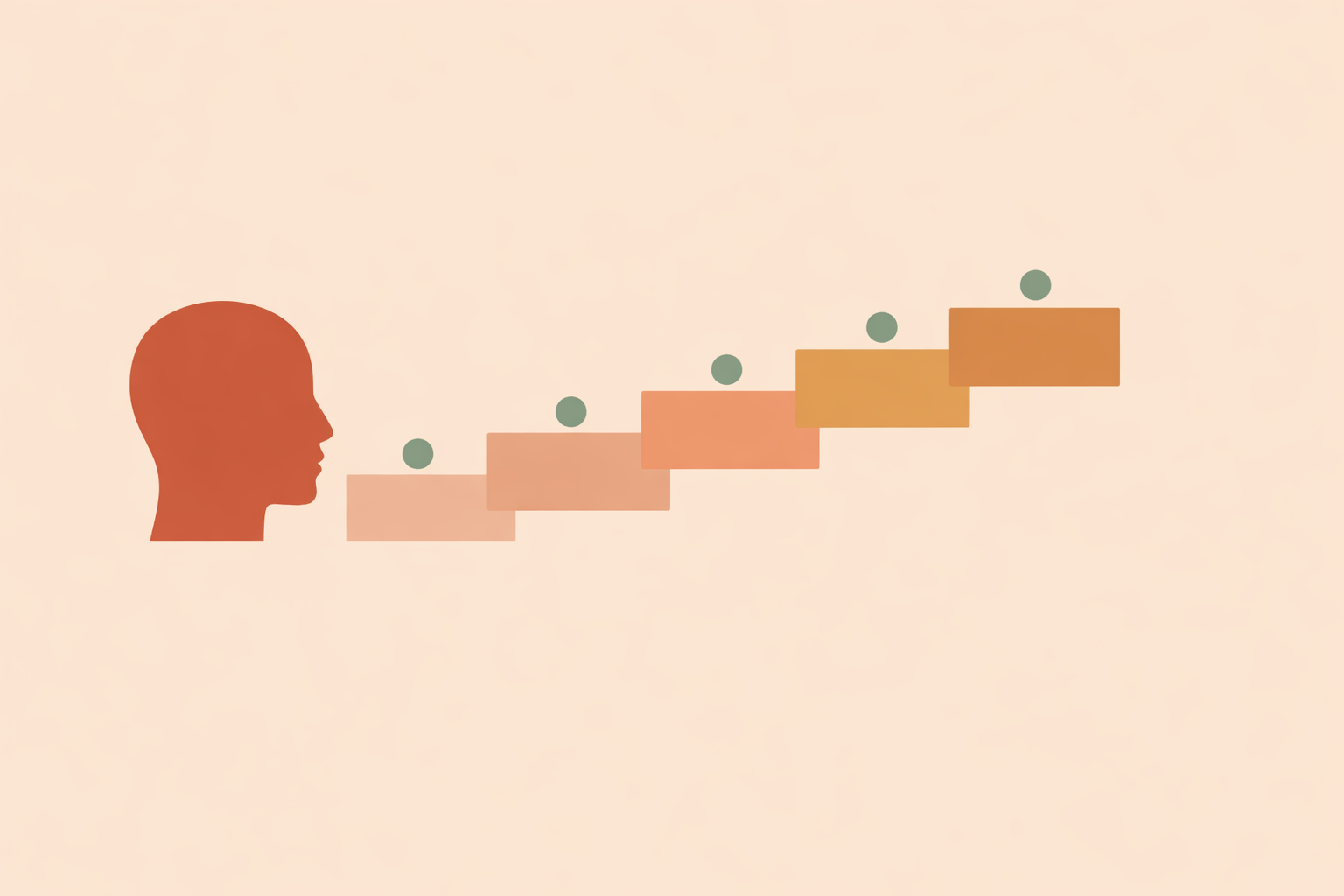
A simple reflection ladder:
- What do you notice first?
- What part draws your attention?
- What does it connect with for you today?
- Is there a next step, choice, or experiment that follows from that?
This approach keeps inquiry respectful and helps people practice naming their own experience instead of looking for the “right” interpretation.
In sharing rounds, reinforce language like “I notice…” or “I’m curious about…” If someone starts interpreting another participant’s image, a calm redirect is enough: “Let’s stay with the maker’s meaning here,” a core principle in symbolism work.
6. Hold strong emotion and disruption without losing the frame
Creative work can stir deep feeling. Tears, frustration, silence, withdrawal, or an unexpected disclosure are all possible when people make from lived experience.
What helps most is steadiness. Name what’s happening without dramatizing it, and return people to choice: pausing, stepping out briefly, changing materials, sitting out a round, or shifting attention to something sensory and concrete.
There is broad support for arts-based engagement as a way to meet difficult experience. WHO notes that arts engagement can support recovery after trauma. In day-to-day facilitation, the key is keeping the group’s boundaries intact while emotion moves through.
Sensory anchors can help when someone feels overwhelmed: feet on the floor, noticing the chair beneath the body, holding a textured material, tearing paper, or returning to repetitive mark-making. These are gentle ways back into the present moment.
Group dynamics need care as well. If one or two people are taking too much space, use structure rather than confrontation: rounds, pair sharing, or one minute of silent journaling before anyone speaks again. If someone doesn’t want to participate in an exercise, treat that as a valid boundary.
7. Close with integration and one small next step
A good close prevents the session from ending as a loose emotional thread. The goal is one clear piece of learning and one realistic action, not a dramatic breakthrough.
A simple closing sequence:
- One thing I noticed
- One feeling, value, or truth I want to keep
- One action or experiment I will try
- When I will try it
This kind of integration helps creative insight move into everyday life. Small experiments beat big promises. An image about spaciousness can become one protected 20-minute block next Tuesday. A collage about support can lead to one honest conversation.
If your group is ongoing, it helps to track participant-defined indicators such as clarity, confidence, follow-through, or ease of expression over time. This fits well with evidence that community arts programs can improve wellbeing, while keeping each person’s own experience at the center.
Close the loop for yourself, too: What supported flow? Where did pressure rise? What can be simpler next time? Strong groups are built through small refinements.
Conclusion: Flow is designed, not improvised
Creative group facilitation becomes more useful when you stop relying on the activity alone and shape the whole experience around it. Build the container, offer a gentle arrival, guide making with real choice, reflect without projecting meaning, hold intensity with calm boundaries, and close with practical integration.
This respects traditional circle wisdom while staying aligned with evidence-informed practice. It keeps the work grounded, relational, and ethically clear, and it helps participants leave with something more valuable than a finished image: a stronger sense of choice, meaning, and next movement.
Refine one element in your next session and watch what shifts. A clearer permission-to-pass, a better arrival prompt, a more breathable making phase, or a stronger close can change the whole group. The main cautions are straightforward: keep consent explicit, avoid interpreting others’ imagery, and plan for privacy and access—especially online. If you want to build these skills more fully, art life coaching offers a focused path for facilitation practice.
Train in Art Life Coaching
Deepen your facilitation flow and ethical container skills with the Art Life Coach Certification.
Explore Art Life Coach →